
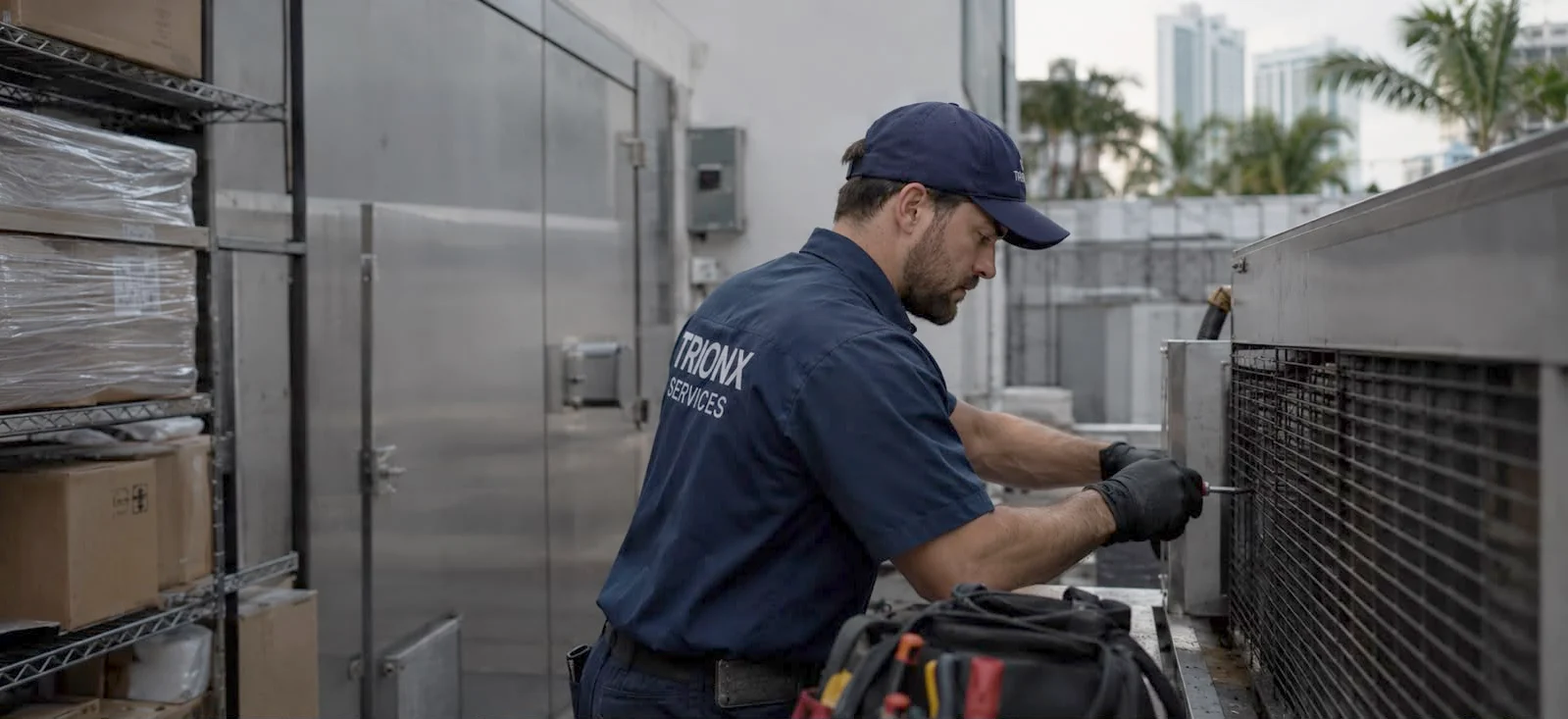
The ice machine is not making ice, or the ice is slimy
An ice machine that stops producing is a refrigeration unit with a water supply, and either half can be the fault.

Insights
Practical guidance for people responsible for commercial property in South Florida. What actually fails, why, and what it costs to leave it.
Symptom first, with what to check and what to stop doing before anybody attends. 46 articles Browse them by where in the building.
An ice machine that stops producing is a refrigeration unit with a water supply, and either half can be the fault.
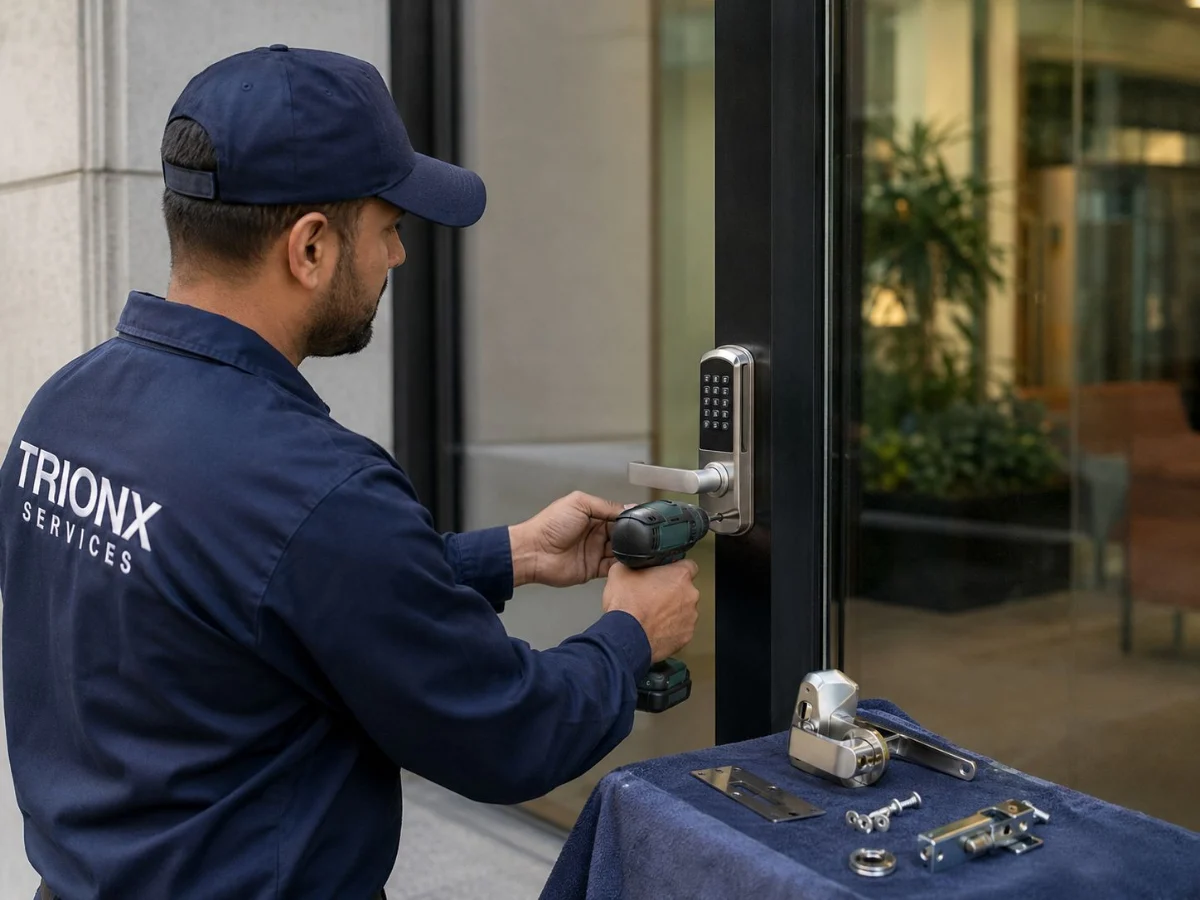
A missing master key is a risk that grows with the number of doors it opens, so the first job is to find out exactly which doors those are.
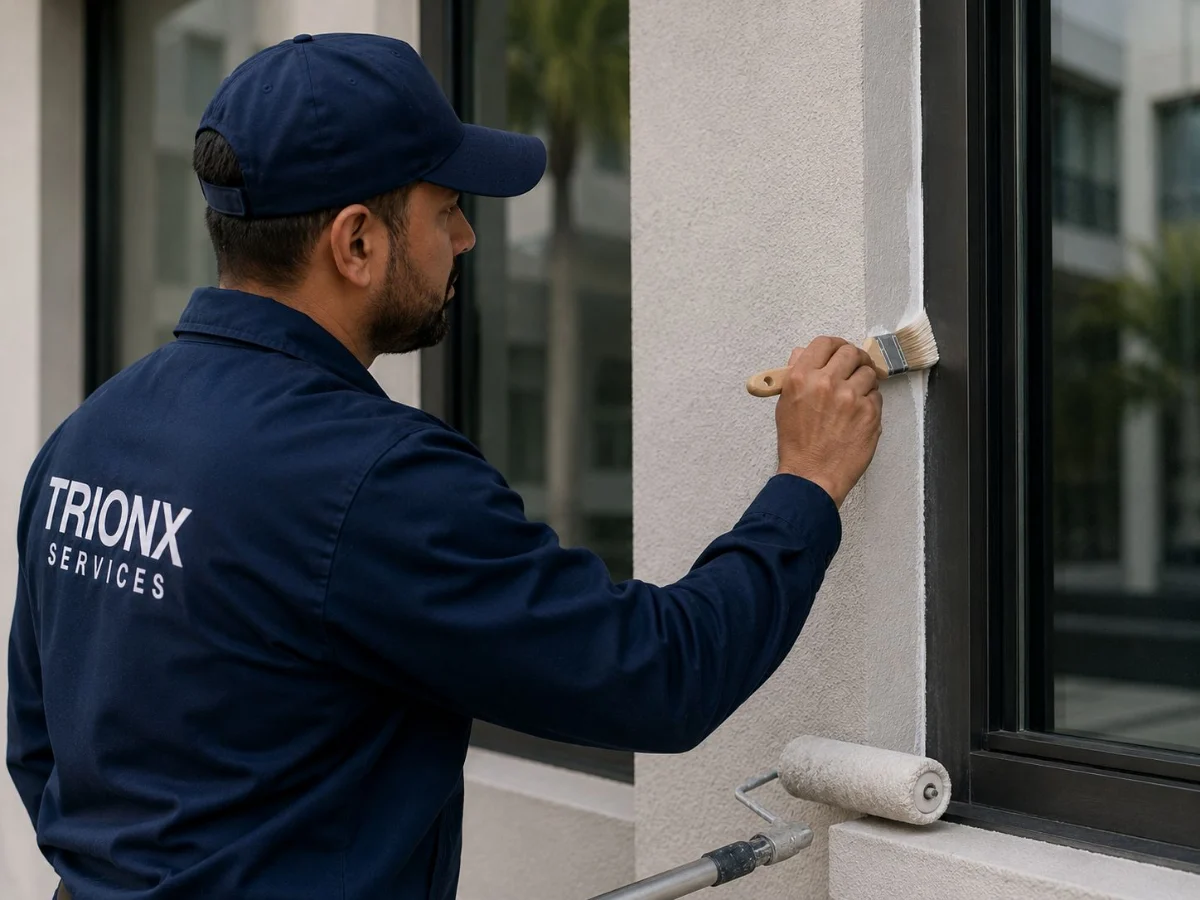
Paint that bubbles or flakes has almost always been pushed off by something, and repainting over the top only hides it for a season.
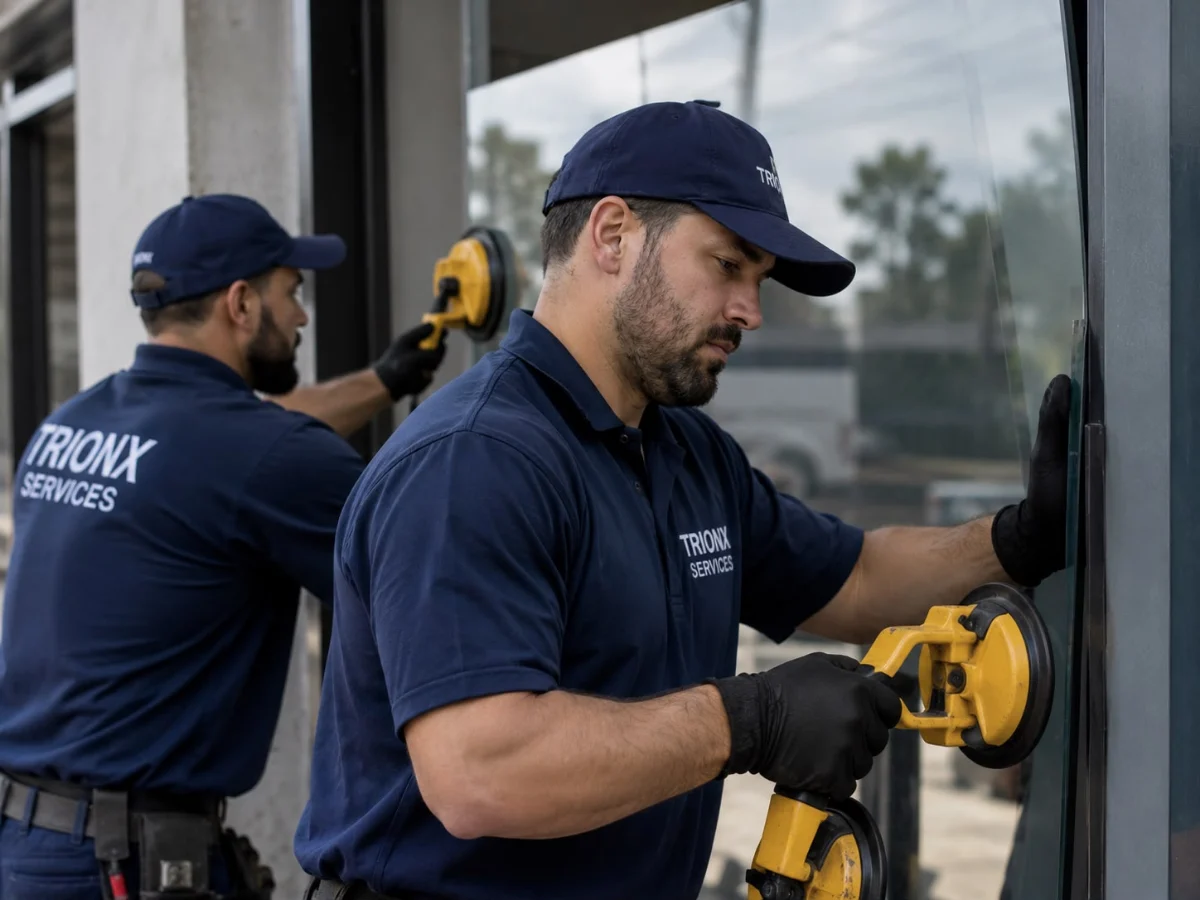
A glass door that drags or will not meet its lock has usually dropped on its pivots or fittings, and the glass itself is often fine.
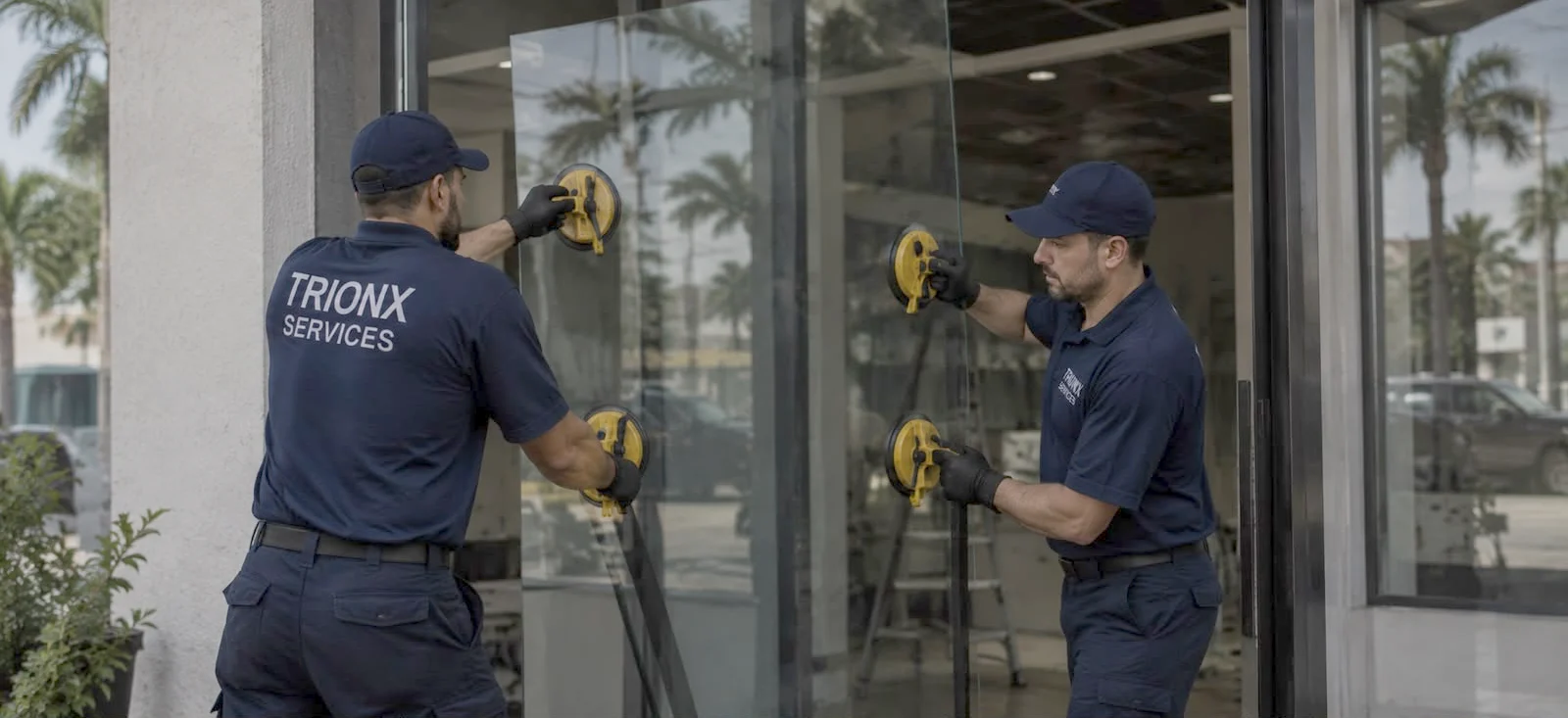
Above the ground floor the first job is keeping people out from under the window, and the second is covering the opening before the weather arrives.
A shattered tempered door leaf has done what it was built to do, and what remains is a door that cannot close, a floor covered in small pieces and a building that is open.
Water at the edge of a window in the rain usually comes through the sealant, the gasket or the glazing bead, but it can also be arriving from somewhere above and only showing up at the glass.
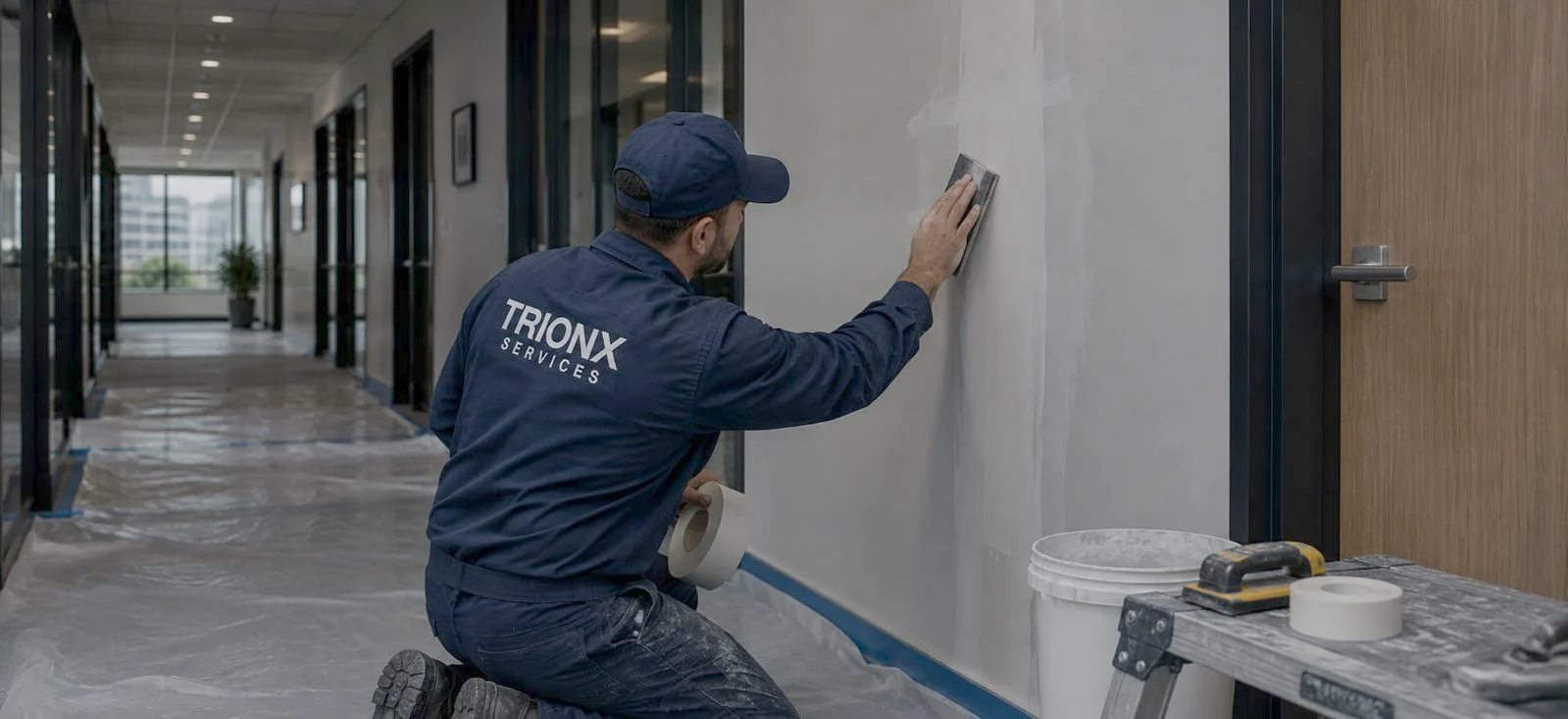
A hole in a wall looks like a ten-minute job until the cutting starts and something is behind it.
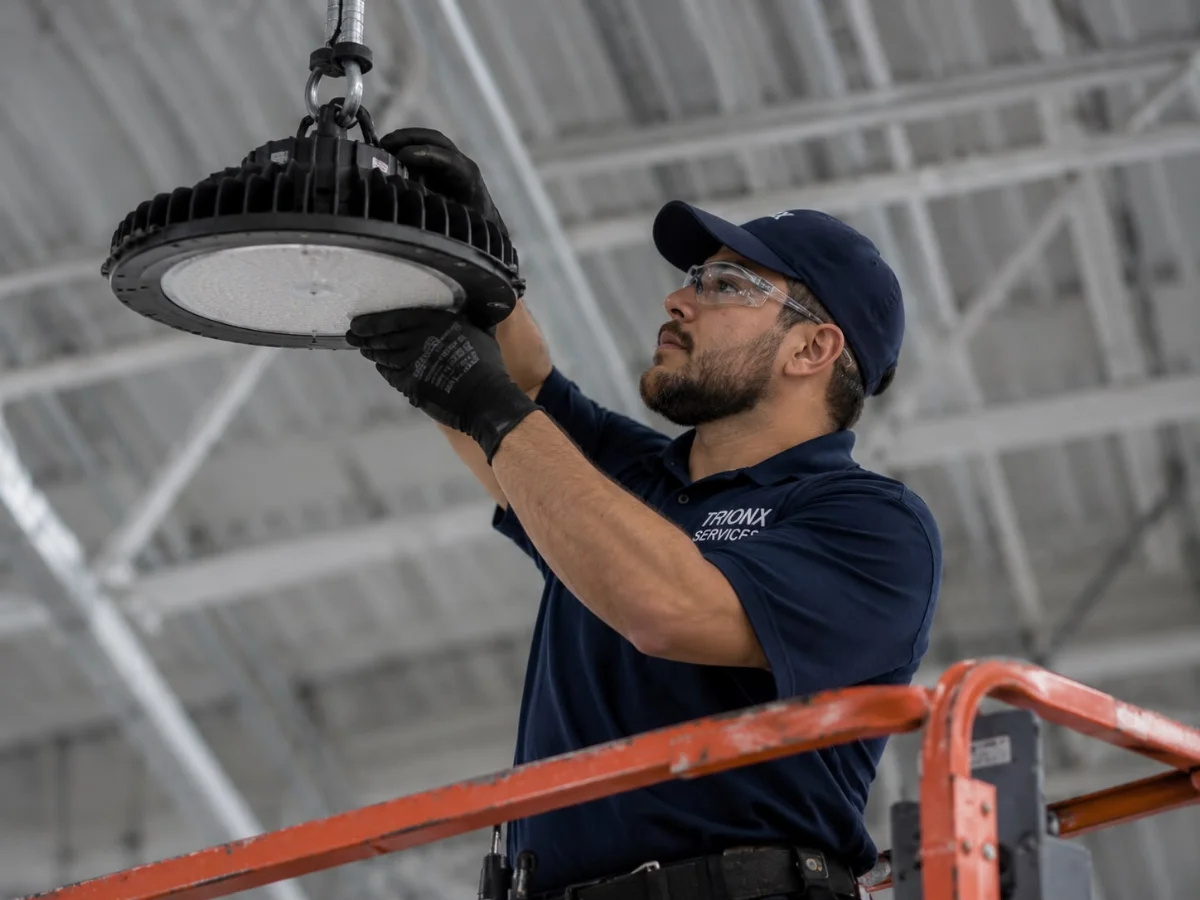
When a new lamp does not bring a light back, the fault is in one of four places, and the first two cost nothing to rule out.

When a walk-in door does not seal, the box takes in warm humid air every minute, and the frost and the running compressor follow from that.
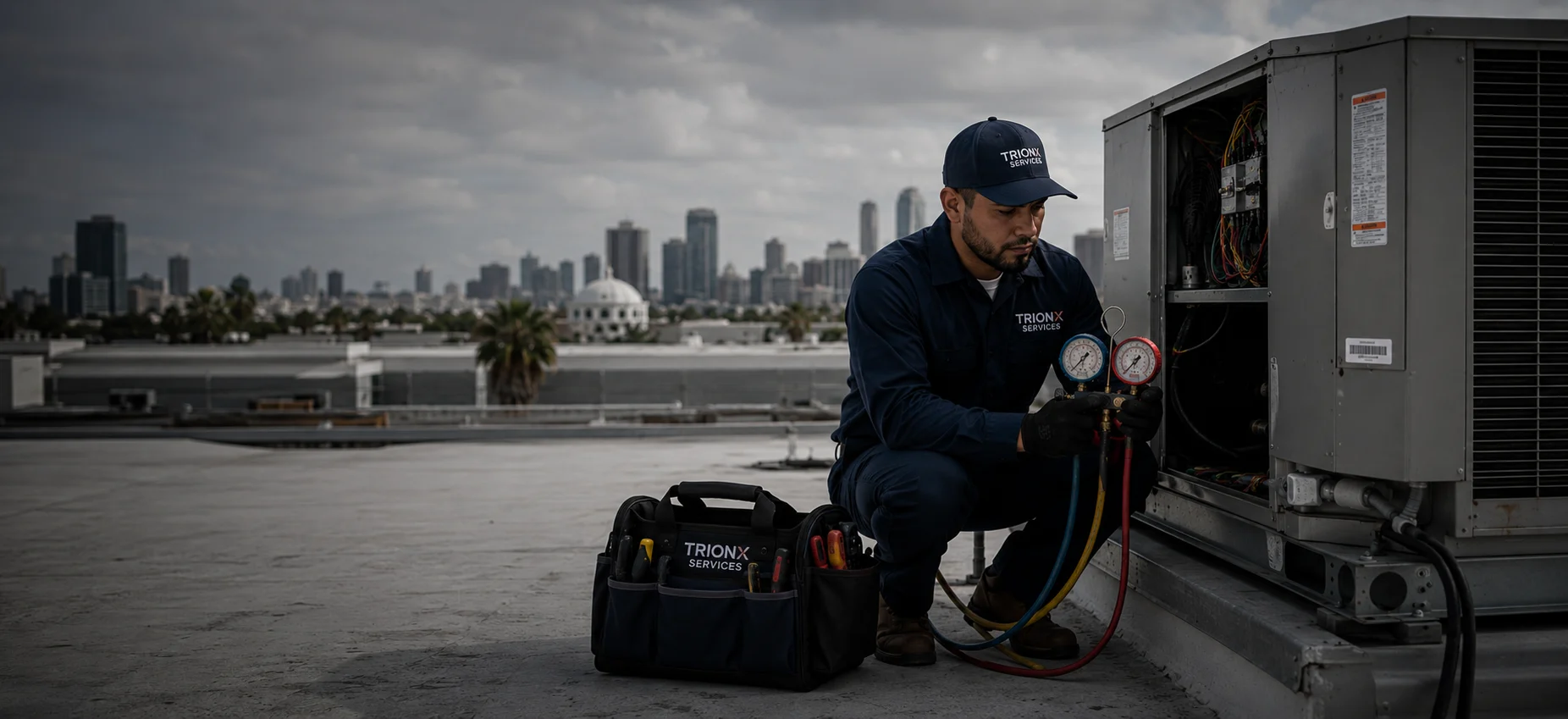
An air conditioner dripping indoors is usually removing humidity correctly and failing to get rid of it.
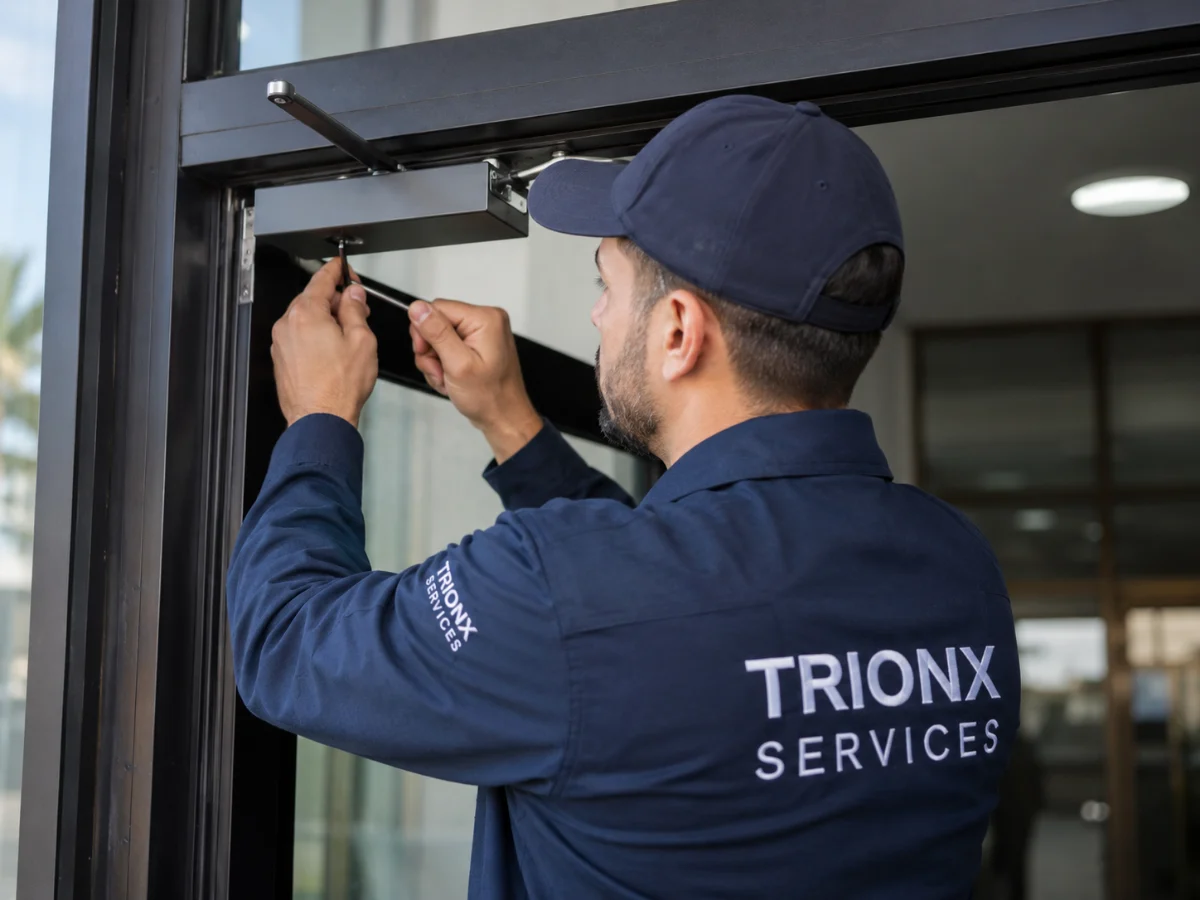
A sliding door that has started to drag is running on rollers that have already failed, and every use from here is grinding the track.
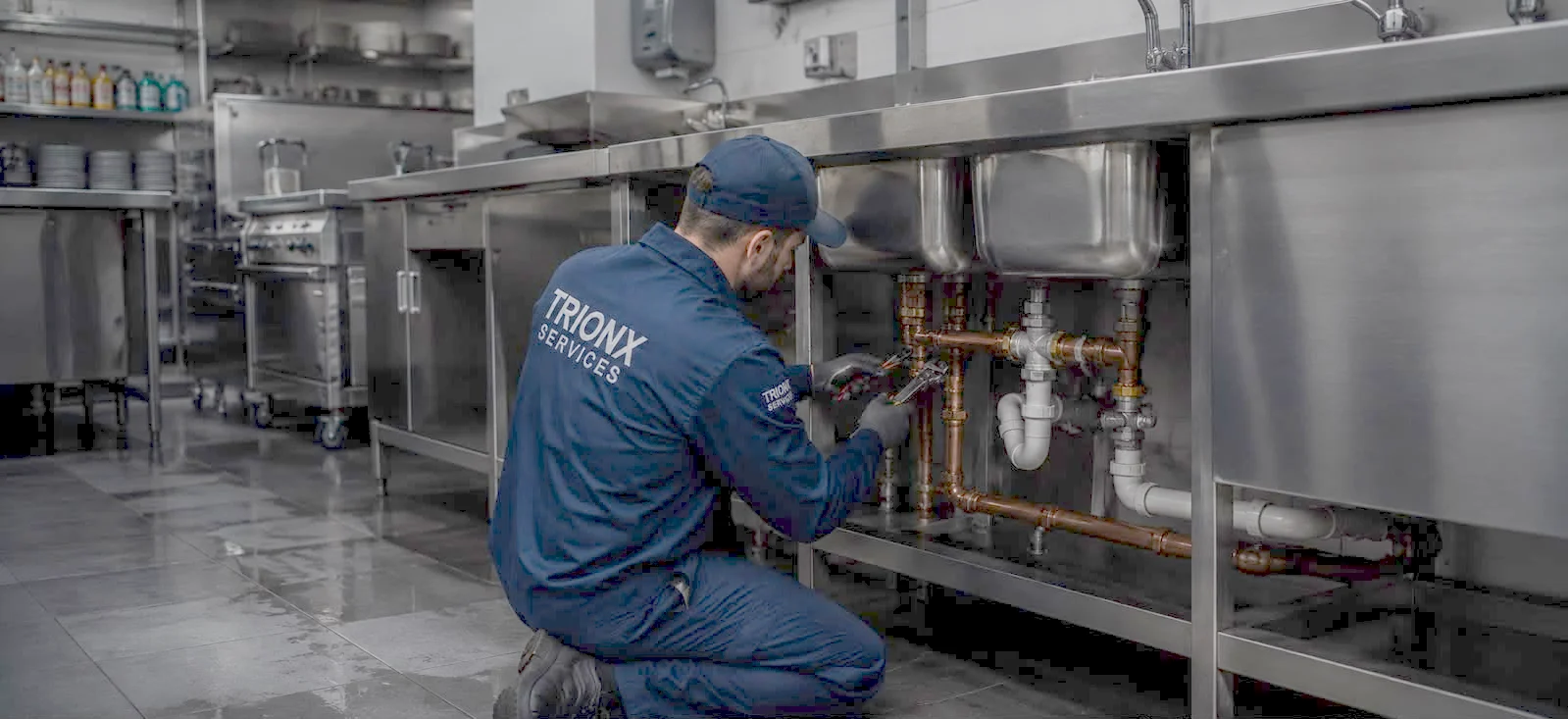
Most sewage smells in commercial buildings come from a drain nobody uses, and the fix is a jug of water.
A loose floor tile is a trip claim waiting to be filed, and the tile is rarely the thing that failed.
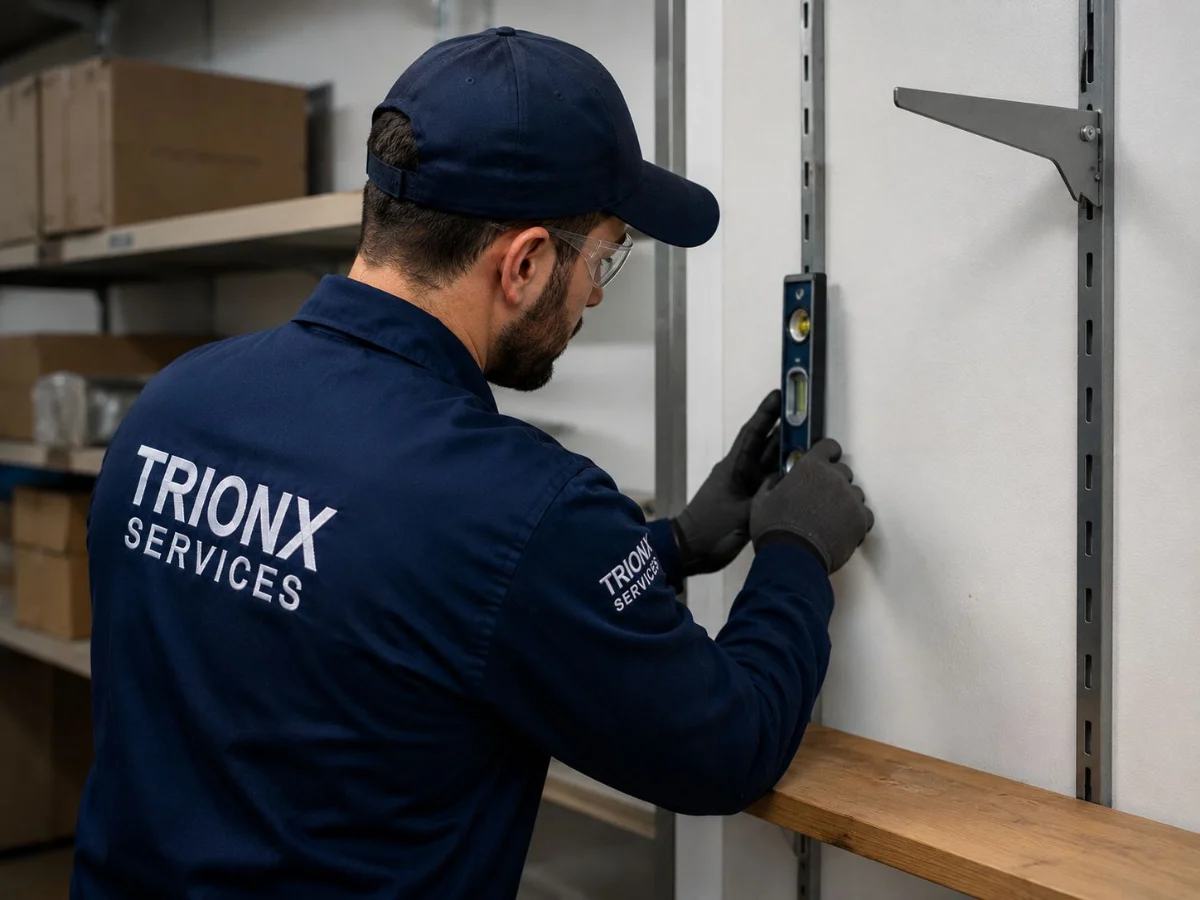
Whether a crack is still moving matters more than how wide it is, and finding out takes a pencil and a date.
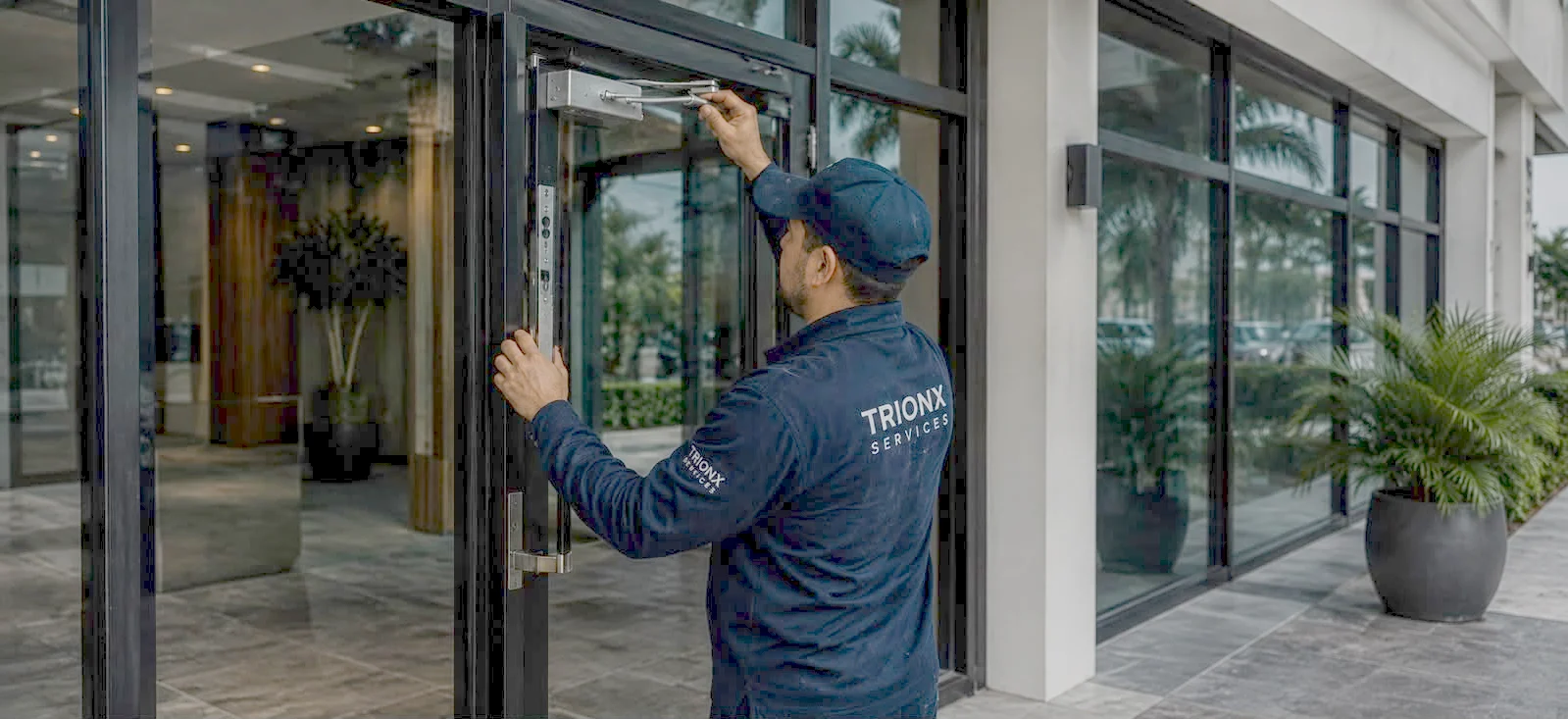
Treatment kills what is inside. The building decides how much comes in next week.
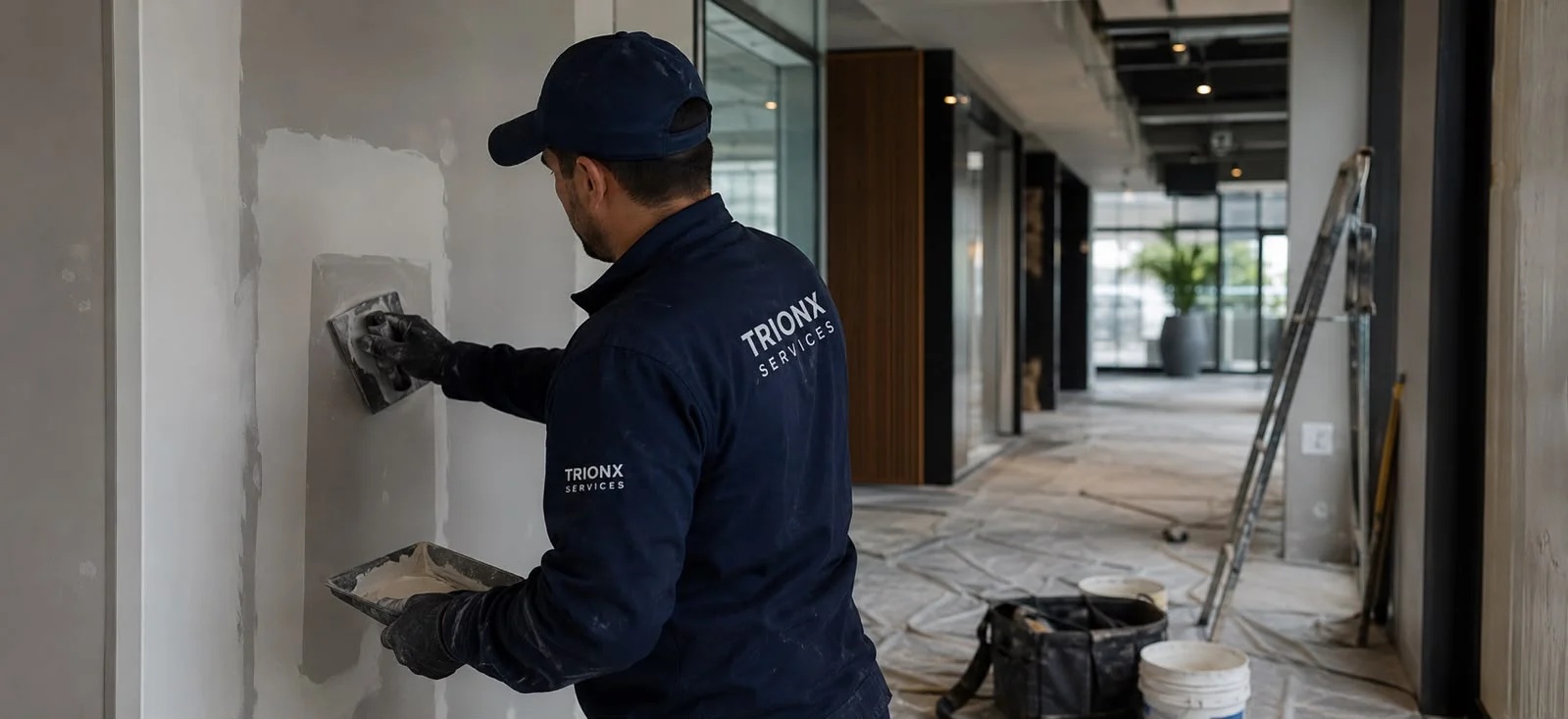
A musty smell means something has been damp long enough for growth to start, and the water is rarely where the smell is strongest.
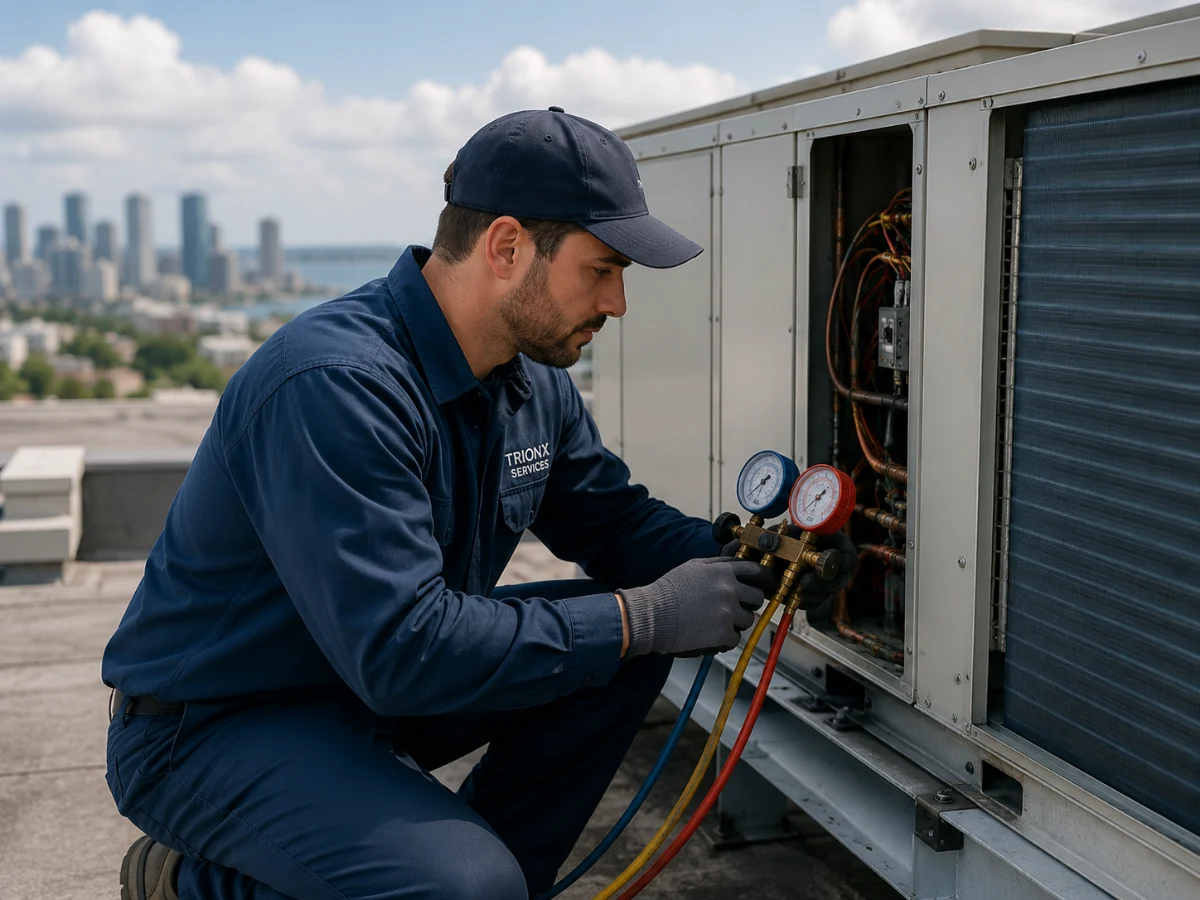
One room at the wrong temperature while everywhere else is comfortable is usually an airflow problem rather than a capacity one.

The information that decides how fast somebody reaches you is rarely the description of the fault.
A cracked pane that is still standing is either stable for weeks or hours from letting go, and the glass type decides which.
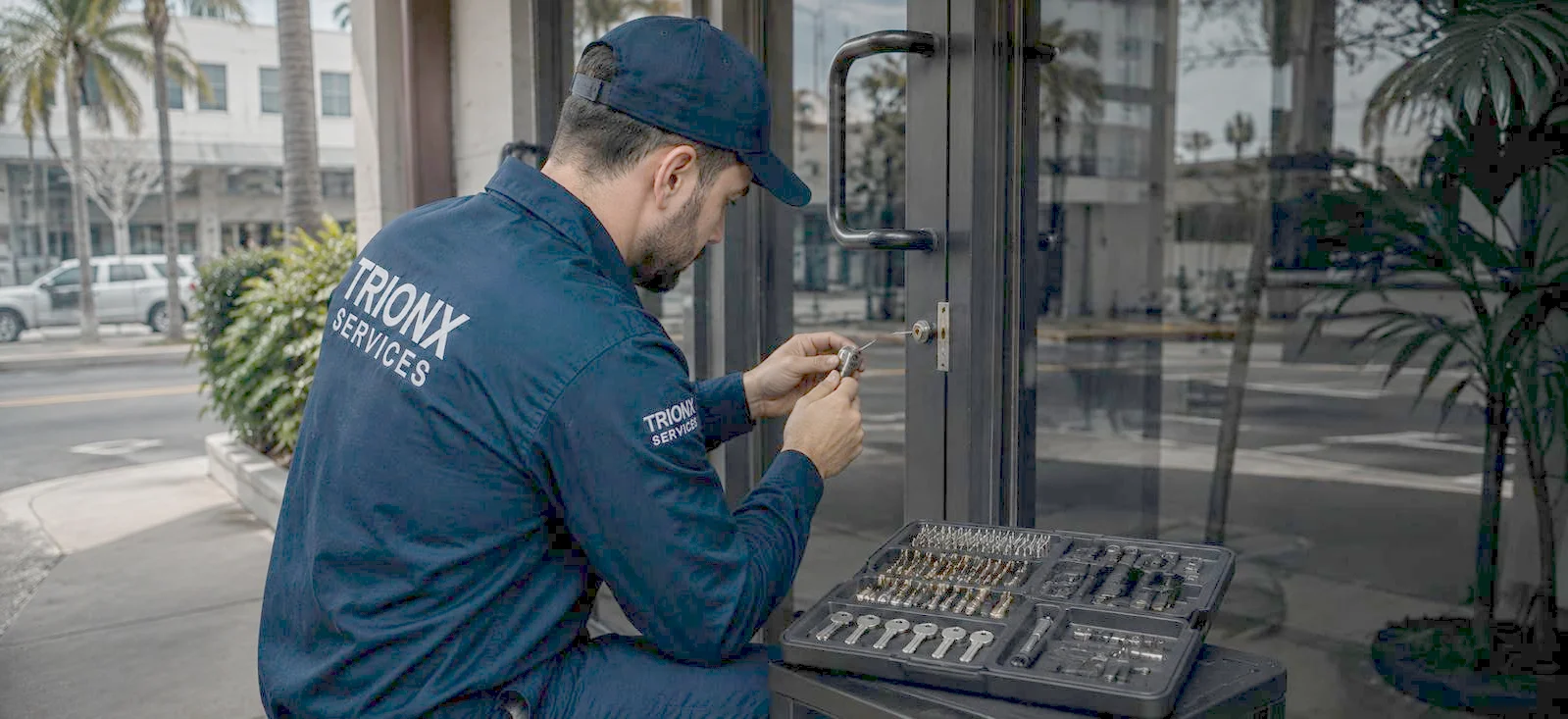
Repeated night activations are usually a building problem being reported by an alarm that is working correctly.
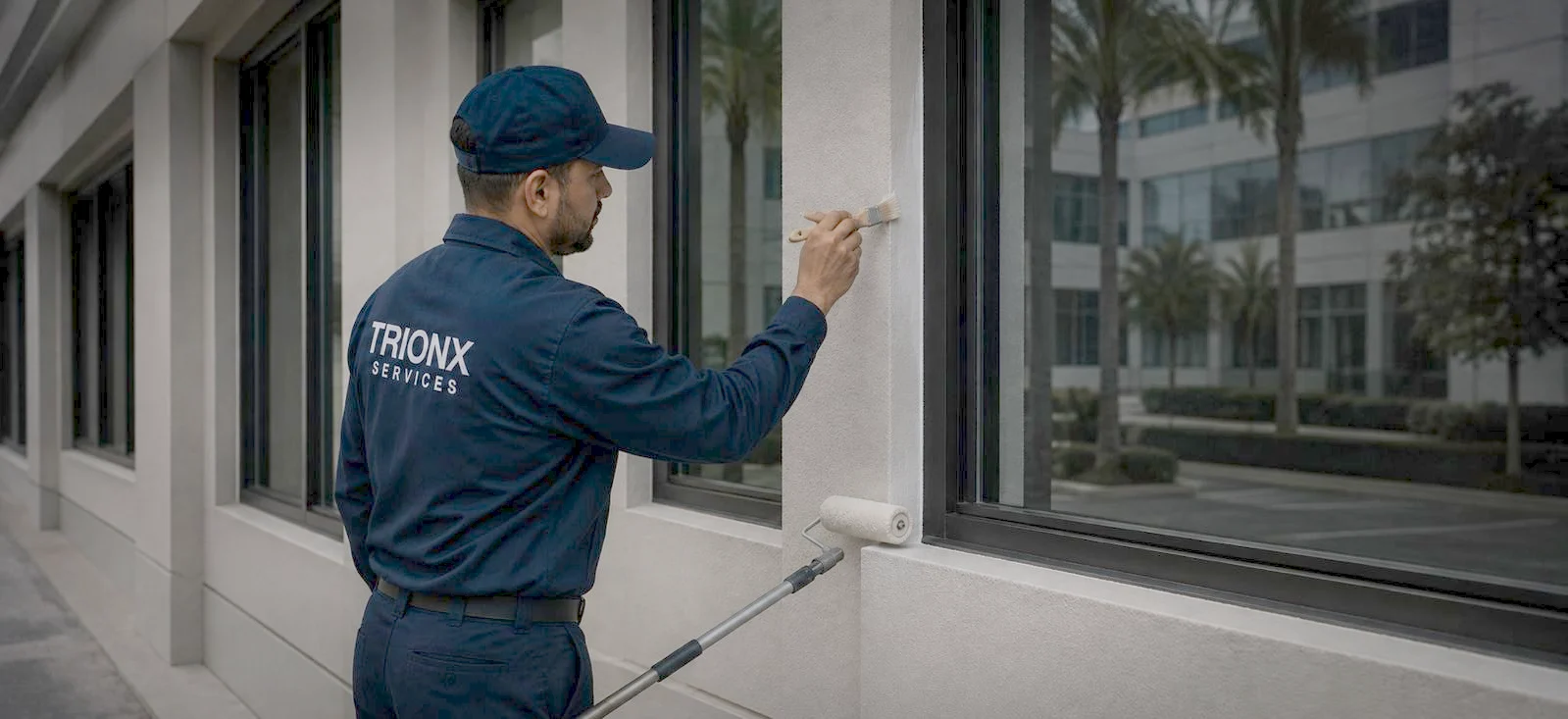
Graffiti gets harder to remove every day it stays up, and a frontage that keeps it for two weeks tends to attract more.
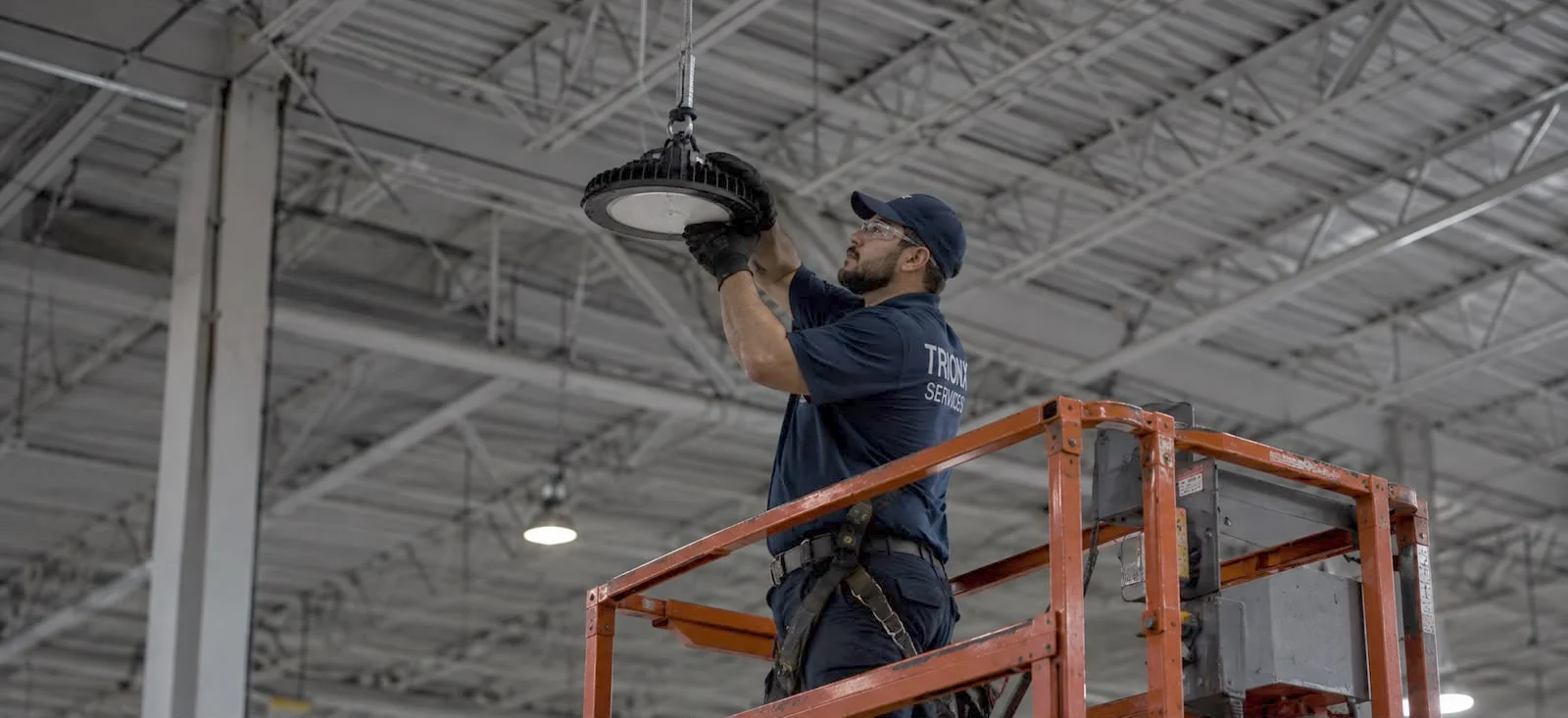
How much of the building flickers, and when, is the difference between a lamp at the end of its life and a connection that is heating up.
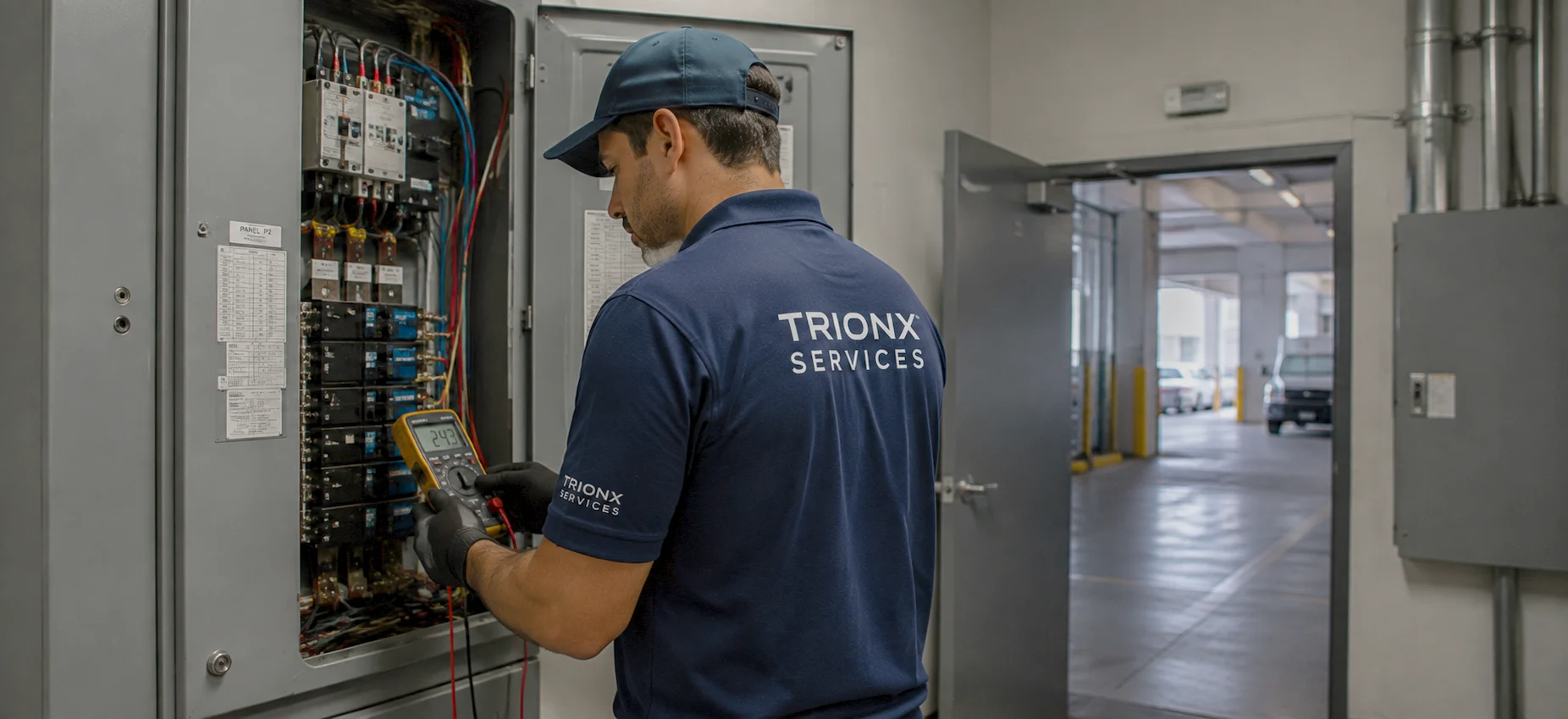
A dead outlet has a reset device behind it more often than it has a fault, and the device is rarely in the room you are standing in.
A smell of hot plastic with no visible source is the one building complaint that should never be filed for the morning.
Exterior lighting fails one fixture at a time, and nobody reports it until the dark patch is large enough to feel unsafe.
A commercial water bill that has jumped with no change in occupancy is usually a leak that has been running quietly for weeks.
Whether the hot water is gone everywhere or only at one fixture narrows this to a handful of causes in about two minutes.
The order the first two days go in decides how much of the damage is covered and how much is argued about later.
Two things are running from the moment you arrive, an open building and an evidence record, and they pull in opposite directions.
A broken storefront is two problems at once, an open building and a hazard on a public footway, and they are dealt with in that order.
Water arriving through a ceiling has already been somewhere else for a while, and where it entered is rarely where it is coming out.
A walk-in that is climbing has a few hours of usable stock in it, and the first checks are worth doing before anybody is called.
Whether one fixture is blocked or the whole line is backing up is the first thing to establish, and it changes everything that follows.
Whether the supply is out or the building is faulty is answerable from the sidewalk, and it decides who you should be calling.
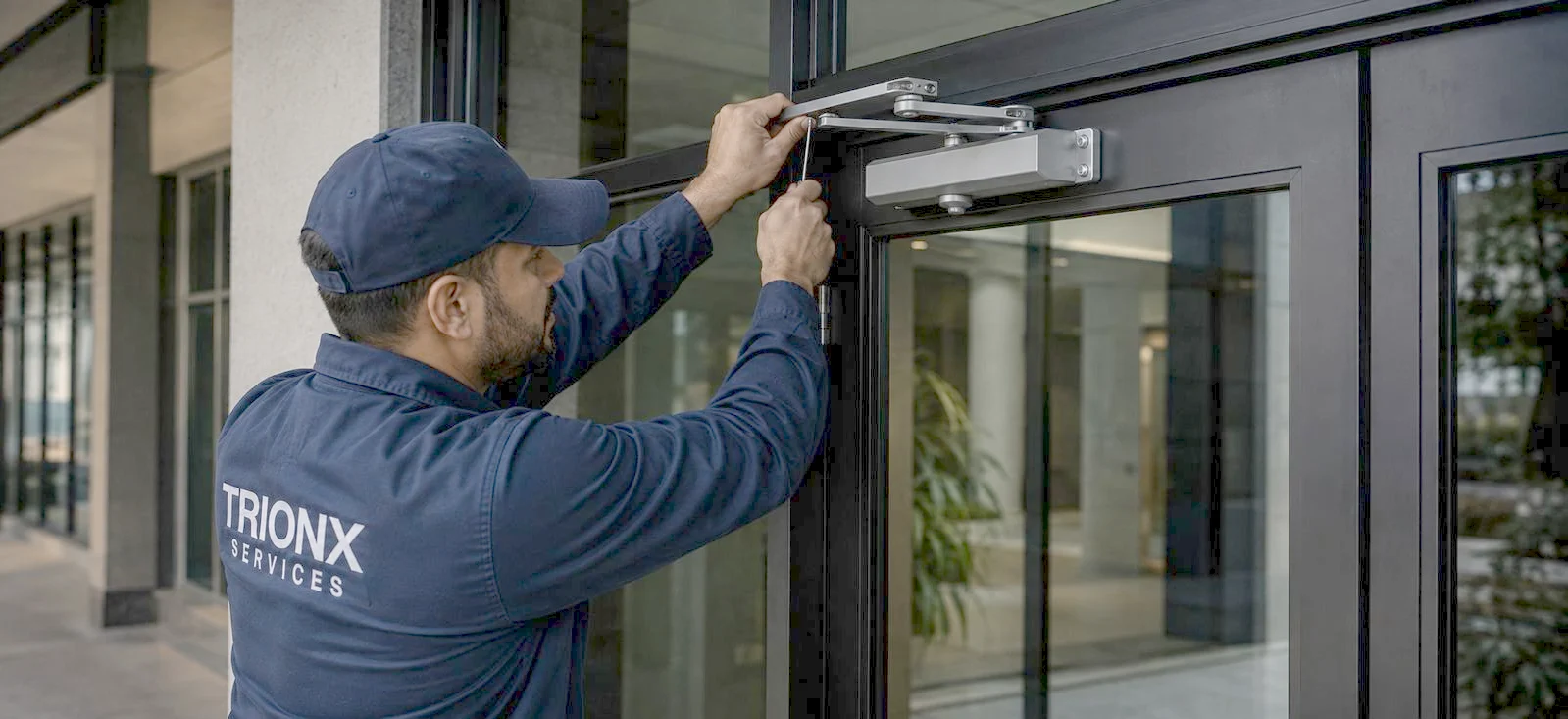
Stuck open and stuck closed are different emergencies, and the first thing to do in both is stop pressing the button.
Replacing a stained ceiling tile takes two minutes and hides the only evidence of where the water came from.
A door that will not lock is an open building, whatever the alarm says. Here is what to check before you call, and what it almost always turns out to be.
A commercial lockout is a different job from a domestic one, mostly because of who is allowed to authorize it.
A door that swings most of the way shut and then stops is not almost closed. It is open, and on a rated assembly it has lost its rating.
An access reader that has stopped responding is a door nobody can use, and how you handle the next hour depends on which way the lock fails.
A key that has snapped off in the cylinder is usually recoverable. The next ten minutes decide whether it stays that way.
A powered door that has stopped is two problems at once: an opening that does not work, and an accessible entrance that may no longer be one.
An exit device that needs a second push, a twist or a shove has already failed the only test that matters.
A fair share of no-cooling calls turn out to be something the site could have settled in five minutes. The rest go considerably faster when the right information is ready before the phone rings.
Broken storefront glass is two jobs on two different clocks. One of them has to happen today and the other should not be rushed.
For the reader holding a report with a correction date on it, and for the one getting ready. 17 articles
A backflow notice asks you to prove that a device on your water line still works. The test is routine, and a failure is usually a repair rather than an emergency.

A lapsed certificate does not stop a vendor working. It stops you being able to show they were covered, and the gap usually surfaces on the day something goes wrong.
A vendor's paperwork describes the company. Your tenants and your insurer care about the person who walks through the door, and the two are not the same document.
A fire inspection report is a list with a date attached, and the order you work through it matters nearly as much as the work.
A notice of violation is a maintenance job with an administrative process around it, and the process is the half people underestimate.
Measure the door before you assume anything about it, because the reading decides whether this is an adjustment or a new opening.
A good share of a kitchen inspection report is building fabric rather than procedure, and those items are fixed rather than trained.
Emergency lighting fails quietly, because nothing about a unit that is not working looks different from one that is.

A loss control report reads like advice and behaves like a deadline, and the difference is in which items are written as conditions.
The question is which trade the work falls in, and the size of the job has nothing to do with the answer.
A fire door only works if it closes and latches by itself, every time. Almost everything that gets written up is a door that no longer does.
The most expensive misunderstanding in commercial maintenance is the belief that small electrical jobs are exempt. There is no size threshold. There never was.
An inspector does not look at an exit device. They walk up to it, push it the way somebody leaving in a hurry would, and watch what happens.
A door that takes real effort to open is an accessibility problem before it is a maintenance one, and the usual cause is somebody trying to fix a different fault.
Repairing an existing opening and replacing a storefront look similar from the sidewalk. One is maintenance and the other is permitted construction, and the boundary matters.
Most kitchens keep a temperature log because somebody will ask to see it. Kept properly, it is also the earliest warning you will get that a compressor is in trouble.
A grease trap is the cheapest piece of equipment in a commercial kitchen and the one most likely to close it for a day.
The situations that produce a list: a new building, a vacant unit, a tenant leaving, a season. 25 articles
Every request sounds urgent to the person making it. A fixed rule, based on risk to people, security, water and the building, lets you decide the same way every time.
Closers wear out slowly and fail on the worst day. A yearly pass over every door finds the weak ones while they are still a small job.
Arrange board-up while the weather is quiet. Once a storm is named, every glass-fronted building in the county is looking for the same vendor.
Once a year, compare what your records say about keys and codes with what is actually out there. The two rarely match the first time.
Heavier foot traffic and longer trading hours find every weak point at the entrance. One planned pass now finds those faults before the busiest weeks, when a repair is hardest to fit in.
A building that came through the season without an obvious loss has still been soaked and pushed hard by wind, and the damage that results shows up months later as a leak.
Glass gets attention when it cracks. A walk round once a year finds most of what would have cracked it.
Making good means returning the unit in the condition the lease describes, fair wear aside, and the landlord will check it against a list you have not seen.
Most shutters and gates are looked at once, on the day they fail. A scheduled service finds the faults while they are still small, before they close the opening on a working day.
A building that has been shut is not the building you left, and most of what changed is invisible until something is switched on.
An empty unit deteriorates faster than an occupied one, and almost all of it is preventable by turning up.
The cheapest changes to a restaurant space are the ones agreed before signing, and the expensive ones are all in the same three places.
Shutters get tested when a storm is named, which is the one moment there is no time to fix what the test finds.
The week before a tenant leaves is the only time you can establish what the space was handed back in, and it does not come round again.
Everything wrong with a building you have just taken on becomes yours the moment something proves it, so it is worth finding out first.
Most storm damage on commercial property starts with something that was already loose, already blocked or already failing before the season began.
A restaurant that only fixes what breaks pays the emergency rate every time. The alternative is a calendar, and in Miami the calendar is shaped by the weather.
Most overnight incidents at a retail unit trace back to something that was already wrong at closing time and nobody was looking for.
Almost every repair argument in a condo building is presented as a disagreement about the documents. Most of them are a disagreement about what actually failed.
A departure is the moment a key register either earns its cost or reveals that nobody has kept one.
Most emergency call-outs were visible for weeks. The walk that would have caught them takes about ninety minutes and almost nobody does it.
The gap between one tenant leaving and the next arriving is the only window you get. Everything not fixed in it gets fixed later, at a worse price, around somebody trading.
Almost every property has a maintenance schedule somewhere. The useful question is whether anyone has looked at it since the year it was written.
Most landlord and tenant repair disputes are not really disagreements about the lease. They are disagreements about what actually failed.
Almost everything that goes wrong on a commercial roof during a storm was visible on the roof in May.
What goes wrong in one sector rather than another, and what the operator can do about it. 10 articles
The changing rooms age the building faster than the gym floor does.
The holidays are the maintenance window, and everything that needs one has to be booked against it.
Almost nothing in a branch should be happening at a public counter, which decides the whole schedule.
Handling hundreds of latches one complaint at a time costs far more in attendances than it does in work.
The room is part of what the client is paying for, which makes a damaged finish a trading problem.

Guest rooms get the attention and the service corridor does the work.
Nothing in an office is damaged by one move. It is damaged by the fourth.
A damaged surface in a clinical room is a finding rather than a decorating job.
A cabinet door that no longer seals costs more over a year than the repair ever would.
The showroom is judged on presentation and the workshop behind it is judged on whether the doors still work.
What to ask, what an invoice should say, and what to get back when a relationship ends. 15 articles
Pick a commercial locksmith before you need one. Whoever you call from a search result at night will hold your keys, your key codes and a way into the building.
A rekey changes which keys open your doors. It also decides who can cut more of them afterward, and that part is settled before the work starts.
A vendor with standing access holds a copy of your building, so the rules go in before the first key or code changes hands.

When two quotes for one repair disagree, the difference is almost always in what each vendor decided to include, and the work is finding that out.
Plenty of properties are better off calling when something breaks, and a vendor who tells you otherwise is selling.
Before deciding a vendor has stopped caring, find out whether the work orders are actually reaching a person.
The expensive part of changing vendors is not the work, it is everything the outgoing one knows about your building.
Most commercial door faults get booked as lock problems, and a good share of them turn out to be the door.
Vendor onboarding is treated as paperwork. Every document in the packet exists because somebody once got hurt or unpaid without it.
Emergency rates look arbitrary until you see what they are made of. Agreeing the structure in advance is what stops the first invoice being an argument.
A punch list that cannot be priced from the page turns into a survey visit, then a quote, then a work visit. Three attendances for a list that should have taken one.
The certificate of insurance is the piece of paper that decides whether your contractor gets through the loading dock. It is worth understanding before the morning of the job.

Most maintenance disputes are not disagreements about facts. They are disagreements that exist only because nobody wrote the facts down.
Most disputes over maintenance invoices are not about dishonesty. They are about an invoice that never explained what the money bought.
The vendor comparison that matters is not the hourly rate. It is what happens on the third call, when the first two did not fix it.
The background pieces, for when you want to understand the thing rather than fix it tonight. 34 articles
Two locksets of the same grade can behave in opposite ways. The function decides which side locks and what the inside lever does.
A stall door that swings open, will not lock or sags into the next stall draws complaints faster than almost anything else in a public restroom. Most of the time the panel is fine and the hardware has worn out.
Restriping a lot to the layout it already has is painting work. Changing the layout is a compliance question, and the two are easy to confuse once a complaint arrives.
Almost everything that falls off a commercial wall was fixed to drywall and nothing else.
Most visible patches are not badly filled. They are finished to a lower standard than the wall around them.
A replacement tile that is the right size and the wrong edge detail will not sit flat, and everybody will see it.
A frame takes the impact the door is blamed for, and it is the half nobody looks at.
The painting is the easy part. Working around a business that cannot stop is the job.
The color can be exactly right and the patch still obvious, because the wall is not reflecting light the same way.
A rekey changes what the lock answers to. The lock itself usually stays on the door.
A lock that looks identical to the one next to it can be rated for thirty times the use.
Three small valves control almost everything a closer does, and turning the wrong one is how a door stops latching.
Kneel at a back door and look for daylight. Whatever you can see through, something else can get through.
Re-glazing puts new glass into the frame that is already there, and that distinction decides both the price and the paperwork.
Condensation on the inside face wipes off. Condensation between the panes does not, and that difference is the whole diagnosis.
The frame decides this more often than the door does, and it is the half nobody looks at.
A sign is the one part of a building that is looked at by everybody and maintained by nobody.

A distribution building fails at its openings. Everything else can wait a day. A dock that will not open cannot.
Lighting is the one trade where the licensing line runs through the middle of a single job, and both halves can happen on the same fixture in one visit.
The question is rarely which technology is best. It is which one you can still administer in two years, when the person who set it up has left.
Every electrically controlled door has a defined behavior when the power goes. Most people managing those doors have never been told which behavior theirs has.
Sealant is the cheapest component in a building envelope and the first one to fail. Almost nobody has it on a schedule, and almost every water problem we trace comes back to one.
Almost every water-damaged wall we are called back to was patched while it was still wet. The repair was fine. The timing was the problem.
Pressure washing is the cheapest visible improvement available on a commercial property, and the easiest way to cause damage that costs many times what the clean did.
A door that scrapes the frame, sticks at the top corner or has stopped latching is rarely a broken door. It has moved, and something moved it.
The three terms get used as though they are interchangeable. They describe different things, and putting the wrong one in an opening is expensive to discover.
A tenant hands the keys back and you have a decision to make the same week. The two options differ by an order of magnitude in cost, and picking the wrong one either wastes money or leaves the unit open to whoever kept a copy.
Commercial entrance doors rarely fail all at once. The closer goes first, it goes slowly, and every stage of it looks like something a tenant can live with until the door stops latching.
Master key systems are easy to design and easy to ruin. The design takes an afternoon. Keeping it intact takes a register and the discipline to use it.
Coating manufacturers quote service life for a temperate climate. Miami gives a facade ultraviolet all year, driving rain for half of it, and salt on any property within a few miles of the water.
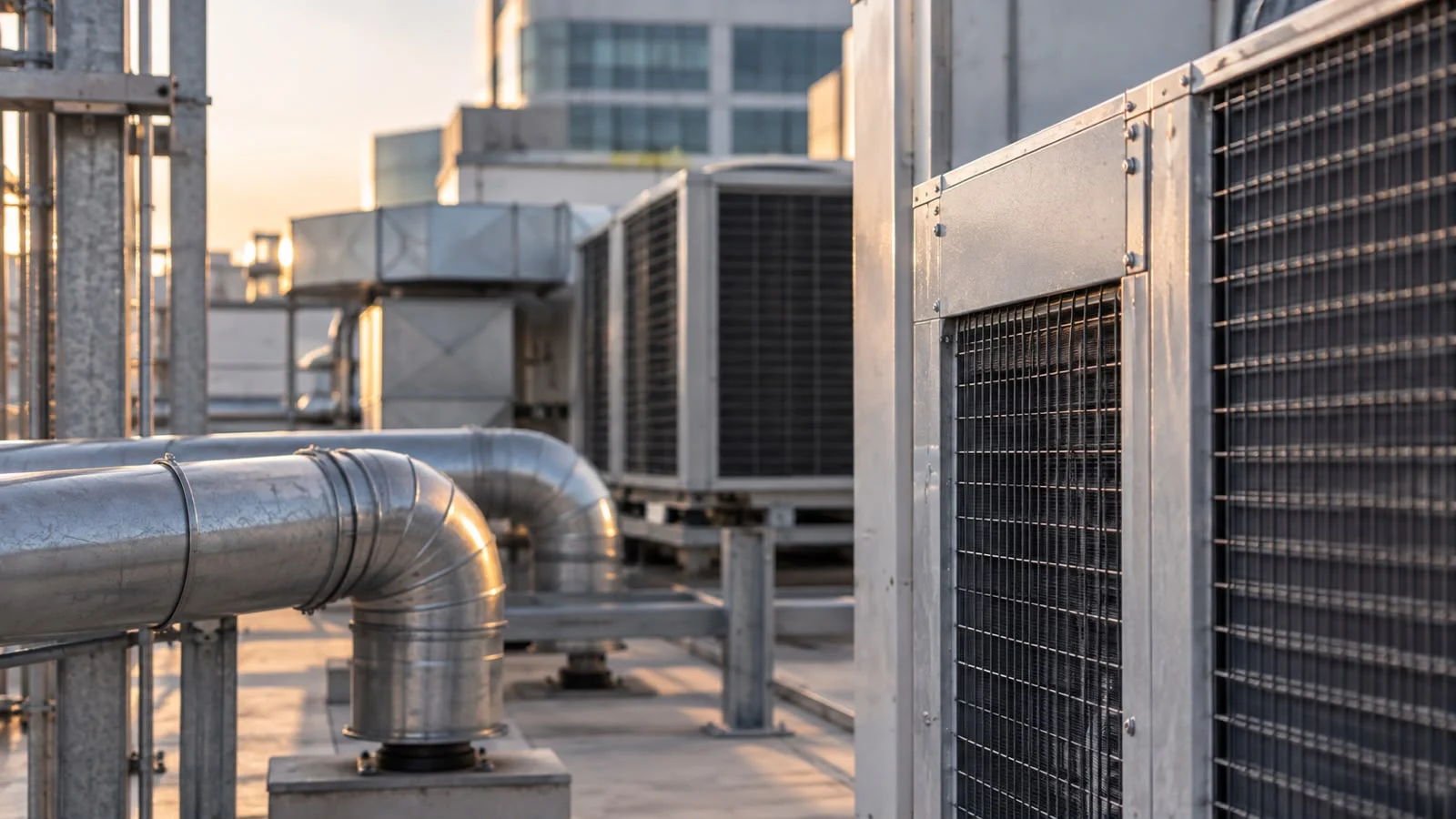
Storm damage to rooftop HVAC is rarely dramatic. It is water where water should not be, debris in a condenser, and a unit that runs for three more weeks before it stops.
Refrigeration almost never dies without warning. It declines over weeks, and every one of those weeks is a chance to fix something cheap instead of something expensive.
Every LED quote arrives with a payback figure on it. The number is only worth anything if it was calculated from your run hours and your electricity rate rather than from a brochure.
A kitchen exhaust hood removes thousands of cubic feet of air a minute. If nothing is deliberately putting that air back, the building will find its own way, and you will not like it.
Our technicians handle the trades that need no state license, and licensed contractors handle the ones that do. Either way we scope it, book the visit and file the record. Tell us the property and the problem and we will come back with a window. Call out of hours and someone who works here answers.