
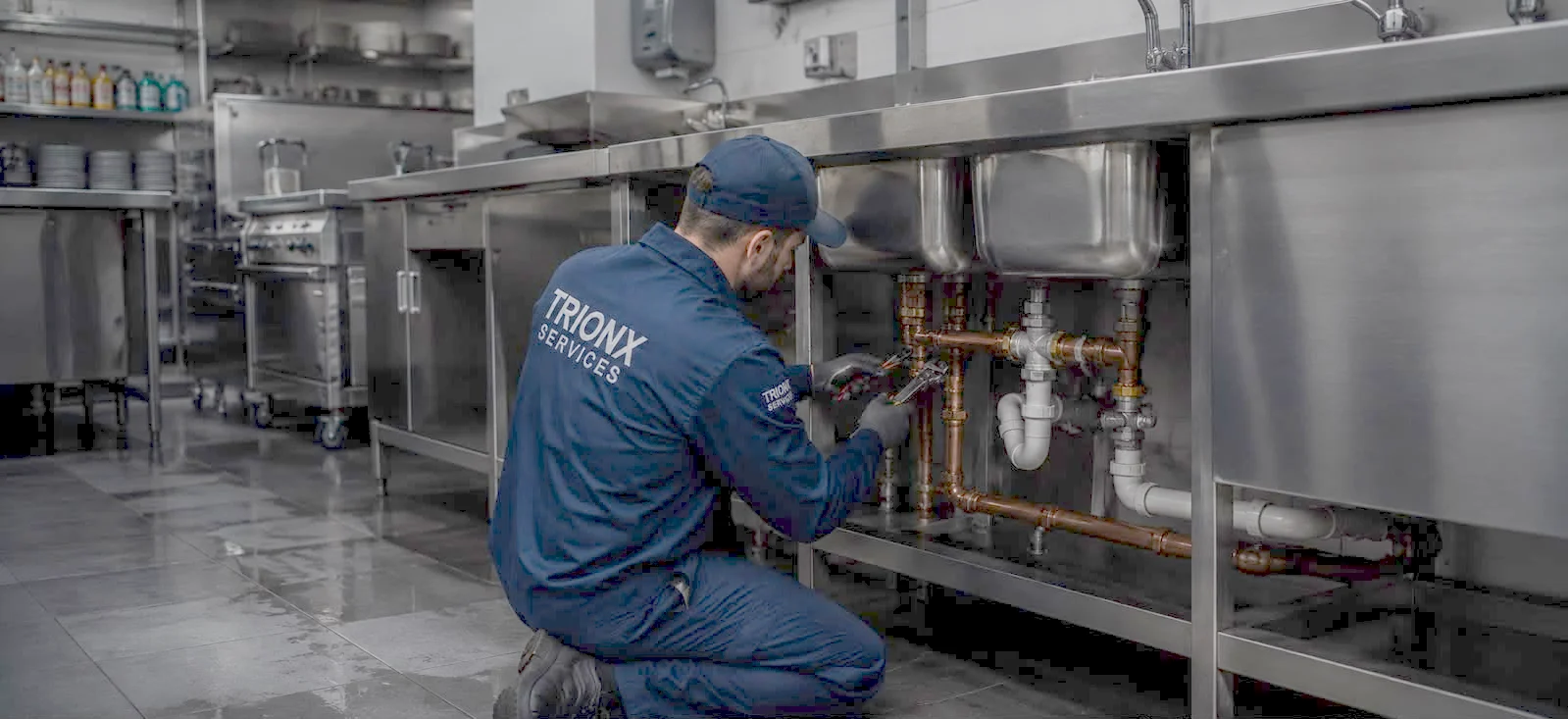
Plumbing
A commercial drain or toilet is backing up
Whether one fixture is blocked or the whole line is backing up is the first thing to establish, and it changes everything that follows.
Stop running water into it. Every fixture on that line, not only the one that is backing up. Then close the area off, because waste water on a floor is a slip hazard and a contamination one at the same time.
Once nothing is discharging, you can find out what you are dealing with in about a minute.
The test that decides everything
Run water at a different fixture on the same line and watch the blocked one. A sink that discharges and makes the toilet gurgle, bubble or rise tells you the blockage is downstream of both. That is a main line problem and it affects everything connected above it.
If the blocked fixture is the only one affected and everything else drains normally, the blockage is local to that fixture and the rest of the building is fine.
This matters because the two are handled completely differently, and because a main line backing up in a restaurant or a multi-tenant building can put waste into somebody else's space while you are still deciding what to do.
What not to put down it
Caustic drain cleaner is the reflex and it is worth resisting. It does little against grease or solids, it will sit in a line that is already blocked rather than reaching the obstruction, and it damages some pipe materials. It also leaves a chemical hazard for whoever opens that line later, so tell the plumber if any has gone down.
Avoid plunging a toilet that is already at the rim, because the only place the contents can go is the floor. Avoid running a hose down an outside cleanout to flush it through, which frequently backs up into the lowest fixture in the building instead.
What causes it in commercial buildings
In kitchens it is grease more often than anything else, and it accumulates over months in the horizontal runs rather than arriving overnight. A trap that is undersized for the volume or on too long a service interval produces exactly this. Our article on grease trap requirements in Miami-Dade covers the interval and the manifests you have to keep.
In public restrooms it is usually what has been put down the pan, and paper towels are the common one. In older buildings it is root intrusion, a collapsed section, or a run that has lost its fall over time. Any drain that has needed clearing more than once in a year is telling you the cause is structural rather than a one-off.
What to record
Note which fixtures are affected and which are not, the time it started, and whether anything unusual has been going down the line. Photograph any overflow before it is cleaned up.
In a leased unit that record decides who pays for the clean-up and the repair, and the answer usually turns on whether the blockage was inside the demise or in the shared line. Our article on repair responsibility in a multi-tenant building covers the usual split.
Who is allowed to do it
Plumbing work in Florida requires a licensed plumbing contractor, and that holds at any job size. Clearing a line, jetting it, camera surveying it, repairing or replacing piping, and anything involving the fixtures where lines are made and broken all sit on that side.
TrionX coordinates that work and documents it, which means one company is accountable for getting a licensed contractor there, for what they found, and for the record of it afterward. The clean-up, the floor, the making good and any door, hardware or finish damage on the way in are performed directly by our technicians.
When it cannot wait
A main line backing up does not wait. Nothing on that line can be used, the volume is not under your control, and in a shared building it can become somebody else's problem quickly.
Waste water reaching a food preparation area, a public space, or another tenant's demise is the same answer for the same reason.
A single blocked fixture in a building with others available can usually be isolated, signed and scheduled. Take it out of service properly rather than leaving it to be discovered, because a fixture that half works gets used and then it is not a single fixture any more.
Common questions
Questions we get asked about this
Can I pour drain cleaner down it?
It is worth avoiding. Caustic cleaner sitting in a line that is already blocked does little to grease or solids, damages some pipe materials, and leaves a hazard for whoever opens the line afterward. Tell the plumber if any has gone down, because it changes how they work.
How do I tell a local blockage from a main line problem?
Run water at a different fixture on the same line and watch the blocked one. If a sink discharging makes the toilet gurgle or rise, the blockage is downstream of both and it is a main line. If only one fixture is affected, it is local to that fixture.
Is a blocked drain really licensed work?
Clearing and repairing drainage is plumbing, and Florida requires a licensed plumbing contractor for it regardless of how small the job looks. There is no minor-scale exception. TrionX coordinates and documents that work rather than performing it.
Our grease trap was serviced recently. Could it still be the cause?
Yes. A trap that has been pumped can still be the cause if the line into it or out of it has narrowed, or if the service interval is too long for the volume. Keep the manifests, because that is what an inspector asks for.
Keep reading
Related field notes

One company, whoever does the work
Our technicians handle the trades that need no state license, and licensed contractors handle the ones that do. Either way we scope it, book the visit and file the record. Tell us the property and the problem and we will come back with a window. Call out of hours and someone who works here answers.