

Plumbing
Grease traps in a Miami commercial kitchen: what fails and why
A grease trap is the cheapest piece of equipment in a commercial kitchen and the one most likely to close it for a day.
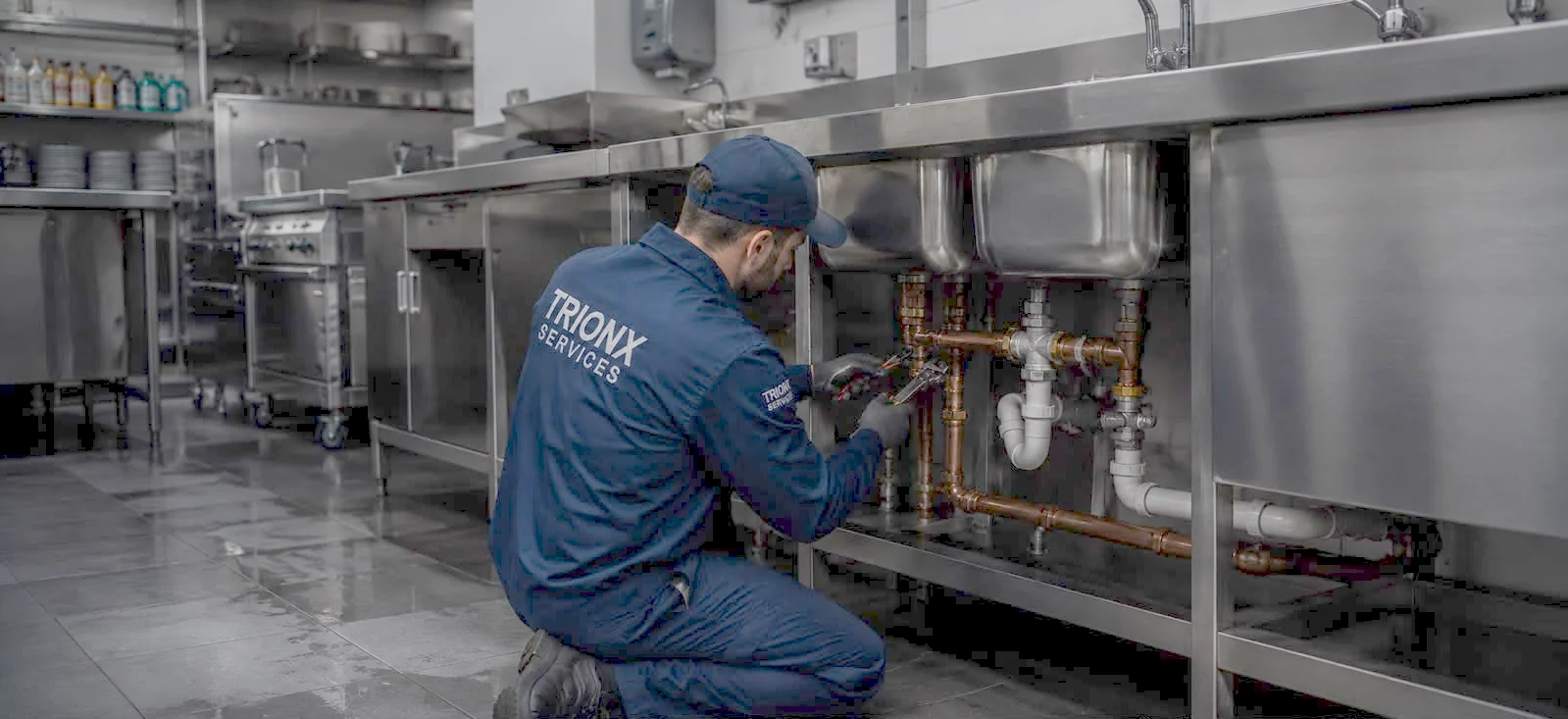
Grease interception is not interesting, which is exactly why it causes so much trouble. It sits under a sink or outside in the ground, nobody looks at it, and the first sign that anything is wrong is usually a floor drain backing up in the middle of service.
The underlying idea is simple. Fats, oils and grease leave a commercial kitchen as warm liquid and arrive in the drain line as a cooling solid. A grease trap slows the flow long enough for that material to separate out and be held, so the drainage carries water rather than a substance that will eventually line the pipe and close it.
What is actually required
Food service establishments are generally required to have grease interception sized for the operation, and to have it serviced and documented on a schedule. The specific device, its sizing method and the pump-out frequency are set by local plumbing code and by the sewer authority, which in Miami-Dade means requirements can differ between municipalities and can change.
Treat the details as something to confirm with your local authority rather than something to assume from a previous property. One thing holds everywhere: you are expected to keep records of servicing, and those records are checked.
Where sizing goes wrong
The most common problem we find is a trap sized for a business that no longer exists. Interception gets specified during a build-out for the concept being built, and then the space changes hands. A cafe becomes a full kitchen. A bar adds a fryer. A restaurant that did forty covers a night starts doing a hundred and forty.
The trap does not change with any of that. It simply fills faster, holds less, and starts passing grease into the line it was installed to protect. The symptom is a pump-out schedule that no longer keeps up and a drain that blocks between services.
This is particularly common in converted buildings in Wynwood, where the underlying drainage was laid for a warehouse and the interception was retrofitted for whichever tenant came first. Getting the sizing right during a build-out is straightforward. Correcting it in a trading restaurant with a finished floor is not.
What a blocked grease line is telling you
A line that blocks once is an incident. A line that blocks repeatedly is a message, and it is usually one of four.
The trap is undersized or overdue. Grease is reaching the line because interception is not holding it. Check the service interval before anything else, then check the sizing.
The line was cleared rather than cleaned. A cabled auger will punch a hole through a grease blockage and restore flow, which looks like a fix. The walls of the pipe are still coated, the bore is still reduced, and it closes again within weeks. Hydro-jetting scours the pipe wall, which is what actually resets the line.
The pipe has a fault. A bellied run holding standing water, a displaced joint or a damaged section will collect grease at the same point every time regardless of how well the kitchen behaves. Only a camera inspection distinguishes this from the other causes, and it is worth doing after the second repeat rather than the fifth.
Kitchen practice. Hot water and detergent move grease past the trap in suspension and let it cool further down the line, which defeats the interception entirely. Dry-wiping pans before washing and scraping to a waste bin rather than a sink does more for a drainage system than most equipment upgrades.
Servicing, and the records that come with it
A proper service pumps the trap, removes the accumulated solids from the bottom rather than only skimming the grease from the top, inspects the baffles, and leaves a manifest documenting what was removed and where it went. That manifest is the record an inspector asks for.
Partial pump-outs are a real problem and hard to detect from the invoice alone. A trap that is skimmed rather than emptied will look serviced, cost the same, and be full again in half the time. If the interval between services has been shrinking without the kitchen getting busier, that is worth investigating.
The economics
Scheduled grease servicing is a predictable cost that sits comfortably in an operating budget. An emergency drain call during service is expensive, and the real damage is that it happens at the worst possible moment and can close the kitchen. When a health inspection follows a sewage backup, the day gets considerably worse.
The arithmetic here is about as clear as it gets in facility maintenance, which is why grease lines belong on the quarterly tier of a preventive maintenance schedule rather than in the reactive column.
Common questions
Questions we get asked about this
How often must a grease trap be cleaned in Miami-Dade?
Interval depends on the device size and the volume the kitchen produces, and the requirement is set locally rather than statewide. Confirm the schedule with your local authority. Servicing records are expected and are checked.
What happens when a grease trap is not maintained?
Grease carries past the device and hardens in the line, which produces backups into the kitchen, then into the dining room. The repair cost climbs sharply once the blockage is in the building drain rather than in the trap.
Does grease trap work need a licensed plumber?
Work on the drainage lines does. Plumbing requires a licensed contractor in Florida at any job size, so TrionX scopes the job, brings in a licensed plumber, and handles the scheduling, access and record afterward.
One company, whoever does the work
Our technicians handle the trades that need no state license, and licensed contractors handle the ones that do. Either way we scope it, book the visit and file the record. Tell us the property and the problem and we will come back with a window. Call out of hours and someone who works here answers.