
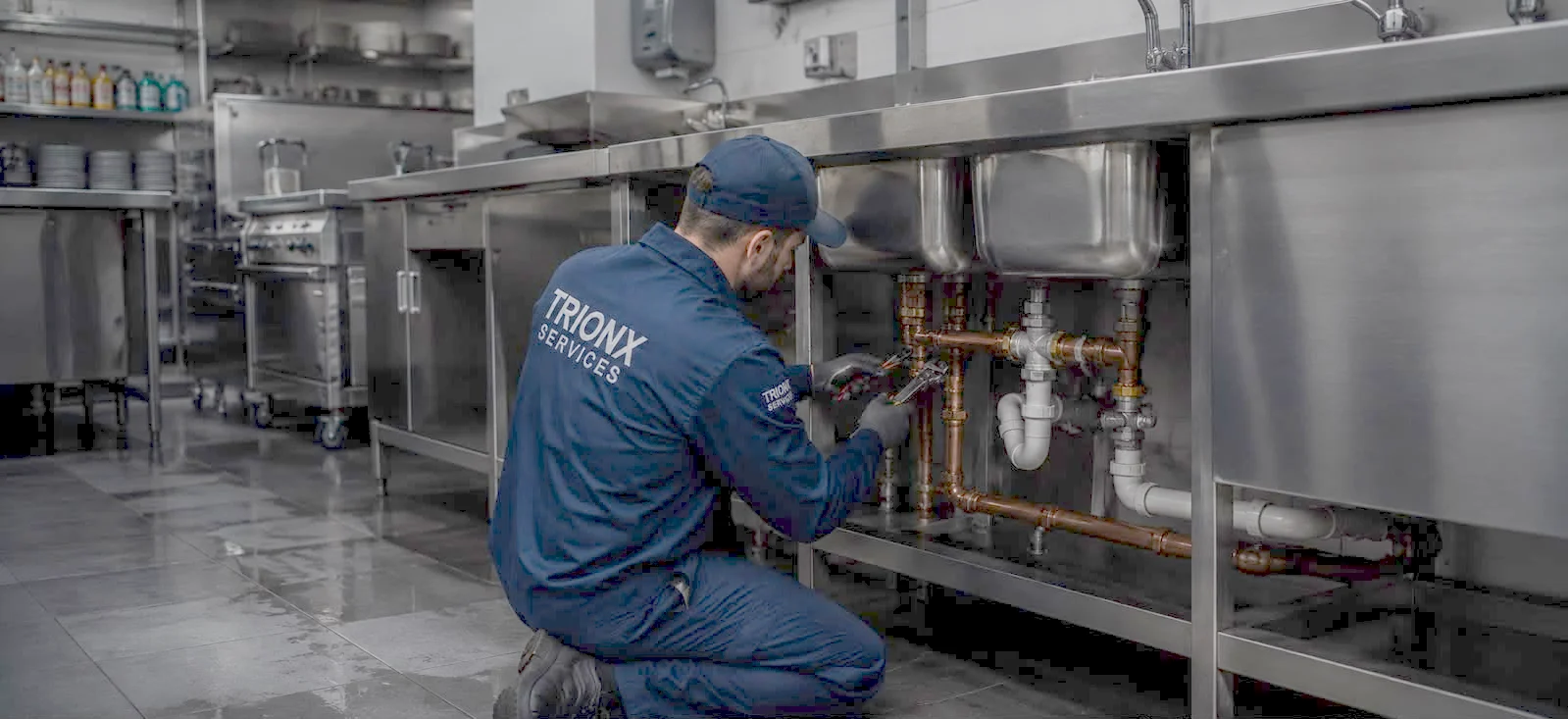
Plumbing
There is no hot water
Whether the hot water is gone everywhere or only at one fixture narrows this to a handful of causes in about two minutes.
Check a second and a third fixture before doing anything else, and note which have hot water and which do not. Then look at whether the water heater has power or gas.
Those two checks separate three completely different problems, and getting the wrong contractor to site is the usual cost of skipping them.
No hot water anywhere in the building
The heater or its supply. Find the unit and check the obvious first: has a breaker tripped, has a disconnect been switched off, has a gas supply been interrupted, is there a reset button that has operated.
Where a breaker has tripped, reset it once and note what happens. If it trips again, leave it off and label it, because that is a fault rather than a nuisance and it needs a licensed electrician. Our article on a circuit that has stopped working covers why the second trip matters.
Where the unit has power and the water is still cold, the likely causes are a failed element or thermostat on an electric heater, or a pilot, ignition or gas supply fault on a gas one. Both are licensed work and neither is a reset.
Hot water at some outlets and not others
The heater is probably fine and the problem is between it and the fixture.
Look for an isolation valve that has been closed, often after other work. A thermostatic mixing valve that has failed and is blending the hot away. A crossed connection where a recent fixture change has fed cold into a hot line, which shows up as one sink that never gets hot while everything else is normal. Scale or debris in a faucet aerator or a flexible connector, which affects a single outlet.
Note whether the affected fixtures share a run or a floor, because that narrows it further before anybody attends.
Hot water that runs out quickly
A different symptom with different causes, and worth separating from having none at all.
A storage heater that is undersized for how the building actually uses water, which frequently follows a change of tenant or a new piece of equipment. A failed lower element on an electric unit, which leaves the top of the tank hot and the rest cold. A thermostat set low. Sediment in the bottom of the tank reducing its usable volume, which is common in hard water and builds over years.
Note how long the hot water lasts and what was being used at the time. That figure is genuinely diagnostic and it is rarely on the call.
What to establish before you call
Which fixtures are affected and which are not. Whether the unit is electric or gas, and roughly how old it is from the nameplate. Whether anything has changed recently, including plumbing work, a new appliance or a new tenant. Whether the water is lukewarm rather than cold, which points somewhere different. Whether there is any water on the floor around the heater, which changes the urgency immediately.
A heater leaking from the tank rather than from a fitting is at the end of its life and it does not get repaired.
Who is allowed to do the work
Water heaters and the plumbing around them require a licensed plumbing contractor in Florida, and gas work and the electrical supply have their own licensing. None of that relaxes because the fault is small or the fix looks routine, which is the most common misunderstanding in this area. Our article on handyman or licensed contractor sets out how the trades are licensed here.
TrionX coordinates the right licensed contractor and documents the visit. Our own technicians handle the work around it: access, any door or hardware that has to come off, drywall, ceiling, painting and making good afterward.
When it cannot wait
Right away where hot water is a requirement rather than a convenience. Food operations and anything with a handwashing obligation fall here, and it is worth saying so on the call because it changes how the job is prioritized.
Immediately if there is water pooling around the unit, if a relief valve is discharging continuously, or if there is any smell of gas. A discharging relief valve is a fault and it is also quietly adding to your water bill.
An office where the hot faucet is a convenience can usually be scheduled, and batching it with other work is the cheaper answer.
Common questions
Questions we get asked about this
How do I tell whether it is the heater or the plumbing?
Check more than one fixture. No hot water anywhere points at the heater or its power or gas supply. Hot water at some outlets and not others points at distribution, a mixing valve or a fixture, and the heater is probably fine.
The heater has power but the water is cold.
On an electric unit that commonly means a failed element or thermostat, and on a gas unit a pilot, ignition or gas supply fault. Both are licensed work. It can also be a mixing valve that has failed and is blending the hot away before it reaches the faucet.
Is this urgent?
It depends on the building. A food operation or anything with a regulatory handwashing requirement can be stopped by it, which makes it urgent. An office where hot water is a convenience usually is not, though it is worth knowing which of the two you are before calling.
Can your technician relight the pilot or reset it?
Resetting a tripped breaker once and reporting what happened is reasonable. Anything on the appliance itself, its gas supply or its plumbing needs a licensed contractor in Florida at any job size, and we coordinate that rather than performing it.


One company, whoever does the work
Our technicians handle the trades that need no state license, and licensed contractors handle the ones that do. Either way we scope it, book the visit and file the record. Tell us the property and the problem and we will come back with a window. Call out of hours and someone who works here answers.