
Electrical
Part of the building has lost power
Whether the supply is out or the building is faulty is answerable from the sidewalk, and it decides who you should be calling.
Step outside and look at the buildings either side, and at the street lighting. If they are dark too, this is a utility outage and the electrical contractor cannot help you. If your neighbors are lit, the fault is on your side of the meter.
That takes thirty seconds and it decides who you should be calling.
Working out how far it spreads
Walk the affected area and note what is dead and what is not. Lighting out but outlets live, or the reverse, points at a single circuit rather than a supply problem, because lighting and small power are normally separated.
Check whether anything on the same area still works. One room dark in an otherwise normal building is a circuit. A whole floor is a distribution panel. The entire premises with the neighbors lit is the main supply into the building or the main switch.
Look for a tripped GFCI or RCD device, and look for it in the places nobody thinks of: a restroom, a cleaner's cupboard, an outside outlet, behind a counter. One tripped device can take down outlets several rooms away and the reset is on the device itself.
The breaker rule
Resetting a breaker once is reasonable and it will often be the end of it. Resetting one that trips again is not.
A breaker trips because it is protecting something, and the second trip is telling you the fault is still there. Holding it in, taping it, or working the handle repeatedly defeats the protection on a circuit that has already demonstrated a problem. This is the single most common dangerous thing done in commercial buildings during an outage, and it is done with good intentions every time.
A breaker that has tripped twice is a licensed electrician's job, and it stays off until they arrive.
What not to open
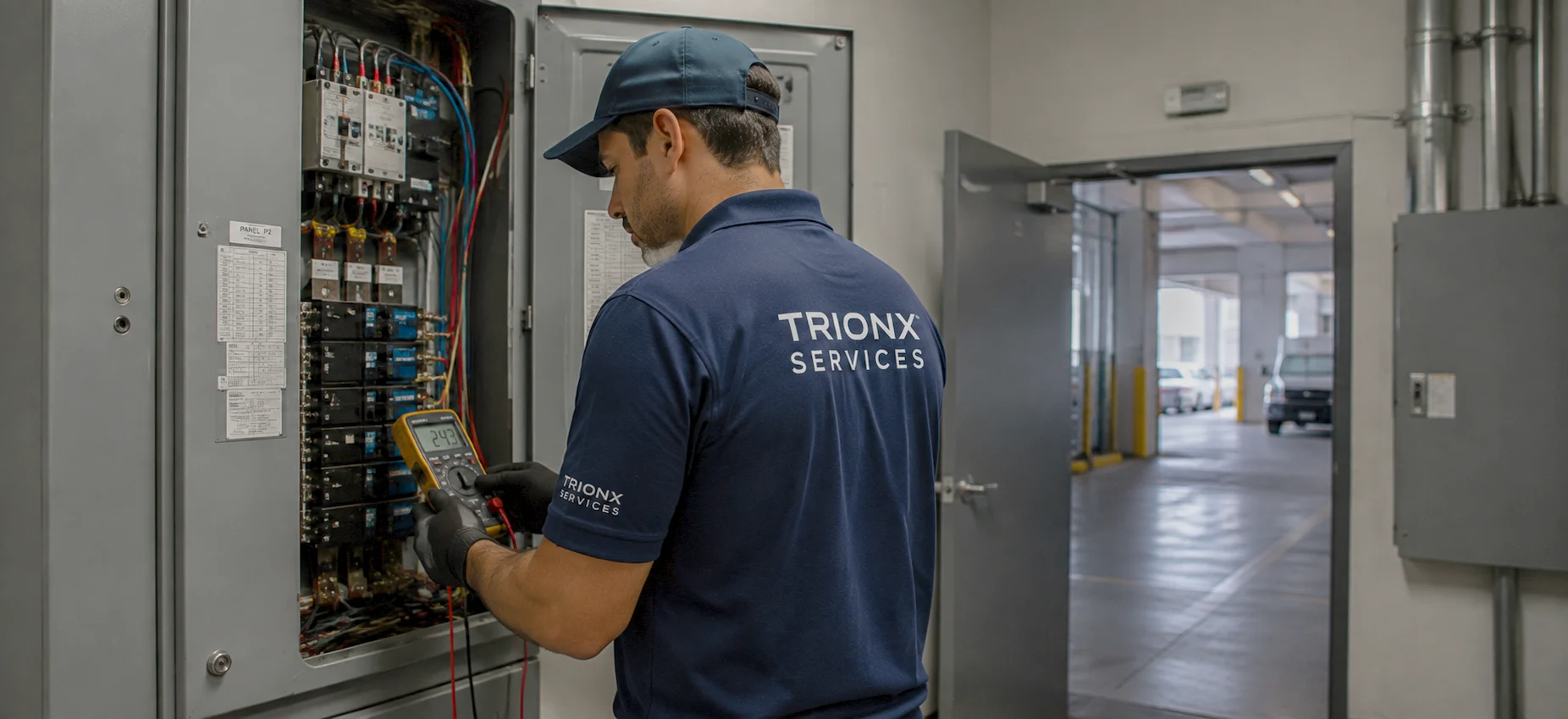
Do not open a distribution panel or a panel cover. There are live parts behind it that are not obvious and are not insulated, and opening the cover is qualified work regardless of what you intend to do once it is open.
Reading the labels on the outside of the board, noting which breaker has moved, and photographing it is all useful and all safe. That photograph genuinely shortens the visit.
What to note before the call
What went off, what stayed on, and what was running at the moment it happened. A circuit that trips when a specific piece of equipment starts is a much shorter diagnosis than one that went at random.
Whether it has happened before, and how recently. Whether there has been water anywhere near, which is worth saying plainly because it changes the risk. Whether any work has been done in the building lately, including work by another tenant.
Also note what the outage takes with it. Refrigeration, security systems, powered doors, access control and emergency lighting all run on this, and a power cut frequently arrives at us as three separate problems that turn out to be one. Our article on fail-safe and fail-secure locks covers what your doors do when the power goes, which is worth knowing before it happens rather than after.
Who is allowed to work on it
Electrical work in Florida requires a licensed electrical contractor and there is no minor-scale exception. Replacing an outlet, a switch, a fixture or a ceiling fan is licensed work. Tracing a fault, repairing a circuit, working in a panel and anything on the supply side all are too. Our article on when you need a licensed electrician in Florida sets out where the line falls in detail.
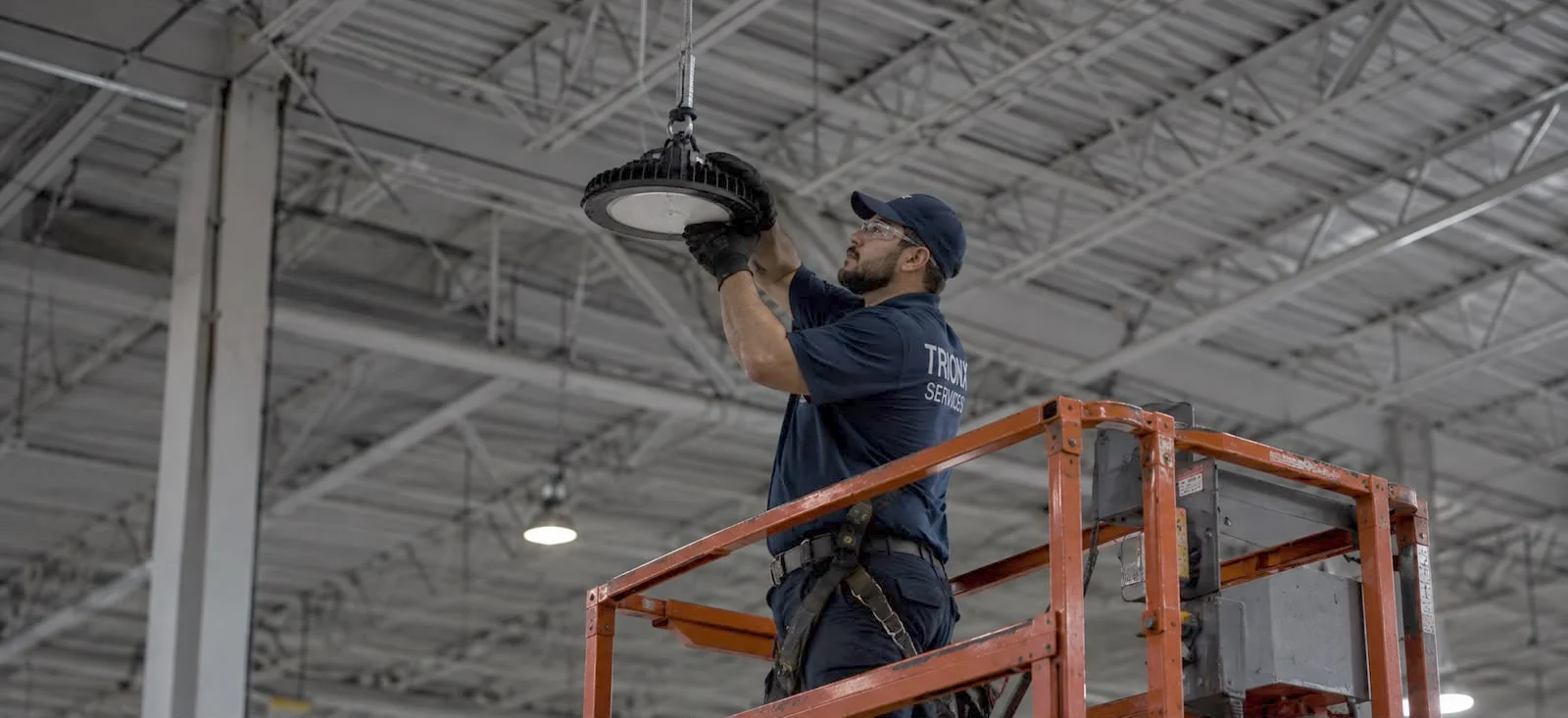
TrionX coordinates that contractor and documents the work. Our own technicians handle the part with no wiring involved: relamping a fixture, mounting equipment, and the making good afterward.
When it cannot wait
Call tonight if the outage has taken refrigeration, life safety systems or emergency lighting with it, if there is any smell of burning, if anything is warm to the touch at the board, or if there has been water near electrical equipment. A burning smell with no visible cause is the one people wait on and should not.
It can wait if a single circuit in an unoccupied area has tripped, stayed off, and nothing else depends on it. Leave it off, label it, and get it looked at properly rather than restoring it and hoping.
Common questions
Questions we get asked about this
Can I just reset the breaker?
Resetting a tripped breaker once is reasonable. Resetting one that trips again is not. The breaker is doing its job, and forcing it back repeatedly on a fault is how fires start. A breaker that has tripped twice needs a licensed electrician rather than a third attempt.
How do I know if it is the utility or the building?
Look outside. If neighboring premises and the street lighting are also out, it is the supply and the utility is the call. If the building next door is lit and yours is not, the fault is on your side of the meter.
Can TrionX do the electrical repair?
No, and that is deliberate. Florida requires a licensed electrical contractor for electrical work at any job size. We coordinate a licensed contractor, attend, and document the job. Relamping a fixture and mounting equipment with no wiring involved are ours.
Half the outlets in one area are dead but the lights work. Why?
Lighting and small power are usually on separate circuits, so losing one and keeping the other points at a single tripped circuit rather than a supply problem. A tripped GFCI device somewhere upstream is a frequent cause and it is often in another room.
Keep reading
Related field notes
One company, whoever does the work
Our technicians handle the trades that need no state license, and licensed contractors handle the ones that do. Either way we scope it, book the visit and file the record. Tell us the property and the problem and we will come back with a window. Call out of hours and someone who works here answers.