
Doors
The fire inspector wrote us up: closing the findings out
A fire inspection report is a list with a date attached, and the order you work through it matters nearly as much as the work.
Read the report before you price a single item. Separate the findings, which carry the correction date, from the recommendations, which do not. Then walk the building with the list in your hand rather than working from the summary.
A surprising share of a typical report can be closed the same afternoon for nothing, and knowing which items those are changes how the rest of it is scheduled.
The findings that come up again and again
Chains, padlocks, barrel bolts, slide bolts and bars added to exit doors. This is the single most recorded deficiency on commercial property and it is always added for a practical reason, usually that the door will not secure on its own overnight.
Fire doors wedged, propped or tied open. Doors that close but do not latch. Exit routes blocked by stock, bins, pallets or a parked vehicle. Damaged or missing intumescent and smoke seals. Holes drilled through a rated assembly for cables. Panic hardware that has been dogged down on a door where dogging is not permitted.
Almost all of that is hardware and housekeeping rather than construction. Most reports can be closed without anybody opening a wall.
The order to work through it
Start with everything that costs nothing. Remove the chains, the wedges and the padlocks, and clear the routes. That is often half the report and it is done in an afternoon. Photograph each one as you go, dated.
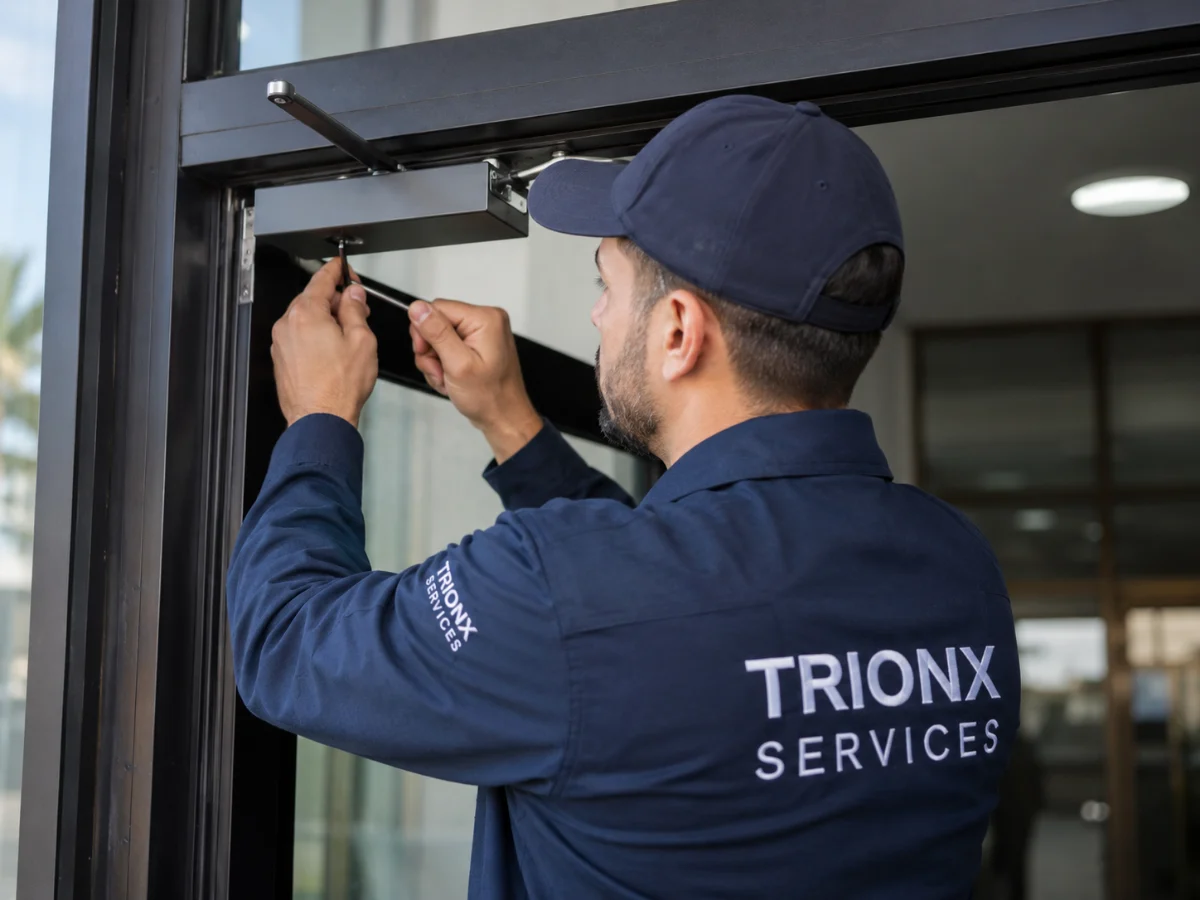
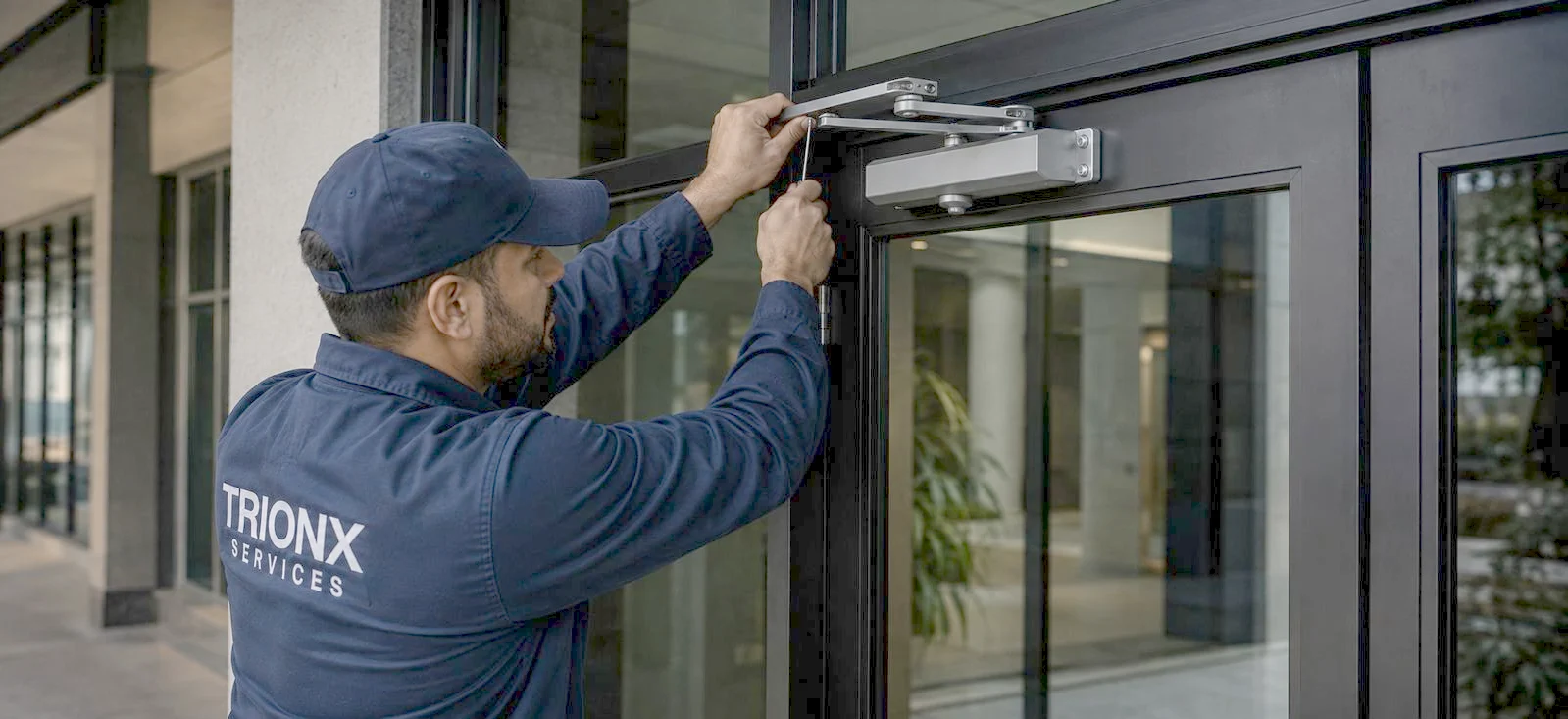
Next take the doors that do not close or do not latch, because they are the largest genuine group and they are usually adjustment rather than replacement. A dropped door, a closer that has lost its adjustment or a strike that has moved will all produce this. Our article on a door that will not close or latch covers the diagnosis, and door alignment covers what the repair involves.
Then exit devices. An exit device has to release in one motion, flat-handed, at walking pace, and a device that needs a second push has already failed the test an inspector applies.
Identify anything needing a rated component on day one, even though it is last to fit. Rated doors, frames, closers and exit devices are ordered rather than stocked, so the lead time should run alongside the rest of the work rather than starting after it. Getting this wrong is the usual reason a correction date is missed.
The reason behind the chain matters
Worth pausing on, because it decides whether the finding stays closed. A chained exit is nearly always a security response to a door that does not lock reliably, a strike that has worn, or a frame that has moved enough that the latch no longer seats.
Take the chain off and the building is compliant and less secure than it was yesterday, so somebody puts it back. Correct the locking fault at the same time and the chain has no reason to return. Both halves are the same visit, and treating them as one job is cheaper than treating them as two.
What the re-inspection looks at
The findings, in the order they were written. Turn up with the report annotated: what each item was, what was done about it, the date, and who did it. Keep product documentation for any rated component that was replaced, because on a rated assembly the part has to carry a rating as well as the door.
Being organized about this is the difference between one re-inspection and a second one. It also starts a maintenance record, and next year's inspection goes faster with one.
Who carries this out
Doors, hardware, closers, hinges, strikes, thresholds, exit devices, panic hardware and alignment are performed directly by our own technicians. None of it requires a Florida contractor license, and TrionX carries general liability and workers' compensation on that work.
Where a finding involves a rated assembly being replaced rather than repaired, or anything requiring a permit, that is coordinated through licensed contractors and documented alongside the rest. Findings that turn out to be electrical, such as emergency lighting, go the same way, because Florida requires a licensed contractor for electrical work at any job size.
When it cannot wait
Anything obstructing an exit while the building is occupied does not wait for a scheduled visit, and neither does an exit device that will not release. Those two are life safety rather than paperwork, and the correction date on the report is not the real deadline for them.
The rest can be planned properly inside the correction window, and planning it is better than reacting to it. Group the work so a technician is not attending four times, and start the ordered components first.
Common questions
Questions we get asked about this
What is the difference between a finding and a recommendation?
A finding is a deficiency the inspector requires corrected, and it carries the correction date. A recommendation is advice with no date attached. Both belong in the report and only one drives the re-inspection, so separate them before pricing anything.
Can we just take the chain off the exit door and be done?
Removing it closes the finding. It rarely closes the reason. Chains go on because a door does not secure reliably on its own, and unless the strike, latch or alignment fault behind that is corrected, the chain comes back before the next inspection.
Does a fire door have to latch, or only close?
It has to close and latch on its own from any position, without being pushed or pulled the last part of the way. A door that swings shut and rests against the frame has failed, and it is the finding recorded most often on commercial property.
Who confirms the work was done properly?
The re-inspection does. What helps is arriving with a dated record for each finding: what it was, what was done, and by whom. On rated assemblies keep the product documentation for anything replaced, because the component has to be rated as well as the door.
Keep reading
Related field notes
Panic hardware and exit devices: what an inspector checks
An exit door or panic bar that will not release
A commercial door that will not close or latch
An ADA complaint about a door: what actually has to change
Do I need a locksmith or a door company?

Warehouse dock doors, gate access and the loading yard
One company, whoever does the work
Our technicians handle the trades that need no state license, and licensed contractors handle the ones that do. Either way we scope it, book the visit and file the record. Tell us the property and the problem and we will come back with a window. Call out of hours and someone who works here answers.