
Doors
Do I need a locksmith or a door company?
Most commercial door faults get booked as lock problems, and a good share of them turn out to be the door.
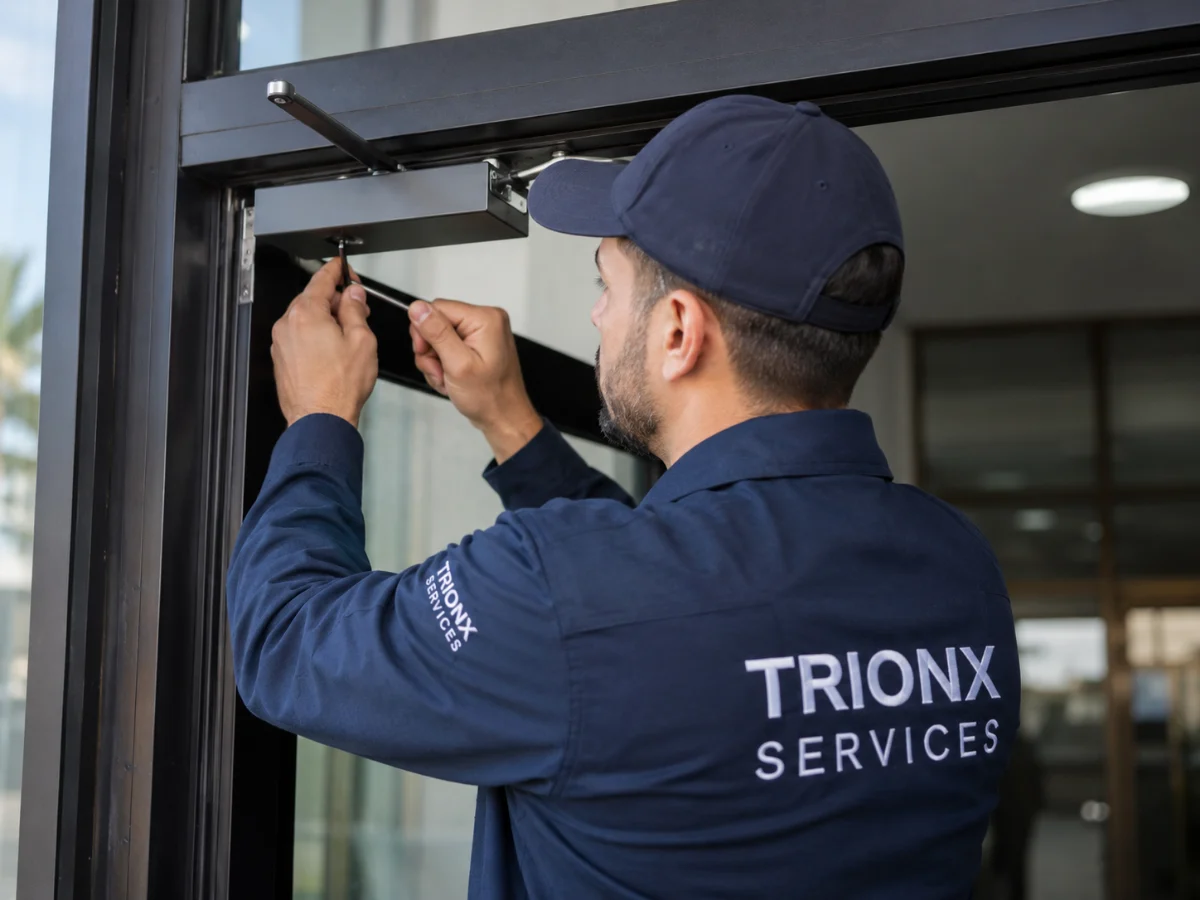
Open the door, hold it standing open, and work the lock. If the bolt or the latch throws smoothly in mid-air, the lock is working and the problem is the door, the frame or the strike. If it binds with nothing in its way, the fault is inside the lock.
That takes ten seconds and it is the single most useful thing you can establish before booking anybody.
Signs it is the door
The key turns but the bolt will not fully throw when the door is closed. You have to lift, pull or lean on the door to lock it. The latch catches on the edge of the strike rather than entering it cleanly. There is a visible gap at the top or the bottom of the door that was not there last year.
All of these are alignment. A door drops on its hinges over time, a frame moves, a closer loses its adjustment, and the hardware ends up fighting a few millimeters it was never designed to cover. Our article on commercial door alignment covers what actually moves and in what order it gets corrected.
Signs it is the lock
The key is stiff or catches at the same point every time, regardless of whether the door is open or closed. The cylinder turns but nothing happens. The handle has gone loose or has stopped returning. A keypad or reader has stopped responding while the mechanical side of the door is unchanged.
Wear inside a cylinder, a broken spring, a failed cam and a worn key are all genuine lock faults, and they are fixed by working on the lock.
Why it is often both
Here is the pattern that produces two visits and two invoices. A door drops slightly. The latch starts catching. People pull the door harder to make it lock. The extra force wears the cylinder and the latch faster than normal use ever would. Eventually the lock fails, so a locksmith is called and fits a new one.
The new lock works for a while, because it is new. Then the same misaligned door wears it the same way, and the fault comes back within a year looking exactly like a lock problem again.
Look at the door before deciding on the lock. The door open test is worth doing yourself.
What to check before you call anybody
Whether it affects one door or several. Several doors going the same way at once points at the building rather than the hardware, and building pressure is the usual culprit.
Whether anything changed. A new closer, a new floor covering, a door that has been forced, a frame that has been knocked by a cart. Recent work on a door explains a surprising number of faults.
Whether the strike plate shows a bright wear mark above or below the latch opening. That mark is the door telling you exactly how far out of position it is, and it saves a technician the diagnosis.
Whether the lock has been changed before, and by whom. A cylinder that does not match the others in the building, or a strike that has been enlarged with a file, tells you somebody has already worked around this rather than corrected it. Both are worth mentioning on the call, because they change what a technician expects to find behind the plate.
Who is allowed to do it
Locks, access control and door hardware are performed directly by our own technicians. None of it requires a Florida contractor license, which is why it can be handled in-house rather than passed on. TrionX carries general liability and workers' compensation on that work.
Anything on the electrical side of a powered door or an electrified lock is different. The supply, the control wiring and any fault traced back to a circuit are coordinated through licensed contractors, because Florida requires a license for electrical work at any job size.
When it cannot wait
A door on the perimeter that will not lock does not wait, whichever half turns out to be the cause. Neither does an exit device that will not release, because that is a life safety failure rather than a security one.
A door that is stiff, noisy, or needs a shoulder can be scheduled, and it is worth scheduling rather than living with. A door that needs force is wearing a lock down, and the repair gets more expensive the longer it goes on.
Common questions
Questions we get asked about this
How do I test whether it is the lock or the door?
Open the door and work the lock with the door standing open. If the bolt or latch throws smoothly in mid-air, the lock is fine and the problem is the door or the frame. If it binds with the door open, the fault is in the lock itself.
Why did the locksmith fix it and it came back?
Because the lock was the symptom. A dropped door, a frame that has moved or a closer that has weakened will wear out a new lock the same way it wore out the old one. Replacing the cylinder treats what you can see and leaves the cause in place.
Can one company do both?
It is the arrangement worth looking for. Locks and access control, and doors and hardware, are both performed directly by our own technicians, so one visit can adjust the door, correct the strike and change the lock without a second trade being booked.
What about an automatic door or an electric strike?
The mechanical hardware is door work. Anything on the wiring, the supply or the control circuit is electrical, and Florida requires a licensed electrical contractor for that at any job size. Most powered door problems are a mix of the two.
Keep reading
Related field notes
Why commercial doors drop, and what alignment actually involves

Rekey or replace: what to do with commercial locks after a tenant leaves
Annual door closer and hinge service for a building
Servicing roller shutters and gates before they stick
A restroom stall door will not latch or lock
Closing checklist for a retail storefront: locks, glass and lighting
One company, whoever does the work
Our technicians handle the trades that need no state license, and licensed contractors handle the ones that do. Either way we scope it, book the visit and file the record. Tell us the property and the problem and we will come back with a window. Call out of hours and someone who works here answers.