
Doors
A restroom stall door will not latch or lock
A stall door that swings open, will not lock or sags into the next stall draws complaints faster than almost anything else in a public restroom. Most of the time the panel is fine and the hardware has worn out.
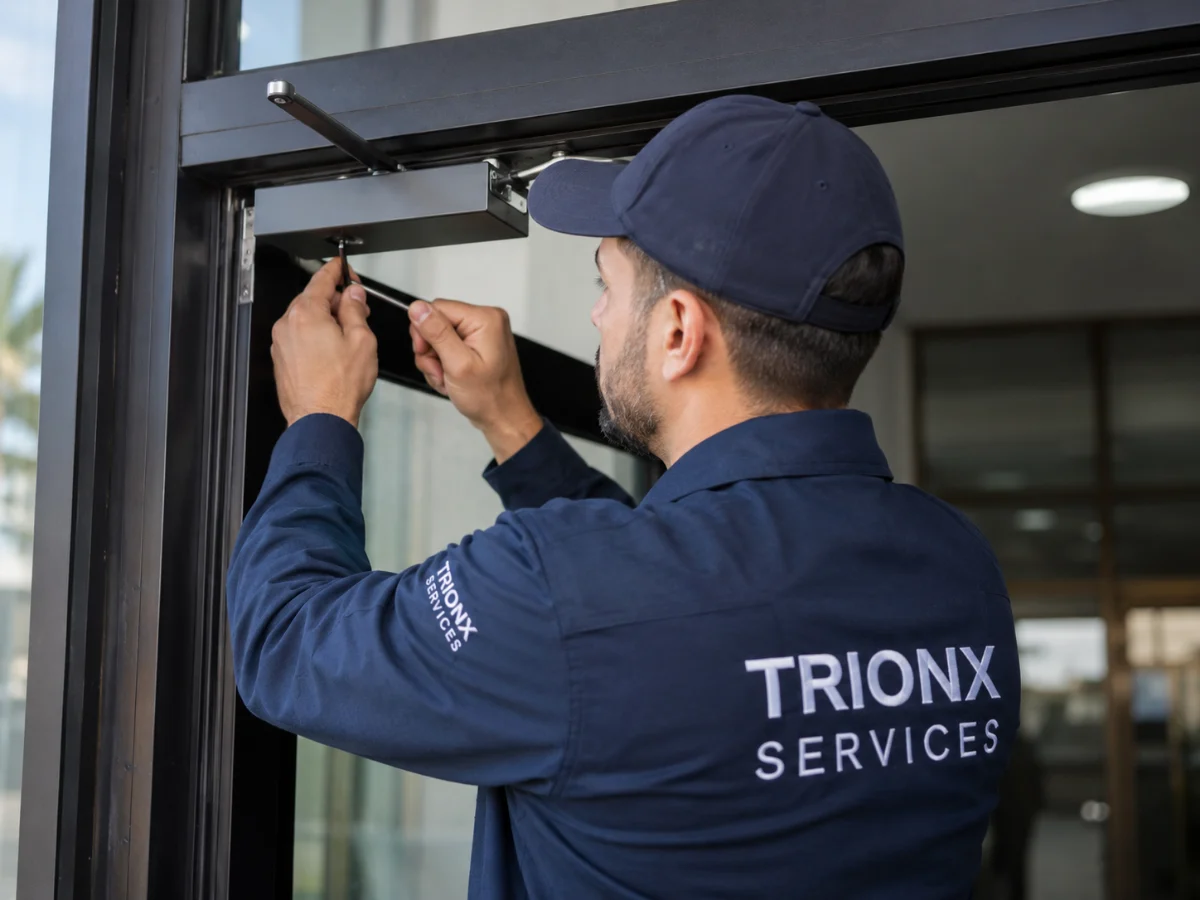
A stall door that will not latch is almost always a hardware problem on a panel that is still sound. The latch, the hinges and the bumper are the parts that take the daily abuse, and they wear out long before the panel does. A hardware swap on the existing partition usually fixes it.
The exception is a panel that has failed around its fasteners, where new hardware will not hold. The checks below tell the two cases apart in a few minutes, and the rest of this article covers what to do in each.
What wears on a toilet partition door
The hinges. Most stall doors hang on two or three light hinges, and many are built to swing closed on their own, using a cam or spring action in the hinge. Over time the cam wears, the screws work loose in the panel edge and the door sags. A door that sits low drags on the floor or misses its keeper.
The latch and slide bolt. This is the part users handle most, and the part they force. The bolt bends, the thumb turn loosens on its spindle and the bolt stops reaching the keeper. People also kick and shoulder these doors, which pulls the whole latch housing out of the panel.
The keeper. The keeper is a small bracket on the pilaster that the bolt slides into. Screws loosen in the pilaster, or the keeper gets bent back, and a latch that is perfectly good has nothing to catch.
The bumper. The bumper stops the door at the right point against the pilaster. When it goes missing, the door swings too far, the latch lands beside the keeper and the hinges take a hard knock on every closing.
Why partition hardware loosens so quickly
Partition panels are thin. Screws in a hollow or honeycomb core have little to bite into, so they loosen with every opening and eventually spin free. Restrooms are also damp, and moisture reaches the edge of the panel through the screw holes. In a Miami building with heavy use and constant humidity, hardware that was sound at the last walk can be loose at the next.
A loose screw is the early warning. Tightening it is a fair first move, but if it keeps coming loose, the hole is already enlarged and the fix has to change.
Checking the door before anyone is called
- Close the door slowly. Watch where the bolt meets the keeper. If it lands high, low or to one side, the door has dropped or the keeper has moved.
- Lift the door at the latch edge. If the fit improves, the hinges are worn or loose.
- Press on the hinge edge of the panel. Soft, crumbling or swollen material means the panel is failing around the fasteners.
- Look at the screw heads. Bright scoring, elongated holes or missing screws show where the fasteners have been pulled.
- Check the bumper. If it is gone, the latch will not line up however good the rest is.
When a hardware swap on the existing panel fixes it
If the panel is flat, solid and undamaged at its edges, new hardware goes straight onto it. That means a matching hinge set, a latch and keeper, and a new bumper. Partition hardware is made in common patterns, so the old fittings are measured and the cutouts checked before parts are ordered, and the new set is chosen to cover the existing holes where it can.
Where the holes are slightly enlarged, they can be filled and the fittings seated on through-bolts and barrel nuts rather than screws into the core. That holds far better in a hollow panel. It is a common repair, and it is worth asking for on any stall that has been fixed more than once.
The door should then close on its own, meet the keeper squarely and sit with an even gap to the pilaster. If the same fault comes back, it was probably something the swap could not reach. The wider logic is the same as on any other door, and the article on why a commercial door will not latch covers entrance and interior doors in more detail.
When the panel is the problem
Some panels are past hardware repair. Delaminated laminate, swollen particleboard cores, rusted steel at the hinge cutouts and cracked plastic around the latch all mean the material cannot hold a fastener. A new latch on a panel like that works for a few weeks and then loosens again.
At that point the choice is a replacement door panel, or in a restroom with several failing stalls, a conversation about the whole partition run. A technician can say which is the case at the visit, and the reasoning is the same as in the piece on repairing or replacing a commercial door: replace when the next repair would be the same as the last one.
The ADA points that apply to the latch
On an accessible stall, the latch has to be usable by someone with limited hand function. Under the 2010 ADA Standards it must be operable with one hand and without tight grasping, pinching or twisting of the wrist, and it has to sit within the allowed reach range above the floor. The accessible stall door also needs a pull on both faces near the latch.
Replacing a worn slide bolt with the same small thumb turn can keep an old compliance problem going. If a stall is being re-fitted anyway, the latch should be chosen with those points in mind. The same attention to operation applies to the restroom entrance door, where opening force is the usual failure, and the piece on ADA door opening force explains how that is measured.
Catching it before the complaints arrive
Stall hardware is cheap to keep up and slow to fail visibly. Checking every latch, hinge and bumper in each restroom on the regular walk finds the loose ones while tightening still works. A line for restrooms belongs on the quarterly property walk checklist, with stall doors tested by closing and latching each one.
Where this sits for us
Hardware swaps on existing partitions are performed by our own technicians, on our payroll and background checked. Hardware on an existing panel needs no Florida contractor license, and TrionX carries general liability and workers compensation. Each visit leaves photographs of what was found and what was fitted. If the real trouble turns out to be a fixture or supply line in the stall, that is plumbing, and a licensed contractor carries it out with TrionX coordinating and documenting it. Our work on doors and hardware covers the partition doors, the entrances and everything in between.
Common questions
Questions we get asked about this
Why will my restroom stall door not latch?
The usual cause is a door that has dropped on worn hinges, so the latch no longer reaches the keeper on the pilaster. Next most common are a bent or worn slide bolt, a keeper that has loosened or been knocked out of position, and a bumper that has gone, which lets the door swing past its stop.
Can the hardware be replaced without replacing the partition?
Often, yes. If the panel is solid and the existing screw holes and cutouts are sound, a matching latch, hinge set, keeper and bumper can go onto the existing panel. Hardware is made to fit common partition styles, and the old fittings are measured before anything is ordered.
What does the ADA say about a stall door latch?
The latch on an accessible stall has to be operable with one hand, without tight grasping, pinching or twisting of the wrist, and within the reach range set by the 2010 ADA Standards. The accessible stall door also needs a pull on both faces near the latch. A slide bolt that needs a pinch to turn is a common fault on older stalls.
When does the partition panel need replacing?
When the material has failed around the fasteners. Delaminated or swollen panels, rusted steel at the hinge cutouts, cracked plastic and screw holes that will not hold a fastener all mean new hardware will loosen again within weeks.
Does stall door repair need a licensed contractor in Florida?
Hardware on an existing partition does not. TrionX performs it with its own technicians and carries general liability and workers compensation. Anything involving plumbing fixtures in the stall is separate licensed work that TrionX coordinates.
Keep reading
Related field notes


One company, whoever does the work
Our technicians handle the trades that need no state license, and licensed contractors handle the ones that do. Either way we scope it, book the visit and file the record. Tell us the property and the problem and we will come back with a window. Call out of hours and someone who works here answers.