
Locks
Lock functions: which one each commercial door needs
Two locksets of the same grade can behave in opposite ways. The function decides which side locks and what the inside lever does.
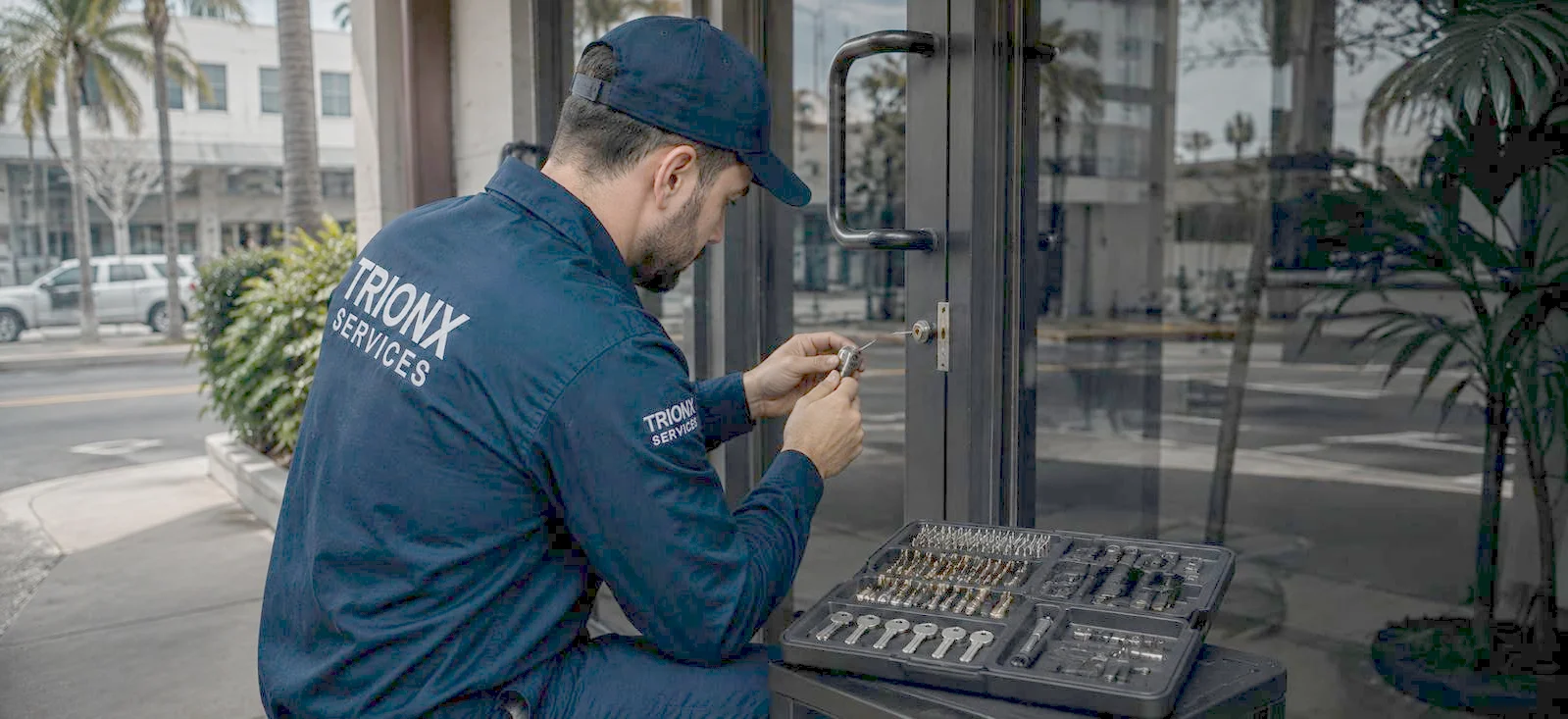
Every commercial lockset is made in a set of functions, and the function is what decides which side locks, what the key does, and whether the inside lever is ever held. Office, storeroom, classroom, entrance and privacy are the ones you meet most often, and each answers a different question about who needs to get in and who needs to get out.
Picking one is a matter of reading the door. Ask who is inside, who stands outside with a key, and what has to happen in an emergency. The answers point to one function, and the rest of this article walks through them so a schedule can be written for a whole suite or building.
Why function and grade get mixed up
Grade tells you how long the mechanism survives. Our article on what Grade 1, 2 and 3 mean covers that. Function sits beside it and says nothing about durability. A Grade 1 lever can be a storeroom lock or a passage latch with no lock at all, and from the shelf the two can look alike.
Manufacturers describe functions by name and by a standard designation, and the names are not perfectly consistent between brands. Reading the behavior rather than the name avoids most mistakes.
The common functions and what they do
Passage has no lock. Both levers always turn. It belongs on doors that only need to stay shut, such as an internal corridor door in a secured area.
Privacy locks from inside with a push button or turn, and a small tool or pin opens it from outside in an emergency. This is the restroom and changing room function. There is no key for ordinary use.
Office is the one most people picture. The outside lever can be locked with a key or by a button on the inside, and the inside lever always opens the door, releasing the lock as it does. It suits private offices, because the occupant decides whether the door is locked and nobody gets trapped by it.
Entrance is close to office, with one difference people notice. The inside lever stays free, but the outside is locked or unlocked by key, and the inside control is usually a thumbturn that holds the lock. It is common on suite entrances and tenant doors that need to be locked from either side.
Classroom locks and unlocks the outside by key only. The inside lever is always free. A person with a key can lock the room without going in, which is the purpose. Despite the name it is used well beyond schools: conference rooms, training rooms and any space where the person securing the door is outside it.
Storeroom keeps the outside locked all the time. Closing the door locks it, and only a key gets you in. The inside lever is free. It is the right function for electrical closets, supply rooms, server rooms and anything that should never be left open by accident.
Which doors have to allow free exit
A door on a route out of the building has to open from the inside in one motion, without a key, a tool or special knowledge. All the functions above satisfy this at the lever, which is why they dominate commercial specifications. A lock keyed on both sides, or a deadbolt with an inside thumbturn that must be turned before the lever works, does not belong on that kind of door.
Exit doors for larger rooms usually move up to push bars and exit devices rather than levers, which brings a separate set of checks. Our piece on panic hardware inspection lists what an inspector looks for on those.
Fire-rated doors add another requirement: the latch has to engage every time the door closes. A rated door propped open or held back with a wedge defeats the rating, and a lock function that depends on someone remembering to turn a button does the same in a quieter way. Storeroom and other self-latching functions fit rated doors well for that reason. The final requirement for any specific door sits with the local fire authority, so confirm it before a change.
Why a door locks from the wrong side
Most complaints come down to a function that does not match how the door is used. A few patterns repeat.
- A storeroom function on a door staff use all day. It locks every time it shuts, and people start propping it or carrying a key everywhere.
- An office function on a room where the person who locks it is outside. The button works only from the inside, so the room cannot be secured at night without a key and a deadbolt.
- A privacy function on a door that needs a key. There is nothing to rekey, and the emergency release becomes the only way in.
- A passage latch left on a door that was meant to lock, usually after a previous lock was swapped for whatever was on the truck.
Before replacing anything, check whether the existing chassis can be changed to another function. Many can, and the part number on the lock body tells you which.
Writing a function schedule
For a suite or a building, list every door and give it one line: door location, who uses it, which side needs a key, what the inside must do, whether it is rated or on an exit route, and the function that results. Add the grade in the next column. That gives the technician fitting the work something to follow and gives you a record when a tenant changes.
A typical starting point: private offices on office function, shared meeting rooms on classroom, supply and equipment rooms on storeroom, restrooms on privacy, suite entrances on entrance, and internal doors that only need to latch on passage. Doors that deviate from that deserve a note saying why.
If the building has several keys that open too many doors, the function schedule is also the right moment to look at the key plan. Our article on rekeying or replacing commercial locks explains when changing cylinders is enough and when the lock itself has to go.
Who carries this out
Specifying, supplying and fitting lock hardware, including function changes, is performed directly by our own technicians. None of it requires a Florida contractor license, and TrionX carries general liability and workers' compensation on that work.
Send us the door list or have a technician walk the suite, and the schedule comes back as a document you can keep. Details of what we fit are on our locks and access control page.
Common questions
Questions we get asked about this
What is the difference between an office lock and a storeroom lock?
An office function lets the occupant lock the door from inside, usually with a push button or thumbturn, and the outside is locked or unlocked with a key. A storeroom function keeps the outside locked at all times, so the door is secure every time it closes and needs a key to enter. The inside lever opens freely on both.
Why does a door lock behind me when I did not turn anything?
It is probably fitted with a storeroom function, or a classroom or entrance function whose lock was set from the key side. Storeroom locks relock the outside every time the door shuts. If the door should stay available during the day, the function is wrong for the door.
Can the function be changed without replacing the door hardware?
Often, yes. Many lever locksets are built so the function can be changed by swapping an internal part or the chassis, and some function changes need nothing more than a different cylinder or a different trim. It depends on the model, so the existing lock's part number is the first thing to check.
Which doors must always open from the inside?
Doors on a route out of the building have to open from the egress side in one motion, without a key, a tool or special knowledge. That excludes keyed-both-sides locks and inside thumbturns that need two steps on those doors. The local fire authority has the last word, so confirm the requirement for a specific door before changing anything.
Does the function affect the lock grade?
They are separate. Grade describes durability and strength. Function describes behavior. A Grade 1 lock can be fitted in any function, and a function chosen wrongly stays wrong at any grade.
Keep reading
Related field notes
What actually happens on a commercial rekey
Panic hardware and exit devices: what an inspector checks
Adjusting a door closer: the valves and what each one does
The alarm keeps going off at night
There was a break-in overnight: securing the property and the record
A tenant is moving out this week: what to secure before they go
One company, whoever does the work
Our technicians handle the trades that need no state license, and licensed contractors handle the ones that do. Either way we scope it, book the visit and file the record. Tell us the property and the problem and we will come back with a window. Call out of hours and someone who works here answers.