

Locks
Lock grades: what Grade 1, 2 and 3 actually mean
A lock that looks identical to the one next to it can be rated for thirty times the use.
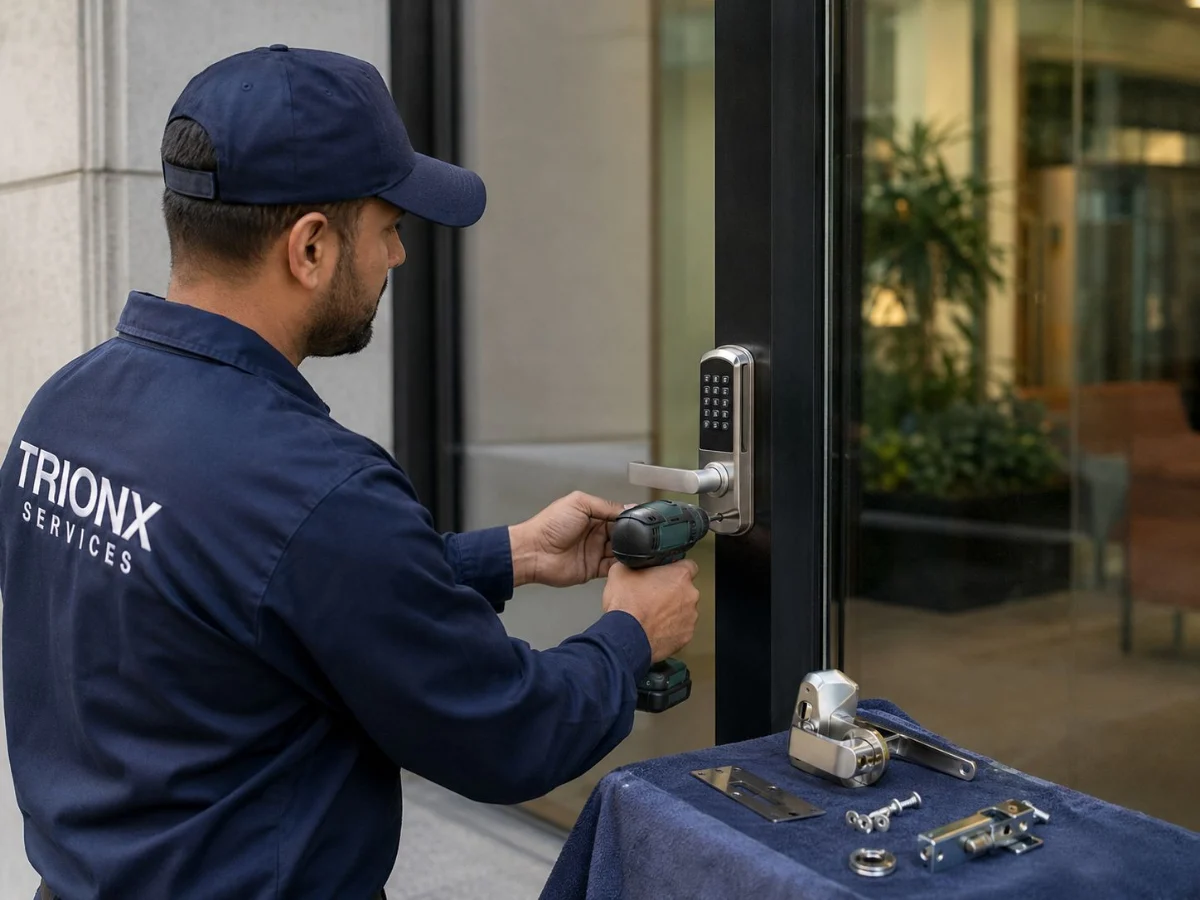
Two lever handles on the same shelf can look the same and be rated for wildly different amounts of use. The grade is the part that says which, and it is marked on the box rather than the lock.
Getting it wrong is the most common quiet fault in commercial door hardware, because it does not fail on day one. It fails in month nine.
What the grades measure
Commercial locks are tested to an ANSI and BHMA standard covering cycle life, strength and finish. The cycle test is the one that matters most in practice: the lock is operated a set number of times and has to still work at the end.
Grade 1 is heavy commercial. Grade 2 is light commercial. Grade 3 is residential, and the cycle figure it is tested to is a fraction of Grade 1, which is why a builder's-merchant lever handle on a busy office door goes loose inside a year while the one next to it does not.
Strength testing sits alongside it: how much force the lock takes before the latch fails, how the handle survives being leaned on, how the finish holds up.
What grade does not tell you
Grade is about durability rather than about defeating an attacker. A Grade 1 lock on a standard keyway still opens to a key anybody can have copied at a counter, and that is a key control question rather than a hardware one. Our article on what happens on a rekey covers restricted keyways, which is where that gets addressed.
It also says nothing about fire rating. A rated door needs rated hardware, and that is a separate listing from the grade.
Where each one belongs
Grade 1 on anything with real traffic or real consequence: main entrances, stairwells, doors on an escape route, plant and service rooms, anything a delivery route passes through. Also anything that is awkward or expensive to get back to, because the labor of returning outweighs the hardware difference quickly.
Grade 2 on internal office doors, meeting rooms and low-traffic areas inside a secured building.
Grade 3 belongs in a house. It turns up on commercial property because it is what a general supplier stocks and it looks the same on the shelf, and it is the single most common specification error we find on a door.
Cylindrical, mortise and tubular
Alongside grade sits the lock type, and the two get confused.
A cylindrical lock fits through a round bore in the door and is the common commercial pattern. A mortise lock sits in a deep pocket cut into the door edge, carries more mechanism, and is what heavier doors and hotel-style functions use. A tubular latch is the lightest of the three and belongs on internal doors.
Swapping between types is not a like-for-like change: a mortise pocket and a cylindrical bore are different preparations in the door, which is why replacing one with the other is a bigger job than it looks.
Reading it off a real door
Look at the wear rather than the finish. A handle that has developed play, a latch that no longer springs back crisply, a lock that has started to need the handle lifted or the door pulled are all wear symptoms, and on a door that has only been in service a year or two they point at grade rather than at abuse.
Count what the door actually does in a day. A door nobody thinks of as busy can be operated hundreds of times, and the arithmetic on a staff entrance or a kitchen door is usually a surprise.
Standardizing a building you have inherited
Most commercial properties end up with a mixture, because hardware gets replaced one door at a time by whoever was there that week. The result is a building where some doors last a decade and others are on their third handle.
Worth doing once: walk the building, note what is on each door and how hard that door works, and set a standard for each category rather than for each door. Entrances and escape routes at Grade 1, internal offices at Grade 2, and nothing residential anywhere.
Then replace to the standard as things fail rather than all at once. The arithmetic favors it quickly, because the labor of attending a door twice costs more than the difference between grades did in the first place.
Who carries this out
Specifying, supplying and fitting lock hardware is performed directly by our own technicians. None of it requires a Florida contractor license, and TrionX carries general liability and workers' compensation on that work.
Where a door has been failing hardware repeatedly, the grade is worth checking before the third replacement. Our article on repair or replace a commercial door covers the case where the door rather than the lock is the thing wearing everything out.
Common questions
Questions we get asked about this
What do the grades actually measure?
Cycle testing and strength testing to an ANSI and BHMA standard. Grade 1 is the heavy commercial rating, Grade 2 is light commercial, Grade 3 is residential. The headline difference is how many open-and-close cycles the lock is tested to survive, and the gap between grades is large.
Does a higher grade mean a more secure lock?
It mostly means a more durable one. Grade speaks to how long the mechanism survives use and abuse rather than to how hard the cylinder is to pick or the keyway is to copy. Those are separate questions, and a restricted keyway addresses them.
Can I tell the grade by looking?
Rarely. Grade is marked on the packaging and in the specification rather than on the fitted lock, and a Grade 3 lever can look much like a Grade 1 on a door. Wear patterns give it away faster than appearance does: handles that have gone loose within a year on a busy door usually mean the grade was wrong.
Which grade belongs on our doors?
It follows the traffic and the consequence. A main entrance, a stairwell or anything on an exit route earns Grade 1. Internal offices and low-traffic doors are usually fine at Grade 2. Grade 3 belongs in a house, and it is the most common wrong answer on commercial property.
Keep reading
Related field notes

Rekey or replace: what to do with commercial locks after a tenant leaves
Repair or replace a commercial door
Card readers, keypads or keys: choosing access control
A tenant is moving out this week: what to secure before they go
Locked out of a commercial property: what happens when you call
We have lost a master or building key: what now
One company, whoever does the work
Our technicians handle the trades that need no state license, and licensed contractors handle the ones that do. Either way we scope it, book the visit and file the record. Tell us the property and the problem and we will come back with a window. Call out of hours and someone who works here answers.