
Locks
A tenant is moving out this week: what to secure before they go
The week before a tenant leaves is the only time you can establish what the space was handed back in, and it does not come round again.
Ask for the key list before they leave rather than after, and ask how many were issued rather than how many are being returned. Those are different numbers and the gap between them is the whole problem.
Everything else this week is easier if that conversation happens while somebody is still there to answer it.
Collecting keys is not securing the building
Over a commercial tenancy, keys get copied. Staff, cleaners, contractors, delivery drivers and previous employees all end up with them, and none of that appears on the list the outgoing tenant hands you.
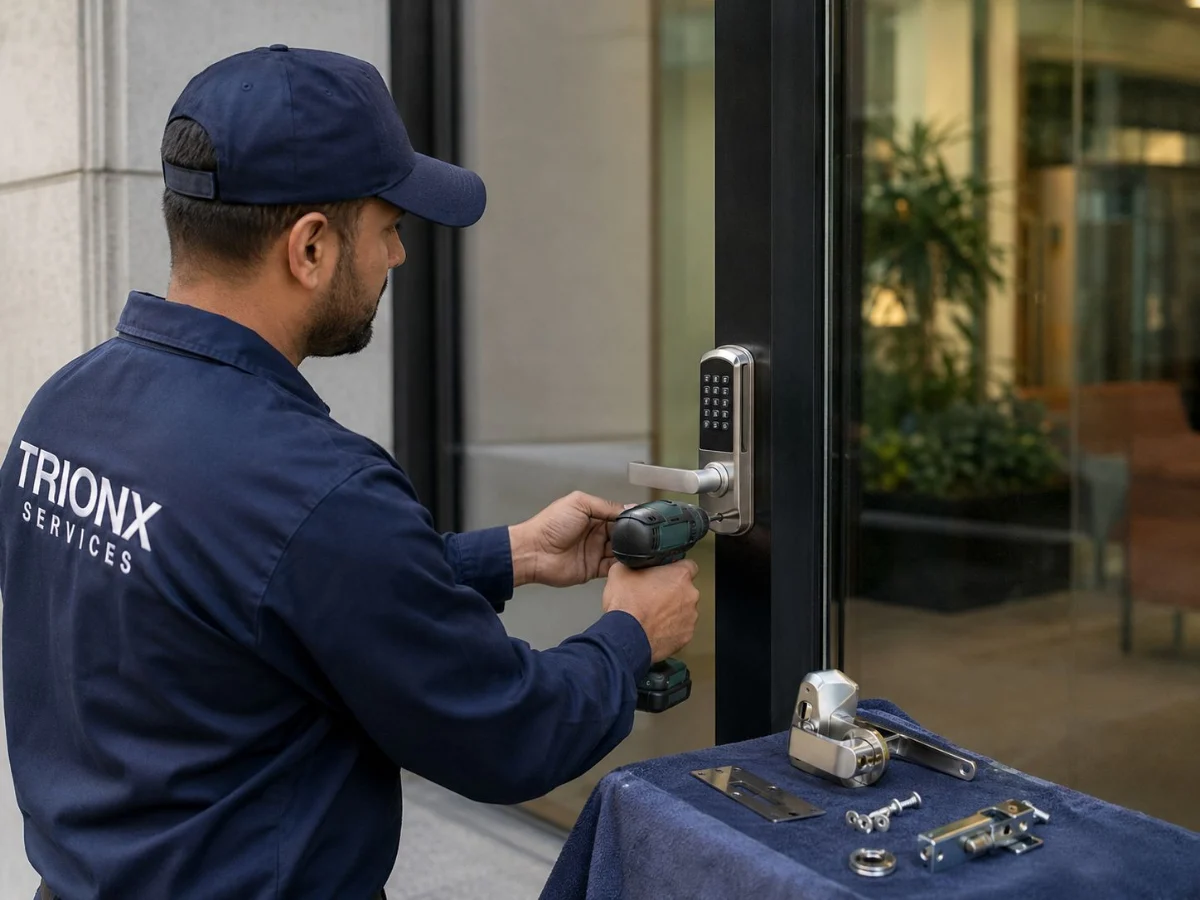
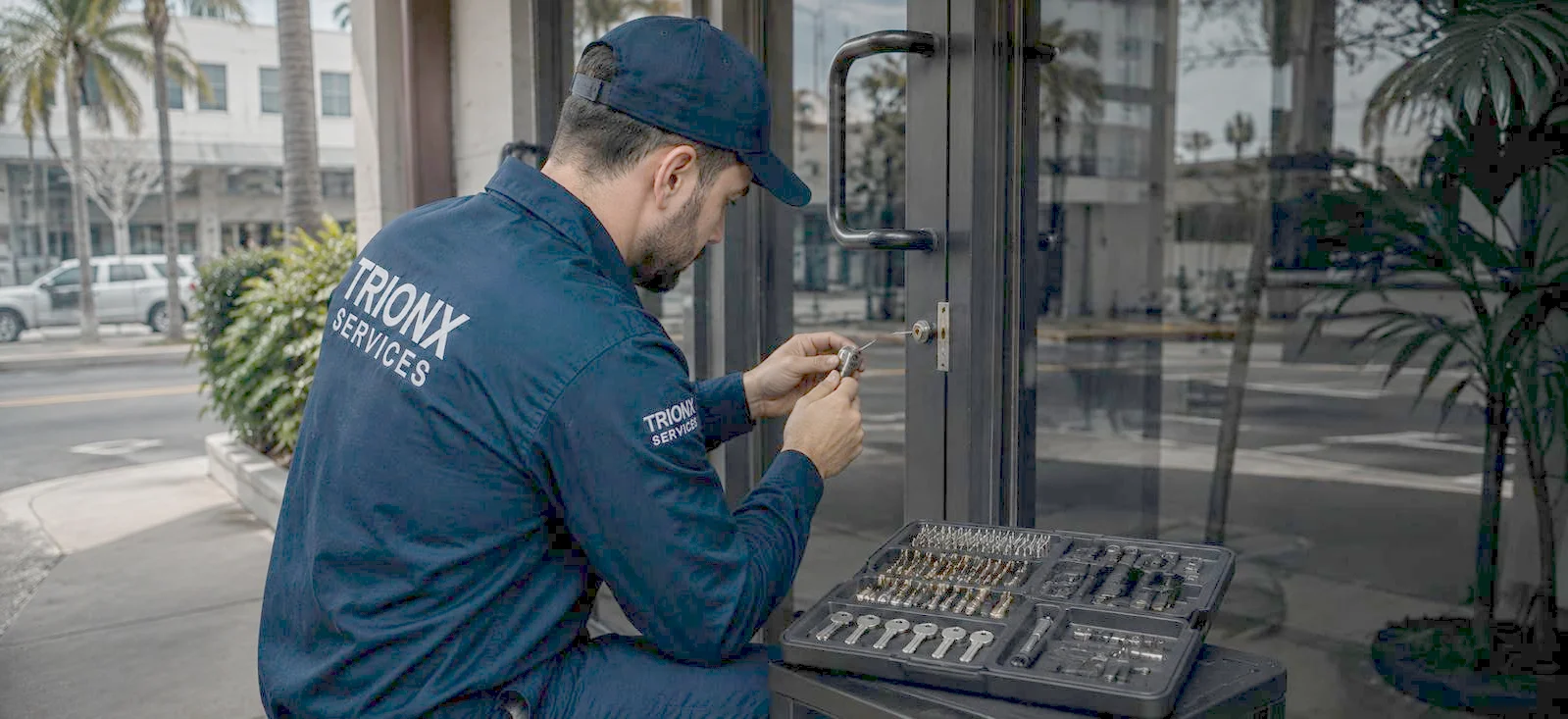
Rekeying is the only measure that ends the old access, and it should happen after they have gone and before anybody else gets in, including your own trades. Our article on rekeying against replacing covers which of the two the situation calls for, and key control after a termination covers the record to keep afterward.
On a master keyed building this needs scoping rather than doing door by door, because the tenant's cylinders sit inside a system that has to keep working for everybody else.
Access control and codes
Revoke every credential issued to the tenant at the controller, working from the issue list rather than from what came back. A card that is not returned is a card that is still live until somebody removes it.
Change any shared alarm code. Shared codes are known to more people than anyone believes, and they outlive tenancies for years.
Check whether the tenant added anything of their own: a keypad on an internal door, a padlock on a store, a smart lock on a cupboard. Those need handing over with their codes or removing, and they are easy to miss because they were never on your schedule.
The condition record
Walk the space and photograph it empty, before any making good starts. Empty is the point, because a space full of furniture hides floors, walls and everything mounted to them.
Look specifically at what was fixed to the structure and what happened when it came off. Shelving, signage, screens, cable runs and equipment brackets all leave holes, and the wall behind a fitted counter is usually unpainted.
Check the ceiling for tiles that were lifted and not replaced properly, and for anything the tenant ran through the void. Check the doors, because a space that has taken deliveries for years has doors that show it. Our article on writing a punch list covers how to record all of this so it survives an argument.
What to check physically before the handover
Every external door: does it lock, does it latch on its own, is the closer still doing its job. Every exit device: does it release in one motion. Glass, for chips and cracks that were not there before. Any powered door or gate, which will have taken a lot of use.
Then the things that only show up when the space is empty and quiet: a ceiling stain that was behind a display, a stained floor under a machine, a smell that points at a drain.
Our tenant turnover punch list sets out the full sequence for a turnover, which is worth following where the space is going straight back to market.
Who carries this out
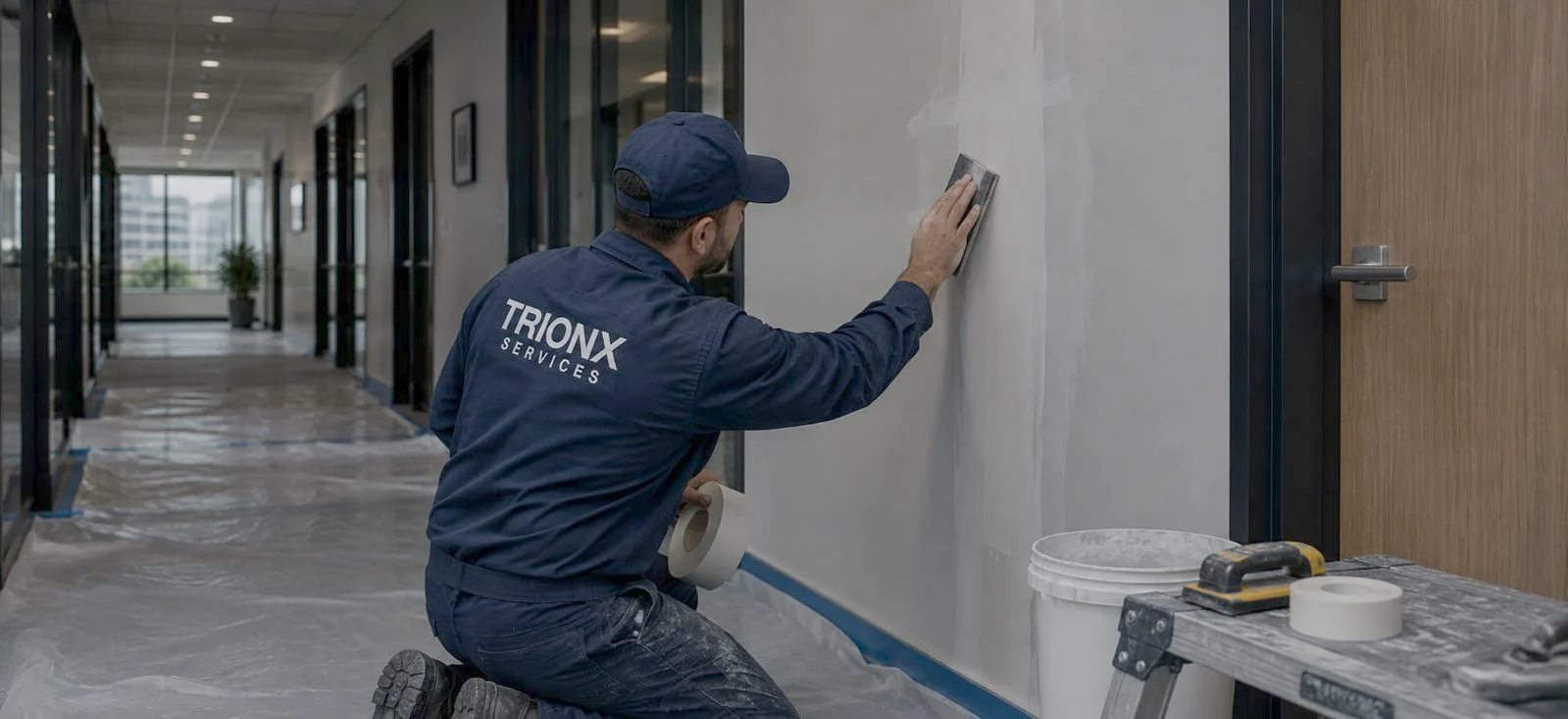
Rekeying, master key work, access control changes, door and hardware repair, glass, carpentry, drywall, painting and general making good are all performed directly by our own technicians. A turnover usually needs several of those at once, which is exactly the case where booking separate trades costs the most time.
Where the space needs electrical, plumbing or HVAC work before it is re-let, that goes through licensed contractors, coordinated and documented by us, because Florida requires a license for those at any job size.
Agree in writing who is paying for the rekey before it happens. It is a small item that turns into a disproportionate argument when it appears on a final account nobody discussed, and most leases say nothing about it either way.
The same applies to any making good the tenant has offered to carry out themselves. A tenant repairing their own damage in the final week is frequently cheaper for everybody, and it needs recording as an agreement rather than left as an assumption on both sides.
Getting the timing right
The condition record happens while the space is empty and before any work starts. The rekey happens after the tenant has gone and before anybody else has access. The making good happens after both, so that nothing gets repaired before it has been recorded and charged to the right party.
Running those out of order is how a landlord ends up paying for damage that was recoverable, which is a more common outcome than a disputed deposit.
Locks and access control in Miami
Printable checklist: Tenant move-out punch list for commercial units
Common questions
Questions we get asked about this
They are returning all the keys. Is that enough?
No. Returned keys tell you nothing about copies, and commercial keys get copied routinely over a tenancy for staff, cleaners, contractors and deliveries. Rekeying is the only measure that actually ends the old access.
When should the rekey happen?
After they have gone and before anybody else is given access, including your own contractors. Doing it on the day of handover avoids a gap where the space is empty and the old keys still work.
What about the alarm and access control?
Revoke every credential issued to the tenant at the controller, and check the list against what was actually issued rather than what was returned. Change any shared alarm code, which is usually known to more people than the key list suggests.
Do I need a condition record if I have the original one?
Yes, and it is the more important of the two. The original establishes what they took on, and the exit record establishes what changed. Without the second one, any deduction from a deposit becomes an argument about recollection.
Keep reading
Related field notes

Key control after an employee termination
Rekey or replace: what to do with commercial locks after a tenant leaves
Writing a punch list a vendor can actually price
Lock functions: which one each commercial door needs

Arranging storefront board-up before hurricane season

A yearly check of storefront glass and glass doors
One company, whoever does the work
Our technicians handle the trades that need no state license, and licensed contractors handle the ones that do. Either way we scope it, book the visit and file the record. Tell us the property and the problem and we will come back with a window. Call out of hours and someone who works here answers.