
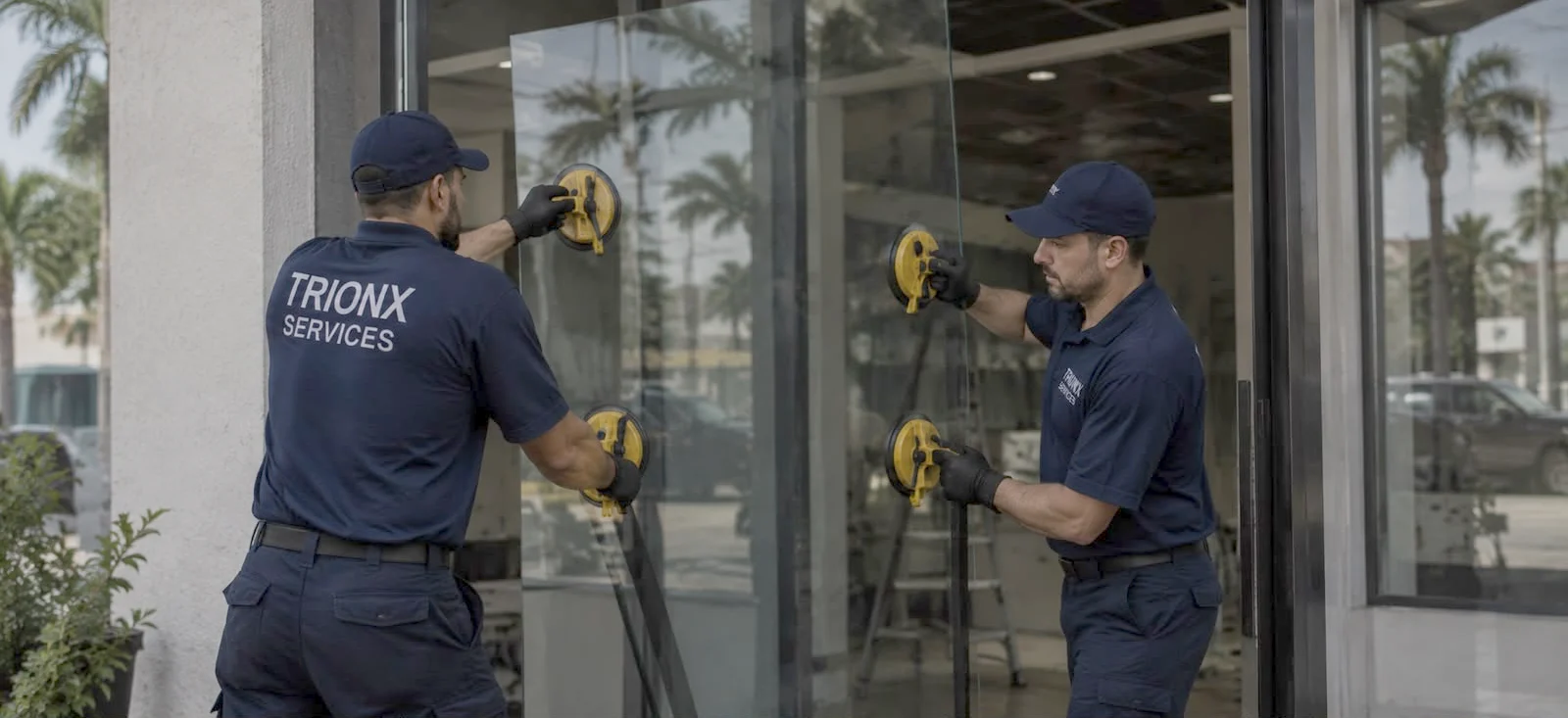
Glass
A yearly check of storefront glass and glass doors
Glass gets attention when it cracks. A walk round once a year finds most of what would have cracked it.
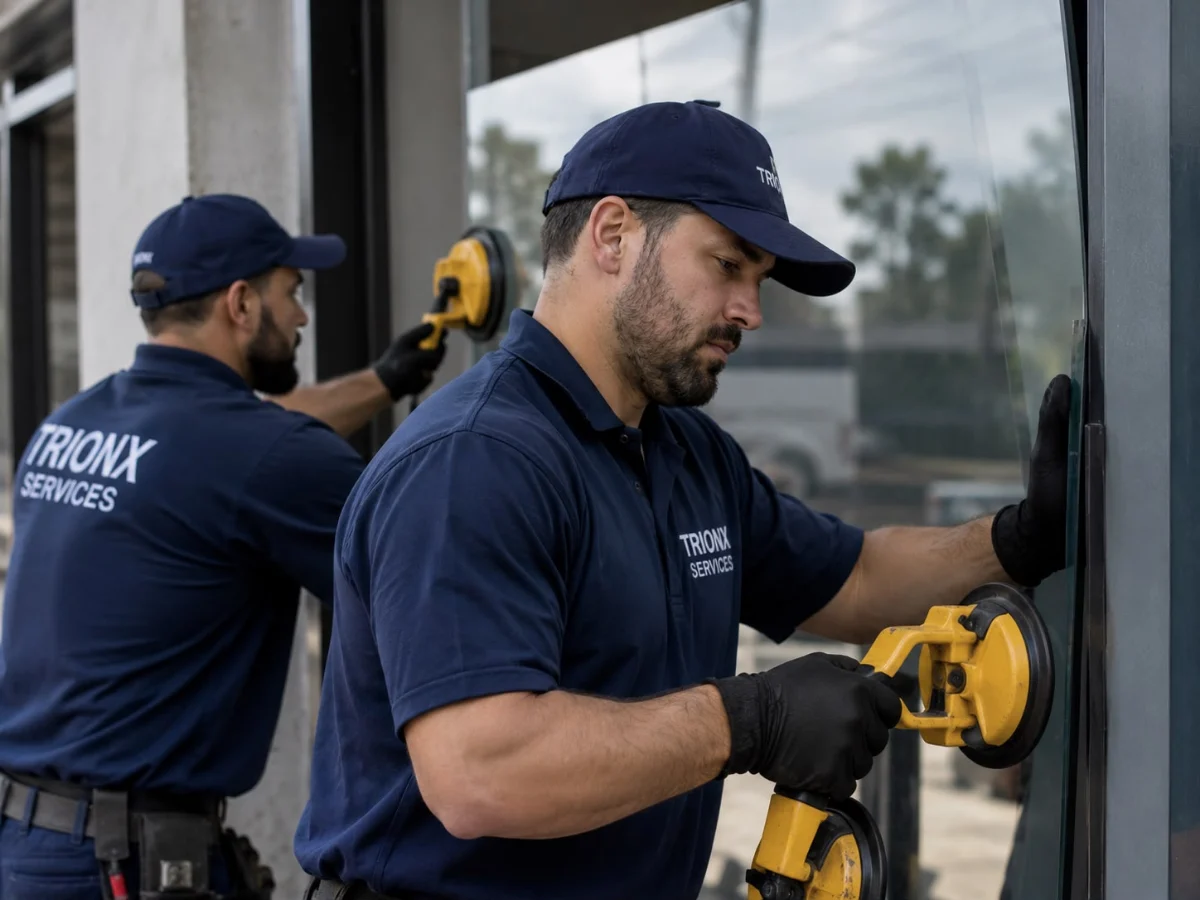
Walk the whole glass frontage once a year with a notebook and a phone. Look at four things: the seals and beads around each pane, the edges of the glass, the way each pane sits in its frame, and the moving parts of every glass door. Photograph anything you note, and write down the location so someone else can find it.
Most units have no routine for glazing at all. The glass stays put, so nobody thinks about it until a pane cracks or a door starts to drag. By then the cause has usually been present for a year or more.
Seals and beads
The seal is the first thing to fail. Look along every joint between glass and frame, inside and out. Sealant that has shrunk, split, peeled away from the glass or gone chalky is no longer keeping water out. In Miami sun and rain that happens faster than most people expect.
On framed systems the glass is held by a bead or a gasket. Check that beads are tight and in place, that gaskets have not shrunk back from the corners, and that nothing rattles when you press the pane gently with a flat hand. Water that gets behind a failed seal sits in the frame and corrodes it. If you already see staining or damp at a sill, our article on sealed unit fogging explains what moisture inside a double-pane unit means and what can be done about it.
Edges and chips
Run your eye along every edge you can see. A small chip, a shell-shaped flake or a short hairline from the edge is the beginning of a crack. Edge damage matters more than damage in the middle of a pane, because the edge is where stress gathers when the glass flexes or heats unevenly.
Mark each chip with a note of its size and take a photo. Check it again in a month. If it has grown, it will keep growing. Our article on glass that has cracked but not fallen covers what to do once a crack has formed, including when a pane needs to be made safe at once.
How the glass sits
Glass should rest on setting blocks and sit with a small even gap to the frame all round. Look for panes that have slipped, so the gap is wide on one side and tight on the other, and for glass that touches metal at any point. Glass touching the frame is a future crack.
Check the frame itself. Corroded aluminum, a frame that has racked out of square, or screws that have worked loose all change how the load reaches the glass. If a frame has moved, the pane inside is under stress it was never set to carry.
Glass doors: bottom rail and pivots
Doors work the hardest. Open and close each one slowly and watch it. A door should swing free, close without being pushed and show an even gap at the top, at the sides and at the threshold.
- Look for scrape marks on the threshold or floor, which mean the door has dropped.
- Check the bottom rail or patch fitting for movement, cracks around the fixing holes and worn bushings.
- Check the top and bottom pivots for wear, play and noise.
- Check the closer and its arm. A closer that slams puts shock through the whole door every cycle.
A dropped door is usually a worn pivot or a loose fitting. Corrected early, it is an adjustment or a part swap. Left for a season, the lower corner of the glass starts taking the weight and the door finishes up with a cracked or chipped panel. Also test the lock and handle on each door, since a door that has dropped often stops latching properly.
Repair, re-glazing or replacement
Most findings from a yearly check are small. Resealing a joint, refitting a bead, replacing a gasket, adjusting or replacing a pivot or bottom rail fitting, and swapping a chipped or cracked pane in an existing opening are all repairs. Our article on what re-glazing involves covers how a pane is replaced in a frame that stays where it is.
Replacing a whole storefront system is a different job. On an exterior opening in Miami-Dade it normally needs a permit and a product approval submittal, which also makes it a matter of impact ratings and frame anchoring. Our article on impact glazing and the NOA sets out how that process works. If your check shows a frame that is corroded through or racked, expect the answer to be replacement rather than repair.
Who carries this out
Sealing, bead and gasket work, re-glazing of existing openings, glass door repair, pivot and bottom rail fittings, closers and hardware are performed directly by our own technicians, and none of it requires a Florida contractor license. TrionX carries general liability and workers' compensation.
Anything that needs a permit is handled differently. A full storefront replacement is carried out by licensed, insured contractors, coordinated and documented by TrionX. Automatic door operators and any wiring to them are electrical work and go the same way.
Keeping the record
Put the findings in one sheet with the date, the opening, the photograph, what was found and what was done. Keep it with the lease and maintenance papers. When a pane does fail, you can show that the frontage was inspected and maintained, and you can see whether the failure was one you had already marked. See our glass and glazing service if you would like the check done and the repairs written up in one visit.
Common questions
Questions we get asked about this
How often should storefront glass be inspected?
Once a year as a planned walk, and again after any storm, impact or building movement. Doors deserve a quick look every quarter because they carry moving load every day.
Is a small edge chip worth worrying about?
Yes. Cracks in glass usually start at the edge, where a chip concentrates stress. A chip on an edge that is held in a frame can run across the pane after a temperature swing or a door slam.
What does a dropped glass door tell me?
A door that scrapes the threshold or the frame has usually worn at the pivot or the bottom rail fitting. Fixing it early is a hardware adjustment. Left alone, the corner of the glass takes the load.
When does glass work need a permit?
Repairing or re-glazing an existing opening does not. Replacing a storefront system on an exterior opening in Miami-Dade normally does, with a product approval submittal, and that part is coordinated through licensed contractors.
Should I record what I find?
Yes. Date, location, a photograph and a note of what was done. The record shows a landlord, tenant or insurer that the glass was maintained and makes next year's check a comparison.
Keep reading
Related field notes
A sealed glass unit has fogged: why, and what fixes it
Glass has cracked but not fallen: how long can it wait?
Impact-rated glazing and the NOA: what needs a permit
Storefront glass is broken: the first hour
A glass storefront door drags or will not lock
An office or upper-floor window is cracked or broken
One company, whoever does the work
Our technicians handle the trades that need no state license, and licensed contractors handle the ones that do. Either way we scope it, book the visit and file the record. Tell us the property and the problem and we will come back with a window. Call out of hours and someone who works here answers.