
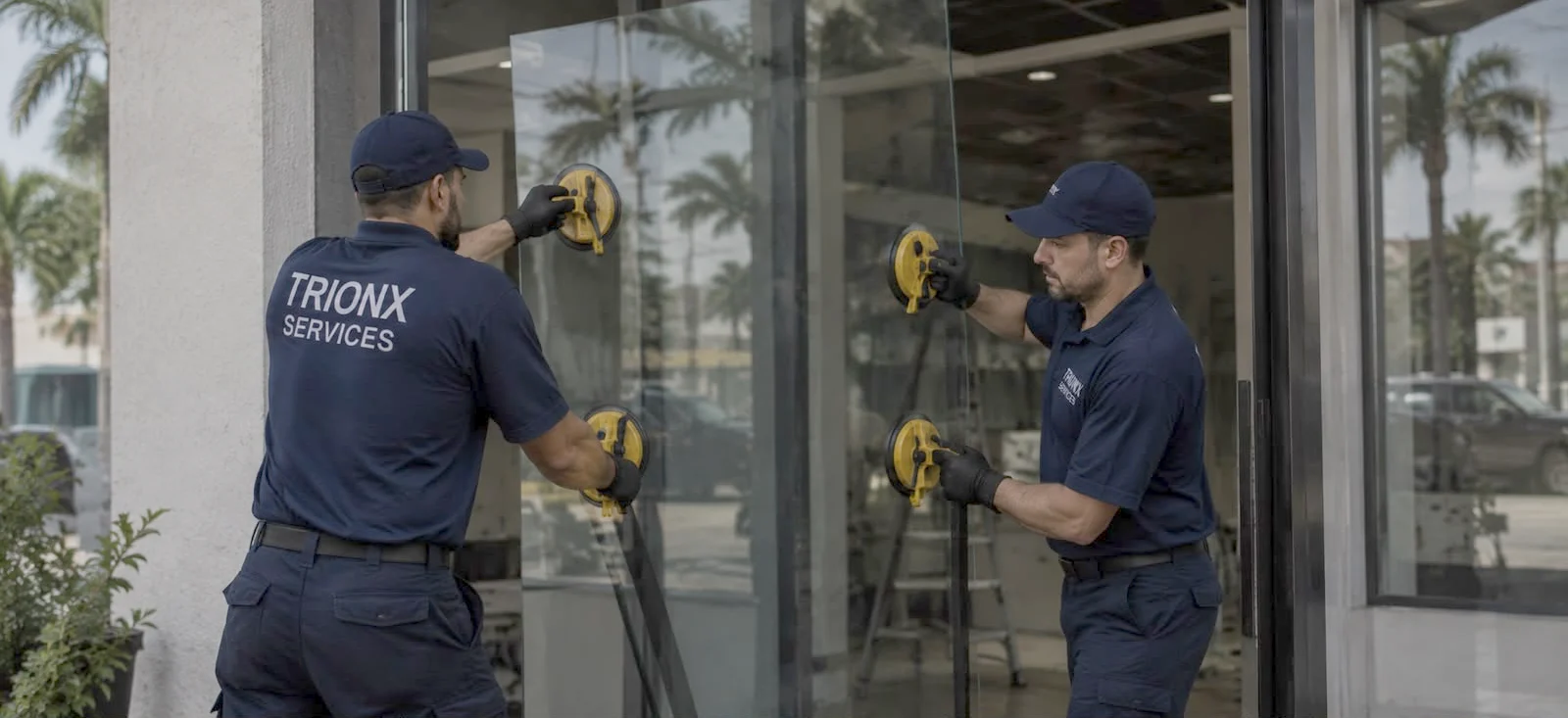
Glass
Storefront glass is broken: the first hour
A broken storefront is two problems at once, an open building and a hazard on a public footway, and they are dealt with in that order.
Keep people away from the opening first, on both sides. The glass still standing in the frame is the part that hurts somebody, because a cracked pane can release later with nobody touching it. Then photograph the whole storefront before anything is swept or moved.
Those two things take about three minutes and they are the ones that cannot be done later.
What the photographs need to show
A wide shot of the whole storefront so the position of the broken pane is obvious. Then the frame itself, close enough to show whether the glass came out of the channel or broke in place. Then the ground on both sides, including anything that might have caused it.
Insurers ask for these and so do police reports on a break-in, and once the footway is swept the evidence is gone. Take more than you think you need. It costs nothing and the alternative is a claim argued on a description.
Clearing up without making it worse
Sweep the public side, because that is where a passer-by walks into it and where the liability sits. Leave the glass held in the frame alone. Removing a partly broken pane is part of the repair and it is done with cut resistant gloves, eye protection and a method for catching what falls.
Do not run a vacuum over storefront glass. The fragments will destroy the machine and fine glass dust goes back into the air.
Working out what the pane was
This is the single most useful thing you can find out before anybody attends, because it decides whether the replacement is in stock or ordered.
Look for a stamp etched in a corner of the glass, which most tempered and laminated panes carry. Failing that, look at how it broke. Tempered glass goes into small blunt cubes across the whole pane. Laminated glass cracks but largely stays put, held on its interlayer. Annealed glass breaks into long sharp shards. An insulated unit has two panes with a spacer bar between them, visible at the edge.
Measure the opening if you safely can, and note whether the glass sits in a metal channel with a rubber gasket or is held on structural silicone. Our article on the three glass types covers what each one is for.
Securing the opening tonight
A board-up closes the building, keeps the weather out and stops anybody else coming through. It is deliberately a temporary measure. The point of it is to buy the time to order the correct glass, rather than to force a decision at eleven at night about a pane that will be in place for the next ten years.
Board-ups are work our own technicians carry out. TrionX carries general liability and workers' compensation on that. The board-up article covers what a proper one looks like and what should be recorded while it goes on.
Which half of the repair is which
Repairing and re-glazing an existing opening is work performed directly by our technicians, including the board-up, the removal of the broken pane and the fitting of the replacement.
Replacing the storefront system itself is a different job. So is changing the size of an opening, and so is any impact rated glazing that needs a permit and a Notice of Acceptance submittal, which is common on exterior work in Miami-Dade. Permitted work is coordinated through licensed contractors, documented by us, and there is no version of it where the scale makes the permit optional. Our article on impact glazing and NOA submittals explains where that line falls.
When it cannot wait
A broken pane on a public frontage does not wait, because the hazard is on a footway you do not control and the building is open. That is true whether or not there is stock behind it.
An interior pane inside a secured building, with the area closed off, can be scheduled. So can a cracked but intact exterior pane where the glass is laminated and holding, though it should be treated as on borrowed time rather than as stable.
Tell us on the call whether the pane is out or cracked, whether the frontage is public, and whether anything is running behind it. That is enough to scope the visit properly and to bring the right board material the first time.
Common questions
Questions we get asked about this
Should I sweep up the glass before anyone arrives?
Clear the public footway so nobody walks into it, and photograph everything first. Leave the glass still standing in the frame where it is. That part comes out during the repair, and pulling at a cracked pane by hand is how people get cut.
Can the glass be replaced right away?
Sometimes, when the pane is a common size in stock glass. Tempered and laminated units are cut and processed to order, and insulated units are made up as a sealed assembly, so those are ordered. A board-up secures the opening in the meantime.
Does replacing a storefront pane need a permit?
Re-glazing an existing opening normally does not. Replacing the storefront system itself, changing the opening, or anything requiring an NOA submittal on impact rated glazing does, and permitted work is carried out through licensed contractors.
The glass cracked on its own overnight. Is that possible?
Yes. Tempered glass can fail spontaneously from a nickel sulphide inclusion in the pane, sometimes years after installation. Edge damage from installation and a frame under load will also do it. Nobody has to have hit it.
Keep reading
Related field notes
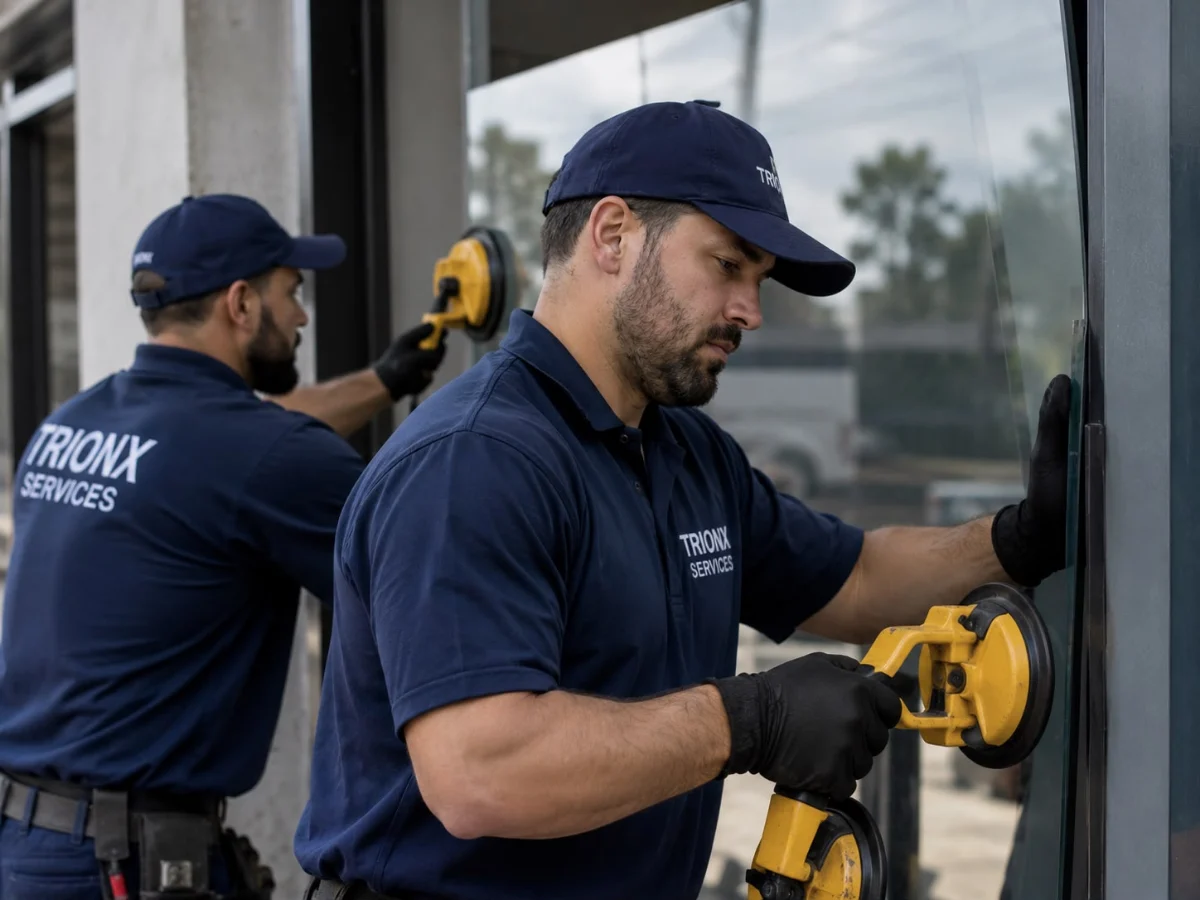
Tempered, laminated or insulated: what belongs in which opening
Impact-rated glazing and the NOA: what needs a permit
Dealership showrooms: glass, lighting and the service bay
Glass has cracked but not fallen: how long can it wait?
A glass storefront door drags or will not lock
An office or upper-floor window is cracked or broken
One company, whoever does the work
Our technicians handle the trades that need no state license, and licensed contractors handle the ones that do. Either way we scope it, book the visit and file the record. Tell us the property and the problem and we will come back with a window. Call out of hours and someone who works here answers.