
Glass
Dealership showrooms: glass, lighting and the service bay
The showroom is judged on presentation and the workshop behind it is judged on whether the doors still work.
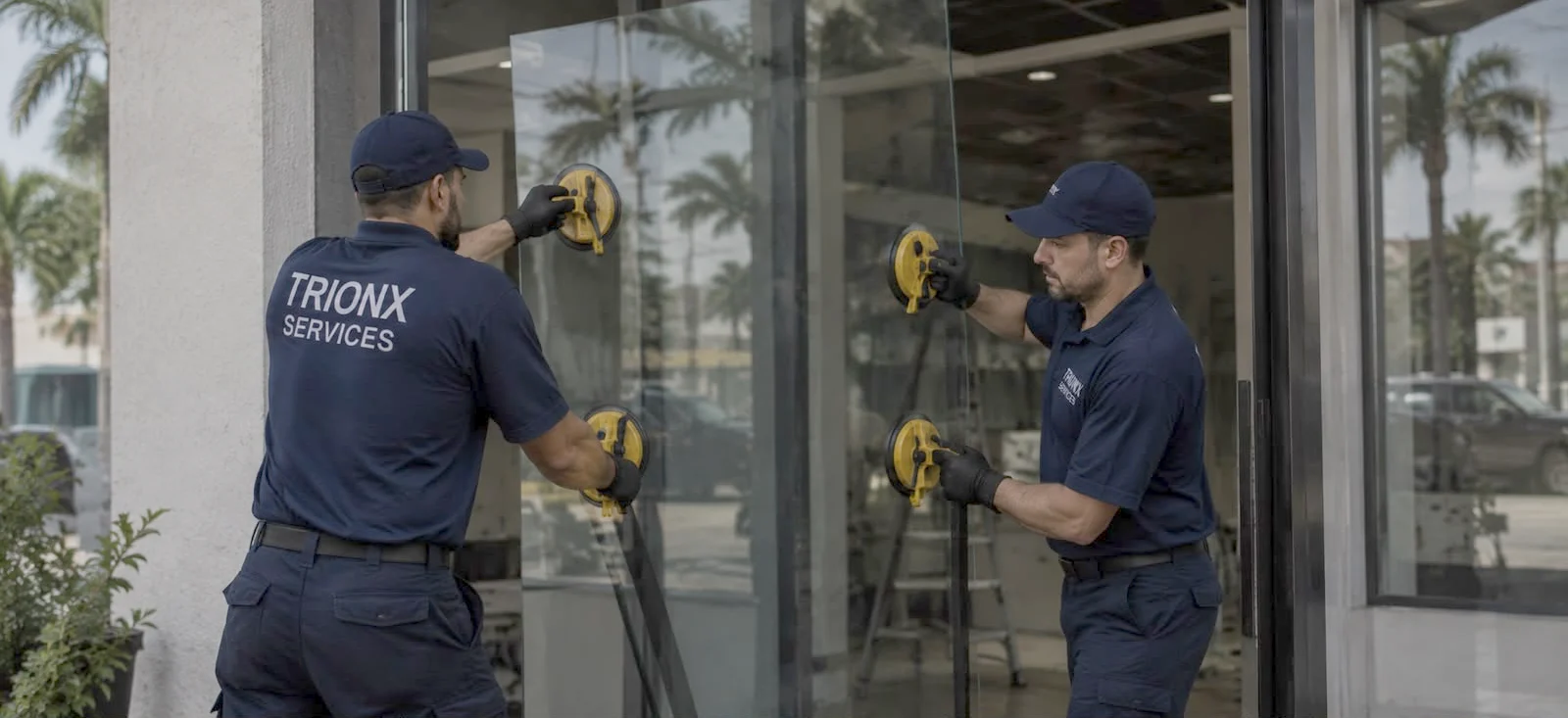
A dealership is two buildings that happen to share a wall. The front is a glass box selling on how it looks. The back is a workshop running at industrial rates of wear. Scheduling them the same way is how one of them gets neglected.
The showroom is mostly glass
Glass is the finish, the signage backdrop and the product lighting all at once, so a defect in it is visible from the road.
Sealed units fog when the perimeter seal fails, and in this climate they fail faster because the cavity heats and cools every day and the desiccant has a finite capacity. It shows as misting between the panes that cannot be wiped from either side. Our article on why a sealed unit fogs covers it, including why defogging is not a repair.
Units installed together fail together, so when one goes it is worth walking the elevation early on a cool morning and looking at the rest before ordering. Doing several while the access is already in place is the cheaper outcome.
Where a pane needs replacing, it goes into the frame that is already there. Our article on what re-glazing involves covers the measuring and setting, and the point where a storefront replacement crosses into permitted work.
Lighting is the product display
A showroom lit unevenly makes stock look worse than it is, and lighting fails one fixture at a time so it degrades without anybody reporting it.
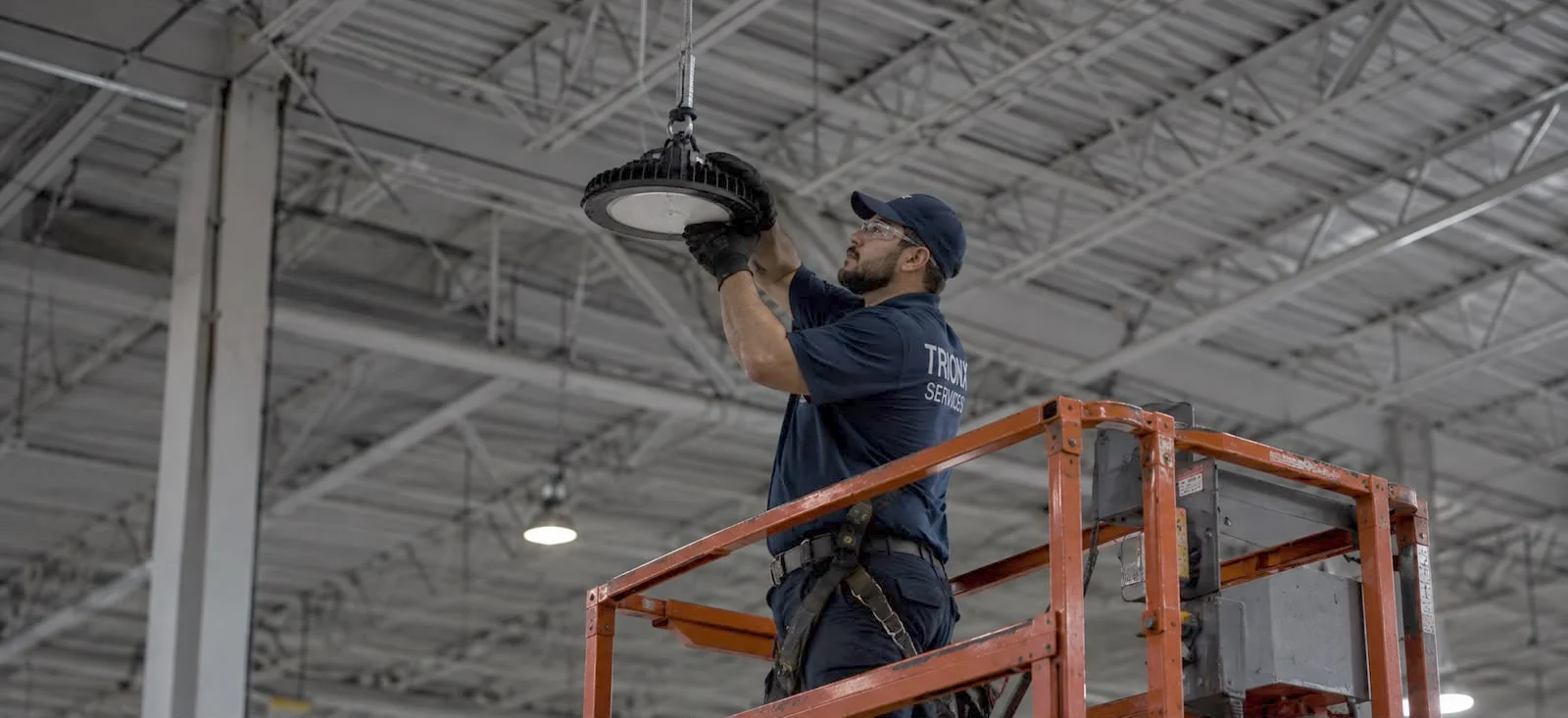
Relamping is straightforward and is our own technicians' work. Anything touching wiring, drivers, ballasts or the circuit is electrical and needs a licensed contractor in Florida at any job size, and LED retrofit sits on that side despite usually being quoted as though it were a lamp change. Our article on relamping against retrofit covers the line.
The forecourt and parking lot matter as much after dark, and that is walked at night or it is not assessed at all.
The service bay is a different building
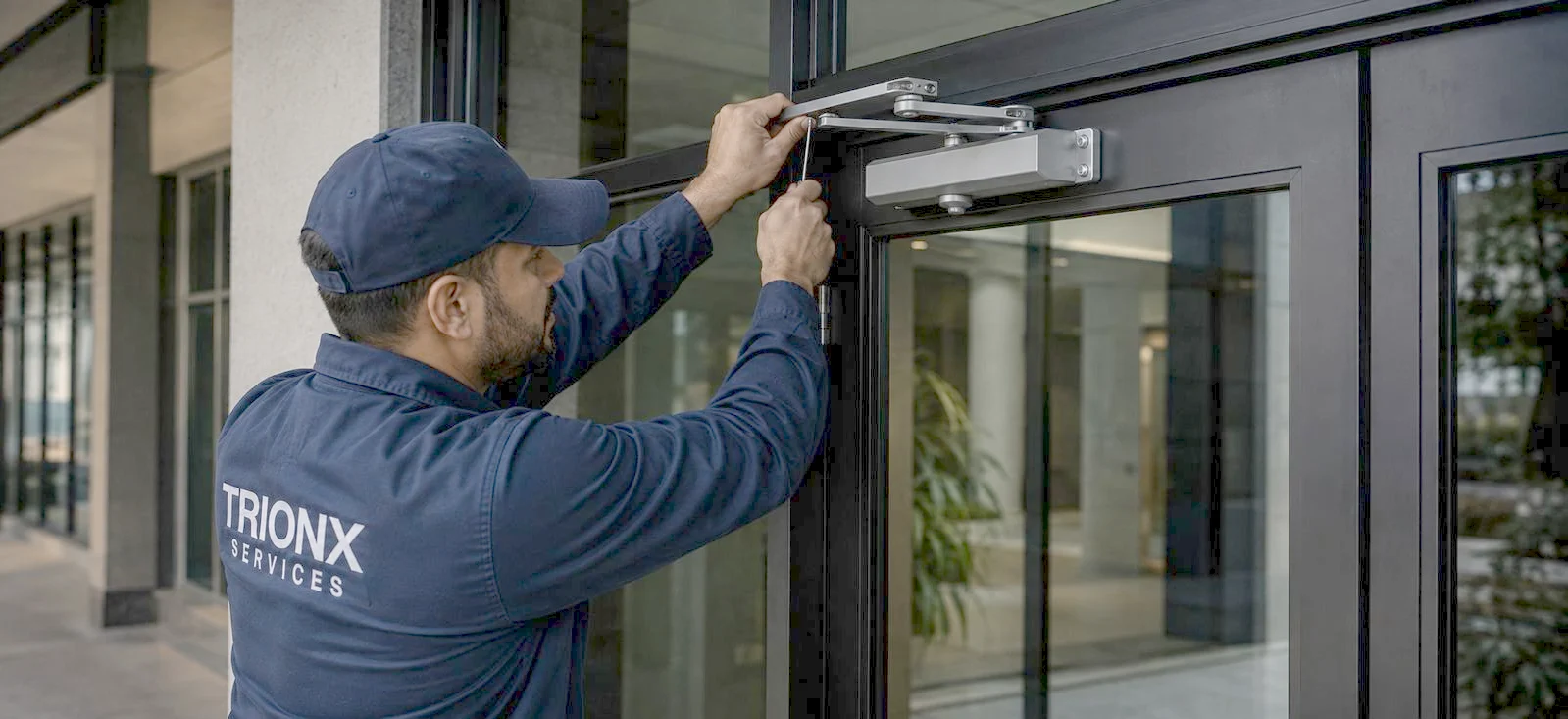
Workshop doors are the thing that actually stops a dealership working. Sectional and roller doors take vehicle and equipment impacts, run constantly, and bind at exactly the height where the damage is.
A door that has started to judder, stop partway or need a second press on the button is wearing something every cycle, and the part that eventually fails is rarely the cheap one. Our article on a stuck shutter or gate covers the checks worth doing and why the manual release is not always safe to use.
Floors in a workshop take oil, heat and point loads, and a failed floor is a slip hazard in a space where people work under vehicles.
The two halves want different scheduling
Showroom work is presentation-led. It is planned around opening hours, and the constraint is that customers should not see the work or the mess.
Service bay work is availability-led. The constraint is how many bays can be out of use at once and for how long, and that is a workshop manager's answer rather than a facilities one.
Treating both as one maintenance program with one window is how the workshop ends up deferred, because the showroom is the half anybody complains about.
The forecourt after closing
A dealership holds most of its stock outside, in the dark, unattended. That makes the perimeter and the lighting part of the maintenance program rather than a security afterthought.
Gates and barriers that no longer close properly, lighting that has gone dark in a corner of the lot, and a camera view that a grown hedge now blocks are all maintenance items with a security consequence. They are also the ones nobody sees, because everybody leaves before they matter.
Walk the site after dark once a quarter. It is the only way to assess exterior lighting, and it is when the gaps are obvious.
A glass box in hurricane season
The showroom that sells the cars is also the largest area of glass on the property, which makes protection a genuine question rather than a formality.
Whatever the protection is, it wants testing before the season rather than when a storm is named, because the failures are seized tracks, corroded fasteners and panels nobody can find. Where impact rated glazing is being considered instead, that is permitted work with a product approval submittal attached, and our article on impact glazing and the NOA covers what that involves.
Who carries this out
Glass repair and re-glazing of existing openings, sealed unit replacement, doors and hardware, roller and sectional door mechanical work, locks, carpentry, flooring, painting, signage mounting and relamping are performed directly by our own technicians. TrionX carries general liability and workers' compensation on that work.
Electrical, including door operator circuits and anything on lighting wiring, goes through licensed contractors, as does plumbing and HVAC, because Florida requires a license for those at any job size. Replacing a storefront system or fitting impact rated glazing that needs a permit and an NOA submittal is licensed work whatever the trade.
Common questions
Questions we get asked about this
Why does showroom glass matter more than most glass?
Because it is the product display. A fogged sealed unit, a scratched pane or a failed seal is visible from the forecourt and reads as neglect on a site selling on presentation. The same defect in a warehouse would be noted and left.
Can a fogged unit be repaired?
The sealed unit is replaced and the frame stays. Drilling and venting a unit clears the appearance for a while and permanently opens the cavity to outside air, which in this climate is a short reprieve rather than a repair.
What fails in the service bay?
The doors, by a distance. Sectional and roller doors on a workshop are operated constantly and take vehicle impacts, so tracks, guides, slats and bottom bars wear and bend. Anything on the operator circuit is electrical and licensed.
How are the two halves scheduled?
Differently, and that is the point. Showroom work is presentation-led and planned around opening hours and forecourt visibility. Service bay work is availability-led and planned around when a bay can come out of use.
One company, whoever does the work
Our technicians handle the trades that need no state license, and licensed contractors handle the ones that do. Either way we scope it, book the visit and file the record. Tell us the property and the problem and we will come back with a window. Call out of hours and someone who works here answers.