
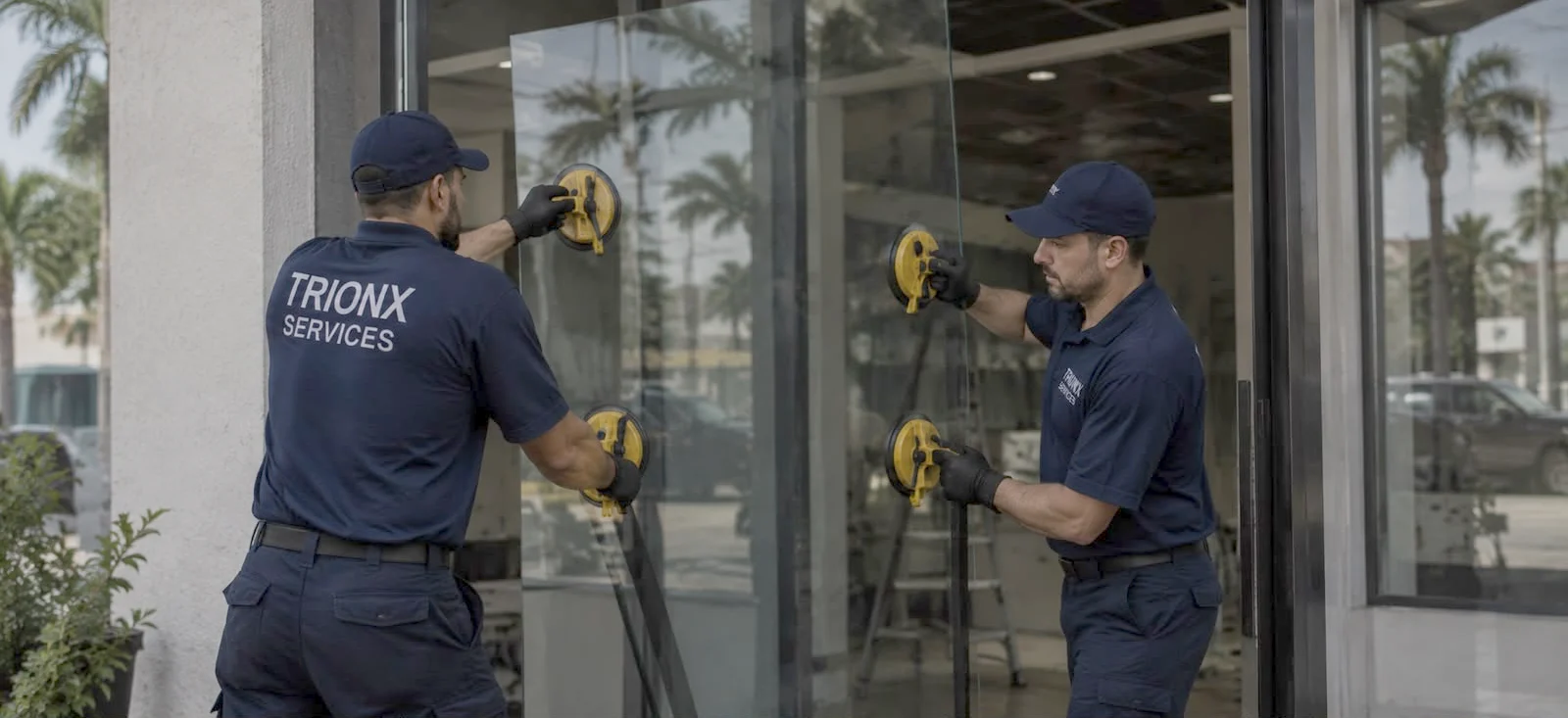
Glass
An office or upper-floor window is cracked or broken
Above the ground floor the first job is keeping people out from under the window, and the second is covering the opening before the weather arrives.
Clear the area below the window and keep people out of it. Then cover the opening so rain and wind stay outside, and report the break to whoever controls the building envelope. Replacement comes after those three steps, and it usually needs an approval before the glass is ordered.
A broken window at street level can usually be boarded from the sidewalk. Above the ground floor the same break is a different problem, because loose glass falls onto people and the opening is harder to reach. Our article on storefront glass covers the ground-floor case. This one covers the rest.
Keep people out from under it first
Pieces of a cracked or partly broken pane can stay in the frame for hours and then let go. Wind, a door slamming, the sun heating the glass or the air conditioning cycling are all enough. Whatever is still hanging will land on the sidewalk, a parking lot or a terrace below.
Close off the ground beneath the window with barrier tape, cones or a staff member, and re-route foot traffic. Allow for the spread: glass does not drop straight down, and a pane on the fourth floor can scatter across a wide area. Inside, move desks and people back from the window and keep the blinds drawn, which also catches some fragments.
Do not try to knock out the remaining glass from inside, and do not lean out to reach it. If shards are still in the frame, they are a job for someone with the right access and protective equipment.
Taping and temporary cover
If the pane is cracked but intact, wide clear tape across the cracks on the inside face holds fragments together and shows whether the cracking is spreading. Mark the end of each crack with a pen and the time, and photograph it. That record helps the glazier and the insurer, and it tells you whether the pane is still moving. Our article on glass that is cracked but has not fallen goes through what the crack patterns mean.
If the glass has gone, the opening needs sheeting or board fixed to the frame from the inside where that is possible. Polyethylene sheet over a timber or board backing keeps rain out for a short period. It is a temporary cover and should come down when the replacement arrives.
Weather and what is inside
An open window on an upper floor lets wind and rain onto carpet, ceiling tile, electrical equipment and paper. Move the contents away from the opening and cover what cannot be moved. Wet carpet and drywall near the opening should be checked after a day, because water that goes into a wall cavity stays there. If it has rained in, our article on drywall repair after a leak covers the drying.
In hurricane season, a broken pane is also a pressure problem. An opening in the envelope lets wind into the building, and that is a reason to get it covered quickly rather than leave it for the next working day.
Who has to approve the replacement
This is the step that surprises people. In a leased or multi-tenant building the exterior glass is normally controlled by the landlord, the association or the property manager. Many buildings specify the glass: a tint, a reflective coating, a laminated or insulated construction, sometimes a particular manufacturer so the facade stays uniform. Ordering glass before you know that can mean paying twice.
Report the break in writing, attach the photographs, and ask three things: who is responsible for the cost, which glass specification applies, and whether the building has a required contractor or a certificate of insurance requirement for anyone working on the facade. Interior glass in a suite is often the tenant's, and exterior glazing often the landlord's, but leases differ and the lease decides.
Knowing the glass type also matters for how it breaks. Tempered glass dices, laminated glass cracks and holds, and an insulated unit has two panes and a sealed gap, so a break in one layer can leave the other standing. Our article on tempered, laminated and insulated glass explains how to tell which you have, and it is worth knowing before anyone orders a replacement.
When a permit changes who does the work
Replacing a pane in an existing opening, with the same frame and the same type of glass, is straightforward glazing. If the opening is impact-rated, or the building requires a permit or a product approval submittal for the change, the job moves out of simple repair. Our article on impact glazing and Notice of Acceptance permits sets out when that applies. Ask the building department or the property manager early, because a permit adds time before any glass can be installed.
The access method also affects the plan. A window reachable from inside with the frame intact is one job. A window needing a lift or a suspended platform is another, and the building may want to approve the equipment, the working hours and the insurance first.
Who carries this out
Repair and re-glazing of an existing opening, and the emergency cover for it, are performed directly by our own technicians. TrionX carries general liability and workers' compensation on that work. Where the building requires a permit or a product approval submittal for the replacement, that work is coordinated through licensed contractors, and we coordinate and document it. Anything involving electrical, plumbing, HVAC or structural work around the opening is also carried out by licensed, insured contractors.
Attending is chargeable whether or not work follows, and we give the rate before anyone is dispatched. Our glass service page lists what is covered. Send the building address, the floor, a photograph of the opening from inside and the lease or management contact, and the first visit can cover the opening and clear the debris while the approval is sorted.
Common questions
Questions we get asked about this
Can I tape a cracked upper-floor window and leave it?
Tape holds fragments in place for a short time and shows where the cracks run. It does not make the pane safe. Keep the area below clear and get the glass assessed, because a pane that is cracked through can drop in one piece or in shards when the wind or the temperature changes.
Do I need the landlord's approval to replace the glass?
In most leased buildings, yes. Glass in an exterior wall is usually the landlord's or association's to specify, and many buildings require a particular tint, coating or glass type so the facade stays uniform. Report it in writing first and ask which specification applies.
Why can it not be treated like a ground-floor board-up?
Boarding a street-level opening is done from the sidewalk. Above that, the work may need an aerial lift, rope access or a suspended platform, and anything that falls lands on whoever is below. The approach is set by access and fall risk before it is set by the glass.
What if the glass was broken by a storm?
Photograph the opening and the debris before anything is moved, cover the opening, and tell your insurer and the building manager right away. Replacement of glass in an impact-rated opening may need a permit and a product approval, and that part is coordinated rather than a simple swap.
Does a window in a multi-tenant suite belong to the tenant?
Check the lease. Interior glass is often the tenant's responsibility and exterior glazing is often the landlord's, with the cost sometimes recharged. Settle who pays and who instructs before ordering anything.
Keep reading
Related field notes
Glass has cracked but not fallen: how long can it wait?
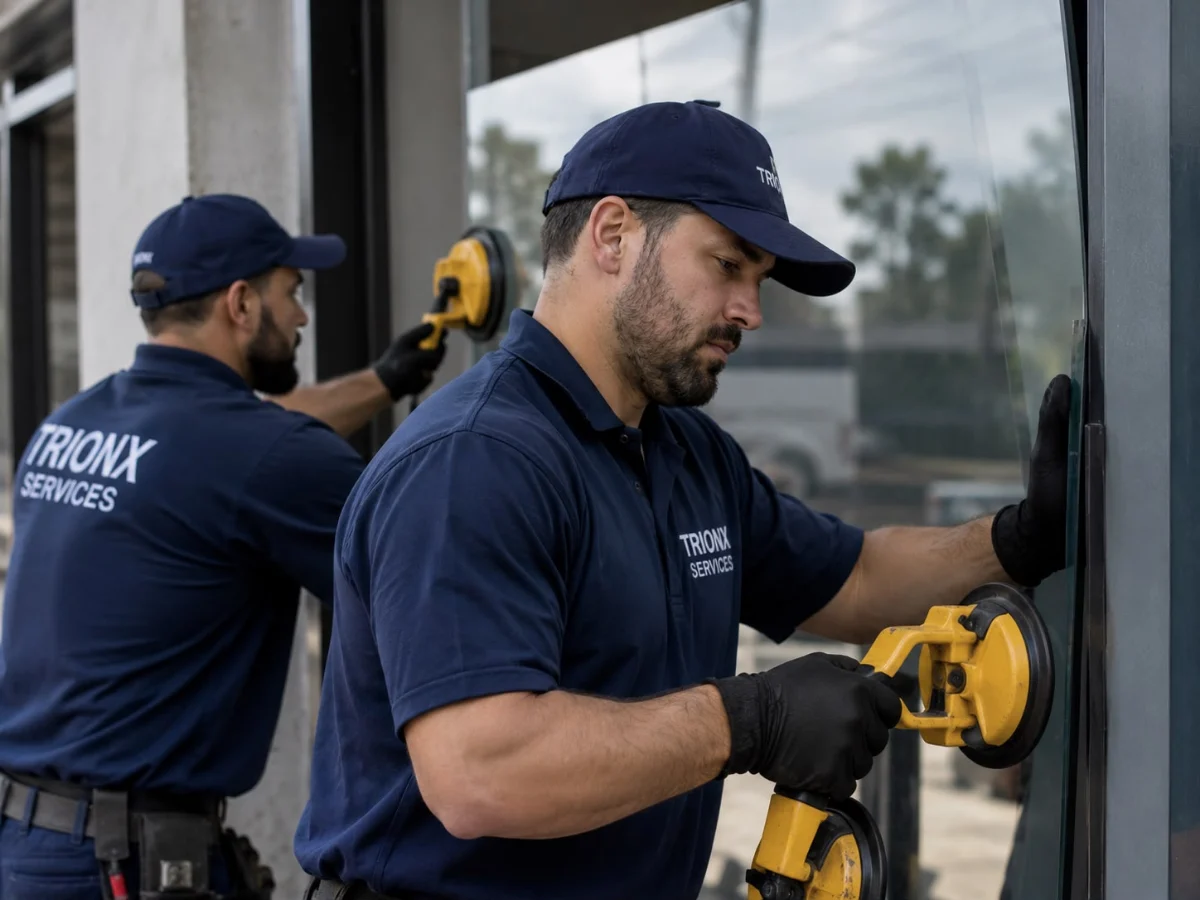
Tempered, laminated or insulated: what belongs in which opening
Impact-rated glazing and the NOA: what needs a permit
A yearly check of storefront glass and glass doors
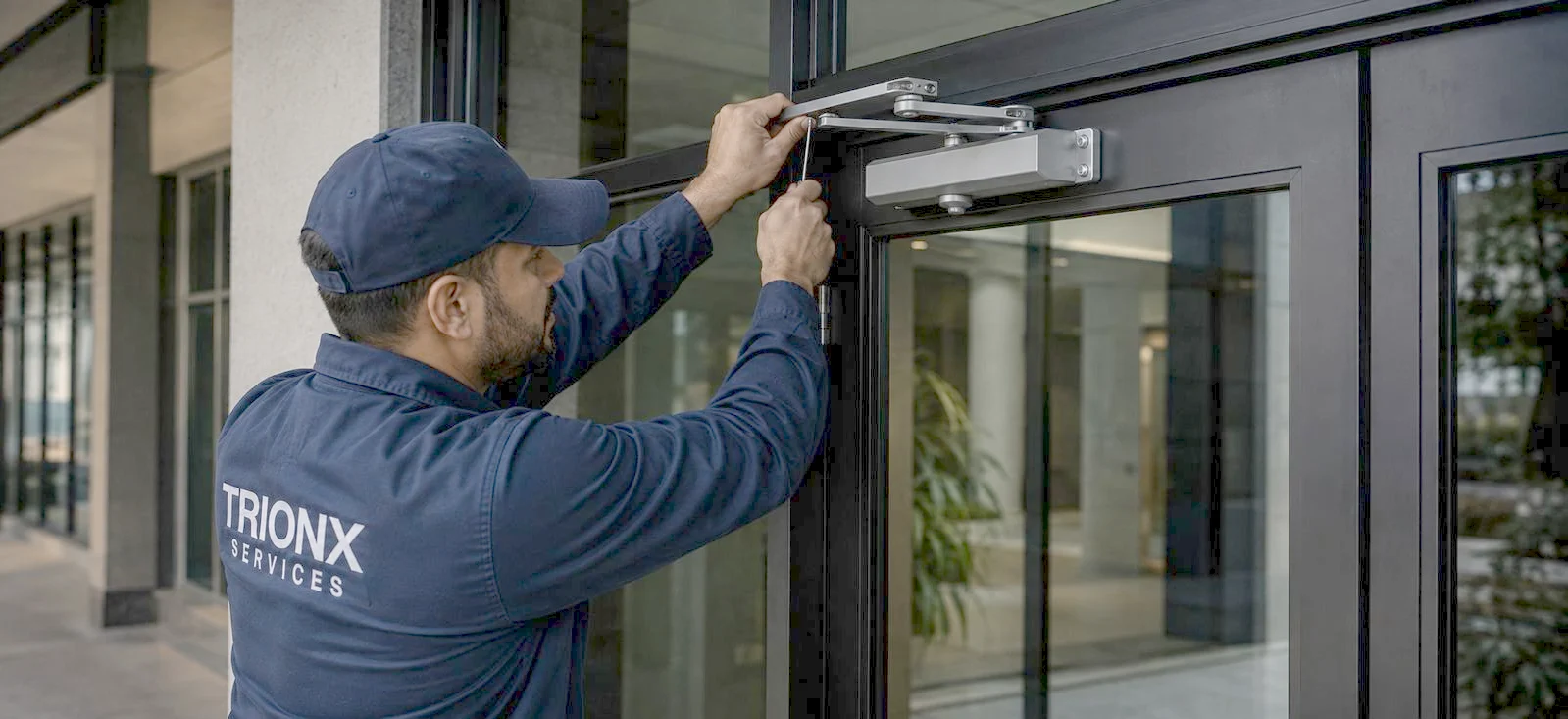
The fire inspector wrote us up: closing the findings out
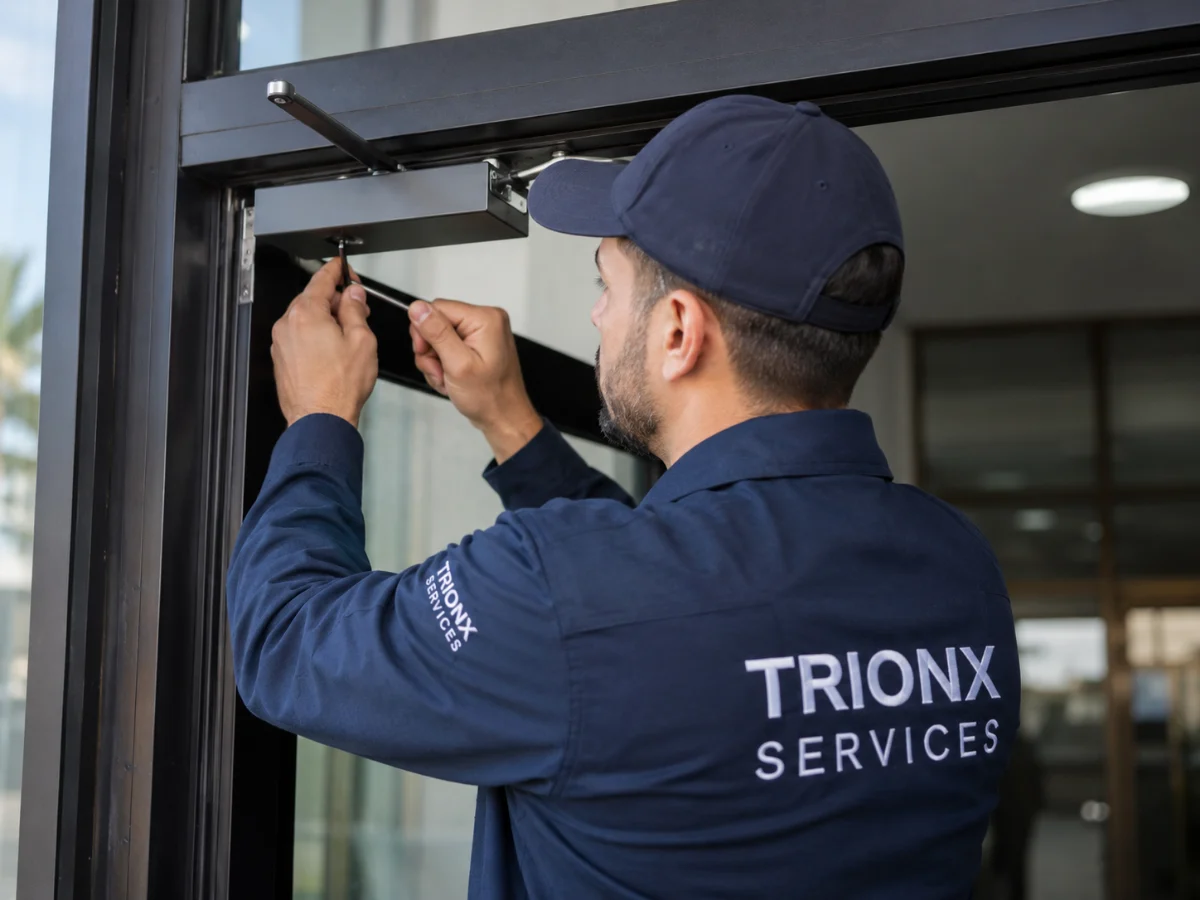
An ADA complaint about a door: what actually has to change
One company, whoever does the work
Our technicians handle the trades that need no state license, and licensed contractors handle the ones that do. Either way we scope it, book the visit and file the record. Tell us the property and the problem and we will come back with a window. Call out of hours and someone who works here answers.