
Doors
An ADA complaint about a door: what actually has to change
Measure the door before you assume anything about it, because the reading decides whether this is an adjustment or a new opening.
Put a gauge on it before deciding anything. Push at the handle edge of the door, perpendicular to the face, and read the peak force as the door starts to move. A number takes two minutes to obtain and it changes the conversation from an opinion into a measurement.
Our article on opening force and how doors fail it covers the limits themselves and where they apply. This piece is about what to do once somebody has complained.
Measure it properly, in the state people use it
Measure with the door in its normal condition. Not held open, not with the closer disconnected, not on a day the building pressure is unusual, and not after somebody has just oiled the hinges.
Take a reading at the same door at different times if the building has variable pressure, because a door that passes at nine in the morning and fails at two in the afternoon is telling you the cause is not the closer. Record each reading with the date and the conditions.
What usually makes the number high
Closer spring tension set higher than the door needs. This is the most common cause and it is normally set high because the door was not latching, which means the real fault is elsewhere.
A door that has dropped on its hinges, so the leading edge binds against the frame or the threshold. Weatherstripping and smoke seals compressed harder than they were designed for. A frame that has moved. Building pressure pushing against the door, which is common where the air handling has been rebalanced or a nearby door has been changed.
A closer that is simply the wrong size for the leaf, which happens most often where a closer was replaced with whatever was on the van.
Our article on what a failing door closer is telling you covers the mechanism, and alignment covers the door itself.
Adjustment or replacement
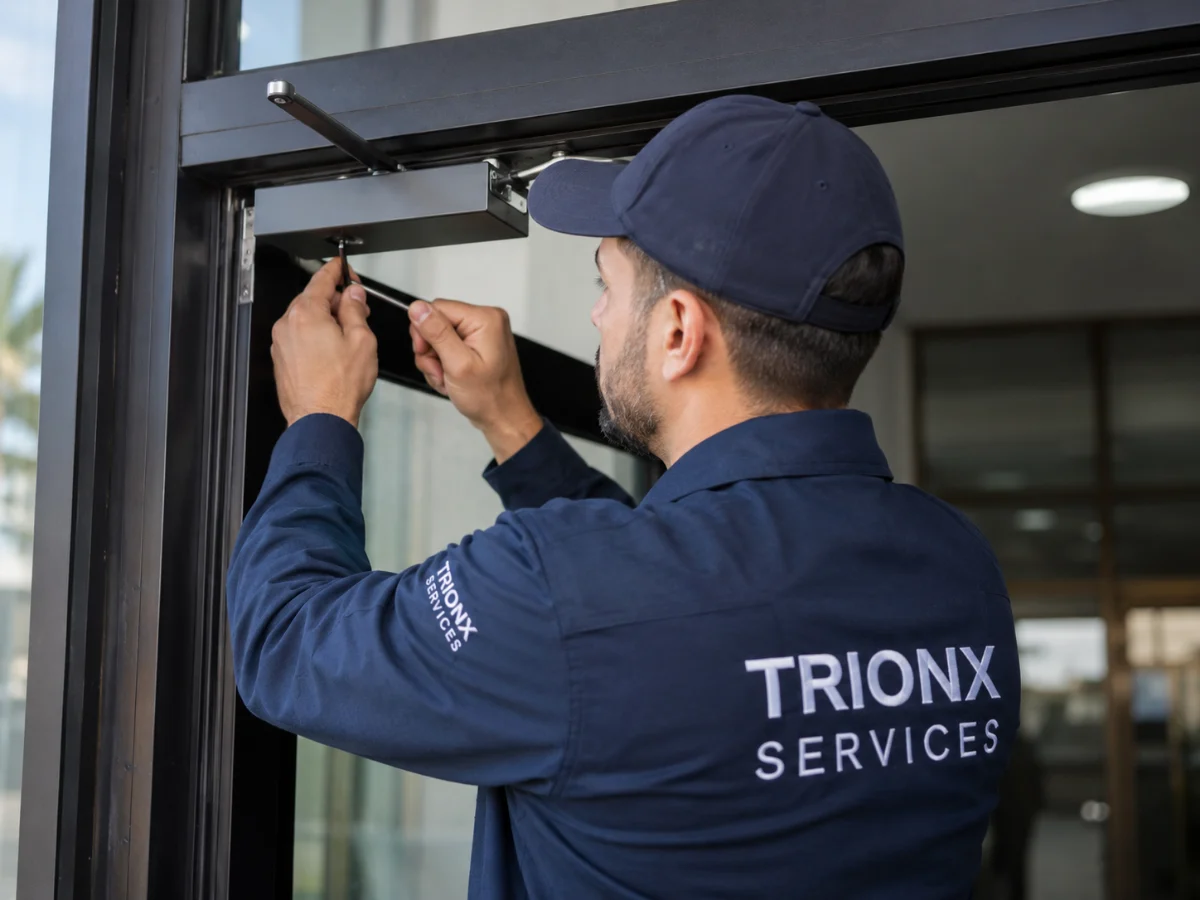
Most doors come into range through adjustment. Correct the alignment, free the binding, adjust the closer properly across all of its valves rather than only the spring, and re-measure.
Replacement is the answer where the closer is worn internally, where it is the wrong size for the leaf, or where it is a non-adjustable unit. On a rated assembly the replacement has to be a rated closer.
The trap worth naming: winding the spring down until the reading passes, and leaving a door that no longer closes and latches on its own. That trades one requirement for another, and on a fire door it trades a minor problem for a serious one. Where a door genuinely cannot satisfy both, a powered operator is the normal answer.
The things that are not opening force
Complaints get filed as force problems and turn out to be something else, so check these at the same visit.
Hardware that requires tight grasping, pinching or twisting of the wrist to operate. Lever handles and push bars are usable in a way a knob or a thumbturn is not.
Clear width through the opening with the door at its normal open position, which is reduced by the door leaf itself and by anything mounted in the reveal. Threshold height and any lip at the floor. Maneuvering space on both sides of the door, which is frequently lost to a bin, a display or a planter rather than to the building.
Closing speed, which is a separate adjustment on the closer and a separate complaint.
The record to keep
Date, door, reading before, what was done, reading after, and who did it. Photograph the gauge in position. Where a door was brought into range by adjustment rather than replacement, that record is what shows it was measured rather than assumed.
Re-measure the same doors on the quarterly walk, because closers drift and seals compress. A door corrected once and never checked again is a door that will be complained about twice.
Who carries this out
Measuring, adjusting, aligning, replacing closers, changing handles to lever hardware and adjusting thresholds are performed directly by our own technicians. None of it requires a Florida contractor license, and TrionX carries general liability and workers' compensation on that work.
A powered operator is different. The hardware is ours and the supply and control wiring are electrical, coordinated through licensed contractors because Florida requires a license for electrical work at any job size. Our piece on powered doors covers that split.
Common questions
Questions we get asked about this
How is opening force measured?
With a force gauge on the door, applied at the handle edge rather than the middle, pushing perpendicular to the face and reading the peak as the door begins to move. Guessing by hand is unreliable, and a door two people disagree about is exactly the case where a number settles it.
Is the fix always a new closer?
Frequently not. Spring tension set too high, a dropped door, binding seals and a frame under pressure all raise the reading, and all are adjustment. A closer sized wrong for the door, or worn internally, is a replacement.
Can we just wind the closer down until it passes?
Only to a point. Reduce spring power far enough and the door stops closing and latching reliably, which fails a different requirement and, on a rated door, a more serious one. The adjustment has to satisfy both, which is why the other causes are worth eliminating first.
What if the door is fire rated?
A rated door still has to close and latch on its own, and that requirement is not traded away to reduce opening force. Where the two genuinely cannot both be met by adjustment, a powered operator is the usual answer rather than a weakened closer.
Keep reading
Related field notes

What a failing door closer is telling you
Why commercial doors drop, and what alignment actually involves
Automatic or powered door not working
The fire inspector wrote us up: closing the findings out
An exit door or panic bar that will not release
Giving a vendor access: keys, codes and sign-in rules
One company, whoever does the work
Our technicians handle the trades that need no state license, and licensed contractors handle the ones that do. Either way we scope it, book the visit and file the record. Tell us the property and the problem and we will come back with a window. Call out of hours and someone who works here answers.