
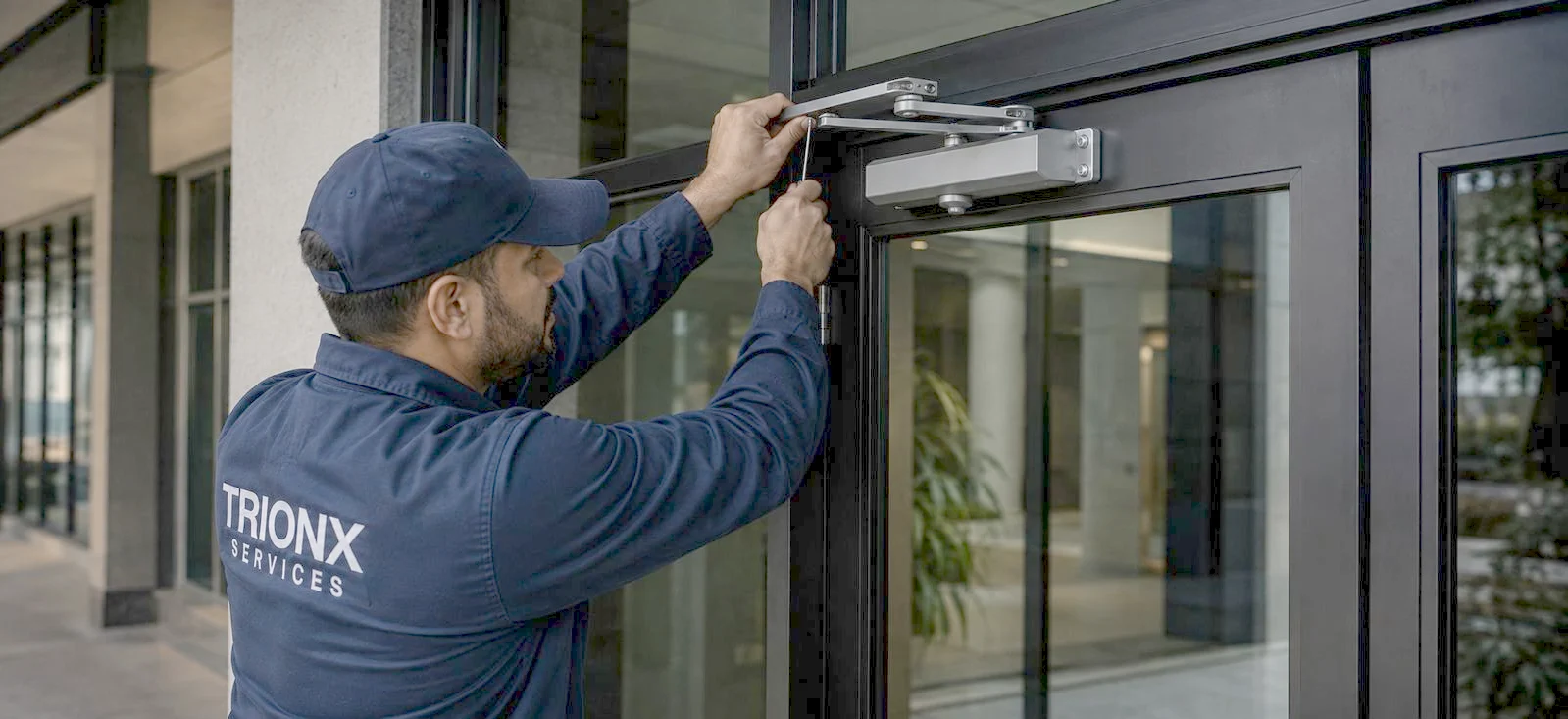
Doors
An exit door or panic bar that will not release
An exit device that needs a second push, a twist or a shove has already failed the only test that matters.
Walk up to it and push once, flat-handed, at normal walking pace. It has to release in a single motion in the direction of travel, and if you found yourself adjusting your grip or pushing a second time, it has failed.
Then look at the door itself, because two of the most common failures have nothing to do with the device.
Anything added to the door
A chain, a padlock, a barrel bolt, a slide bolt, a deadbolt above the device, a bar across the frame. Every one of them defeats the point of the hardware, and it is the finding inspectors record most often on commercial property.
They are always added for a practical reason, usually that the door blows open, does not secure on its own, or somebody is getting in at night. Removing it is the immediate answer. Fixing the reason is the real one, and it is normally a strike, a latch or an alignment problem rather than anything that requires defeating an exit.
Anything in front of it
Stock stacked against it inside, a bin or a parked vehicle outside, a pallet in the corridor. The device can be in perfect condition and the exit still unusable. This costs nothing to fix and it is worth agreeing with the operation where stock actually goes, rather than clearing it once and finding it back the following week.
Why a device sticks
The latch is loaded. A door that has dropped, or a frame under building pressure, puts force on the latch, and the device has to overcome that as well as its own mechanism. Since that is precisely the condition the device exists for, it counts as a failure rather than an excuse.
The mechanism has worn. Exit devices have a finite life measured in cycles. One that needs a firm push in a particular spot has worn, and it will fail under crowd load rather than under a technician's hand.
Corrosion. Common on coastal Miami property. Salt gets into the mechanism, the touchbar stiffens, and the release becomes unreliable well before anything looks wrong from the outside.
Dogging left engaged. Dogging holds the latch retracted so the door pushes open freely. It is useful during trading hours on an unrated door, it is not permitted at all on a fire rated one, and it should never be left set when the building is closed.
The order the repair goes in
Remove anything added and clear the obstructions first, because both cost nothing. Then fix the alignment on any door that releases but does not latch, before touching the device. Then solve whatever the chain was there for. Then replace worn or corroded devices with the correct type for that door.
On a fire rated assembly the replacement has to be a rated exit device, which does not have a dogging feature, because the latch must engage every time. Fitting a standard device with dogging to a rated door is itself a finding. Our piece on what an inspector checks covers the rest.
This one does not wait
An exit device that will not release in one motion is a life safety failure while the building is occupied, and there is no version of it that waits for a scheduled visit. The same is true of an exit that has been chained, bolted or blocked.
Where the building is unoccupied and will stay that way until it is repaired, the urgency drops and it becomes a first-thing job rather than a tonight one. No other situation postpones it.
If you cannot get it attended before the building is occupied again, the honest interim measure is to keep the door under supervision or to route people to another compliant exit and sign it. Neither is a fix, and both are better than opening with an exit nobody can use.
Who carries this out
Exit devices, panic hardware, closers, strikes and door alignment require no Florida contractor license, so TrionX performs this work with its own employees. Where a device is tied into an alarm or an access control system, the wiring side is electrical work under Florida law and a licensed electrician handles it with us coordinating. We do not certify assemblies, and where a formal inspection is required we say so rather than implying our record replaces it.
Common questions
Questions we get asked about this
How is an exit device supposed to be tested?
Walk up and push it once, flat-handed, at normal walking pace. It has to release in a single motion in the direction of travel. If you adjusted your grip, pushed twice, or leaned on it, it failed, and that is exactly how an inspector tests it.
The door is chained at night. Is that a problem?
Yes, and it is the finding written up most often. It trades a life safety protection for a security one. The chain is usually there because the door does not secure reliably on its own, which is a strike, latch or alignment fault that can be fixed properly.
It releases when I push gently but sticks when the door is under pressure. Why?
Because the latch is loaded. A dropped door, a frame under pressure or a bolt binding in the strike all put force on the latch, and the device has to overcome that as well as its own mechanism. The device is built for exactly that load, so it is a genuine failure.
Can it be repaired or does it need replacing?
Adjustment and alignment fix many of them. A worn internal mechanism, a corroded device or one that was never the right type for the door is a replacement, and on a rated assembly the replacement has to be a rated device with no dogging feature.
Keep reading
Related field notes
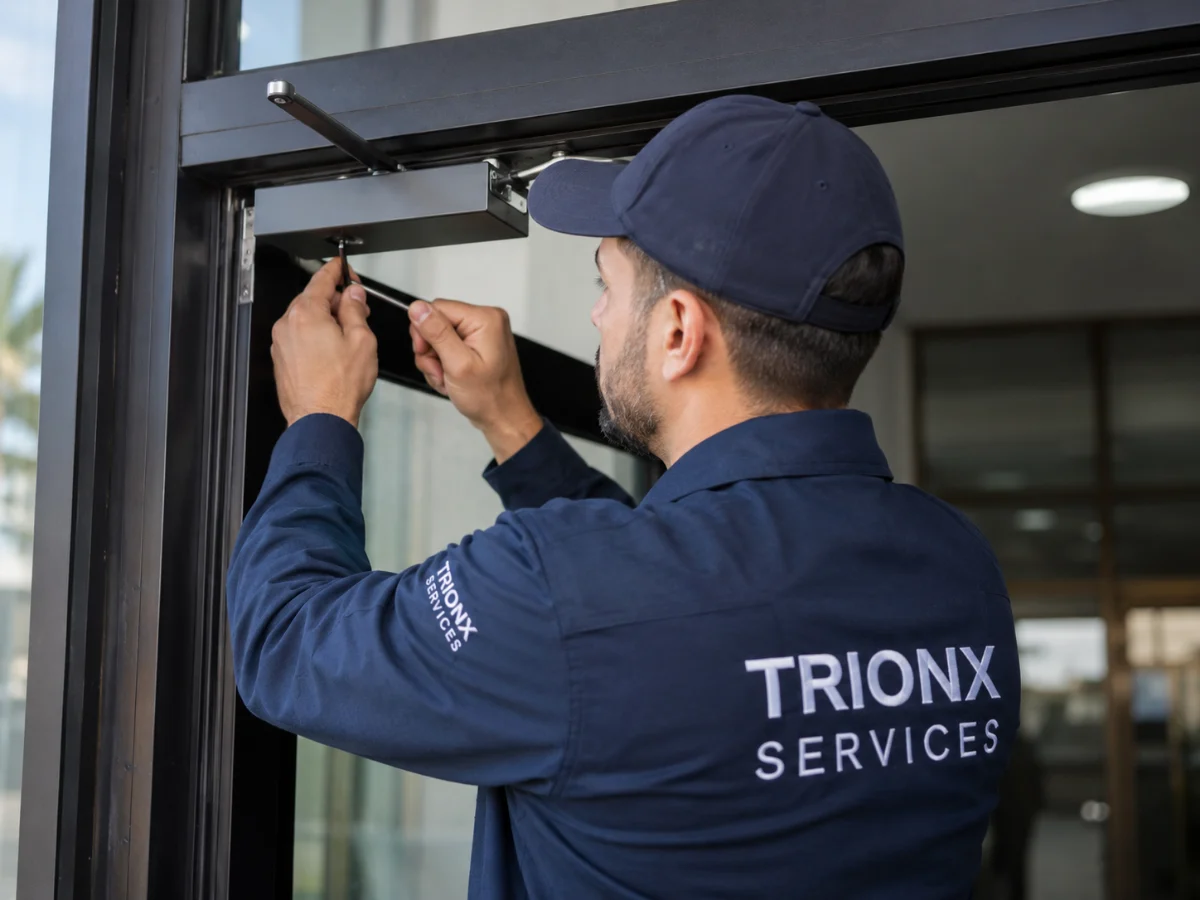
Fire door inspection: the annual requirement and the paperwork
A commercial door that will not close or latch
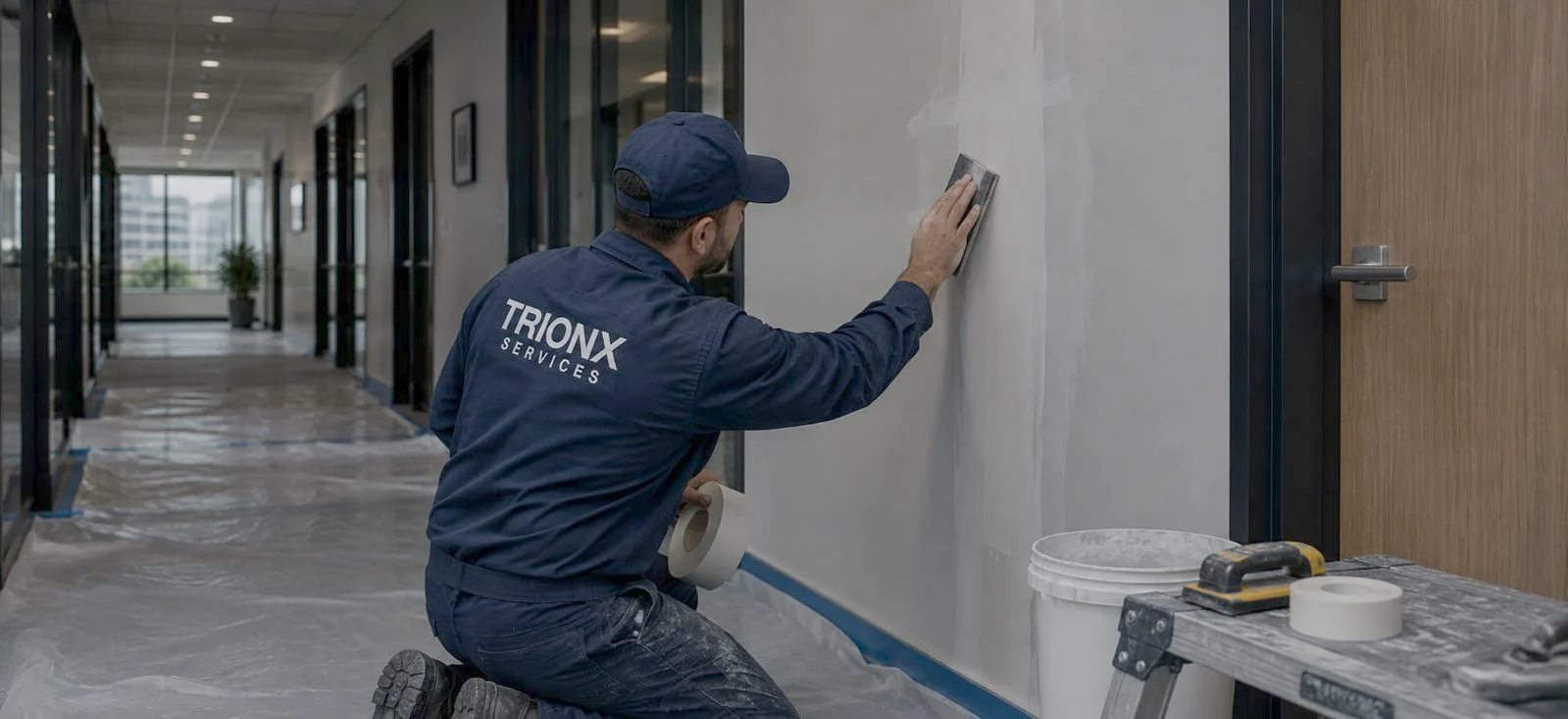
Office churn: moving teams without wrecking the finishes

Replacing ceiling tile without wrecking the rest of the grid
Trim and door frames: repairing rather than replacing
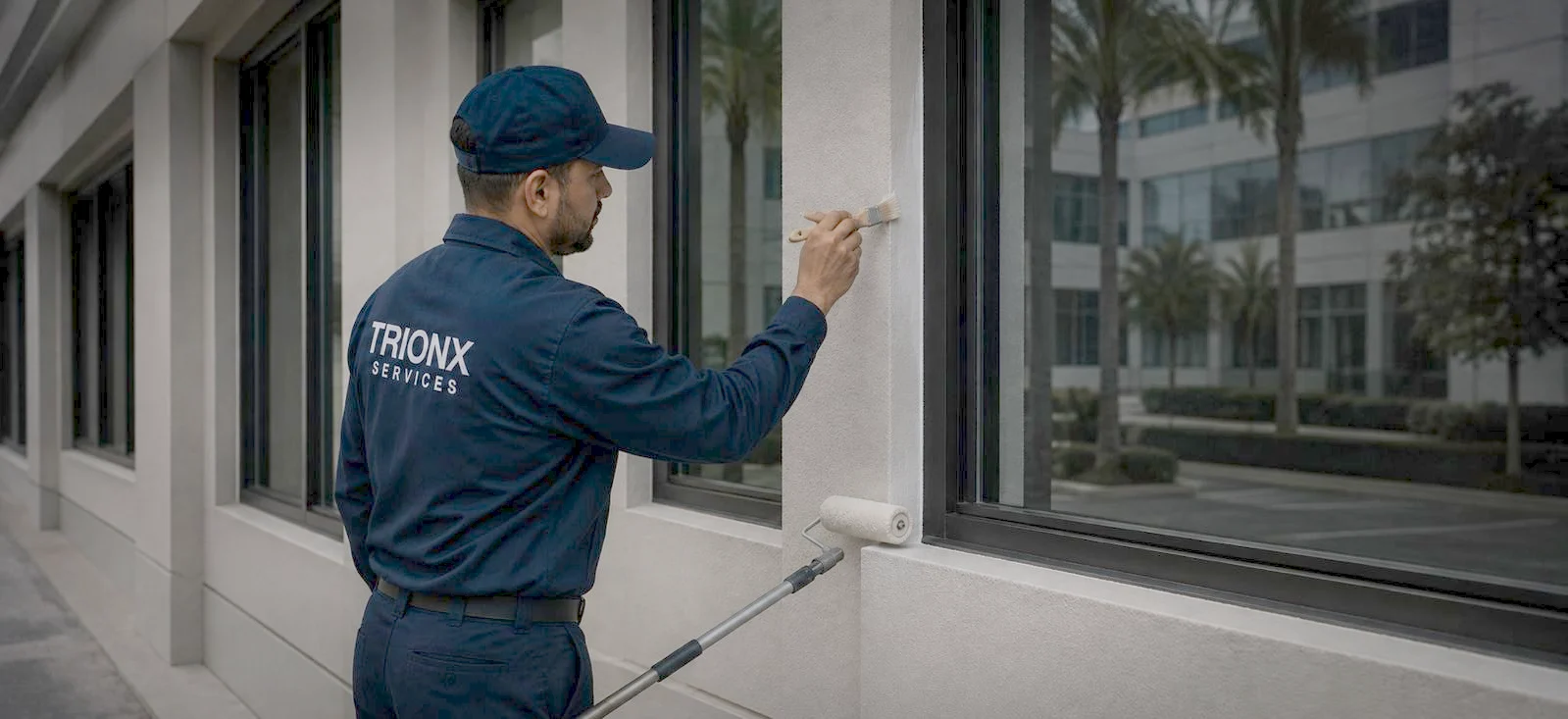
Painting a space that is still trading
One company, whoever does the work
Our technicians handle the trades that need no state license, and licensed contractors handle the ones that do. Either way we scope it, book the visit and file the record. Tell us the property and the problem and we will come back with a window. Call out of hours and someone who works here answers.