

Painting
Painting a space that is still trading
The painting is the easy part. Working around a business that cannot stop is the job.
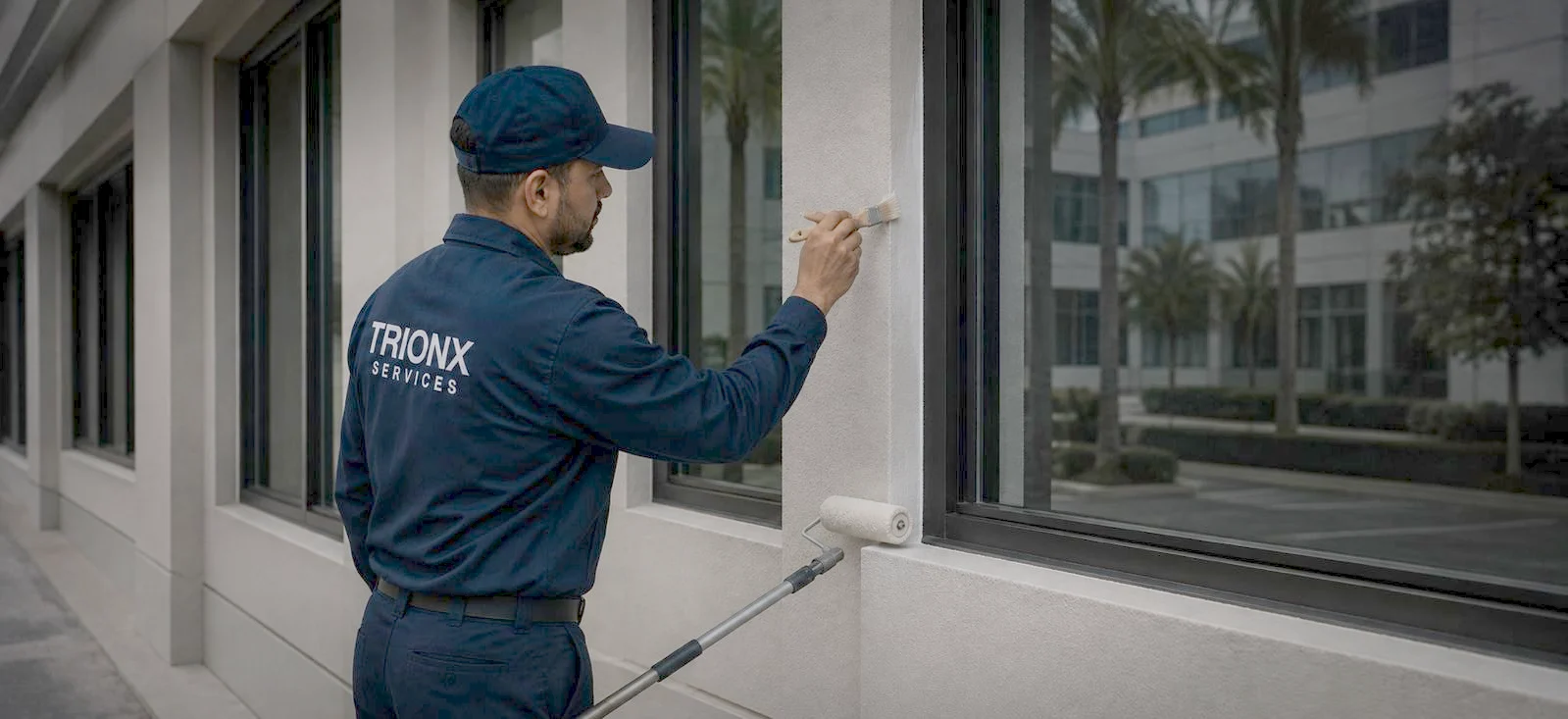
Repainting an empty unit is straightforward. Repainting one that is trading is a scheduling exercise with some painting attached, and almost every problem on these jobs comes from the first half rather than the second.
Sequencing decides everything
The work gets split into sections so the business keeps operating in one part while another is being done. Getting those sections right means understanding how the space is actually used rather than how the floor plan looks.
Where do people come in, where do they line up, where do deliveries land, which route does stock take. A section that looks self-contained on a drawing can turn out to be the only way to the store room.
Access equipment is the usual pinch point. A section is not workable if the only place to stand a tower is in the doorway everybody uses, and that is discovered on day two unless somebody walks it in advance.
Preparation is where the result is decided
Paint is a finish, not a repair. Anything filled, sanded flat and feathered properly disappears, and anything painted over telegraphs through. Our article on why a drywall patch shows covers that in detail.
Washing matters more than people expect in commercial interiors, particularly anywhere near a kitchen, where a film of grease on a wall stops a coating bonding and the failure appears months later as peeling rather than immediately.
Existing coatings have to be identified before anything goes over them. Putting the wrong system over an unknown one is how a whole wall lifts, and the test is a small area rather than the finished job.
Dust, odor and the things people actually complain about
Sanding produces the dust, so extraction at the tool and a sealed working section handle most of it. In a food operation the preparation areas are protected as a separate exercise from the rest of the space, and that is worth agreeing explicitly.
Odor is far less of an issue than it used to be, because most interior commercial work now uses water-based coatings that are low in odor and dry quickly. Where a specification genuinely needs solvent-based material, that section gets planned around trading hours instead of worked through.
Noise is the one nobody plans for. Sanding, moving equipment and stripping are all loud, and a section next to a meeting room or a treatment room is a timing question rather than a dust one.
Choosing the finish for the traffic
A flat finish hides surface imperfection best and marks most easily, which makes it right for a ceiling and wrong for a corridor.
An eggshell or satin finish takes cleaning and scuffing far better and shows more of what is underneath, which is the trade being made every time somebody specifies a corridor or a back-of-house wall.
Anywhere that gets hit repeatedly, a coating is the wrong tool. A kick plate, a corner guard or a rail solves it permanently where repainting solves it until the next cart.
Drying against curing
Touch dry is not the same as cured. A wall can feel dry in a couple of hours and still mark under pressure for considerably longer, and the callback on these jobs is nearly always something pushed back against a wall too early.
Agree when furniture, stock and signage go back, and take the figure from the product rather than from how the wall feels. In a humid space it runs longer than the tin suggests.
Protection, and what the space has to do
Floors take more damage on these jobs than walls do. Hard flooring gets covered and taped at the edges, carpet gets a breathable cover rather than plastic, and anything that cannot be moved gets sheeted rather than worked around.
Equipment is the part worth agreeing explicitly. Screens, tills, servers and anything with a vent should be covered or moved, and a decision about who moves them is better made in advance than at eight in the morning.
The space has a part in this too. Clearing walls, emptying shelving and giving access to the areas being worked on are what keep the sequence intact, and a section that cannot be cleared on the day it was scheduled pushes everything behind it.
Reinstatement matters as much as the painting. Putting furniture, signage and fittings back where they were, and confirming it with somebody who knows the space, is the difference between a finished job and one that generates a list a week later.
Who carries this out
Interior and exterior painting, preparation, filling, caulking and the making good around them are performed directly by our own technicians. None of it requires a Florida contractor license, and TrionX carries general liability and workers' compensation on that work.
Our article on how often a South Florida exterior needs repainting covers the outside, where the intervals are driven by sun and weather rather than by traffic.
Common questions
Questions we get asked about this
Does the space have to close?
Usually not, and the work is sequenced in sections instead so one area is live while another is being painted. The trade, the layout and where the access equipment has to stand decide it, and that is worth agreeing before anybody starts rather than discovering on day two.
How bad is the smell?
Modern water-based commercial coatings are far lower in odor than solvent-based ones and are what most interior work uses. Where a specification genuinely calls for solvent-based, that is the point to plan around trading hours rather than to work through them.
What about dust?
Sanding is the dusty part, not the painting. Containment, extraction at the tool and sealing off the working section handle most of it, and in a food operation the preparation area gets protected as a separate question from the rest of the space.
How soon can furniture go back?
Touch dry and cured are different things. A wall can feel dry within hours and still mark if something is pushed against it, so anything leaning on a freshly painted surface is what produces the callback. The product data sheet gives the real figure and it is longer than people expect.
Keep reading
Related field notes
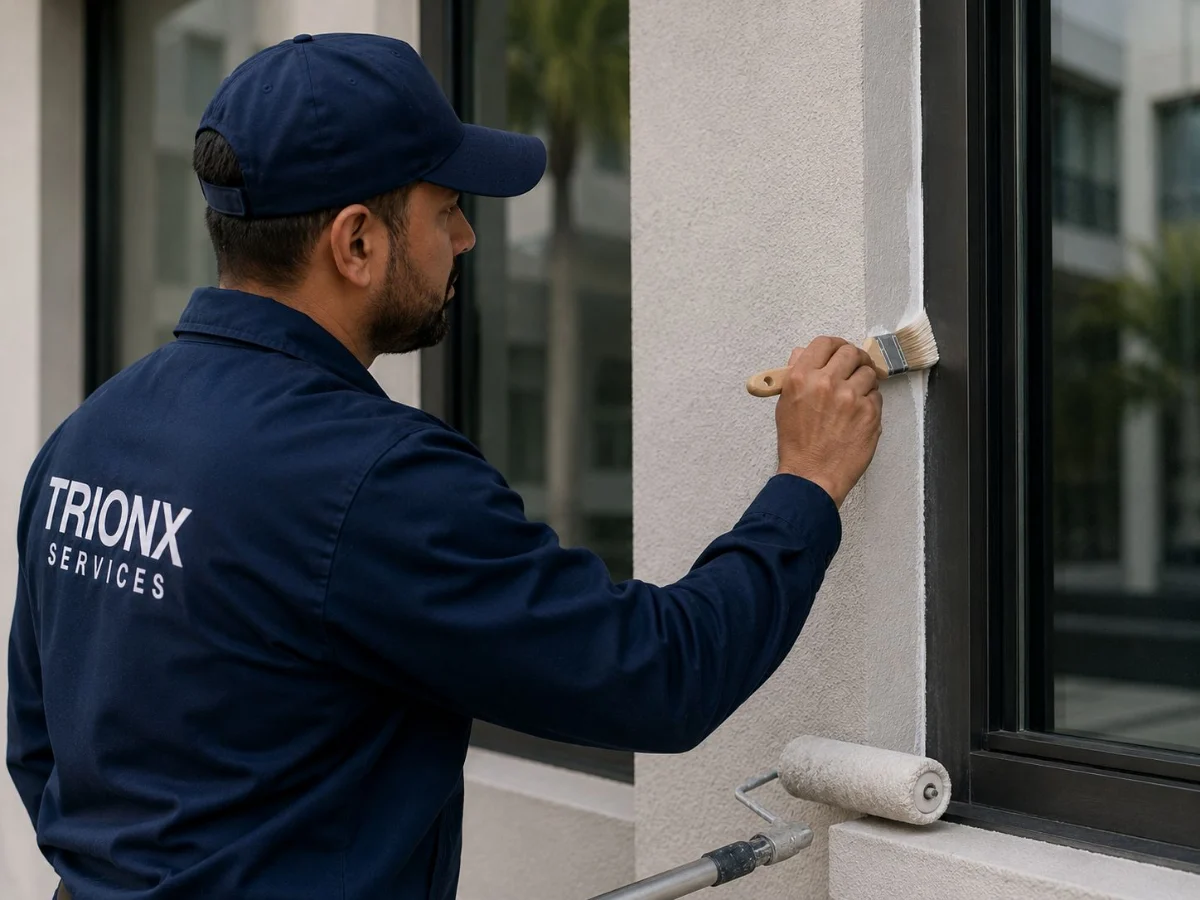
Matching paint over a repair so it does not flash
Why a drywall patch shows, and how to stop it
Caulking and joint sealing: the maintenance nobody schedules
A restroom stall door will not latch or lock
Backflow preventer test: what the annual notice means
Salons and spas: humidity, chemicals and finishes that show everything
One company, whoever does the work
Our technicians handle the trades that need no state license, and licensed contractors handle the ones that do. Either way we scope it, book the visit and file the record. Tell us the property and the problem and we will come back with a window. Call out of hours and someone who works here answers.