
Painting
Matching paint over a repair so it does not flash
The color can be exactly right and the patch still obvious, because the wall is not reflecting light the same way.
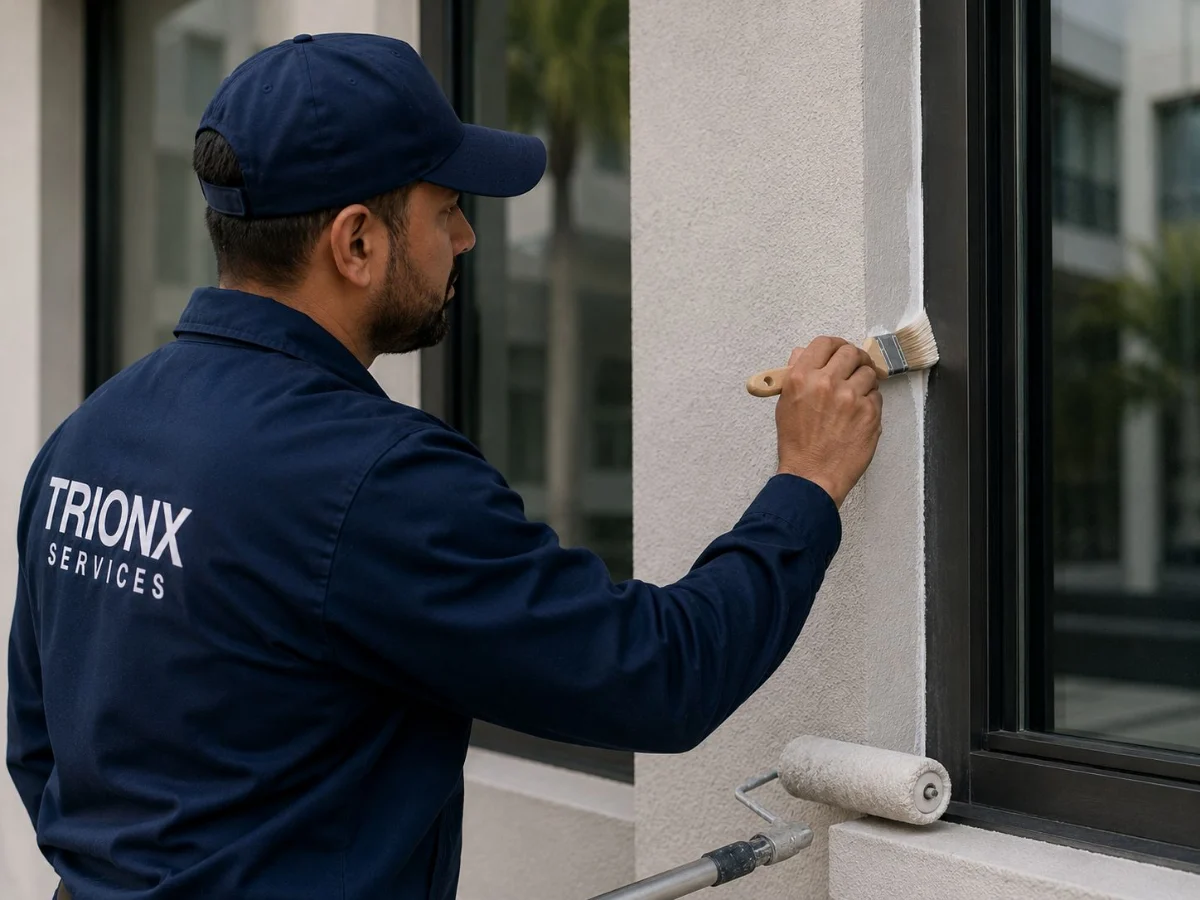
A repair filled flat, sanded properly and painted in the correct color can still be obvious from the doorway. The color is rarely the problem. How the surface takes the paint is.
What flashing actually is
Fresh joint compound is porous. The painted wall around it is sealed. Put the same paint over both and the compound drinks it in while the wall holds it on the surface, so the patch dries to a duller sheen even though the pigment is identical.
That difference in reflectance is what the eye picks up, and it is far more visible than a small color variation would be. It is also why the patch tends to look worse under a window or a wall light, where raking light exaggerates any change in surface.
Sealing the repair is the fix
Priming the filled area evens out absorbency so the finish coat behaves the same across the whole wall. It is the single step that separates a touch-up that disappears from one that announces itself, and it is the step most often skipped because the repair already looks fine bare.
On a large or heavily filled area, priming the whole wall rather than just the patch removes the question entirely.
Over a stain, sealing does a second job. Water marks, smoke and tannin all bleed through ordinary paint however many coats go on, so the stain has to be blocked rather than covered. Our article on drywall repair after a leak covers the drying that has to happen before any of this.
Why the original tin rarely helps
A wall changes. Light fades it, cleaning burnishes it, and cooking and traffic deposit a film on it over years. Paint in a tin also drifts slightly with time and settling.
So an exact original frequently looks brighter and cleaner than everything around it, which reads as a patch just as clearly as a mismatch. Where color matching is needed, a sample taken from the wall itself is a better starting point than the label, and the match wants checking on the wall in the light it will live under rather than on a card.
Sheen has to match as well as color
The same color in flat, eggshell and satin looks like three different colors on a wall, because sheen changes how much light comes back. Matching the color and not the sheen produces a patch that is obvious from an angle and invisible head-on.
Where the original sheen is unknown, a small test area beside the repair settles it in a way that guessing does not.
Feather it, and know when to stop
A touch-up wants working outward well beyond the repair so there is no hard edge for the eye to catch, rolled rather than brushed where the surrounding wall was rolled, and with the same nap so the texture matches.
And there is a point where a touch-up is the wrong answer. On a large uninterrupted wall under good light, painting corner to corner is usually quicker than three attempts at an invisible patch, and it looks better. Decide at the start, not after the third attempt.
Exteriors are a different problem
Outside, the wall has faded and the fading is uneven. A south-facing elevation in this climate is a different color from a shaded one after a couple of seasons, even though both were painted together from the same batch.
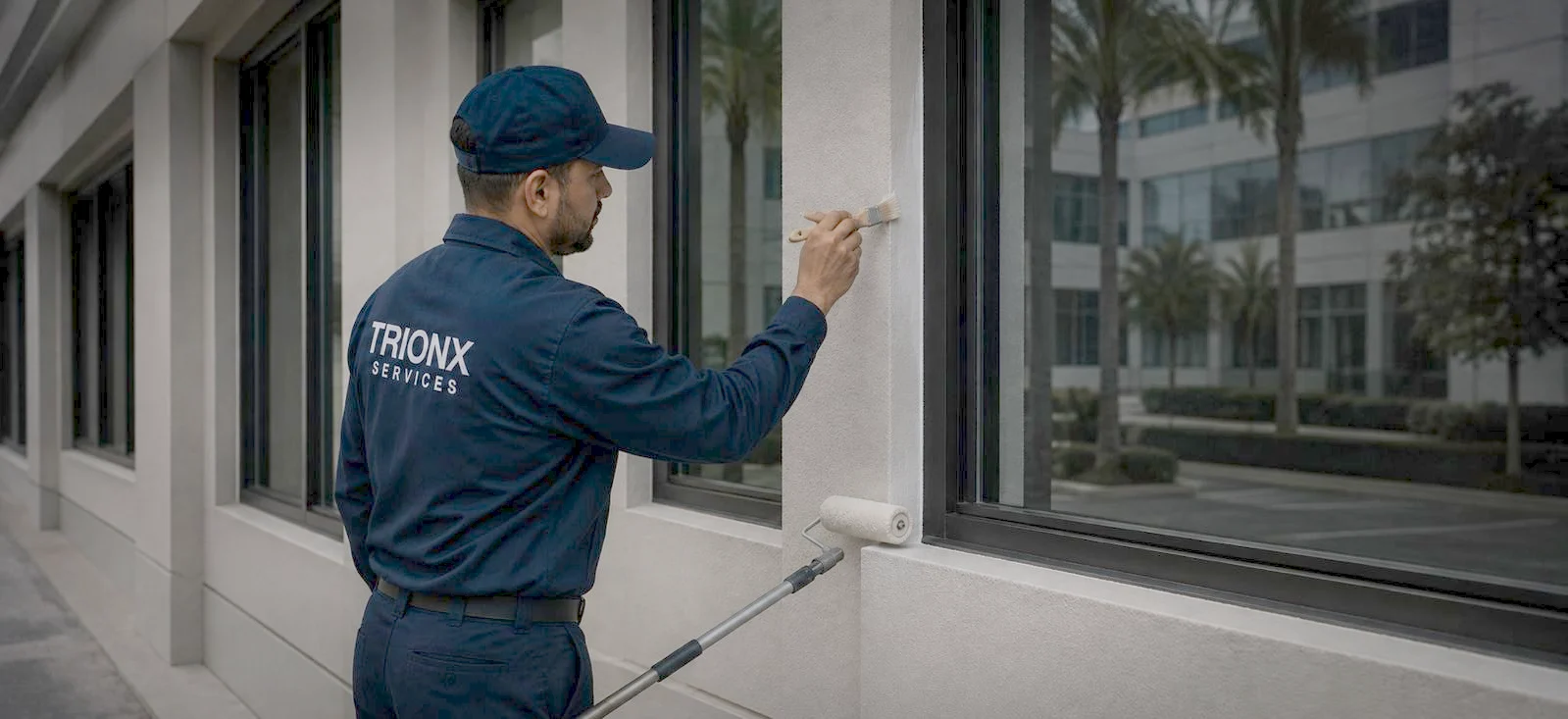
So an exterior touch-up matched to a sheltered area looks wrong in the sun and the other way round. Matching is taken from the elevation being repaired, and where a patch cannot be made to disappear, painting to a natural break such as a change of plane, a downspout or a corner is the honest answer.
Keep a record while you have one
The cheapest future repair is the one where somebody wrote down what was used. Product, color reference, sheen, and which wall it went on.
Filed with the job record, that turns the next touch-up from a color-matching exercise into buying the same material again, and it survives a change of manager in a way that a tin in a cupboard does not. Our article on what a closeout should contain covers where that information belongs.
What to agree before the work
What the wall lives under, because a reception with a window down one side needs a different standard from a store room. Whether the wall is being touched up or painted out. What the sheen is. And when anything can be pushed back against it, which our article on painting a space that is still trading covers.
Who carries this out
Filling, sealing, color matching, touching up and full repaints are performed directly by our own technicians. None of it requires a Florida contractor license, and TrionX carries general liability and workers' compensation on that work.
Common questions
Questions we get asked about this
What does flashing mean?
A patch that reads as a different sheen rather than a different color. Fresh compound absorbs far more than the painted wall around it, so the coating sinks in over the repair and sits on the surface elsewhere, and the two reflect light differently even in the same paint.
Does priming the repair fix it?
It is the main thing that does. Sealing the filled area evens out how much the surface absorbs, so the finish coat behaves the same over the patch as over the rest. Painting straight onto bare compound is the most common cause of a visible touch-up.
Will paint from the original tin match?
Not reliably. The wall has aged, faded and been cleaned since, and paint changes slightly in the tin. An exact original often looks fresher than its surroundings, which reads as a patch just as clearly as a color difference would.
When is it better to paint the whole wall?
Where the wall is a single visible plane under good light, painting corner to corner is usually cheaper than several attempts at an invisible touch-up. On a broken-up or low-light wall, a properly primed and feathered patch disappears.
Keep reading
Related field notes
Painting a space that is still trading
Drywall repair after a leak, done so it does not come back

How often a South Florida commercial exterior needs repainting
Graffiti and storefront damage: back to trading condition
Paint is peeling or bubbling on a commercial wall
Parking lot striping and ADA stall markings: when to redo
One company, whoever does the work
Our technicians handle the trades that need no state license, and licensed contractors handle the ones that do. Either way we scope it, book the visit and file the record. Tell us the property and the problem and we will come back with a window. Call out of hours and someone who works here answers.