
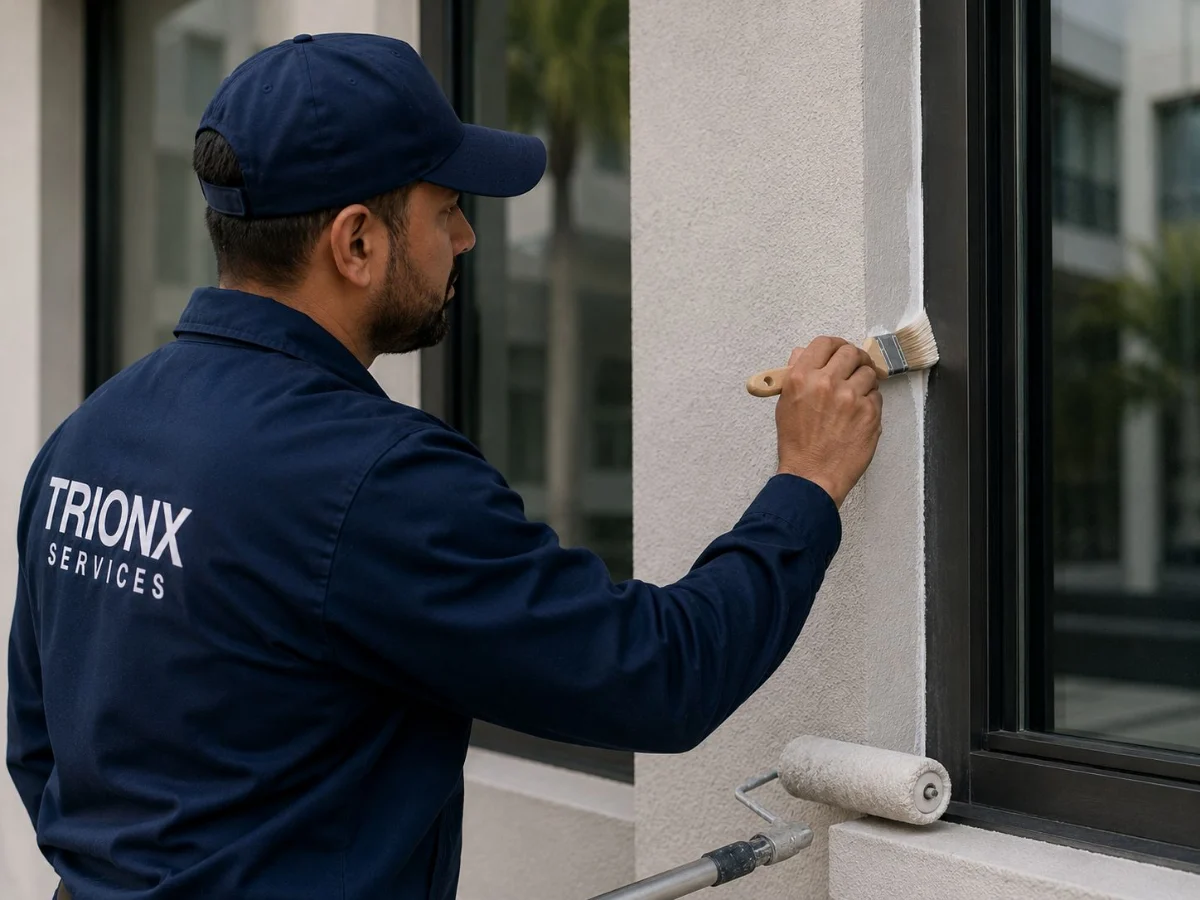
Painting
Paint is peeling or bubbling on a commercial wall
Paint that bubbles or flakes has almost always been pushed off by something, and repainting over the top only hides it for a season.
Someone who works here answers, out of hours included. (786) 628-9227
Paint blisters and peels because something has broken its grip on the wall. In Miami the first suspect is moisture, either coming through the wall from behind or sitting trapped under the coating. The second is a surface that was never ready to be painted: dusty, chalky, glossy or previously coated with something that would not bond.
So the first job is to decide which one you have, before anyone talks about a repaint. If the wall is wet or has been wet, the paint is a symptom and the cause has to be found. If the wall is dry and the paint simply let go, it is a coatings job and a straightforward one.
Read the pattern
Where the paint has failed says a good deal about why. Walk the wall and note the position before touching anything.
- Low on the wall, within a meter or so of the floor: moisture from the slab, a splash zone, irrigation spray or a drain that overflows onto the footing.
- Under a window, along a parapet or beneath a roof edge: water getting in at a seal, a flashing or the roof itself.
- Beside a restroom, kitchen or air handler wall: a pipe, a drain line or a condensate leak inside the wall.
- In sheets across a large flat area, with no link to water: adhesion failure from preparation or product choice.
Photograph it with a coin or tape measure for scale and note the date. If it is spreading, that record is how you will know.
Peel the edge and look at the back
Lift a loose flake and look at both sides. If the back of the paint is damp, stained or carries a white crust, water has been behind it. If the back is clean and dry and the wall under it is clean, the bond failed on its own. Dust, grease or a glossy old coat left unabraded will do that.
Press the bare wall with a fingertip. Drywall that is soft, powdery or crumbling has been wet for some time. On masonry and stucco, white salt deposits mean water is traveling through the wall and drying at the surface, and the salt itself will push new paint off.
Humidity and the chalk factor
Miami adds its own causes. Exterior paint that has chalked, leaving a pale powder on your hand when you rub it, no longer gives a new coat anything to hold. Stucco that is painted before it has dried properly holds water behind the film. Mildew under the paint on a shaded elevation also lifts it. Our piece on repainting a commercial exterior in Florida covers intervals and what the climate does to a coating. This article is about the walls that fail well short of the interval.
Inside, the usual culprit is air conditioning that cannot keep up. A cold wall in humid air collects condensation on the paint, and coatings bubble where the drying never finishes. If the building smells damp as well, the article on a musty smell with no visible water explains how to find the moisture that is not showing itself.
Rule out the seal before the paint
A good share of exterior peeling starts at a joint. Caulk around windows, door frames, control joints and penetrations dries out and splits in the sun, and water follows the gap into the wall. The paint fails in a line that follows the joint, which is a useful clue. Replacing that sealant is part of the repair, and our notes on commercial caulking and sealing cover when to renew it. Paint applied over a split joint fails again along the same line.
What to do before repainting
Fix the water first, then let the wall dry, then paint. Drying takes longer than people expect, particularly on masonry in summer, and a surface that feels dry to the hand may still hold moisture inside. Where there is any doubt, leave it, recheck after a dry spell and see whether the bubbles return.
Once the wall is sound, the sequence is straightforward. Scrape back to firmly bonded paint, feather the edges, remove chalk and mildew, patch what is damaged, prime bare areas with a product suited to the surface, and recoat. Where only part of a wall is touched, matching the paint over a repair decides whether the patch shows.
Who carries this out
Scraping, preparation, patching, caulking, sealing, priming and painting, inside and out, are performed directly by our own technicians under our commercial painting service. TrionX carries general liability and workers' compensation on that work, and none of it requires a Florida contractor license. Pressure washing before a repaint is part of the same scope.
If the diagnosis points to a leaking pipe or drain, a condensate line or an air handler, that is plumbing or HVAC work, and the roof or flashing is roofing. Florida requires a license for each of those at any job size. Licensed, insured contractors carry that work out, and TrionX coordinates it and documents it. Water damage that reaches the drywall is repaired by our technicians once the source is closed. If the framing or structure behind the wall is affected, that goes to a licensed contractor as well.
When it cannot wait
Bubbling that is growing week to week, paint that is wet to the touch, a stain that is spreading or a wall that has gone soft needs attention now, because the leak behind it is still running. Flakes on the floor of a customer area, or paint falling from above an entrance, are a housekeeping and liability point as well and should be cleared and recorded right away.
A small area of dry, chalky or tired paint on a quiet elevation can wait for the next scheduled round of work, provided somebody looks at it again and confirms that it has not changed.
Common questions
Questions we get asked about this
Is peeling paint always a moisture problem?
No. Poor surface preparation, the wrong primer, painting over dust or chalk, and ordinary age all cause peeling. Moisture is the cause that matters most, because it keeps working after the paint is replaced. Check for it before you decide it is only cosmetic.
How can I tell whether the water is coming from inside or outside the wall?
Look at where it sits. Bubbles low on a wall point to damp rising from the slab or a splash zone. Bubbles under a window, below a roof edge or along a joint point to a failed seal or a roof leak. Bubbles near a bathroom, kitchen or air handler point to a pipe, a drain or condensation.
Can paint just be scraped and recoated?
Where the cause was adhesion or preparation and the wall is dry, yes. Loose paint is scraped back to sound edges, the surface is cleaned and primed, and the coat is applied. Where the wall is damp, the new coat lifts the same way.
Does paint that is bubbling contain anything hazardous?
In older buildings the layers underneath can include lead paint, and a building from before the late 1970s should be treated with care before anything is sanded. If the age is uncertain, ask before disturbing it, and keep the debris out of ventilation and public areas.
Keep reading
Related field notes
How often a South Florida commercial exterior needs repainting
Matching paint over a repair so it does not flash
A musty smell with no visible water
Pressure washing: what it fixes, and what it damages
Parking lot striping and ADA stall markings: when to redo
There is a burning smell and nothing visible
One company, whoever does the work
Our technicians handle the trades that need no state license, and licensed contractors handle the ones that do. Either way we scope it, book the visit and file the record. Tell us the property and the problem and we will come back with a window. Call out of hours and someone who works here answers.