

Facilities
A musty smell with no visible water
A musty smell means something has been damp long enough for growth to start, and the water is rarely where the smell is strongest.
Someone who works here answers, out of hours included. (786) 628-9227
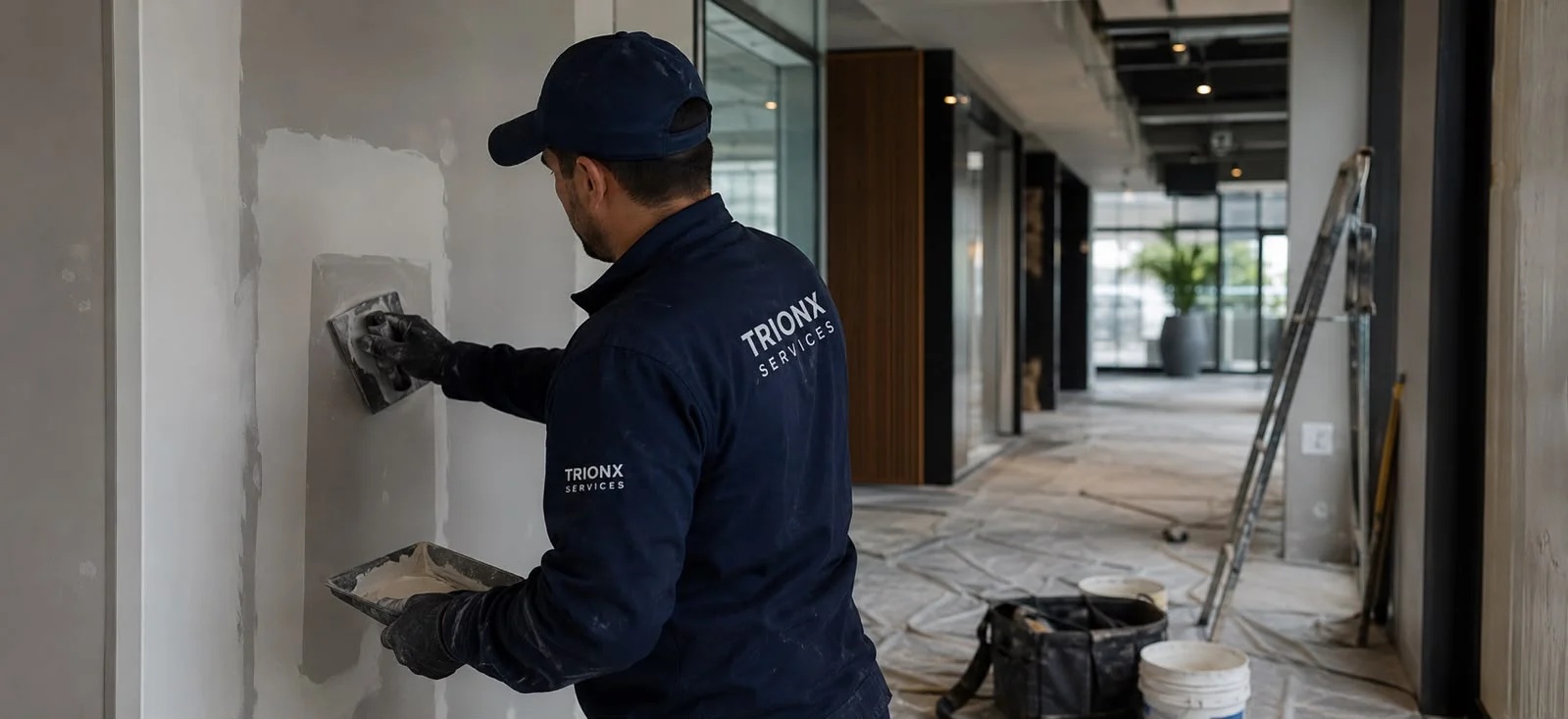
Work out where the smell is strongest and, just as usefully, where it disappears. Walk the space methodically at different times of day and write it down rather than trusting your nose to remember.
A musty smell means something has been damp long enough for growth to start. The moisture is rarely at the point the smell is strongest, because air moves.
Follow the air, not the smell
If the smell is stronger when the air conditioning runs, the source is somewhere the system is moving air through: the air handler itself, a filter that has stayed wet, a duct, or a ceiling void used as a return plenum.
If it is stronger when the system is off, it is more likely local to the room and being masked by airflow when the system runs.
If it appears in a room with no obvious water anywhere, check what is above it and what is behind the wall it shares with somewhere wet. A restroom, a kitchen, a riser or a mechanical room on the other side of a partition explains a great many of these.
The usual sources
Condensate. An air handler pan or drain line that has been overflowing quietly for weeks wets insulation and ceiling material without ever dripping visibly. Our article on air conditioning leaking water inside covers that mechanism.
A slow supply leak inside a wall or under a floor, which produces no drip and no stain, only a soft patch and a smell. This is also the case where the water bill is worth checking, because a leak that never reaches a drain is still being metered.
Humidity alone. A space that has been closed, or running without air conditioning, or with a unit that short-cycles and never runs long enough to dehumidify, will hold enough moisture in soft furnishings, board and carpet to smell strongly. No leak exists to find.
Wet substrate under a floor covering, which frequently pairs with tile that has started to sound hollow. Our article on floor tile that is lifting or loose covers that side.
An old event that was never dried properly. Water that was mopped up and the surface repainted, with the insulation or the void behind it left wet.
What to measure
A moisture meter across walls, floors and ceilings in the affected area and in a comparable area that smells fine, so you have something to compare against. A reading means little on its own and a great deal next to a control.
The relative humidity in the space, over a few days rather than once. Persistently high humidity with no leak points the whole investigation toward the air conditioning rather than the plumbing.
Lift a ceiling tile next to the affected area rather than the one under the worst of it, and look with a flashlight before putting a hand anywhere.
Look at the water bill as well. A supply leak inside a wall or under a floor never reaches a drain, so it is metered and charged for the entire time it is soaking into something, and a step change on the bill dates roughly when the problem started. Our article on a running toilet or a bill that has jumped covers the overnight meter test that confirms it.
Where our part ends
Saying this plainly. Identifying, assessing and remediating mold belongs to a qualified assessor and a remediation contractor. We do not test for it, we do not grade it, and we would not want a maintenance company that told you otherwise.
What we do is the part that actually stops it recurring: finding the moisture, coordinating the licensed trade that fixes the source, and making good afterward once it is dry. Where an assessment is warranted, having the moisture source already identified makes that assessment shorter and cheaper.
Who carries this out
Investigation, opening up, ceiling tile, drywall, flooring, painting and making good are performed directly by our own technicians. TrionX carries general liability and workers' compensation on that work.
Plumbing, HVAC, refrigeration and roofing are coordinated through licensed contractors, because Florida requires a license for those at any job size. The condensate and humidity causes, which are most of them, land there.
The sequence that matters
Source, then dry, then make good. Repairing and repainting before the void is dry puts the smell and the stain back within weeks, which is the most common way this gets paid for twice. Our article on drywall repair after a leak covers the drying step in detail.
Where the cause was humidity rather than a leak, the fix is the air conditioning running properly rather than any repair to the fabric, and replacing the affected material without that leaves the cause in place.
Common questions
Questions we get asked about this
Is a musty smell always mold?
It usually means microbial growth on something that has stayed damp. Identifying and assessing that belongs to a qualified assessor rather than to a maintenance company, and we would not tell you otherwise. We can find the moisture and stop it.
There is no leak anywhere. Where is the water coming from?
Often humidity rather than a leak. A space running warm and humid, or one where the air conditioning has been off or is oversized and short-cycling, will hold enough moisture in materials to smell without any water ever appearing.
Why is it worse when the air conditioning runs?
Because the system is moving air across something damp and distributing it. That usually points at the air handler, a filter, a duct or a ceiling void the return air passes through, rather than at the room the smell is noticed in.
Can you find it without opening things up?
A moisture meter and a look above the ceiling get you a long way. Some investigation does mean opening a small area, which is why it is worth doing deliberately and in the right place rather than guessing at four.
Keep reading
Related field notes
A ceiling tile is stained or sagging: what it is telling you
Drywall repair after a leak, done so it does not come back

The air conditioning is leaking water inside

A yearly check of storefront glass and glass doors

Lock functions: which one each commercial door needs
The ice machine is not making ice, or the ice is slimy
One company, whoever does the work
Our technicians handle the trades that need no state license, and licensed contractors handle the ones that do. Either way we scope it, book the visit and file the record. Tell us the property and the problem and we will come back with a window. Call out of hours and someone who works here answers.