
Facilities
Pests are getting in: finding the entry points
Treatment kills what is inside. The building decides how much comes in next week.
Someone who works here answers, out of hours included. (786) 628-9227
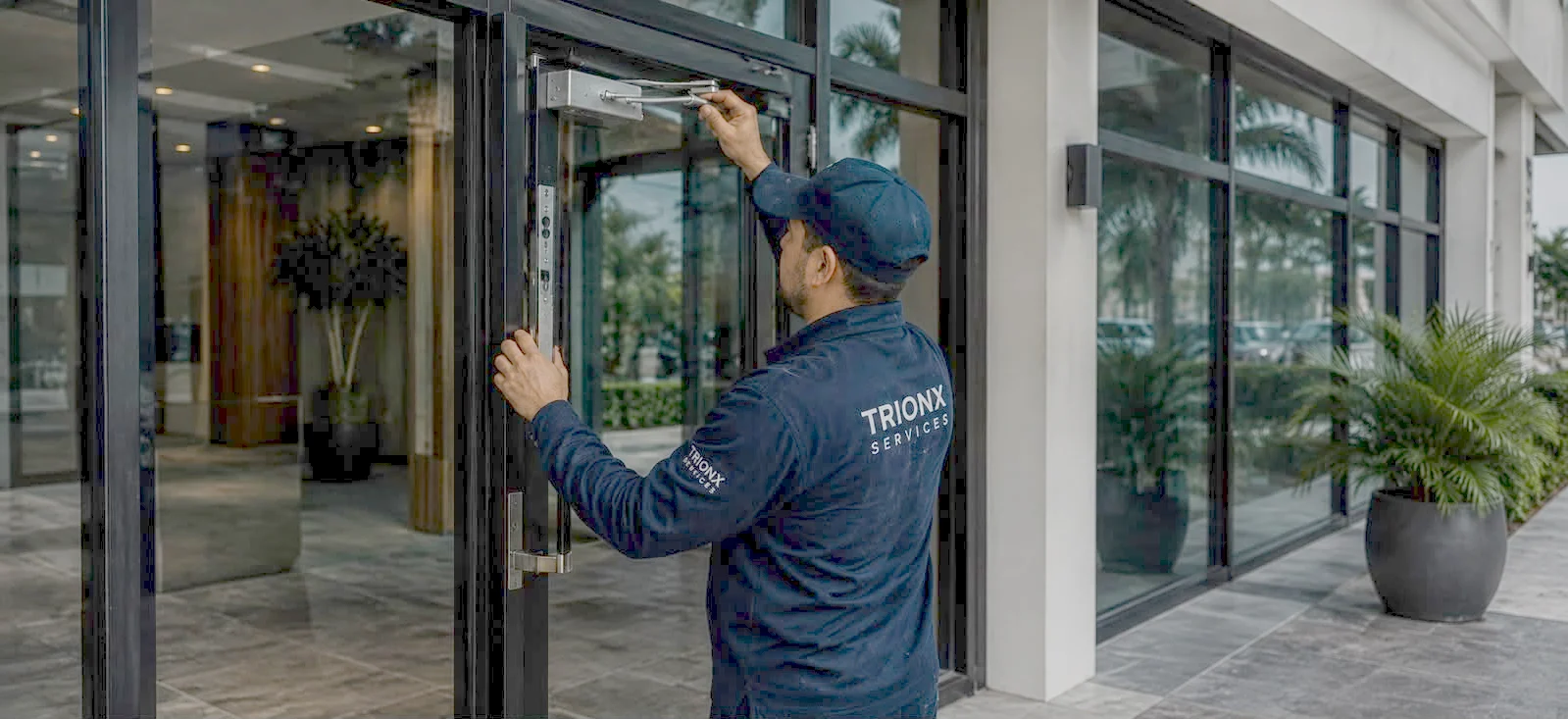
Kneel at every external door and look along the bottom and both sides for daylight. Anything you can see light through is an entry point, and this one check finds most of them.
Treatment deals with what is already inside. Whether more arrives next week is decided by the building, and that half is repair work.
Doors, which is where most of it happens
The gap under a back or delivery door is the most common entry point in commercial property and the most cited maintenance item in kitchens. Sweeps wear down, harden, tear or fall off, and because nobody looks at the bottom of a door it happens invisibly over a year.
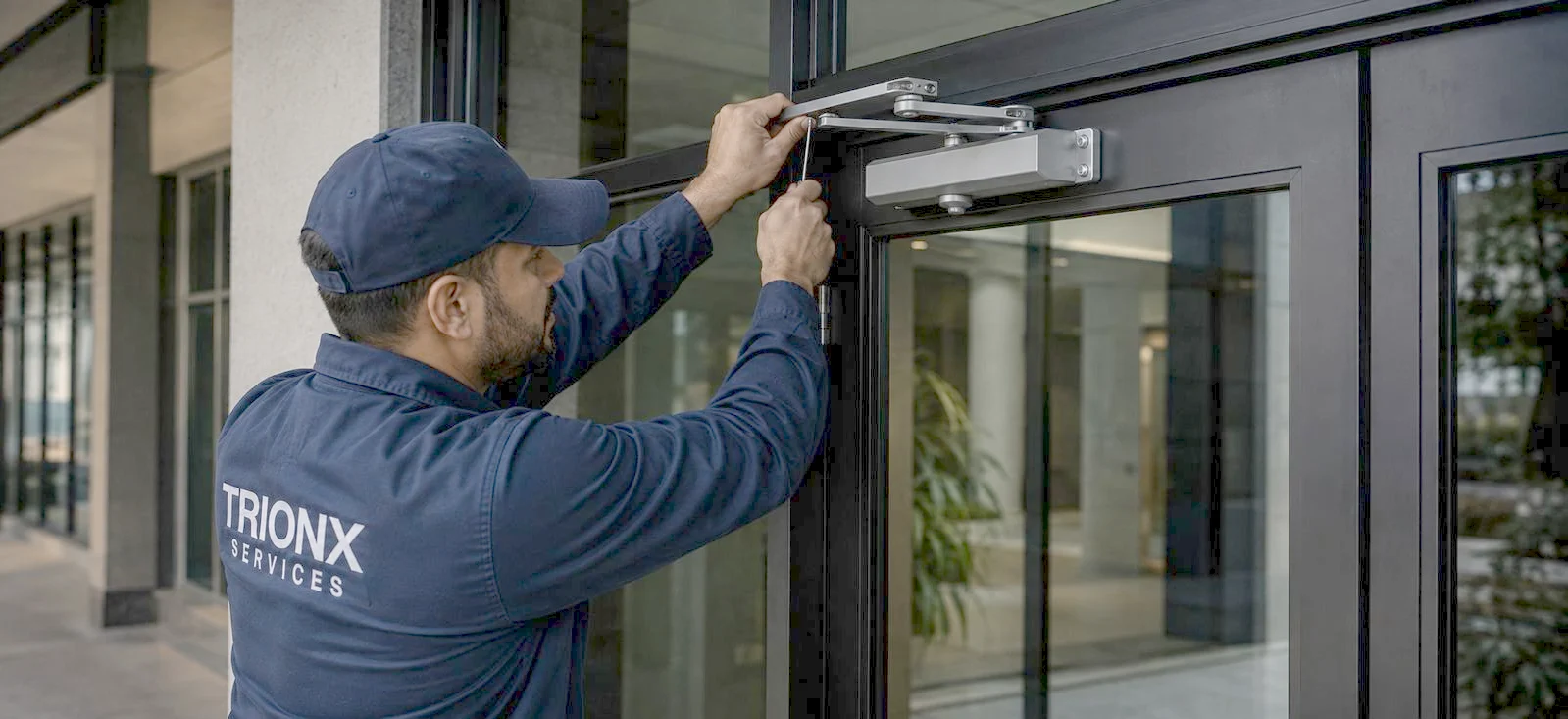
Check the threshold as well, and the seals down both jambs. Check whether the door actually closes and latches on its own, because a door that does not is a door that gets propped, and a propped door defeats everything else. Our article on a door that will not close or latch covers why that happens and how it gets corrected.
Roller shutters and dock doors are the other big one. The gap under a shutter, the guides at both sides, and the seal at a dock leveler are all routes, and dock seals perish in this climate faster than people schedule for.
Penetrations, which nobody walks past
Every pipe, conduit, cable and duct entering the building is a potential gap, and the ones made after the original build are the worst because they were rarely sealed properly.
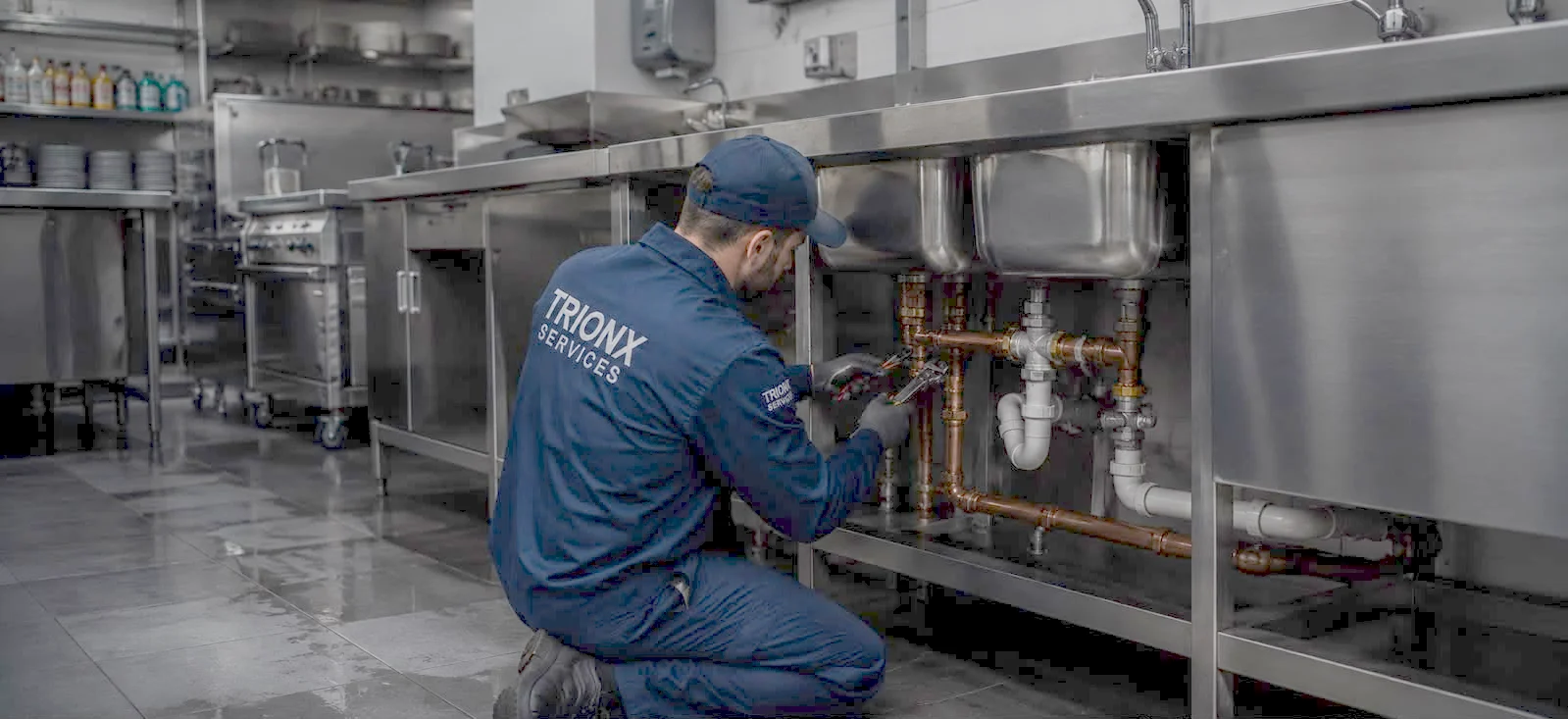
Look under sinks and behind equipment where waste and supply lines pass through walls. Look at where refrigeration lines, condensate lines and electrical conduit enter. Look at the back of the building at low level, which is where most retrofitted services arrive and where nobody ever looks.
Sealing these is straightforward and permanent, and it is the highest-value hour on the whole list.
Above eye level
Vents and louvres with damaged or missing mesh. Extract outlets whose flaps have stopped closing. Gaps at the eaves or where a roof meets a wall. Damaged soffit. Gaps around rooftop plant penetrations.
Rodents climb and birds do not need much, so a building that is sealed at ground level and open at roof level has moved the problem rather than solved it. This is also where an infestation that seems to have no explanation usually turns out to be coming from.
What is attracting them
Worth walking at the same time, because sealing a building that is feeding them from outside only goes so far.
Trash areas and their proximity to doors. Standing water, including a blocked drain, a condensate line discharging to the ground, or an air conditioning unit dripping. Vegetation touching the building, which is a bridge as well as a harborage. Deliveries stored outside. Grease around an extract discharge.
A dry drain trap is worth checking too, because it is an open route from the drainage system into the room. Our article on a sewage smell in the building covers it, and the same defect explains both problems.
Record it as a map, not a list
Mark each entry point on a plan rather than writing them down as sentences. It makes the repair visit efficient, and it shows a pattern that a list will not: several gaps along one elevation usually means one underlying cause, such as a settled threshold or an elevation nobody maintains.
Photograph each one before and after. In a food operation this record sits alongside your pest contractor's reports and is asked for at inspection. Our article on the maintenance items behind a health inspector citation covers where this falls in the wider list.
Who carries this out
Door sweeps, thresholds, weatherstripping, door alignment and closers, sealing penetrations, mesh and screening, soffit and general making good are all performed directly by our own technicians. That is nearly the whole exclusion list, none of it requires a Florida contractor license, and TrionX carries general liability and workers' compensation on it.
Treatment is a licensed pest operator and is not us. Where a gap turns out to be at a roof penetration or needs plumbing or electrical work to close properly, that is coordinated through licensed contractors.
Keeping it closed
Put a daylight check on every external door into the quarterly walk. Sweeps are consumable and they wear on a predictable cycle, so treating them as a scheduled replacement rather than a repair is both cheaper and quieter.
In a food operation put it monthly instead, alongside the other items in the restaurant maintenance calendar.
Common questions
Questions we get asked about this
We already have a pest contractor. Why is this still happening?
Because treatment and exclusion are different jobs. A pest operator treats what is present and will tell you where they are entering. Closing those entry points is building repair, and if nobody does that half, treatment becomes a permanent subscription.
What size gap actually matters?
Smaller than people expect. A mouse needs roughly the gap under a badly fitted door, and insects need almost nothing. The practical test is daylight: kneel at every external door and look along the bottom and the sides.
What is the single most common entry point?
The gap under a back or delivery door, from a worn or missing sweep. It is the most cited maintenance item in commercial kitchens and the cheapest to correct, and it recurs because sweeps wear out quietly.
Do you do pest treatment?
No. Treatment is a licensed pest operator and we do not represent otherwise. We do the building half: sweeps, thresholds, weatherstripping, sealing penetrations, door alignment, screening and making good.
Keep reading
Related field notes

One company, whoever does the work
Our technicians handle the trades that need no state license, and licensed contractors handle the ones that do. Either way we scope it, book the visit and file the record. Tell us the property and the problem and we will come back with a window. Call out of hours and someone who works here answers.