
Doors
A commercial door that will not close or latch
A door that swings most of the way shut and then stops is not almost closed. It is open, and on a rated assembly it has lost its rating.
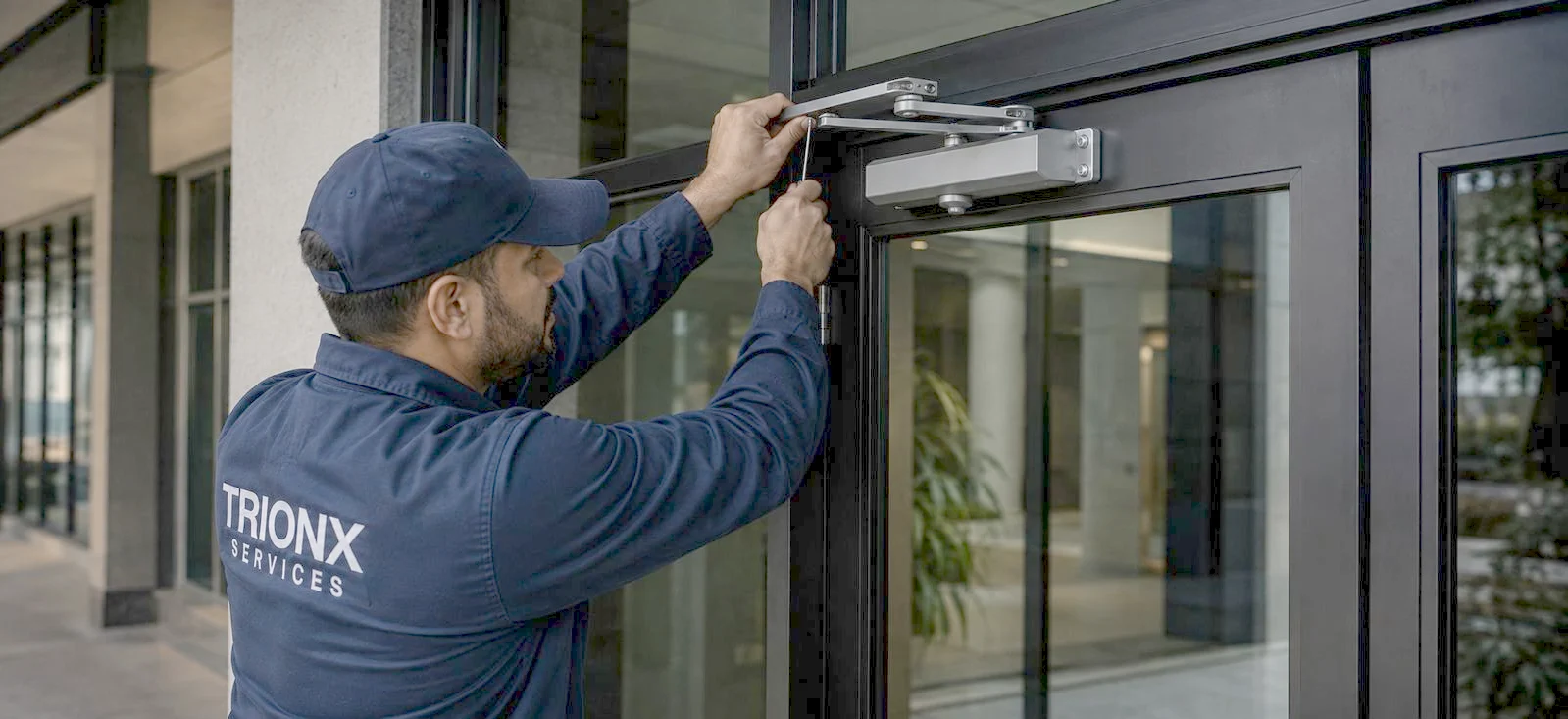
Open the door fully, let go, and do not touch it. If it stops short of the strike, rests against it, or needs a push to engage, the door is open. On a fire rated assembly it has also lost its rating, and that is the test an inspector will use.
Three things cause almost all of it, and they need different answers.
The latch speed is set too slow
A commercial closer meters hydraulic fluid through separate valves: a sweep valve for most of the arc and a latch valve for the last few inches. If the latch speed has been wound down, the door arrives with no momentum and stops against the strike.
This is the cheapest cause and the easiest to fix. It is also the most common one to have been created by somebody adjusting the closer to stop the door slamming.
The spring has weakened
Springs lose tension over years of cycling. A closer that no longer has the power to overcome the latch and the door seals will get the door most of the way and no further.
The tempting fix is to wind the spring tension up. That works, and it makes the door heavy to open, which on an accessible route is the usual reason a building fails an opening force check. It also accelerates wear on everything else.
The door has dropped
If the hinges or their screws have worn, the latch no longer meets the strike squarely. The closer is blameless and adjusting it only masks the fault. Our piece on why commercial doors drop covers what the repair involves.
You can check this in seconds. Look at the gap around the door: it should be even. A gap wide at the top of the lock stile and tight at the bottom means the door has dropped toward the latch side.
And one that is not the door at all
An unbalanced air system or stack effect in a tall building puts the space under pressure, and the door has to close against it. A door that latches early in the morning and fails in the afternoon is frequently reporting the building rather than the hardware. No amount of closer adjustment fixes that, and the answer is an air balancing question.
The order the repair goes in
Alignment first, because friction removed there is force removed everywhere. Then the seals, since weatherstripping that is too thick or has hardened adds real resistance. Then the closer spring, set to the lowest value that still latches reliably rather than the value that makes latching easy. Then the sweep and latch valves.
Where the closer leaks hydraulic fluid, none of that applies. A leaking closer is finished, the fluid level determines the damping, and its behavior gets worse and less predictable from the day it starts. Our article on what a failing closer is telling you covers the other symptoms.
How urgent this is depends on the door
On a fire rated corridor or stairwell door it is urgent, because the assembly does not hold and that is the finding inspectors record most often. On an external door it is urgent for the obvious reason: the building is not secure.
On an internal, non-rated door inside a secured building it can usually wait for a scheduled visit, and batching it with whatever else needs doing is the cheaper way to handle it.
The one thing worth doing immediately in every case is checking whether the same fault has appeared on other doors. Where several doors on a floor stop latching at once, the cause is rarely the hardware and is usually the building pressure, and diagnosing that early avoids paying to adjust four closers that were never the problem.
One more thing worth recording before anybody attends: whether the door was working last week. A latch that has degraded over months is a wear problem and the fix is an adjustment. A door that latched on Friday and not on Monday usually had something happen to it, and the cause is worth finding before the symptom is corrected.
Who carries this out
Doors, closers, hinges, strikes and alignment require no Florida contractor license, so TrionX performs this work with its own W-2 employees and carries general liability and workers compensation covering it. We record the closer settings on every visit, so the next person to touch that door knows where it was left.
Common questions
Questions we get asked about this
How do I test whether a door latches properly?
Open it fully, let go, and do not touch it. It has to close and latch under its own power from any angle it is opened to. If it rests against the strike, needs a nudge, or bounces back, it has failed the only test that matters and the one an inspector uses.
Why does it latch in the morning but not the afternoon?
Usually building pressure or temperature. Hydraulic fluid in a closer thins as the day warms, and an unbalanced air system or stack effect pushes against the door. A door on the margin passes when conditions help and fails when they do not.
Is this serious on a fire door?
Yes. A fire rated assembly holds only if the door closes and latches under its own power, so a door resting against the strike does not hold. It is the finding inspectors record most often on commercial property.
Can it be adjusted or does it need replacing?
Adjustment fixes a surprising number, provided the door hangs correctly and the closer body is sound and dry. A closer that leaks hydraulic fluid, or a spring too weak to latch at a sensible sweep speed, is a replacement.
Keep reading
Related field notes
Why commercial doors drop, and what alignment actually involves
Commercial door will not lock: what to do tonight
An ADA complaint about a door: what actually has to change
Do I need a locksmith or a door company?
An exit door or panic bar that will not release

Warehouse dock doors, gate access and the loading yard
One company, whoever does the work
Our technicians handle the trades that need no state license, and licensed contractors handle the ones that do. Either way we scope it, book the visit and file the record. Tell us the property and the problem and we will come back with a window. Call out of hours and someone who works here answers.