
Locks
Commercial door will not lock: what to do tonight
A door that will not lock is an open building, whatever the alarm says. Here is what to check before you call, and what it almost always turns out to be.
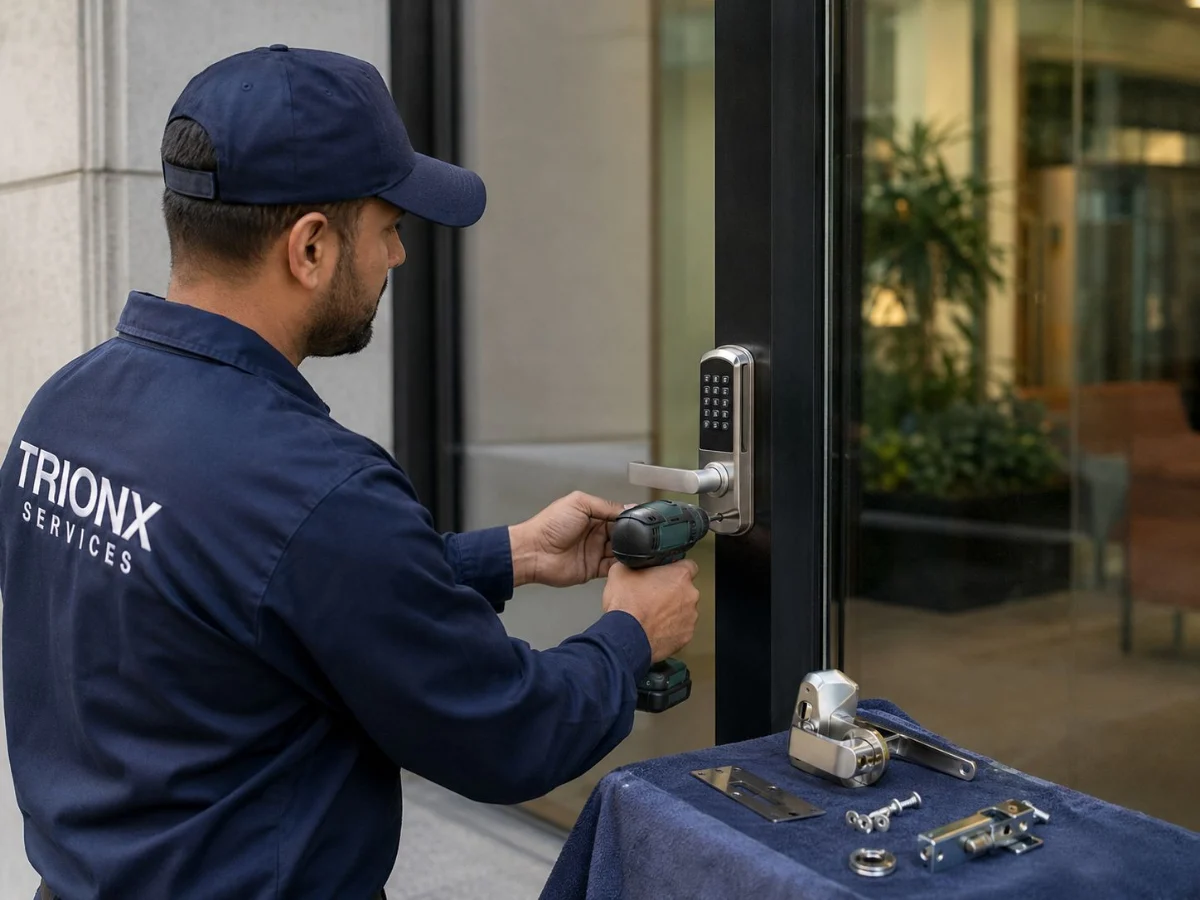
If the building is about to be left unattended, this is worth treating as urgent. An unlocked commercial door is an open building whatever the alarm covers, and most insurance policies expect the premises to be secured rather than monitored.
Before you call, three checks take about two minutes and frequently identify the fault.
Watch the latch meet the strike
Close the door slowly and watch where the latch arrives. It should enter the hole in the strike plate cleanly. If it hits the plate high, low or on its edge, the lock is working perfectly against a target that has moved.
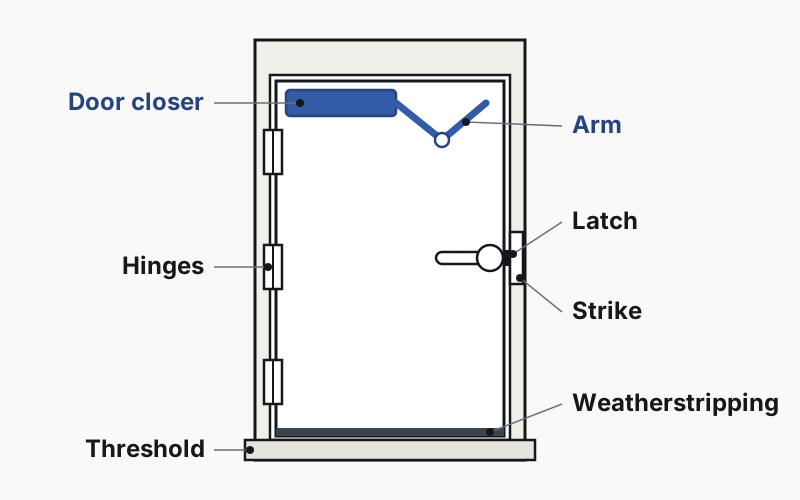
That is alignment, and it is the most common cause by a wide margin. The door has dropped, usually because the hinges or the screws holding them have worn, and the geometry that worked for years no longer does.
Throw the bolt with the door open
Stand the door open and turn the key or the thumbturn. If the bolt extends fully and retracts smoothly, the lock itself is sound and you are back to alignment. If it binds, stops short or will not move, the cylinder or the lock body has failed and the door is not the problem.
This one check separates the two causes, and it decides whether the answer is an adjustment or a replacement.
Look inside the strike and at the frame
A screw head backed out into the strike hole, a lip bent inward, or debris packed into the cavity will all stop a bolt entering. So will a frame that has been struck. A door that somebody has tried to force often locks normally right up until the attempt.
If the frame shows fresh damage, photograph it before anything is repaired. That record matters for an insurance claim and it is easier to take now than to reconstruct later.
What actually fixes it
Where the fault is alignment, the sequence matters. Loose or stripped hinge screws get dealt with first, because everything downstream depends on the hinges being solidly fixed. Worn hinges get replaced, and on a high-cycle commercial door a continuous hinge is frequently the right answer, since it spreads the load along the whole edge instead of concentrating it on three points.
The strike is adjusted last, once the door hangs correctly. Filing a strike to make a misaligned door lock is a fix that works for a month and hides the real fault from whoever looks next.
Where the lock body or cylinder has failed, it is a replacement. Rekeying a failing lock gives you a working key in a lock that was going to fail anyway.
What not to do overnight
Do not chain or padlock an exit door. It is the finding inspectors record most often, and it trades a security problem for a life safety one. If a door genuinely cannot be secured tonight, the honest answers are a temporary hasp on a non-exit opening, a physical presence, or getting it repaired rather than worked around.
When it cannot wait until morning
Call tonight if the property will be empty and the door is on the perimeter, if it is the only lock on a space holding stock, cash, records or controlled items, or if the frame shows signs somebody has already tried it. A door that failed because it was forced is a different situation from one that failed because a hinge wore out.
It can usually wait until morning if the door is internal, if the space behind it is itself inside a locked building, or if somebody is staying on site. Say which of those applies when you call and you will get a straight answer about whether to wait.
Do not decide alone at ten at night. Tell us what the door protects and we will tell you honestly whether it is a tonight job, because sending a technician for something that could wait costs you money and helps nobody.
Who carries this out
Locks, cylinders, strikes, hinges and door alignment require no Florida contractor license. TrionX performs all of it with its own W-2 employees, who are background-checked and covered by our general liability and workers compensation insurance, so the person who surveys the door is the person who fixes it.
Where a door is tied into access control and the fault is in the wiring or the power supply rather than the hardware, that is electrical work under Florida law at any job size, and a licensed electrician carries it out with us coordinating.
Common questions
Questions we get asked about this
Is a door that will not lock an emergency?
Treat it as one if the property will be unattended. An unlocked commercial door is an open building regardless of what the alarm covers, and most policies expect the premises to be secured. Emergency dispatch runs around the clock for exactly this.
Can I just use a padlock and chain overnight?
Not on an exit door. Chaining an exit is the single most common finding an inspector writes up, and it creates a life safety problem to solve a security one. On a non-exit door it is a short-term measure at best, and the underlying fault still needs fixing.
Why did it start suddenly when nothing changed?
Usually because it did not start suddenly. Doors drop gradually as hinges wear, and the latch clears the strike by less each week until the day it does not. Heat and humidity moving a frame can be the last millimeter.
Do you need a licensed contractor for this?
No. Locks, cylinders, strikes, hinges and door alignment need no Florida contractor license, so TrionX performs this work with its own employees and carries general liability and workers compensation covering it.
Keep reading
Related field notes

Rekey or replace: what to do with commercial locks after a tenant leaves
Key control after an employee termination
Bank branches: closed-hours work and a key register that holds up
Self-storage: hundreds of latches and one gate
The alarm keeps going off at night
There was a break-in overnight: securing the property and the record
One company, whoever does the work
Our technicians handle the trades that need no state license, and licensed contractors handle the ones that do. Either way we scope it, book the visit and file the record. Tell us the property and the problem and we will come back with a window. Call out of hours and someone who works here answers.