

Locks
Bank branches: closed-hours work and a key register that holds up
Almost nothing in a branch should be happening at a public counter, which decides the whole schedule.
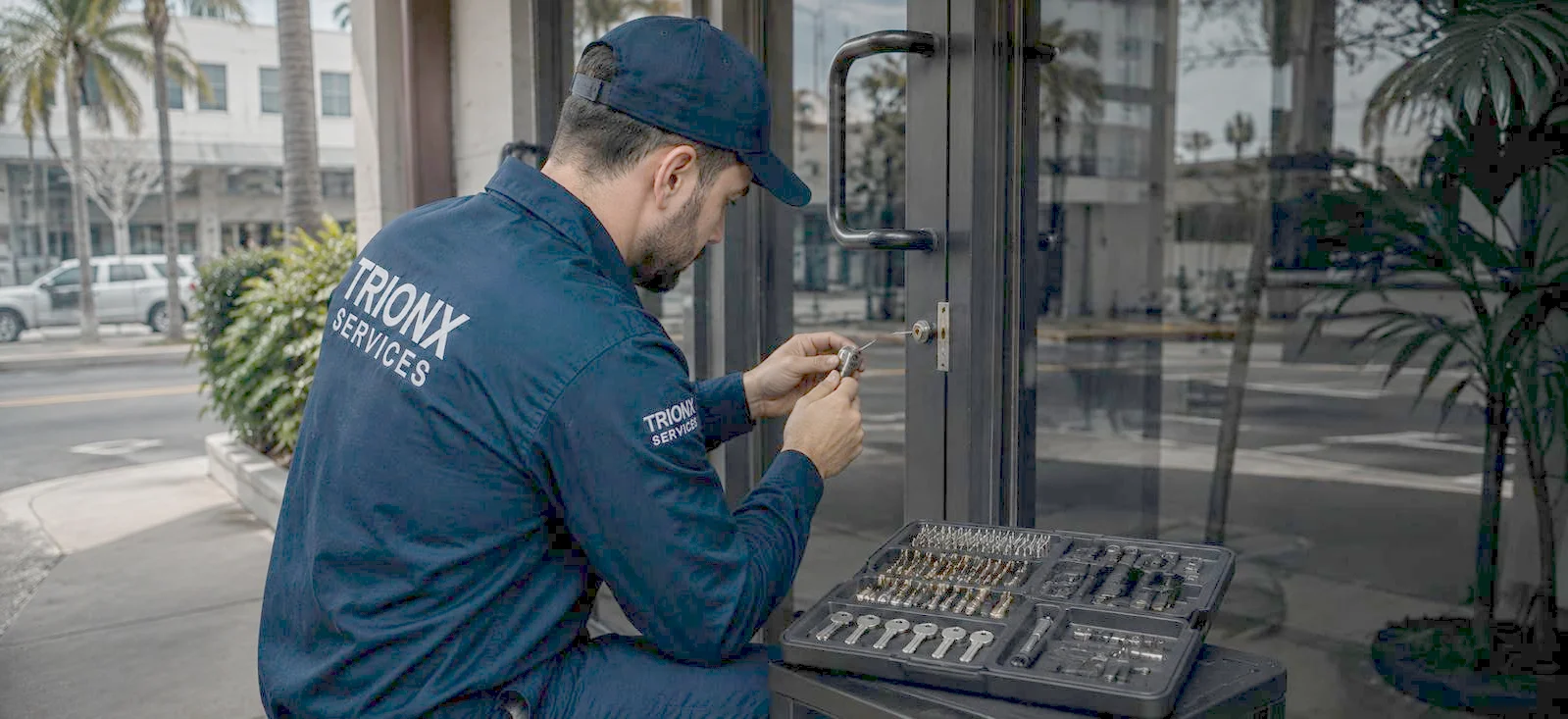
Two things shape maintenance in a branch more than the building does. Work happens outside public hours as a default rather than an exception, and the branch has to be able to answer who holds a key to what.
Everything else follows from those.
Closed hours as the starting assumption
Almost nothing should be happening at a public counter during trading. Noise, access equipment, a technician moving through a secure area, and anything that takes a door out of use are all reasons the work waits.
That is worth pricing and planning from the beginning rather than discovering. A job scoped for ordinary hours and then moved to an evening costs more than one planned that way, and it usually takes a second visit to arrange.
Escorting is the other constraint. Work in a secure area needs somebody from the branch present, and their availability is a real limit on what can be scheduled rather than an administrative detail.
The register is the deliverable
A branch gets asked who holds a key, and the answer has to exist in writing rather than in somebody's memory.
That means every key issued, the doors or group it operates, the holder, and the dates it went out and came back. Issued to the branch rather than held by the contractor, and updated on any visit that changes a key. A record assembled after the question is asked is not a record. Our article on key control after a departure covers what it has to contain.
Where the branch runs a master key system, that is a scheme rather than a set of independent locks, and changing one door has to respect the rest of it. Our article on setting up a master key system covers how those are built without losing control of them.
Restricted keyways are what make a rekey last
On a standard keyway, blanks are available anywhere, so a returned key proves nothing and a departure that should be a line in a book becomes a decision about rekeying.
On a restricted keyway, blanks are supplied only to the registered holder. That turns key collection into a control rather than a gesture, and it is the single change that most reduces how often a branch needs rekeying at all. Our article on what happens on a rekey covers the visit itself.
The hardware that earns a higher grade
Branch entrances, vestibules and staff doors are operated constantly and matter when they fail, which is exactly the case for specifying to a heavier grade rather than to whatever a general supplier stocks.
A lock that goes loose within a year on a branch entrance was underspecified, not abused. Our article on what the grades actually mean covers where each belongs and why the labor of returning outweighs the hardware difference quickly.
What is not ours, said plainly
Vaults, safes, deposit equipment and monitored alarm systems belong to specialists in those products, and we do not work on them. Saying so is more useful than a capability claim that would have to be walked back at the worst moment.
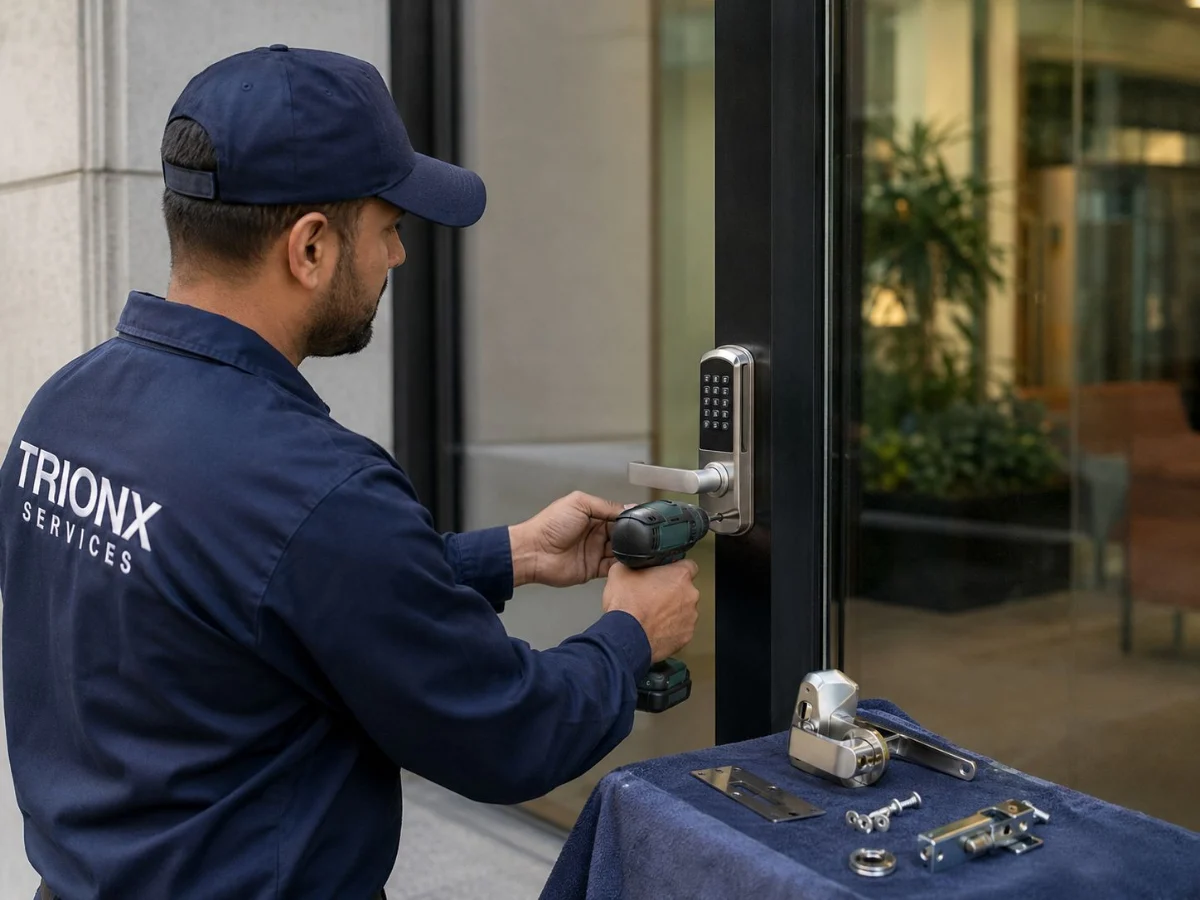
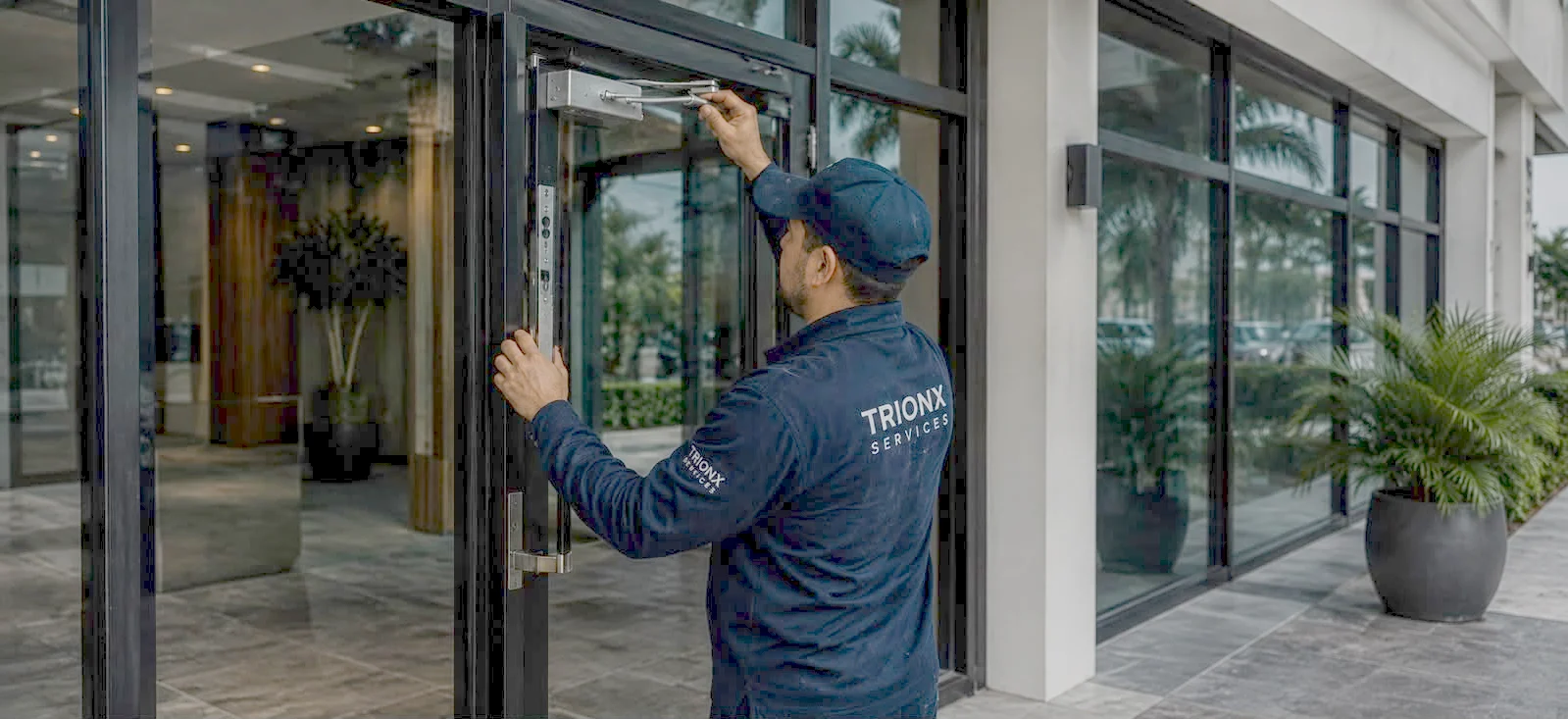
We handle the building around them instead: doors and their hardware, access control hardware, locks and registers, glass, and the finishes in staff and public areas.
The public areas still have to look maintained
A branch is judged on presentation more than most commercial property, because customers sit in it and wait. Scuffed walls at seating height, a chipped counter edge, worn flooring at the entrance and a light out in the ceiling grid all register.
None of it is urgent and all of it accumulates, which makes it a scheduled item rather than a reactive one. Batching presentation work into a single closed-hours visit costs less than attending for each item as somebody notices it.
Glass and the entrance
Entrance and vestibule glass takes the weather, the traffic and the cleaning, and a fogged sealed unit or a scratched pane on a frontage reads as neglect on a building whose whole proposition is that it is careful with things.
Our article on why a sealed unit fogs covers that failure, including why units installed together tend to fail together, which is worth knowing before ordering one.
Who carries this out
Locks, master key work, rekeying, registers, doors and hardware, access control hardware, glass, carpentry and painting are performed directly by our own technicians, who are background checked and on our payroll. None of it requires a Florida contractor license, and TrionX carries general liability and workers' compensation on that work.
Electrical, plumbing and HVAC are coordinated through licensed contractors, because Florida requires a license for those at any job size.
Common questions
Questions we get asked about this
Do you work on vaults, safes or alarm systems?
No, and we do not represent otherwise. Those belong to specialists in those products. We handle the building around them: door hardware, access control hardware, locks, key registers, glass and the finishes in staff and public areas.
Is closed-hours work the default or an extra?
The default assumption for a branch, planned and priced that way from the start rather than treated as a special request. Planning it as ordinary-hours work and then moving it is how a job costs more than it should.
What makes a key register auditable?
Every key issued, the doors or group it operates, the holder, and the dates it went out and came back. Issued to you rather than held by us, and updated on every visit that changes a key. A register reconstructed afterward is not a register.
Why does the keyway matter as much as the lock?
Because on a standard keyway a returned key proves nothing: blanks can be cut at any counter. A restricted keyway supplies blanks only to the registered holder, which is what makes collecting a key at a departure mean something.
Keep reading
Related field notes
One company, whoever does the work
Our technicians handle the trades that need no state license, and licensed contractors handle the ones that do. Either way we scope it, book the visit and file the record. Tell us the property and the problem and we will come back with a window. Call out of hours and someone who works here answers.