
Locks
Self-storage: hundreds of latches and one gate
Handling hundreds of latches one complaint at a time costs far more in attendances than it does in work.
A storage site is a few hundred pieces of identical hardware and one gate everything depends on, usually with nobody there. That combination makes it behave very differently from any other commercial property.
The arithmetic that decides the whole approach
Attending a site costs the same whether one latch is fixed or forty. On a property where the work is repetitive and the individual items are small, complaint-driven repair spends most of the budget on turning up rather than on the job.
A scheduled sweep inverts that. One visit, a walk of every row, hardware corrected in batches, and a record of what was found. It also catches the doors nobody has complained about yet, which on a site where units sit unopened for months is most of them.
It produces something a reactive approach never does: a picture of whether the site is degrading evenly or whether one row, one elevation or one age of hardware is failing faster.
The gate is the single point of failure
Everything else on the site is an inconvenience. The gate is the business. It fails open, which means the site is unsecured, or it fails closed, which means nobody can reach their belongings and the phone starts ringing.
Most gate failures are mechanical and unglamorous: a stone in the track, a dropped roller, ground that has moved, a bent slat, or a photo eye covered in dust or knocked out of alignment. Our article on a stuck shutter or gate covers the checks and, importantly, when the manual release is not safe to use.
The keypad is the other half, and a reader that has stopped responding shuts the site as effectively as a seized motor. Our article on a reader that has stopped working covers narrowing that down.
Unit doors and overlocks
Latches, hasps and overlock hardware wear on a predictable curve because every unit door works the same way. Sun degrades anything plastic, salt air works on the metal, and a door that has been forced or over-tightened carries the damage until somebody looks.
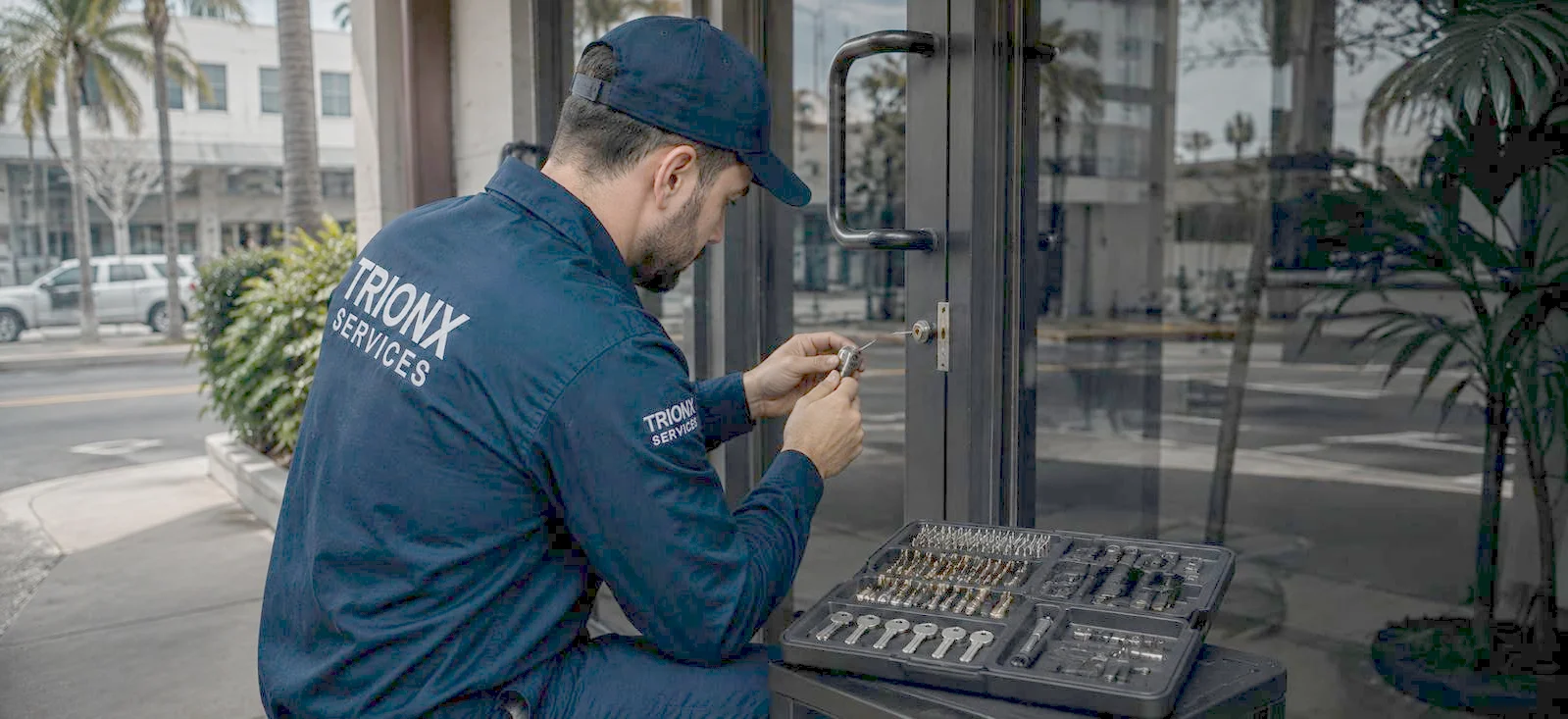
Lock removal on delinquent units is ordinary work on written instruction from the operator, photographed and recorded as part of the job. The record is as much the deliverable as the removal, because it is what the file needs afterward.
What only shows when nobody is there
An unattended site hides its problems well. Exterior lighting fails one fixture at a time and nobody reports the third, so a corner of the site goes dark gradually and only surfaces as a security concern. It cannot be assessed in daylight, and our article on exterior lighting out covers walking it at night.
Water is the other one. A door seal that has failed, a roof detail that has lifted, or drainage that has blocked shows up as a damaged customer unit rather than as a maintenance fault, and by then it is a claim.
Much of the same logic applies as to any space nobody visits, and our article on checking a vacant unit covers the habit of walking it deliberately.
What belongs on the schedule
A hardware sweep across the rows. Gate service, including tracks, rollers, guides and the safety devices. A night walk for lighting. A wet-weather walk for drainage and seals. And the record from each, so the next visit is a comparison rather than a fresh discovery.
Signage and wayfinding are part of the product
A customer arriving after dark at a site with nobody on it is navigating by signage alone. Faded row markers, a unit number that has come off, or a directional sign pointing the way the site used to be laid out all turn into phone calls.
Illuminated signage fails the same way exterior lighting does, one section at a time, and it is the first thing a prospective customer sees from the road. Our article on what fails on commercial signage covers the faces and fasteners, and the fasteners matter here because a site is usually an exposed one.
The sweep record is the useful output
A sweep that produces a list of what was corrected is worth more than one that simply happened. Row by row, what was found, what was replaced, and what is degrading but not yet failed.
Across two or three visits the notes show where the site is heading as well as where it stands, and the budget can follow that.
Who carries this out
Unit latches and hasps, overlock hardware, lock removal on instruction, gate and shutter mechanical work, tracks, guides, doors, fencing hardware, glass, painting and general maintenance are performed directly by our own technicians. None of it requires a Florida contractor license, and TrionX carries general liability and workers' compensation on that work.
Anything on a gate operator circuit, site lighting wiring or the supply is electrical and goes through a licensed contractor, because Florida requires a license for that at any job size.
Common questions
Questions we get asked about this
Why a scheduled sweep rather than fixing what gets reported?
Because the work is repetitive and the travel is not. Attending a site to fix one latch costs the same in attendance as fixing forty, so complaint-driven repair on a site with hundreds of identical doors spends most of the budget on turning up.
What happens when the gate fails?
The site either stands open or nobody can reach their belongings, and both are urgent for different reasons. The mechanical side is ours and anything on the operator circuit is electrical, which is worth establishing before the call rather than during it.
Can you remove a lock on a delinquent unit?
On written instruction from the operator, yes, and it is recorded with photographs as part of the job. The instruction and the record matter as much as the work, because that is what the file needs afterward.
What gets missed on an unattended site?
Anything that only shows at night or only shows in rain. Exterior lighting that has gone dark in a corner, a door that no longer seals, and standing water where drainage has blocked. None of those generate a complaint until they generate a big one.
Keep reading
Related field notes

One company, whoever does the work
Our technicians handle the trades that need no state license, and licensed contractors handle the ones that do. Either way we scope it, book the visit and file the record. Tell us the property and the problem and we will come back with a window. Call out of hours and someone who works here answers.