
Lighting
Parking lot or sign lighting is out
Exterior lighting fails one fixture at a time, and nobody reports it until the dark patch is large enough to feel unsafe.
Count what is out and where, in the dark rather than during the day. Walk the area at night with a plan and mark each dead fixture, each one that is dim, and each one that cycles on and off.
That map takes twenty minutes and it decides whether you are buying lamps or booking a contractor.
What the pattern tells you
Individual fixtures out, scattered around the site, is normal end of life. Lamps and drivers fail on a curve, and where an installation went in at once they reach that point together.
A whole run out along one side, or every fixture on one pole, is a circuit rather than a lamp. Look for a tripped breaker, a failed contactor, a timeclock that has lost its setting or a photocell that has failed. This is the case worth identifying early, because relamping a run that has no power achieves nothing and it happens more often than it should.
Everything on the site coming on late, going off early, or staying on all day is a control fault: a photocell, a timeclock or an astronomical timer that has drifted. It is a single point of failure and usually a cheap one.
Fixtures that come on then drop out after a few minutes are cycling on thermal protection, which points at the driver or the lamp rather than the supply.
Sign lighting is a separate check
Walk the sign at night as well, because internally illuminated signage fails in patches that read very differently from the street. A sign with two dark letters looks neglected in a way a dark parking lot does not, and it is the part of the building most customers see first.
Note whether the sign is on its own circuit and its own control, which it frequently is. A sign that stays dark when the parking lot lights work is a control or circuit fault local to the sign.
Why this gets escalated
Exterior lighting is reported as a safety concern rather than a maintenance one. A tenant raises it, a customer mentions it, or an incident happens and the lighting condition becomes part of the conversation afterward.
That makes the record worth as much as the repair. Note when it was reported, what was found, what was done and when. A property that can show it walked, found and corrected a dark area is in a materially different position from one that cannot.
Worth separating two complaints that arrive in the same words. A fixture that has failed is a repair. An area that was never adequately lit is a design question, and relamping it will not change the outcome. Where a parking lot has been extended, re-striped, or had landscaping grow up around the poles, the lighting can be working exactly as installed and still leave the site dark where people actually walk.
Where the trade line runs
This job has the split running through the middle of it, which is why it is worth understanding before booking anybody.
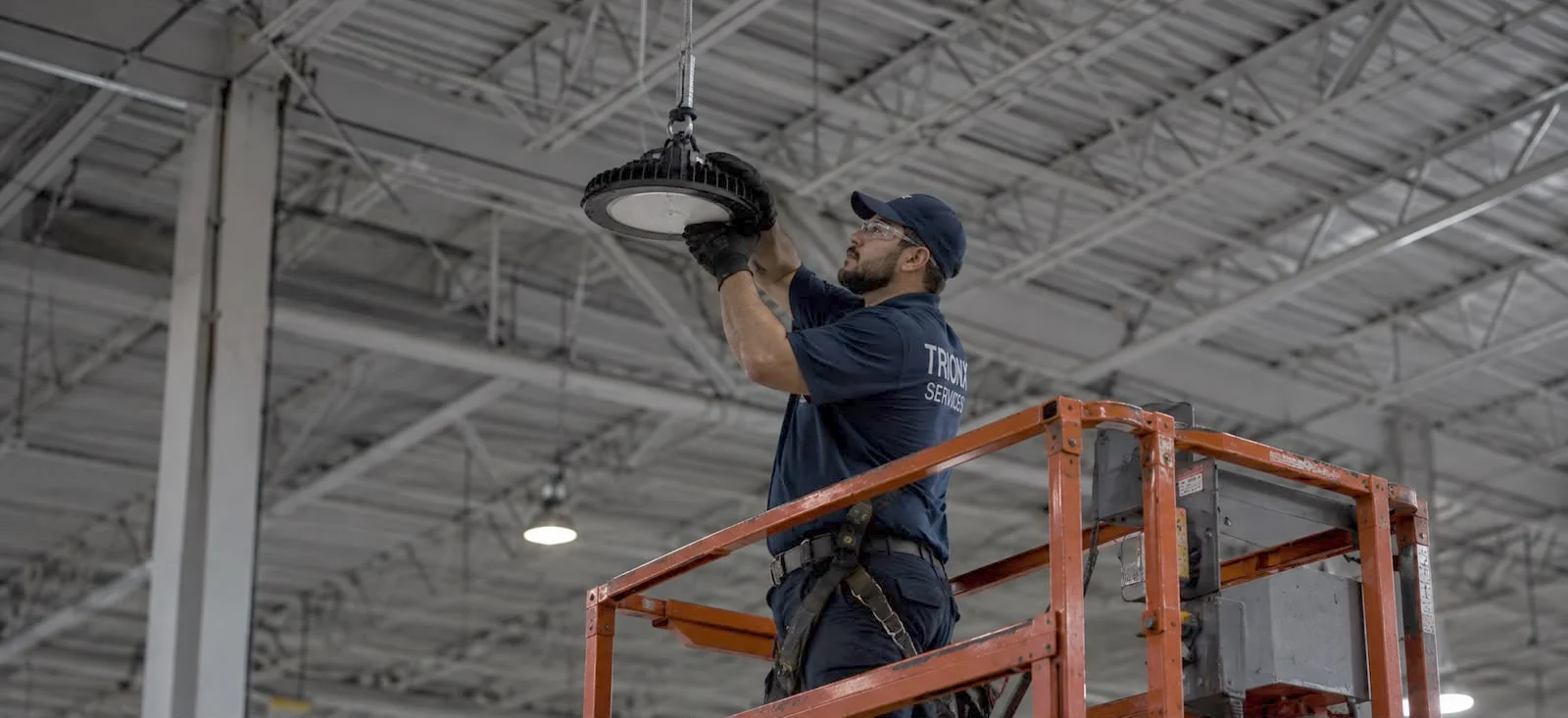
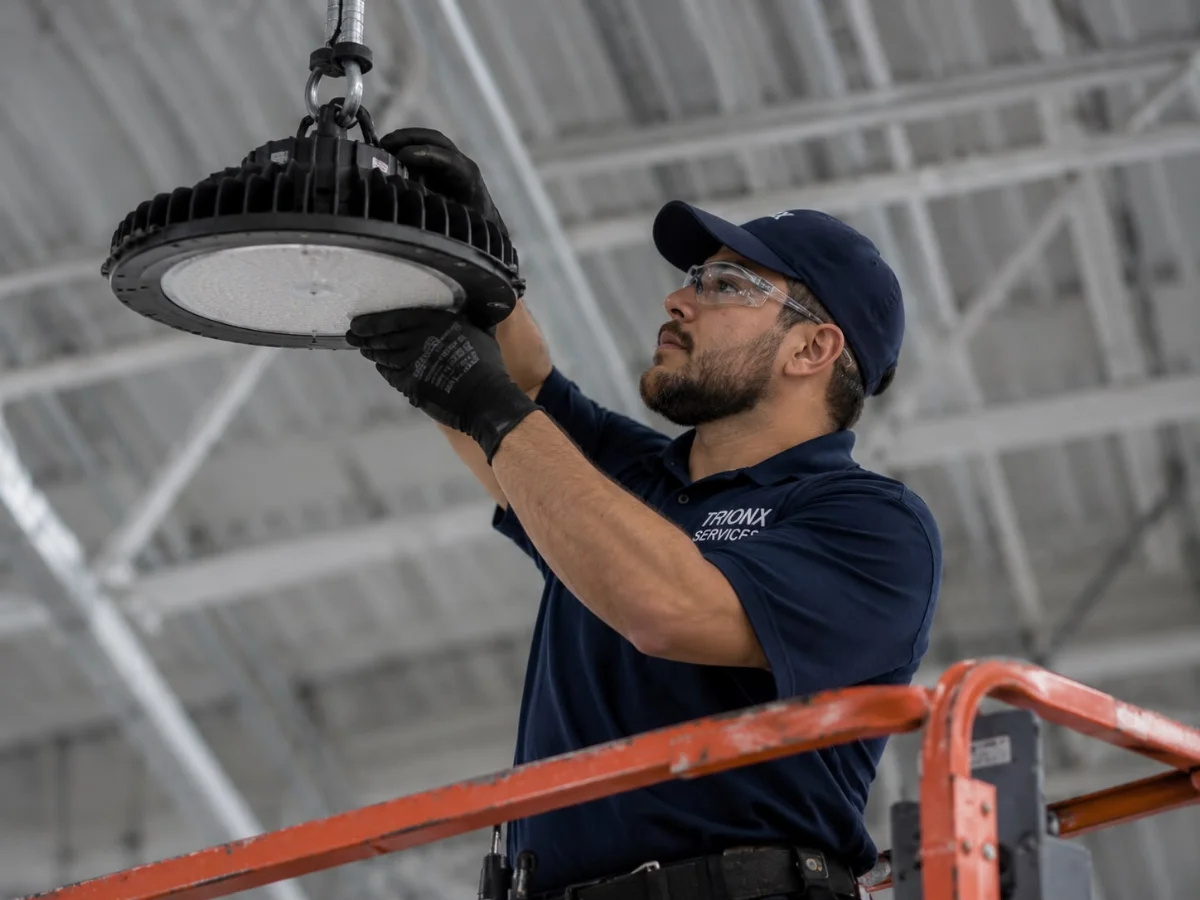
Relamping a fixture and mounting a fixture where no wiring is involved are performed directly by our own technicians. On a straightforward end of life failure that is the whole job.
Anything touching wiring, drivers, ballasts, photocells, timeclocks, contactors, pole circuits or the supply is electrical work, and Florida requires a licensed electrical contractor for it at any job size. LED retrofit sits here too, which surprises people, because it is quoted as though it were a lamp change and it is not. Our article on relamping against retrofit covers exactly where that line falls.
Access is the other half. Pole mounted and high level fixtures need proper access equipment, and that is a scheduling question rather than a licensing one.
Doing it once rather than four times
Where several fixtures of the same age have failed within months of each other, the rest of that batch is close behind. Relamping the group in one visit, with the access equipment already on site, costs less than four separate attendances across a year.
That grouping is also the moment to decide whether a retrofit makes sense, since the access cost is already being paid. Our piece on working out LED retrofit payback covers how that arithmetic tends to run on Florida property.
Keeping it from creeping back
Add a night walk to the quarterly property walk, because exterior lighting cannot be assessed in daylight and a daytime walk will never find it. Marking dead fixtures on a site plan each quarter turns a creeping problem into a scheduled one.
Common questions
Questions we get asked about this
Why does exterior lighting fail so quietly?
Because nobody phones in the third dead fixture in a parking lot. Each one is a small loss of light and the dark area spreads gradually, so it is usually reported as a safety concern by a tenant or a customer rather than as a maintenance fault.
Is a dark parking lot a liability problem?
It is the reason these get escalated. A trip, a fall or an incident in an area that was known to be dark is a harder conversation than the same event in a lit one, and lighting records are asked for afterward. Documenting the repair is worth as much as making it.
Can you just change the lamps?
Where a lamp is the fault, yes, and relamping is work our own technicians perform. Anything on the wiring, the driver, the ballast, the photocell or the pole circuit is electrical, and Florida requires a licensed contractor for that at any job size.
All the lights on one side are out. Is that different?
Very. A whole run failing together is a circuit, a contactor, a timeclock or a photocell rather than lamps, and no amount of relamping will fix it. It is also usually cheaper to resolve than a dozen individual failures.
Keep reading
Related field notes
Working out LED retrofit payback on Florida commercial property

What legally needs a licensed electrician in Florida
The quarterly walk: what to check on a commercial property
A light is out and the bulb is not the problem

A sliding door is hard to slide or off its track

There is a sewage smell in the building
One company, whoever does the work
Our technicians handle the trades that need no state license, and licensed contractors handle the ones that do. Either way we scope it, book the visit and file the record. Tell us the property and the problem and we will come back with a window. Call out of hours and someone who works here answers.