

Lighting
Working out LED retrofit payback on Florida commercial property
Every LED quote arrives with a payback figure on it. The number is only worth anything if it was calculated from your run hours and your electricity rate rather than from a brochure.
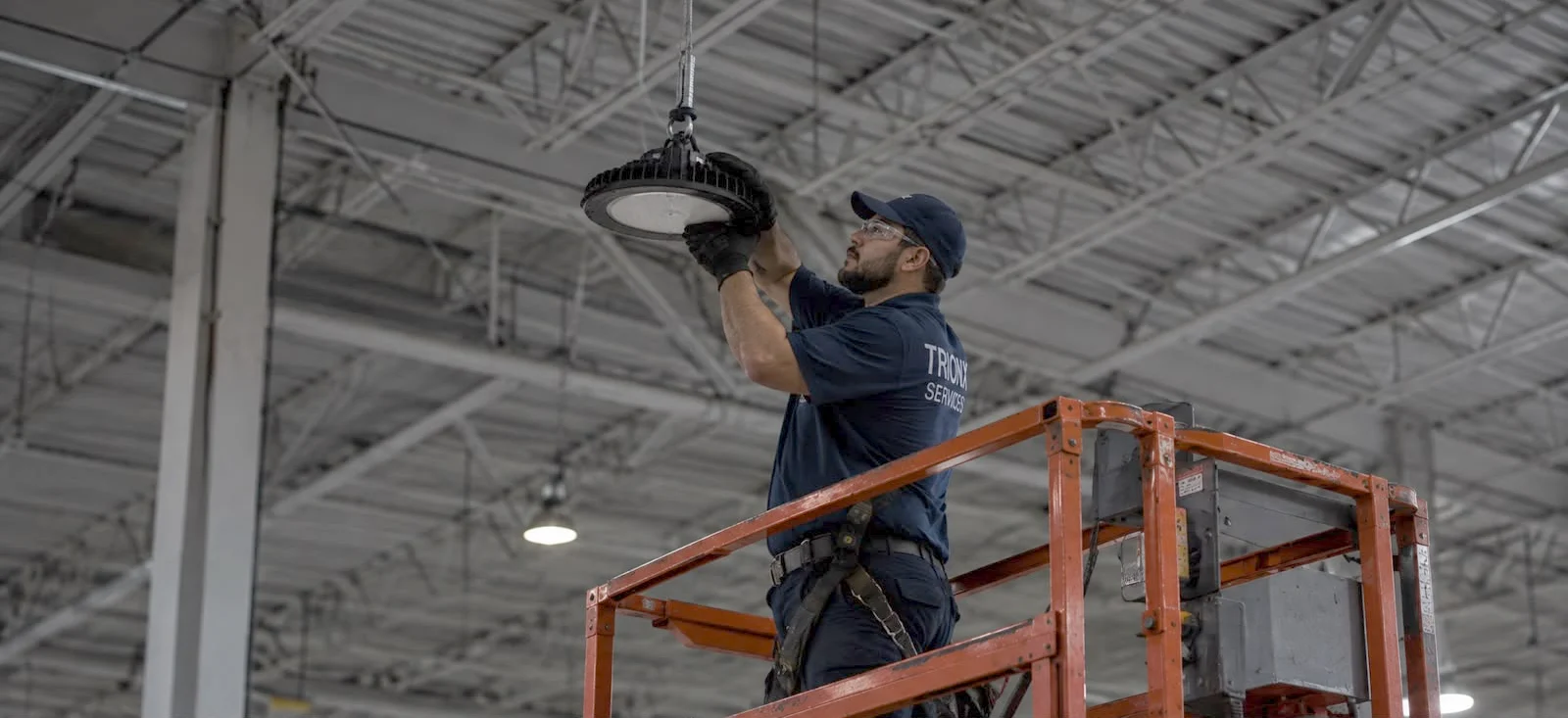
Lighting retrofits are one of the few facility upgrades that genuinely pay for themselves, which is exactly why the sales material around them is so unreliable. Payback figures get quoted as though they were properties of the fixture. They are not. They are properties of your building, and the same lamp can pay back in eighteen months on one property and in seven years on another.
The arithmetic is simple enough to do yourself, and doing it is the only way to know whether a quote is worth taking.
The three numbers that decide everything
Run hours. How many hours a year the fixture is actually lit. This is the number that dominates the result, and it varies enormously. Parking lot lighting burning dusk to dawn every night of the year runs roughly four thousand hours. An office lit during business hours runs closer to three thousand. A storeroom on a switch might run two hundred. Same fixture, same saving per hour, wildly different outcomes.
Watts saved per fixture. The difference between what is installed now and what would replace it. Read the existing lamp and ballast rather than assuming, because the ballast draws power too and a nominal 400 watt metal halide fixture typically pulls more than 400 at the panel.
Your electricity rate. Take it from an actual bill, in dollars per kilowatt hour, and include the demand and delivery components rather than only the energy line. Commercial tariffs vary and the rate on a bill is the only one that applies to you.
Multiply watts saved by run hours, divide by a thousand for kilowatt hours, multiply by your rate, and you have the annual saving per fixture. Divide the installed cost by that and you have the payback in years. It is worth doing on a single fixture before anyone quotes for two hundred.
Why run hours decide the answer
Because run hours swing by a factor of twenty across a single property, the retrofit ordering almost writes itself. Exterior and parking lighting first, since it burns every night of the year and is also the lighting most likely to be causing tenant complaints. Then any interior area lit continuously, such as a warehouse aisle or a corridor. Then general office and retail. Storerooms, mechanical rooms and anything on a switch come last, and frequently do not justify the work at all.
This is why we survey a property before quoting rather than pricing from a fixture count. A quote covering every fixture in a building will contain a great deal of work that never pays for itself, and the honest version of the job is usually smaller than the one that was proposed. There is more on how this applies to suburban retail in our note on lighting maintenance in Kendall.
The Florida bonus most quotes leave out
Every watt a light fixture consumes ends up in the room as heat, and in a conditioned space in Miami that heat has to be removed again by equipment that also consumes electricity. So an interior lighting retrofit saves twice: once on the lighting load and again on the cooling load carrying it away.
The size of the second saving depends on the space and how it is conditioned, so it is not a number to invent. It is worth asking about, particularly on properties running long hours in conditioned space, because it can meaningfully shorten a payback that looked marginal. It also works the other way and is worth knowing when you replace fixtures: dropping a large lighting load out of a space changes what the HVAC is doing.
What a lamp-only swap misses
The cheapest version of a retrofit puts an LED lamp into the existing fixture and leaves everything else alone. It is quick and sometimes it is right, particularly where fixtures are recent and in good order.
It also carries three traps. The old ballast may remain in circuit and keep drawing power, which quietly removes part of the saving you are paying for. The existing reflector and lens were designed around a different light source and may distribute the new one badly, so the space ends up with the same energy saving and worse light. And the fixture itself is now the oldest thing in the installation, so its failure clock is unchanged even though the lamps are new.
None of that means a lamp swap is wrong. It means the comparison should be made honestly against a full fixture replacement rather than only on the price of the two quotes.
Rebates, and checking before you specify
Florida utilities have historically run commercial efficiency programs that offset part of a lighting retrofit, and these programs change their terms, budgets and qualifying product lists regularly. That combination matters practically: a rebate frequently requires the work to be approved before it starts and the equipment to be on a current qualifying list, so a retrofit specified without checking can lose the incentive entirely.
Check what your utility is currently offering before anything is ordered rather than after, and treat any rebate quoted at you as something to verify rather than something to rely on.
What a proper survey looks like
A survey worth having counts and identifies the existing fixtures rather than estimating them, records the run hours for each area rather than applying one figure to the whole property, notes access requirements since a pole fixture needs a lift and a high-bay needs a cleared aisle, and prices the work in an order that puts the fastest payback first.
What comes back should let you approve part of it. A retrofit that only makes sense as a single large project usually means the marginal areas were carried by the strong ones, and you are better off knowing which is which.
Common questions
Questions we get asked about this
How do I calculate LED retrofit payback?
Divide the installed cost by the annual saving. The annual saving is the wattage reduction times annual operating hours times your rate per kilowatt hour, plus the maintenance you stop paying for. Long-hours applications like parking and warehouse pay back fastest.
Does LED retrofit work need a licensed electrician in Florida?
It depends what is touched. Relamping and fixture mounting are performed by TrionX technicians directly. Anything involving wiring, ballasts or drivers, including most retrofits, is electrical work under Florida law and a licensed electrician carries it out.
How long do commercial LED fixtures last?
Manufacturers commonly quote fifty thousand hours or more, though heat shortens it and Florida rooftops and enclosed fixtures run hot. Driver failure usually arrives before the diodes fade, so warranty terms on the driver are worth reading.
Keep reading
Related field notes
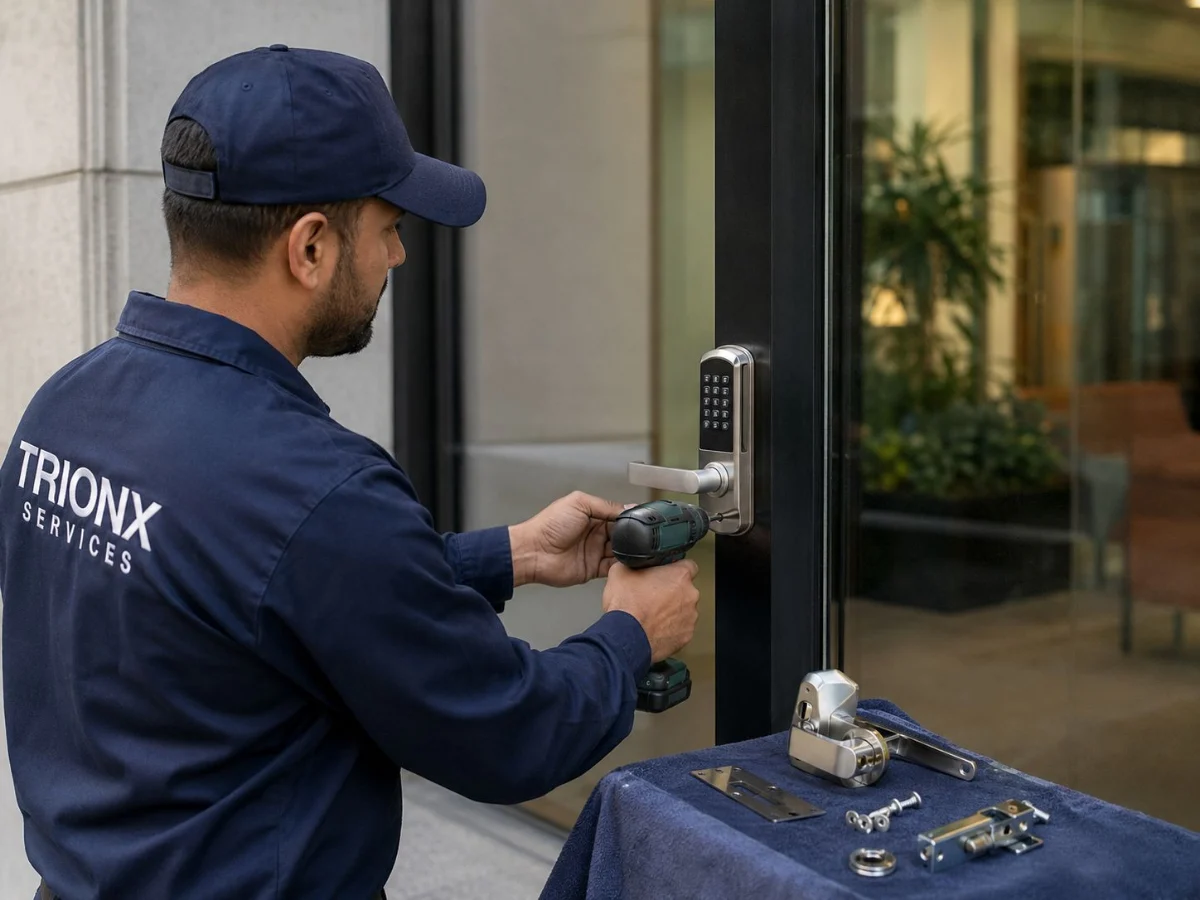
One company, whoever does the work
Our technicians handle the trades that need no state license, and licensed contractors handle the ones that do. Either way we scope it, book the visit and file the record. Tell us the property and the problem and we will come back with a window. Call out of hours and someone who works here answers.