
Refrigeration
Seven signs a walk-in cooler is about to fail
Refrigeration almost never dies without warning. It declines over weeks, and every one of those weeks is a chance to fix something cheap instead of something expensive.
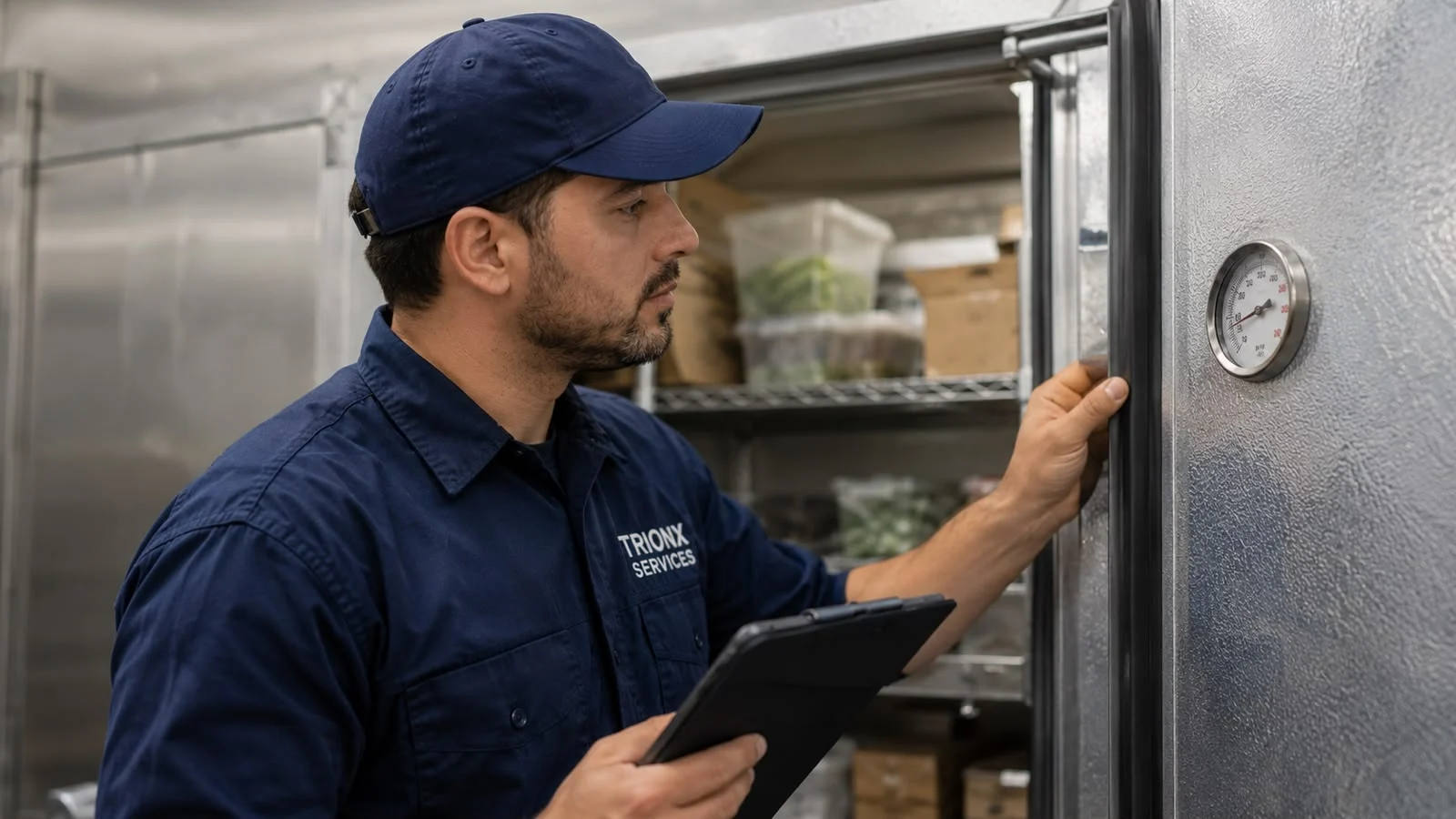
A walk-in cooler failure costs you stock long before it costs you a repair. The bill that hurts is the product you throw away, the service you cannot run, and occasionally the conversation with the health department afterward.
The useful thing about refrigeration is that it warns you. Below are the seven signals we see most often in Miami-Dade, roughly in order of how early they appear.
1. The unit runs almost continuously
A healthy walk-in cycles. The compressor runs, reaches temperature, and stops. If yours now seems to run constantly, especially overnight when the door is shut and the kitchen is closed, something is making it work harder than it should.
Usually that is a dirty condenser coil, a failing door seal or low refrigerant. All three are inexpensive to correct. All three, left alone, end at the same place: a compressor that has been running continuously for months and finally fails.
Continuous running is also visible on your electricity bill before it is visible anywhere else, which makes an unexplained increase worth investigating rather than absorbing.
2. Temperature recovers slowly after the door opens
During service the door opens constantly, and a healthy unit pulls the temperature back down within a few minutes. If recovery is taking noticeably longer than it used to, the system has lost capacity.
This one matters because it is the signal most likely to be dismissed. The cooler still reaches temperature eventually, so it appears to be working. It actually shows that there is no margin left. On the first properly hot day, or the first busy service, there will not be enough capacity to hold temperature.
3. Ice where ice should not be
Frost on the evaporator coil, ice on the ceiling near the unit, or a build-up around the door frame all point to the same family of problems: a defrost cycle that is not working properly, or warm humid air getting in where it should not.
In Miami, humidity makes this considerably worse than it would be elsewhere. Ice build-up insulates the coil, which reduces heat transfer, which makes the unit run longer, which produces more ice. It is self-reinforcing and it does not resolve on its own.
4. The door does not seal properly
Check it directly: close the door on a sheet of paper and try to pull it out. If it slides out easily, the gasket is not sealing at that point. Do it at several places around the frame.
Gaskets are cheap. A perished gasket, a door that has dropped on its hinges, or a latch that no longer pulls the door tight will run a compressor to death over a period of months, and it is among the most common root causes we find behind a failure that presented as something else entirely.
5. Water on the floor
Water inside or outside a walk-in usually means a blocked or misaligned condensate drain, or excessive condensation from the air infiltration described above.
Beyond the equipment implication, this is a slip hazard and a sanitation finding waiting to happen. It is also one of the easiest items on this list to correct.
6. The compressor sounds different
Kitchen staff hear the unit every day and will notice a change in its sound long before anyone measures anything. New rattling, a louder or harsher note, or short cycling, meaning it starts and stops rapidly instead of running a proper cycle, are all worth acting on.
Short cycling in particular is hard on a compressor. Every start draws high current, and a compressor that starts six times an hour instead of twice will not last.
7. Temperature readings drift, then swing
If you log temperatures, and on food premises you should, the pattern before a failure is usually a slow upward drift across several weeks, followed by increasingly wide swings between readings.
The drift is capacity loss. The swings are the system struggling to hold against it. By the time the swings appear, you are typically weeks rather than months from a failure.
This is the strongest argument for keeping temperature logs properly rather than treating them as a box-ticking exercise for inspections. The record is genuinely predictive, if anyone reads it.
What each of these is worth catching
The economics are stark. A gasket replacement, a coil clean or a condensate line clear are minor scheduled jobs. A compressor replacement is a major one, and it arrives with an emergency call-out, likely out of hours, plus whatever was in the box at the time.
For most Miami food service operations, the stock in the box is worth more than a year of scheduled maintenance. Run the numbers for your own site and refrigeration usually comes out as the equipment where a maintenance contract pays for itself fastest.
If it is failing right now
Keep the door closed. Note the current temperature and the time. Do not restock. If the temperature is climbing and the unit is not recovering, start moving product to whatever cold space you have while you still have the choice, and call us.
Refrigeration emergencies are dispatched around the clock, and the first conversation is about protecting the inventory, not the equipment.
Common questions
Questions we get asked about this
What are the warning signs a walk-in cooler is failing?
Longer recovery after the door opens, ice forming where it did not before, the unit running almost continuously, rising discharge air temperature, water on the floor, new noise from the condenser, and readings that drift up across a week of logs.
Why does my walk-in cooler run constantly?
It has lost margin. A fouled condenser, a failing door gasket, low refrigerant charge or a defrost fault all make the system work harder to hold the same temperature, so run time climbs before the temperature itself moves.
How much warning does a walk-in cooler give before it fails?
Usually weeks, in the form of longer run times and drifting readings, which is why temperature logs are the cheapest early warning available. Sudden failures are the exception, and most of them were visible in the log first.
Keep reading
Related field notes
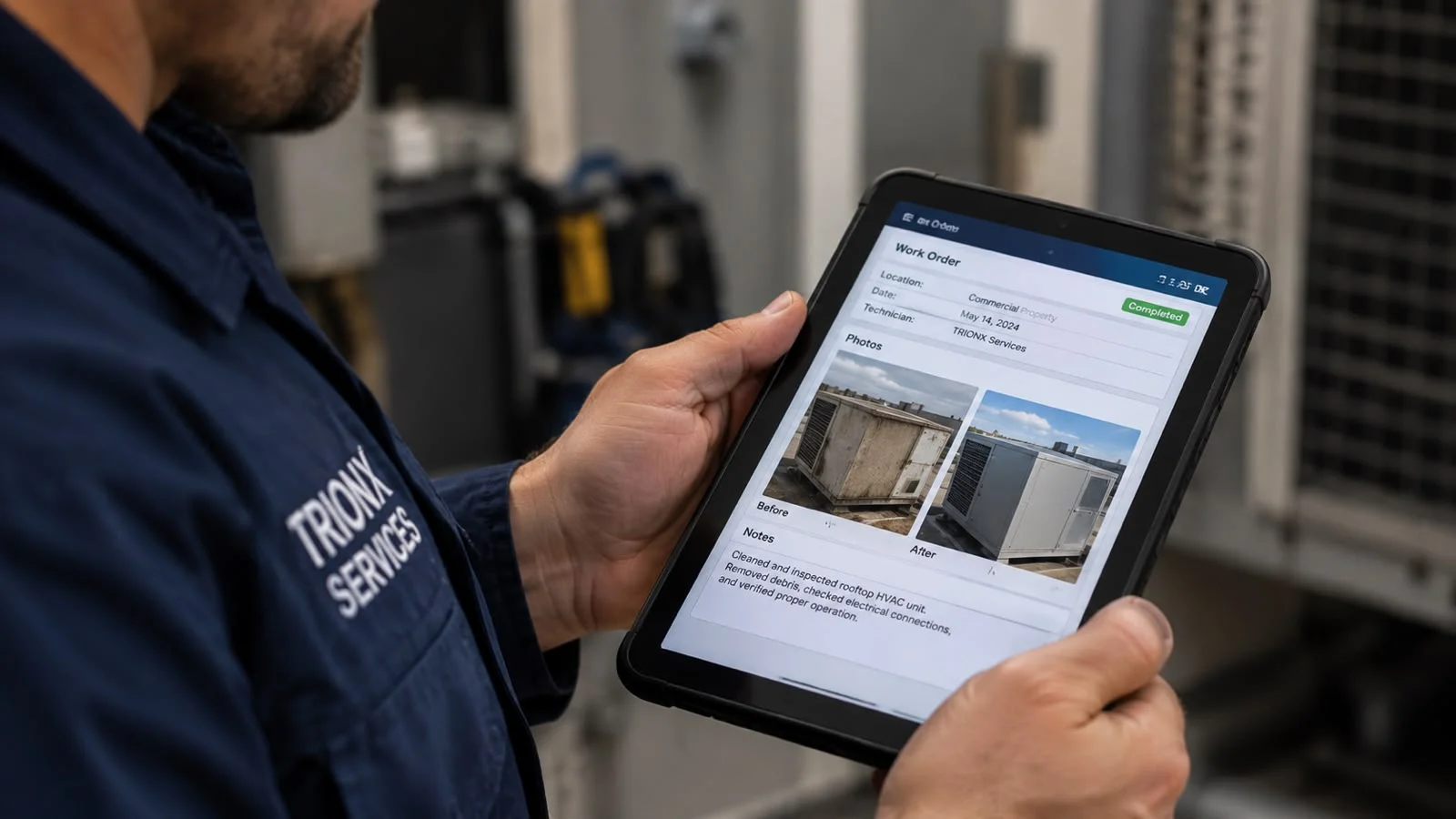
What a proper work-order closeout should contain
Grocery and convenience: what actually keeps the doors open
The walk-in is not holding temperature tonight
Walk-in temperature logs: what to record, and what it tells you
The walk-in door will not seal and frost is building
The ice machine is not making ice, or the ice is slimy
One company, whoever does the work
Our technicians handle the trades that need no state license, and licensed contractors handle the ones that do. Either way we scope it, book the visit and file the record. Tell us the property and the problem and we will come back with a window. Call out of hours and someone who works here answers.