
Refrigeration
The ice machine is not making ice, or the ice is slimy
An ice machine that stops producing is a refrigeration unit with a water supply, and either half can be the fault.
Someone who works here answers, out of hours included. (786) 628-9227
Check four things before anything else: the machine has power and is set to make ice, the water supply valve to it is open, the bin is not full or jammed with fused ice, and nothing is stacked against the unit. A surprising number of calls end there.
If the ice is slimy, cloudy, or smells of anything, stop serving it now. Empty the bin, switch the machine off and keep it off until it has been cleaned and sanitized. Slime is biofilm, and ice is classed as food.
The machine is not making ice
An ice machine is a small refrigeration system with a water circuit attached, and the symptom alone does not tell you which side failed. What you see helps. No ice and no sound at all points at power, a tripped breaker, or a control that has shut the machine down. A machine that runs but produces nothing points at water or refrigerant. A machine that makes thin, small or hollow cubes points at water flow or a failing cooling cycle.
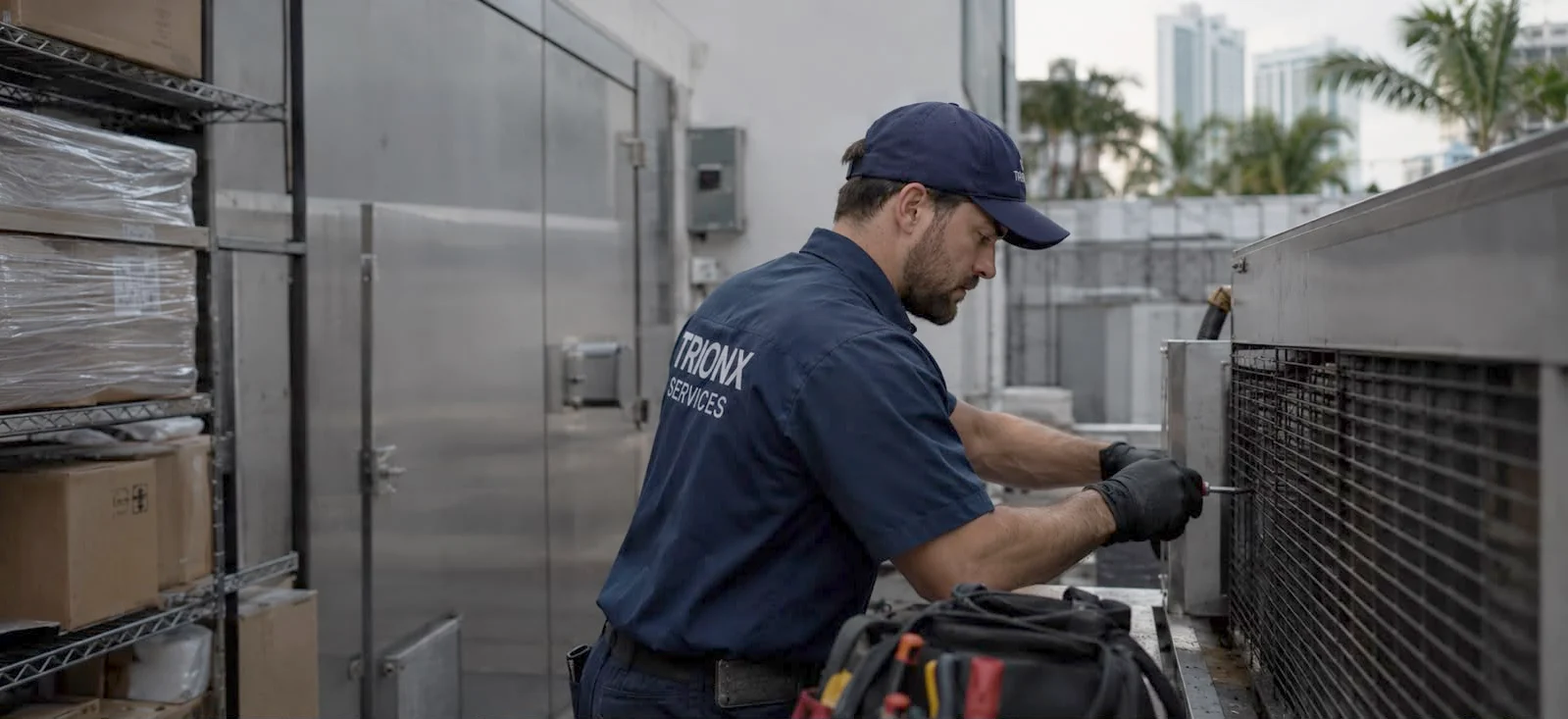
The causes that turn up most often in Miami kitchens and bars are a dirty condenser, a restricted water filter, a bin sensor that reads full when it is not, and a unit that has been pushed against a wall or tucked into a hot back room. The condenser is the one that costs the most when ignored. It needs airflow to reject heat, and in a warm room coated with grease and dust the machine overheats, trips a safety and stops. It may restart once it cools, which is why the problem seems to come and go.
An iced-up evaporator is another. Low water flow or a poor refrigeration cycle lets ice build where it should not, and the machine either harvests badly or stops. Do not chip at it. Switching the machine off and letting it thaw is safe, and the thaw water needs somewhere to go.
What an operator can safely do
Stay on the outside of the machine. Check the power switch and the breaker label, confirm the water valve is open, look at the bin and break up anything fused, and clear the space around the unit so air can move through it. Note the model and serial plate while you are there, because it speeds up the call.
Write down what you see: when it stopped, whether it ran before it stopped, any noise, and whether there is water on the floor. A pattern such as "stops mid-afternoon on busy days" tells a contractor to look at heat before anything else.
Do not remove panels, reset a compressor repeatedly or run bleach through the lines without checking what the manufacturer allows. Repeated restarts on a tripped safety can damage a compressor that would otherwise have been a simple clean.
Slime, odor and why it matters
Ice machines grow slime because they combine cold, constant moisture and a steady supply of water. Biofilm settles in the water trough, the distribution tubes, the curtain, the bin liner and the scoop. It starts pink, yellow or gray and slick to the touch, and the ice may smell of the cellar or taste of chemicals.
Health inspectors look inside the machine. They check the bin, the interior surfaces and the scoop, and visible slime or mold is a written finding, often on the same visit where they check cooler temperatures. Our article on what to do after a health inspector citation covers the follow-up. A machine that has been cleaned on a schedule has a record to show, which counts for a good deal in that conversation.
Cleaning and sanitizing an ice machine follows the manufacturer's procedure, with the right product and the right order, and it should be done on a set interval. A water filter that is overdue makes the slime worse. Putting this on the same calendar as hood cleaning and grease trap service keeps it from being forgotten, and our restaurant maintenance calendar shows where it fits.
Where it connects to your coolers
An ice machine sits on the same cooling side of the building as your walk-ins, and the same warning signs apply: a unit working harder than it should, frost where there should be none, warm air from the condenser side, and a room that has become hot. If the ice machine is struggling and the walk-in is drifting too, look at the shared causes such as ventilation and power. Our article on walk-in cooler failure warning signs lists what to watch for.
What needs a refrigeration contractor
Anything inside the refrigeration circuit is licensed work: the compressor, the condenser fan, the expansion device, the evaporator, refrigerant, the controls and the wiring behind them. Florida requires a license for it at any job size, and there is no exception for a small repair. The water line is the same. Replacing a supply valve, a drain connection or a filter housing involves plumbing, and that also goes to a licensed contractor.
Refrigeration and water-line work is carried out by licensed, insured contractors, coordinated and documented by TrionX. We attend, record what was found, photograph the unit and the fault, and keep the paperwork you need for your own file. Our commercial refrigeration service page describes how that is arranged.
A deep clean and sanitize is a different job from a repair, and it is worth asking the contractor which one you are paying for. If the machine is repaired but the biofilm is still there, the next inspection finds it.
When it cannot wait
Right away if the ice is slimy and the machine is in service, if there is water spreading across a floor or reaching electrical equipment, or if an inspection is close. Stop serving ice, keep a bagged supply from a source you trust if you need it, and note the date and what you did.
It can be scheduled if the machine is off, the bin is empty, the water is contained and the business can run on bagged ice for a short time. Check the clearance and the water valve first, then make the call with the notes you have taken.
Common questions
Questions we get asked about this
Can I keep using the ice if it looks slimy?
No. Slime means biofilm is growing somewhere in the water path or the bin, and ice is a food. Stop serving it, empty the bin and keep the machine off until it has been cleaned and sanitized.
What can I check myself before calling?
Confirm the machine has power and is switched to ice making, the water supply valve is open, the bin is not full or jammed, and there is clear space around the unit for airflow. Do not open panels or touch the refrigeration circuit.
Why does the machine make ice for a while and then stop?
Common causes are a bin sensor reading full, a restricted water filter, a dirty condenser that lets the unit overheat and shut down, or a coil that has iced up. Say when it stops and how long it ran on the call.
Who carries out the repair?
Refrigeration and any work on the water line are carried out by licensed, insured contractors, coordinated and documented by TrionX. Florida requires a license for that work at any job size.
Keep reading
Related field notes
The walk-in is not holding temperature tonight
A health inspector citation: the maintenance items behind it
Maintenance a Miami restaurant needs, month by month
Grocery and convenience: what actually keeps the doors open
Walk-in temperature logs: what to record, and what it tells you
The walk-in door will not seal and frost is building
One company, whoever does the work
Our technicians handle the trades that need no state license, and licensed contractors handle the ones that do. Either way we scope it, book the visit and file the record. Tell us the property and the problem and we will come back with a window. Call out of hours and someone who works here answers.