
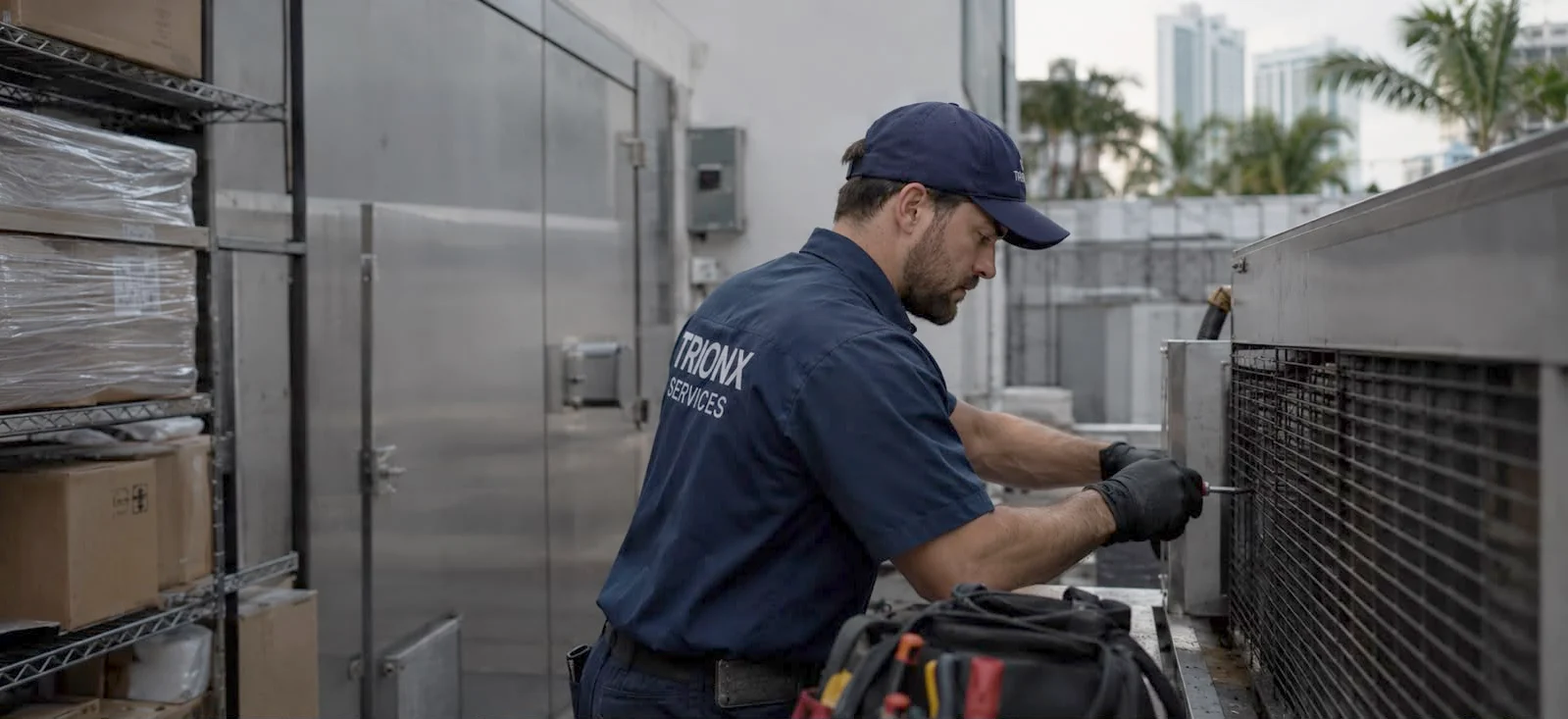
Refrigeration
The walk-in door will not seal and frost is building
When a walk-in door does not seal, the box takes in warm humid air every minute, and the frost and the running compressor follow from that.

Check the door before you check anything else. A walk-in that has frost around the frame, a gasket that is torn or flattened, or a door that drifts open when released is losing cold air and gaining warm, wet air through the one opening everyone uses all day.
The moisture in that air freezes on the first cold surface it meets. The compressor then runs longer to chase a temperature it cannot reach, and the box looks as if the refrigeration has failed when the door is the cause. If the door is the cause, fixing it often brings the temperature back without touching the system.
Look at the gasket first
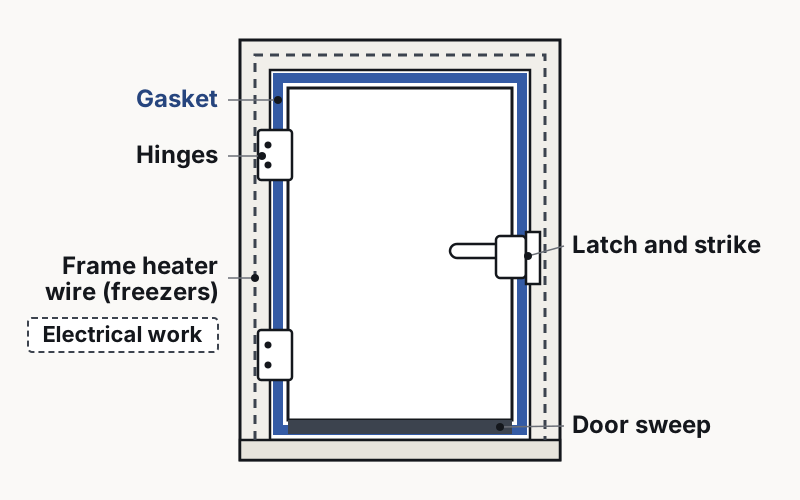
Close the door and walk around the full perimeter, bottom corners included. You are looking for tears, sections that have flattened, places where the gasket has pulled out of its channel and stretches that have gone hard or brittle. Gaskets on busy kitchen doors take a beating from carts, mops and boxes.
A simple test is a sheet of paper. Close the door on it at several points around the frame. If it pulls out without resistance anywhere, the seal is not holding at that spot. Do the same along the hinge side, which people forget.
A gasket that is only dirty or folded back on itself can often be cleaned and reseated. Grease and sugar make the vinyl stick and tear when the door is opened. Warm soapy water and a soft cloth are enough. If the gasket is split, flat or hard, it needs replacing with the correct profile for that door.
Then the hinges and the door position
A sagging door will not close evenly against the gasket however good the gasket is. Look at the gap along the top and along the latch side. If it is wider at one end, or if the door has to be lifted to latch, the hinges have dropped or the frame has moved.
Check the hinge screws for movement and the hinge leaves for wear. Walk-in doors are heavy, and loose fasteners in a panel edge wear their holes larger every day. Many doors also use a spring or cam-lift hinge that closes the door by itself, and those wear internally and lose their closing action.
If the door does not swing shut on its own from a partly open position, it is leaving the seal to chance. Our article on adjusting a door closer explains how closing speed and latching force are set, and much of it applies to a heavy cooler door as well.
The latch, the strike and the sweep
A latch that does not pull the door tight leaves the gasket resting against the frame instead of compressed into it. Check that the latch catches fully, that the strike is lined up with it, and that the handle and cam turn without play. A worn cam or a loose strike lets the door sit proud by a few millimeters, which is plenty for frost to start.
The bottom of the door matters as much as the sides. A door sweep or threshold seal that has worn through lets air flow in at floor level, where cold air spills out and warm air rolls in. Frost at the base of the door, or a thin line of ice on the floor inside, usually points here.
Also check the heater wire in the frame on freezers, if fitted. If the frame stays frozen shut or the gasket freezes to it, the door can tear its own gasket the next time it is opened. A frame heater that has stopped working is electrical. Repairing it belongs to a licensed contractor, not to our door technicians, and we coordinate that visit alongside the gasket repair.
What the door fix looks like
Gasket replacement, hinge adjustment or replacement, latch and strike alignment, sweeps and threshold seals on the door itself are door hardware. Our own technicians perform them, and TrionX carries general liability and workers' compensation. It is normally a single visit if the right gasket profile and hinges are identified first, so take a photograph of the existing gasket and the door tag before the call.
Do the work as soon as the damage is found. A seal that leaks all week costs product, power and compressor hours, and the frost it builds takes time to clear. Our doors and hardware service covers this kind of repair on commercial openings.
When it is not only the door
Replace the gasket and correct the hinges and the box should start to recover. If it does not, or if frost keeps forming on the evaporator coil with a sound door, the cause lies elsewhere. A failed defrost cycle, a fan that has stopped, a low charge or a dirty condenser all show up as a box that will not cool.
Compressor, evaporator, condenser, refrigerant and the electrical controls that drive them are refrigeration work, and Florida requires a license for it. That work is carried out by licensed, insured contractors, coordinated and documented by TrionX. Our refrigeration service explains how that works.
It helps to arrive with a record. Our article on temperature logs shows what to keep, and the logs tell a contractor whether the box drifted slowly, which suggests a seal, or dropped suddenly, which suggests a component.
Protect the stock while you sort it out
Keep the door shut and reduce traffic. Move the most perishable items to another unit if there is one, and keep a probe thermometer in the warmest part of the box. Do not prop the door while loading. Plan deliveries so that the box is opened once and loaded in one go.
If the product has been above safe temperature for longer than your food safety rules allow, discard it and write down what was lost and when. That record matters for insurance and for your inspector.
Our articles on a walk-in that will not hold temperature and on the early warning signs of failure cover the checks on the refrigeration side, so you can tell which half of the problem you have.
Keeping the seal good
Wipe the gaskets when you clean the box. Check them monthly with the paper test. Fix a loose hinge or a loose latch the week you notice it, because the damage compounds. Ask staff to use the door handle rather than the cart to push it shut, and never to leave it open while stocking.
Common questions
Questions we get asked about this
Can a torn gasket really cause frost on its own?
Yes. Warm humid air leaks in through the gap, meets the cold surfaces and freezes. Frost that builds around the door frame and on the evaporator usually follows a leak, so the door is worth ruling out before anyone looks at the refrigeration system.
How do I know the door is the problem and not the refrigeration?
Look for frost or condensation concentrated around the frame, a visible gap, light showing at the edge, or a door that swings open when released. If the door seals well and the box still will not hold temperature, the cause is likely in the system.
Can I just tape or patch the gasket until it is replaced?
Tape holds for a day at best and hides how bad the damage is. A torn gasket should be replaced, and a gasket that is only dirty or folded can often be cleaned and reseated. Either way it is a short job once the right profile is in hand.
Does TrionX repair the cooler itself?
The door is ours. Gaskets, hinges, closers, latches and sweeps are door hardware and are performed by our own technicians. The compressor, evaporator, condenser and refrigerant are refrigeration work, carried out by licensed, insured contractors, coordinated and documented by TrionX.
The door seals but there is still ice on the evaporator. Now what?
That points to a defrost or airflow problem, which sits in the refrigeration system. Note when the ice appears and what the box temperature was doing, then call for refrigeration service. Our article on warning signs covers what to record.
Keep reading
Related field notes
Seven signs a walk-in cooler is about to fail
Walk-in temperature logs: what to record, and what it tells you
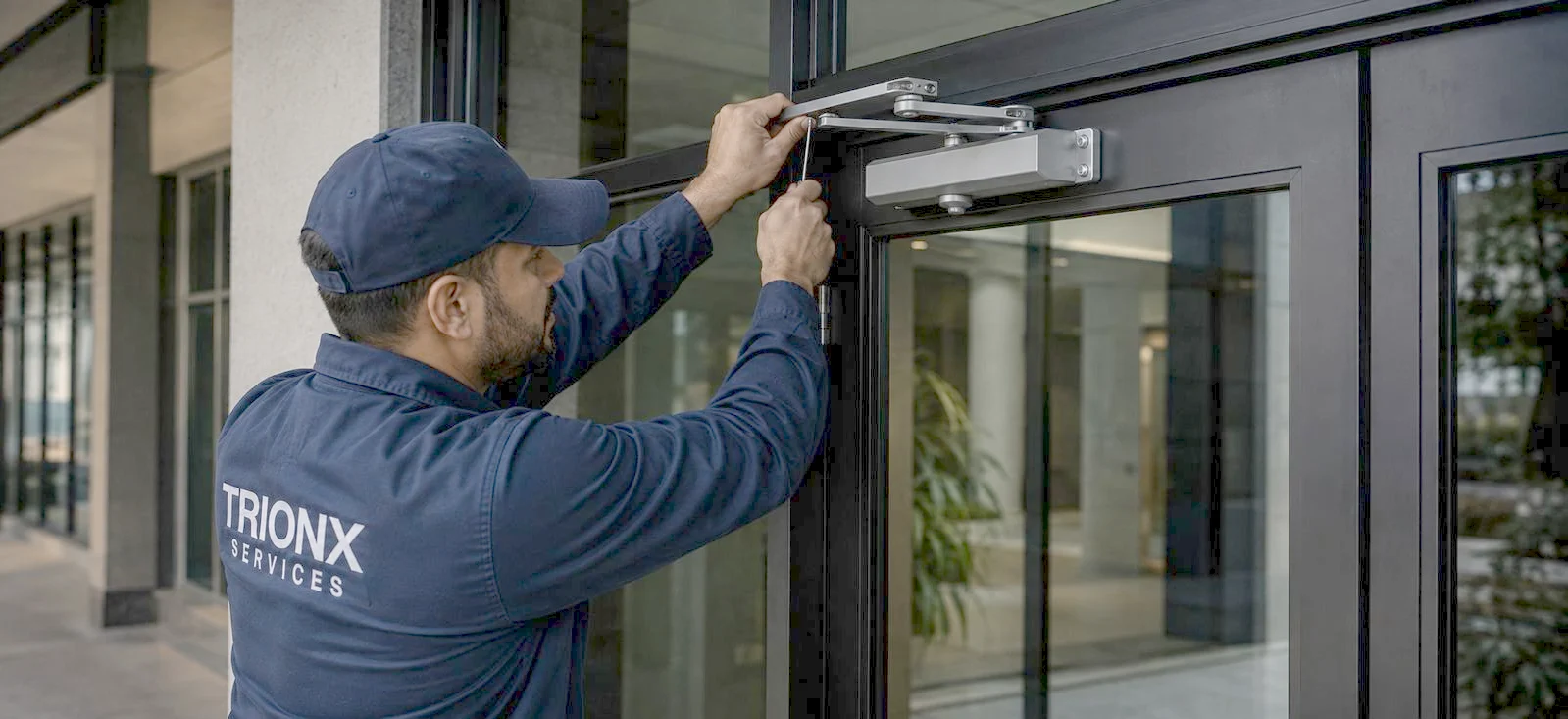
Adjusting a door closer: the valves and what each one does
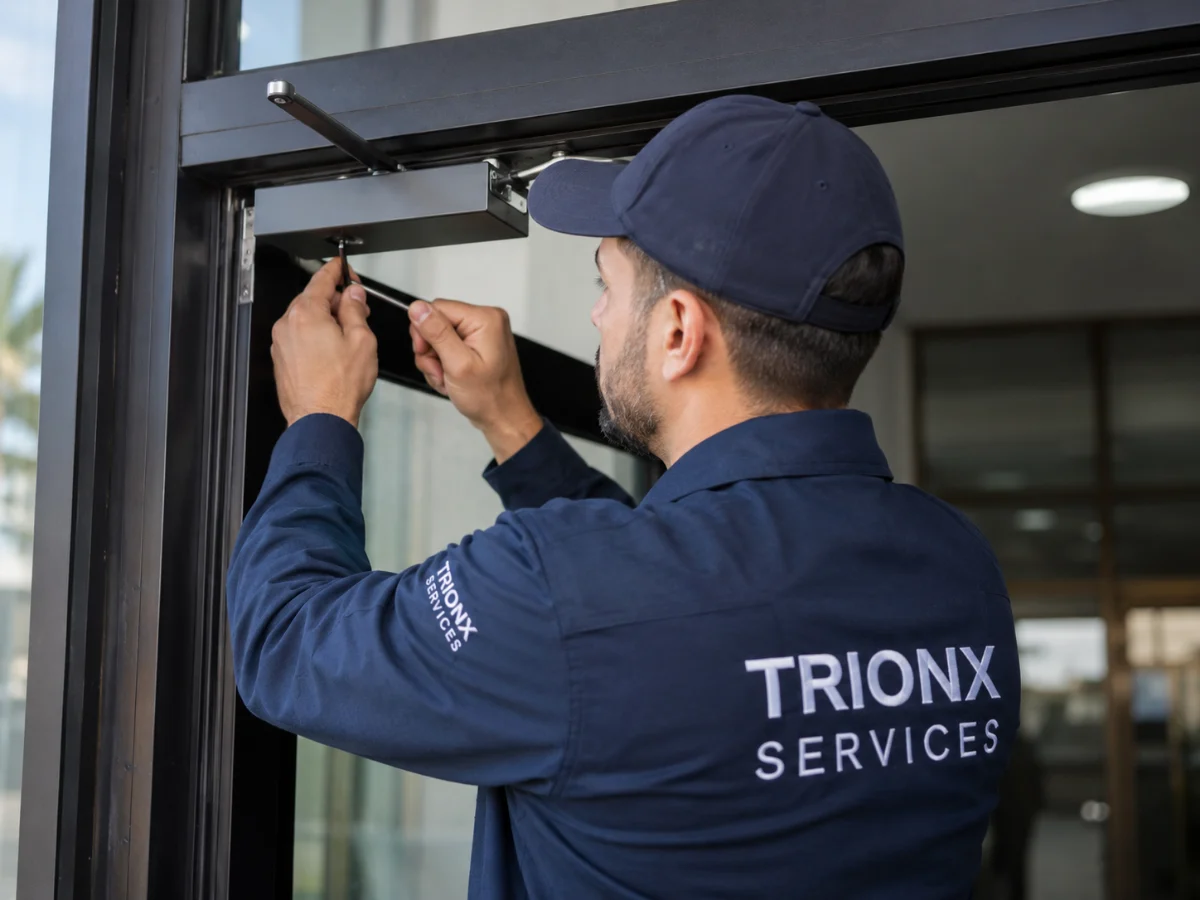
Fire door inspection: the annual requirement and the paperwork
Fail-safe or fail-secure: what your electric strike does in a power cut

The roof checks worth doing before hurricane season
One company, whoever does the work
Our technicians handle the trades that need no state license, and licensed contractors handle the ones that do. Either way we scope it, book the visit and file the record. Tell us the property and the problem and we will come back with a window. Call out of hours and someone who works here answers.