

Refrigeration
The walk-in is not holding temperature tonight
A walk-in that is climbing has a few hours of usable stock in it, and the first checks are worth doing before anybody is called.
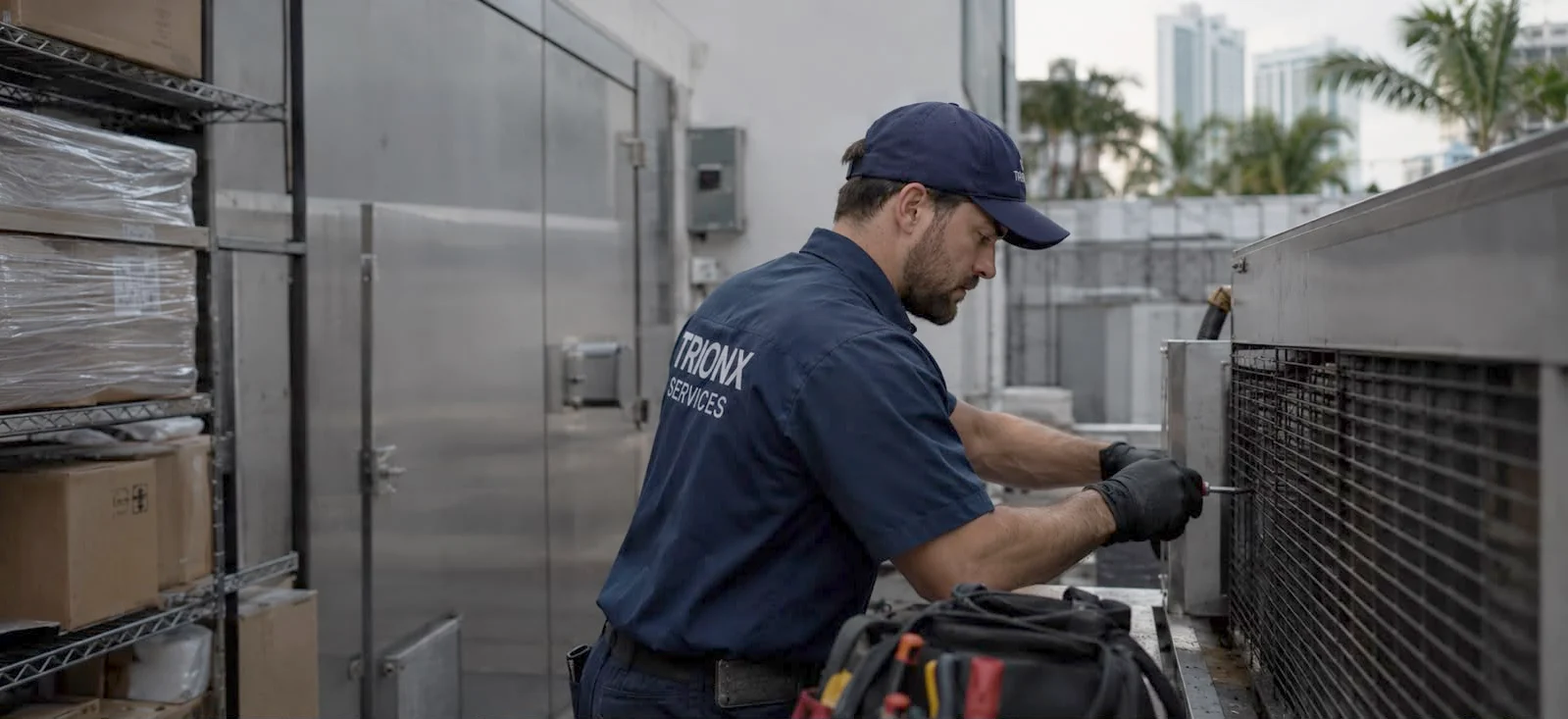
Check the door before you call anybody. A walk-in that has drifted warm is very often a door that is not closing, and that is a fifteen second check that saves a night of stock and a call-out.
Push it shut and look at the whole perimeter. Any gap you can see light through is enough to hold a room above temperature all night.
The door checks, in order
Does it latch on its own from a half-open position, or does it need a shoulder? A closer that has weakened or a hinge that has dropped will leave the door resting against the frame without sealing.
Run a hand around the gasket. A flattened, split or hardened gasket loses its grip on the frame, and the corners go first. Look for a gasket that has pulled out of its channel anywhere along the top.
Look at the floor sweep and at the threshold. A dragged sweep or a build-up of ice at the bottom of the frame stops the door seating.
Check whether anything is holding it. A pallet corner, a hose, a strip curtain that has come off its hooks and folded into the opening. This one is common enough during a busy service that it is worth a specific look.
Then look at what changed
Warm product loaded in bulk will lift a room for hours, and a delivery that went straight in without being staged is the usual cause of a walk-in that started climbing this afternoon.
Check the evaporator fans are running inside the box. Check the condenser outside is not blocked by cardboard, a delivery, grease or debris. Check nothing is stacked against the evaporator or in front of the fans, because a walk-in packed to the ceiling will not circulate air whatever the system is doing.
Look for ice. A light frost on the coil is normal. A solid block over the fins is a defrost fault and it will not fix itself.
What to do with the stock
Write down the temperature and the time, then keep writing it down. That log is what you will be asked for, and reconstructing it afterward from memory is not the same thing. Our article on temperature logs covers what a defensible record looks like.
Move the most sensitive product to whatever cold space is holding. Stop opening the door for anything that can wait, because every opening costs recovery time. Decisions about what is still safe to serve belong to your own food safety procedures and your health authority, and we would not presume to make them for you.
What it usually turns out to be
Where the door checks come back clean, the common causes are a defrost fault leaving the coil iced, a condenser that cannot reject heat because it is blocked or the fan has failed, a low refrigerant charge from a leak, or a control fault where the room is calling correctly and the system is not responding.
The predictive side of this, the signs that show up weeks before a failure, is covered separately in seven signs a walk-in cooler is about to fail. If tonight is the second time this month, read that one.
Which half is which
The sealed refrigeration system is licensed work. Refrigerant, compressors, condensers, evaporator coils, metering devices and the controls that run them are handled through licensed contractors, coordinated and documented by us. Florida requires that at any job size, and a small charge loss needs a licensed contractor exactly as much as a failed compressor does.
The door and the box are ours. Hinges, closers, gaskets, sweeps, latches, strip curtains, panel damage and the shelving inside are performed directly by our technicians. That split matters here more than on most jobs, because the door is a genuinely common cause and it is the cheaper half to put right.
When it cannot wait
A room that is climbing with product in it does not wait. The stock is on a clock and the clock does not pause overnight.
A freezer that is drifting is more urgent than a cooler, because the product recovers worse and the loss is usually larger. A room that is holding but noisy, icing up, or running constantly can be scheduled, and scheduling it is the cheaper outcome than waiting for the night it stops.
Say on the call what the room is reading, what it should read, whether it is a cooler or a freezer, and what is in it. That decides how the visit is prioritized.
Common questions
Questions we get asked about this
How long does stock stay safe once a walk-in starts climbing?
That is a food safety question for your own procedures and your local health authority, not a maintenance one. The useful time is measured in hours, the clock starts when the temperature leaves the safe band, and a written log of when that happened is what protects you afterward.
The unit is iced up. Should I defrost it myself?
Do not attack it with anything hot, sharp or metal. A heavy ice build-up on the evaporator is a symptom of a defrost or airflow fault, so clearing it by hand fixes the appearance and not the cause. It also damages fins and coils easily.
Can you fix the walk-in door?
Yes. Doors, hinges, closers, gaskets, sweeps, strip curtains and latches are hardware, and hardware is work our own technicians perform. The sealed refrigeration system behind it is different and needs a licensed contractor.
Why does it hold overnight but drift during service?
Usually door traffic and warm product. A walk-in that recovers overnight is removing heat successfully but cannot keep up with what is being put in, which points at capacity, airflow or the door rather than a failed compressor.
Keep reading
Related field notes
Walk-in temperature logs: what to record, and what it tells you
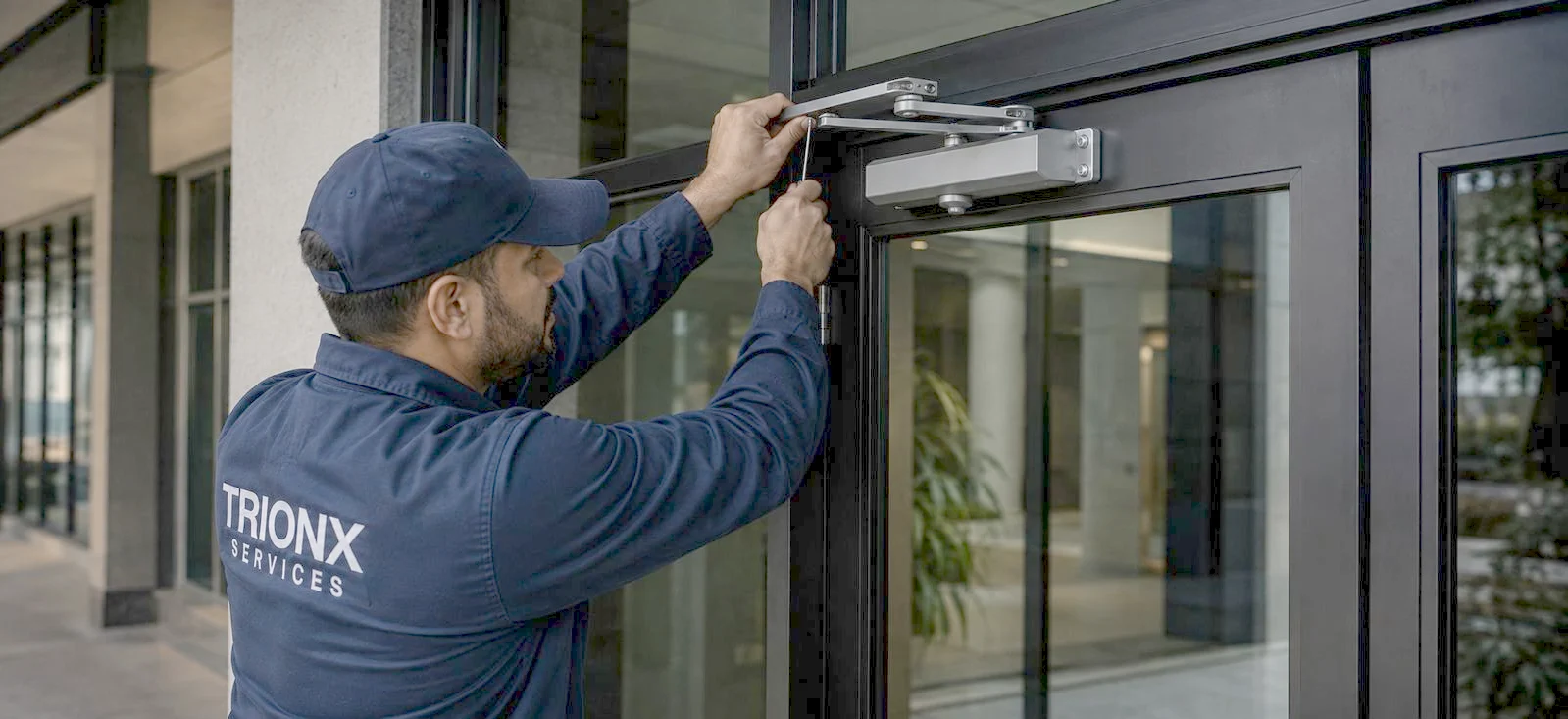
Why commercial doors drop, and what alignment actually involves
Grocery and convenience: what actually keeps the doors open
The walk-in door will not seal and frost is building
The ice machine is not making ice, or the ice is slimy
Schools and childcare: working around term time and access
One company, whoever does the work
Our technicians handle the trades that need no state license, and licensed contractors handle the ones that do. Either way we scope it, book the visit and file the record. Tell us the property and the problem and we will come back with a window. Call out of hours and someone who works here answers.