
Facilities
A health inspector citation: the maintenance items behind it
A good share of a kitchen inspection report is building fabric rather than procedure, and those items are fixed rather than trained.
Sort the report into two piles first. Items about how the kitchen is run, which are procedure and training, and items about the building, which are repairs. The second pile is usually larger than people expect and it is the one that can be closed with a visit.
Work the building pile in the order below and photograph each correction with the date on it.
Doors, gaps and pest entry
The most frequently cited maintenance item in a commercial kitchen, and the cheapest to correct. A worn or missing sweep under a back door, a gap at the threshold, weatherstripping that has hardened, a screen door that does not close, a delivery door propped open on a hot afternoon.
Check every exterior door by kneeling and looking for daylight along the bottom and the sides. Anything you can see light through is a pest route and it will be cited. Sweeps, thresholds, weatherstripping and door alignment are all repairs, and a door that does not close on its own is usually why it gets propped.
The walk-in and the refrigeration
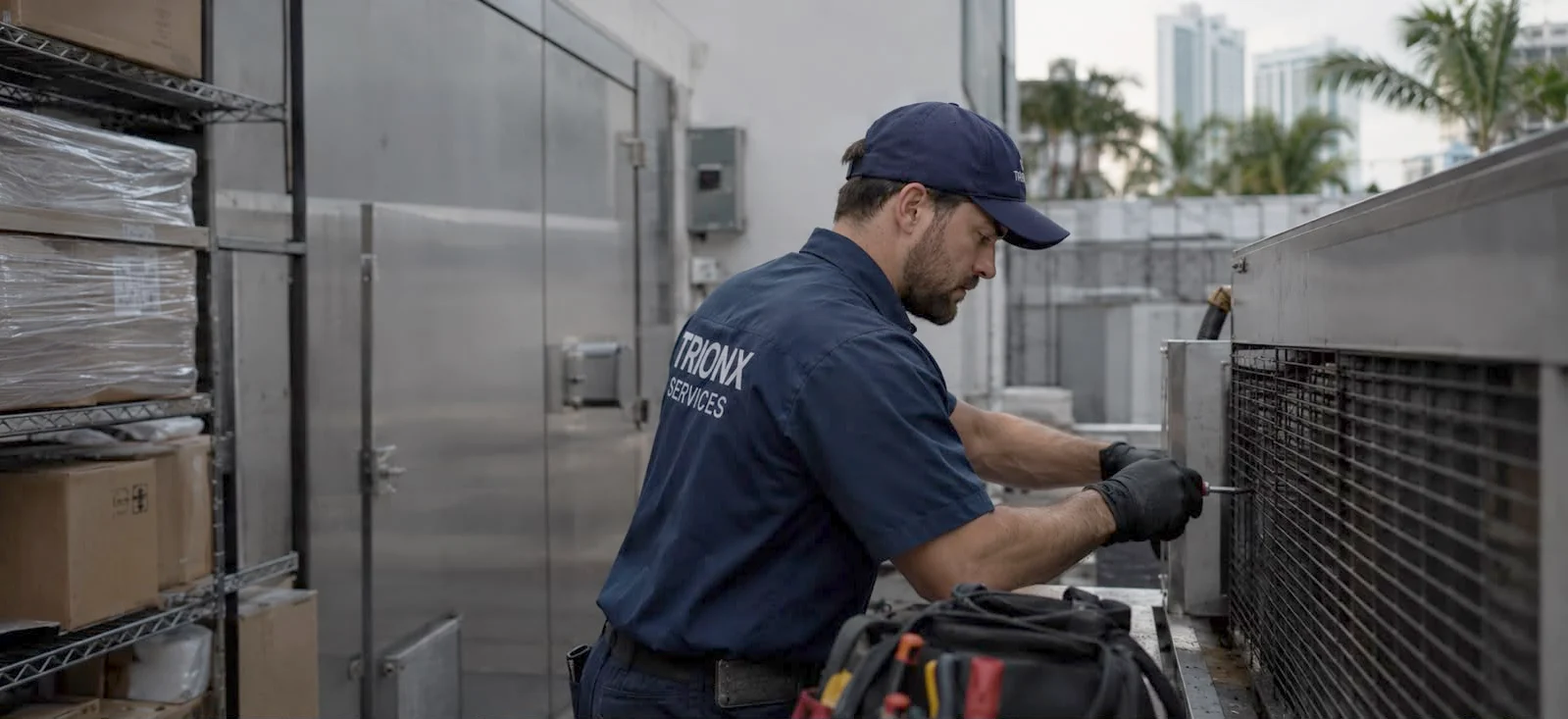
Failed, split or flattened door gaskets. A door that does not latch on its own. A dragging floor sweep. Ice building at the threshold. All of these are hardware, all of them are repairs, and all of them also cost you temperature, which is the other reason they get cited.
Temperature findings themselves are a different matter. Where the room is not holding, our article on a walk-in that is not holding temperature covers the door checks worth doing before a refrigeration contractor is booked. Keep the temperature logs with the closeout, because they will be asked for.
Surfaces, ceilings and penetrations
Damaged or missing ceiling tile, particularly stained tile over a preparation area. Wall finish that is no longer cleanable, chipped tile, failed grout, damaged cove base at the floor to wall junction. Holes around pipe and conduit penetrations, which are both a pest route and a cleanability finding.
A stained ceiling tile is worth treating as two findings rather than one. The tile is the citation and the water above it is the cause, and replacing the tile without finding the source puts the same mark back within weeks. Our article on reading a stained ceiling tile covers what the mark itself tells you.
Drainage, grease and plumbing
Slow or backing floor drains, a grease trap on too long an interval, damaged drain covers, a hand sink that does not deliver properly.
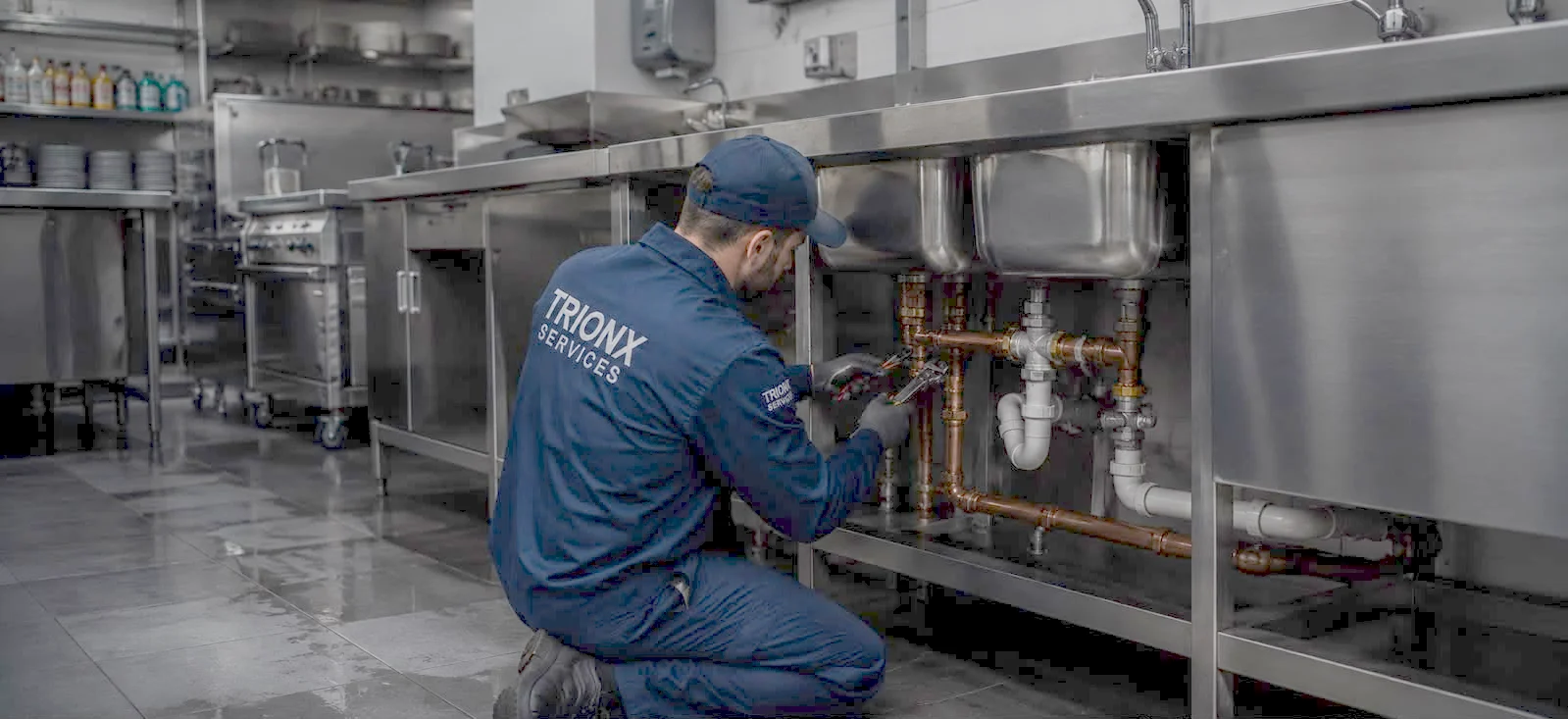
These are plumbing, and Florida requires a licensed plumbing contractor for plumbing work at any job size. There is no exception for a small fixture or a routine swap. We coordinate that work and document it. Our article on grease traps in a Miami kitchen covers the service interval and the manifests to keep, which are asked for alongside the citation.
The order to work through it
Anything that would stop you trading first, whatever the report says about dates.
Then the door and gap work, because it is the largest group, the cheapest, and the one most likely to be re-cited if it is skipped.
Then the licensed work, started early because coordinating a contractor takes longer than sending a technician. Then surfaces and making good, last, once anything that opens up a wall or ceiling is finished.
Two conditions rarely appear on a report themselves and cause a good share of the findings that do. The first is a kitchen running under negative pressure, which pulls warm damp air in around every door, window and penetration, and surfaces later as condensation, staining and pest activity in places nobody can explain. Our article on make-up air covers how that develops.
The second is simpler. Doors get propped because they do not close on their own, and a propped back door is a pest finding every time. Fixing the closer is a repair and it removes the reason, where telling people to stop propping it does not survive a busy service.
Who carries this out
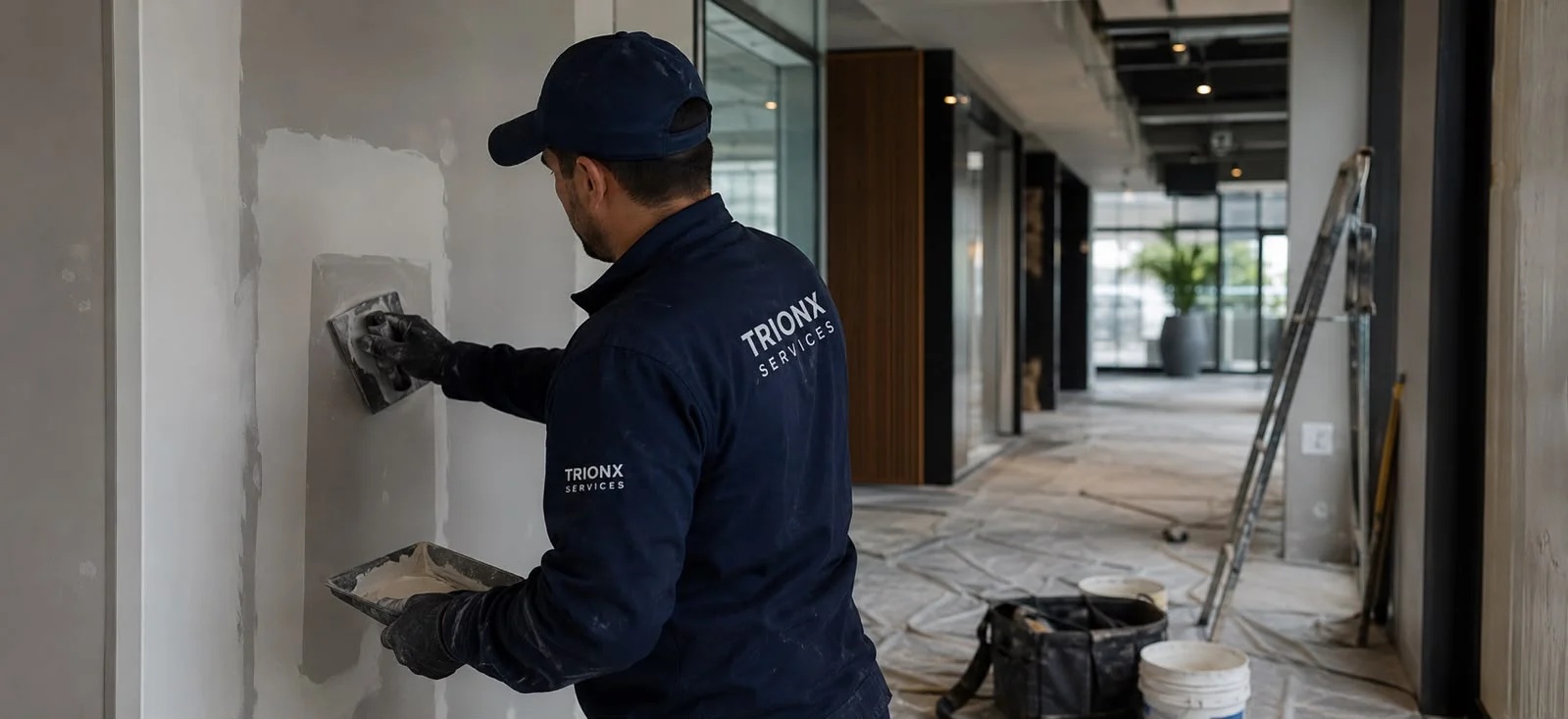
Door sweeps, thresholds, weatherstripping, door alignment, walk-in door hardware and gaskets, ceiling tile, drywall and surface repair, tile, cove base, sealing penetrations and painting are all performed directly by our own technicians. That is most of a typical maintenance citation list, and TrionX carries general liability and workers' compensation on it.
Plumbing, refrigeration systems, electrical and anything requiring a permit are carried out by licensed, insured contractors, coordinated and documented by us.
Keeping it closed
Most of these items are wear rather than accident, which means they return on a cycle unless somebody is looking. Door sweeps wear out, gaskets harden, grout fails and ceiling tile stains again.
Our restaurant maintenance calendar sets out the intervals that keep these off the next report, and running it is materially cheaper than correcting the same findings under a deadline twice a year.
Common questions
Questions we get asked about this
Which citations are maintenance rather than procedure?
Anything about the building itself: gaps under doors, damaged or missing door sweeps, failed walk-in gaskets, damaged wall and ceiling surfaces, holes around pipe penetrations, loose cove base, and drainage. Those are repairs, and no amount of retraining closes them.
Why do inspectors care so much about door sweeps?
Because a gap under an exterior door is the main pest entry route into a kitchen, and it is one of the easiest things in the building to verify. A sweep is a cheap part and it is cited constantly because it wears out quietly.
Can you replace a hand sink or a floor drain?
No. Anything where supply or waste lines are made and broken is plumbing, and Florida requires a licensed plumbing contractor for it at any job size. We coordinate and document that. The surrounding surfaces, wall finish and making good are our own technicians.
What does the re-inspection look at?
The cited items. Having a dated photograph and an invoice against each one makes it short. Keep grease trap service manifests and any temperature logs with that record, because those get asked for at the same time.
Keep reading
Related field notes
Grease traps in a Miami commercial kitchen: what fails and why
The walk-in is not holding temperature tonight
A ceiling tile is stained or sagging: what it is telling you

Two quotes for the same job, and they do not match
Storefront checks before the holiday season
Tenant maintenance requests: urgent, or can it wait?
One company, whoever does the work
Our technicians handle the trades that need no state license, and licensed contractors handle the ones that do. Either way we scope it, book the visit and file the record. Tell us the property and the problem and we will come back with a window. Call out of hours and someone who works here answers.