

Facilities
Two quotes for the same job, and they do not match
When two quotes for one repair disagree, the difference is almost always in what each vendor decided to include, and the work is finding that out.

Put the two quotes side by side and compare scope before you compare anything else. Take each line of work in the first quote and find its match in the second. Whatever has no match is the difference, and it usually explains the gap by itself.
Most mismatches come from one vendor pricing a narrower job. The quotes were written from a conversation or a quick look, and each vendor filled the gaps with its own assumptions. Your task is to turn those assumptions into written statements, so both vendors are quoting the same job.
Start with the scope, line by line
Copy both quotes into one table. Down the left, list every task either quote mentions. Across the top, one column per vendor. Mark each cell as included, excluded or not mentioned. The third answer is the one that matters, because silence in a quote is where extras are born.
Check the description of the fault too. If one quote says replace the closer and the other says adjust and re-hang the door, the vendors disagree about the problem, and no comparison of the totals means anything until that is settled. A quote should say what was found, what will be done and what will be left as it is.
If you wrote a scope before asking for quotes, this is where it pays off. Our article on writing a punch list a vendor can price covers how to set the job down so every quote answers the same question. If you did not, write one now from the better of the two quotes and send it to both vendors.
What one quote tends to leave out
These are the items that go missing most often. Check each one against both quotes.
- Access: lifts, ladders, scaffolding, after-hours entry, keys or codes, and whoever has to be on site to let people in.
- Disposal: removal of the old unit, glass, debris or packaging, and who carries it away.
- Making good: patching, painting or refinishing what the repair disturbs. A ceiling opened for access has to be closed again by somebody.
- Permits and inspections: whether the work needs one, who applies and who is responsible if an inspection fails.
- Materials: whether they are included, what grade or brand, and what happens if the first part is wrong.
- Warranty: on parts, on labor, for how long, and what voids it.
- Return visits: whether a second trip for a part is covered or charged again.
A quote that includes all of these will usually look more expensive than one that includes none. That is a fair reason to prefer it, once you have confirmed the other vendor excluded them and did not simply forget to write them down.
Who is licensed for which part
A job that looks like one task can contain a part that needs a license. Replacing a fixture can involve wiring. Swapping a faucet can involve supply lines. Anything on an air handler or a walk-in cooler is HVAC or refrigeration work. In Florida, electrical, plumbing, HVAC and refrigeration need a state license at any job size, and anything that needs a permit is a separate matter again.
For each quote, ask who carries out each part and whether that person holds the license for it. A vendor with its own employees may be able to do the doors, hardware, glass, carpentry and painting directly, then bring in a licensed contractor for the rest. That is a reasonable structure if the quote says so. It is a problem if the quote prices all of it as one line and does not say who does what. Our article on when a handyman is enough and when you need a licensed contractor sets out where that line falls.
On our side, door hardware, locks, glass, carpentry, painting and general maintenance are done by our own technicians. Electrical, plumbing, HVAC and refrigeration are carried out by licensed, insured contractors, and we coordinate and document that work. A quote from us says which is which.
Questions to put back to both vendors
Send the same list to both, in writing, so the answers can be set next to each other. Keep it short and specific.
Ask what is included and what is not, by name, for each item in the list above. Ask who will be on site and whether any part is subcontracted. Ask what the quote assumes about access and working hours. Ask what happens if the fault turns out to be different from the one described, and who decides, and on what evidence. Ask what the warranty covers and in what form it will be given.
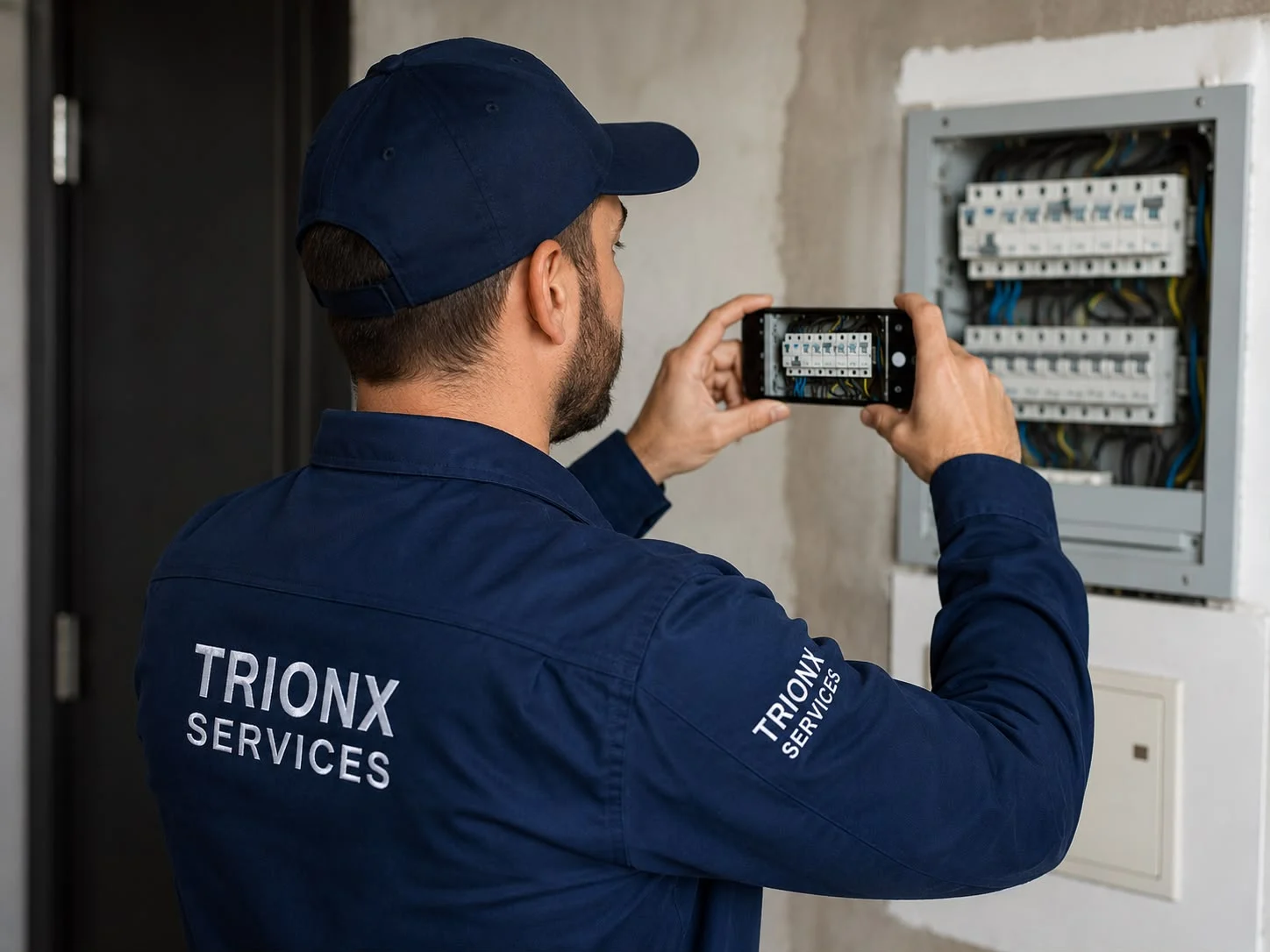
Ask also how the job will be recorded. Photographs of the fault before the work and of the result after it settle most later disagreements, and a vendor that already does this will say so without hesitation.
Reading the answers
A good revised quote gets more specific. It names things, drops the vague lines and states its exclusions. A weak one gets shorter, or repeats the original wording with a reassurance added.
Pay attention to how each vendor handles the questions, because that is a preview of how they will handle the job. Prompt, written, specific answers are what you want to see. Answers that come only by phone, or that say it will all be sorted on the day, leave you with no record to point to when it is not.
If the two quotes still disagree on the diagnosis after this, get a third opinion on the cause only, and ask for it in writing. Paying for a short diagnosis is cheaper than paying for the wrong repair twice.
After you choose
Keep the quote, the revised version and the written answers together. When the invoice arrives, compare it against them line by line. Our article on reading a commercial maintenance invoice covers what each line should be and what to query.
If the job is one of several you are placing, or you are weighing a vendor for ongoing work and not one repair, the questions in choosing a facility maintenance vendor go beyond a single quote. Our general maintenance work is quoted on the same terms described here: scope in writing, exclusions named and the trade that carries out each part stated.
Common questions
Questions we get asked about this
Should I just take the lower quote?
Only once you know both cover the same work. A lower quote often leaves out disposal, making good, access or a permit, and those come back later as extras. Line the scope up first, then compare.
Is it fair to ask a vendor to revise a quote?
Yes. Asking a vendor to confirm in writing what is and is not included is ordinary practice, and a vendor who resists it is telling you something. Send both vendors the same questions so the revised quotes can be compared.
What if one quote names a licensed contractor and the other does not?
Ask who will actually carry out any electrical, plumbing, HVAC or refrigeration part, and ask for the license holder's name. Florida requires a license for those trades at any job size, so a quote that is silent on it may be pricing work nobody is allowed to do.
How many quotes is enough?
Two comparable quotes are usually enough for a single repair. A third makes sense when the two disagree on what the problem is, because then you are comparing diagnoses and not prices.
What if neither quote says what caused the fault?
Ask. A quote that fixes the symptom and says nothing about the cause may be a repeat call in waiting. A short written line on cause costs the vendor nothing.
Keep reading
Related field notes
How to read a commercial maintenance invoice
Choosing a facility maintenance vendor: questions worth asking

Handyman or licensed contractor: which does this job need?
Gyms: humidity, heavy doors and unattended hours

Hotel back of house: maintenance around a building that never closes
Medical and dental suites: maintenance around patients
One company, whoever does the work
Our technicians handle the trades that need no state license, and licensed contractors handle the ones that do. Either way we scope it, book the visit and file the record. Tell us the property and the problem and we will come back with a window. Call out of hours and someone who works here answers.