
Facilities
Medical and dental suites: maintenance around patients
A damaged surface in a clinical room is a finding rather than a decorating job.
Clinical space is judged on two things a visitor can see immediately: whether the surfaces are intact and cleanable, and whether the doors work properly with your hands full.
Both degrade steadily, both are cheap to keep on top of, and both are expensive to fix in a hurry before an inspection.
Surfaces are the whole standard
A wall or countertop in a treatment room exists to be cleaned. Once a laminate edge lifts, a seam opens, or a corner chips through to the substrate, it stops being cleanable and starts holding whatever is wiped across it.
The damage comes from the same places every time: cart corners at a constant height, chair arms against walls in waiting areas, and doorway edges on the routes equipment travels. It is predictable enough to protect against, and wall protection or corner guards on those runs costs less over two years than repairing the same meter of wall repeatedly.
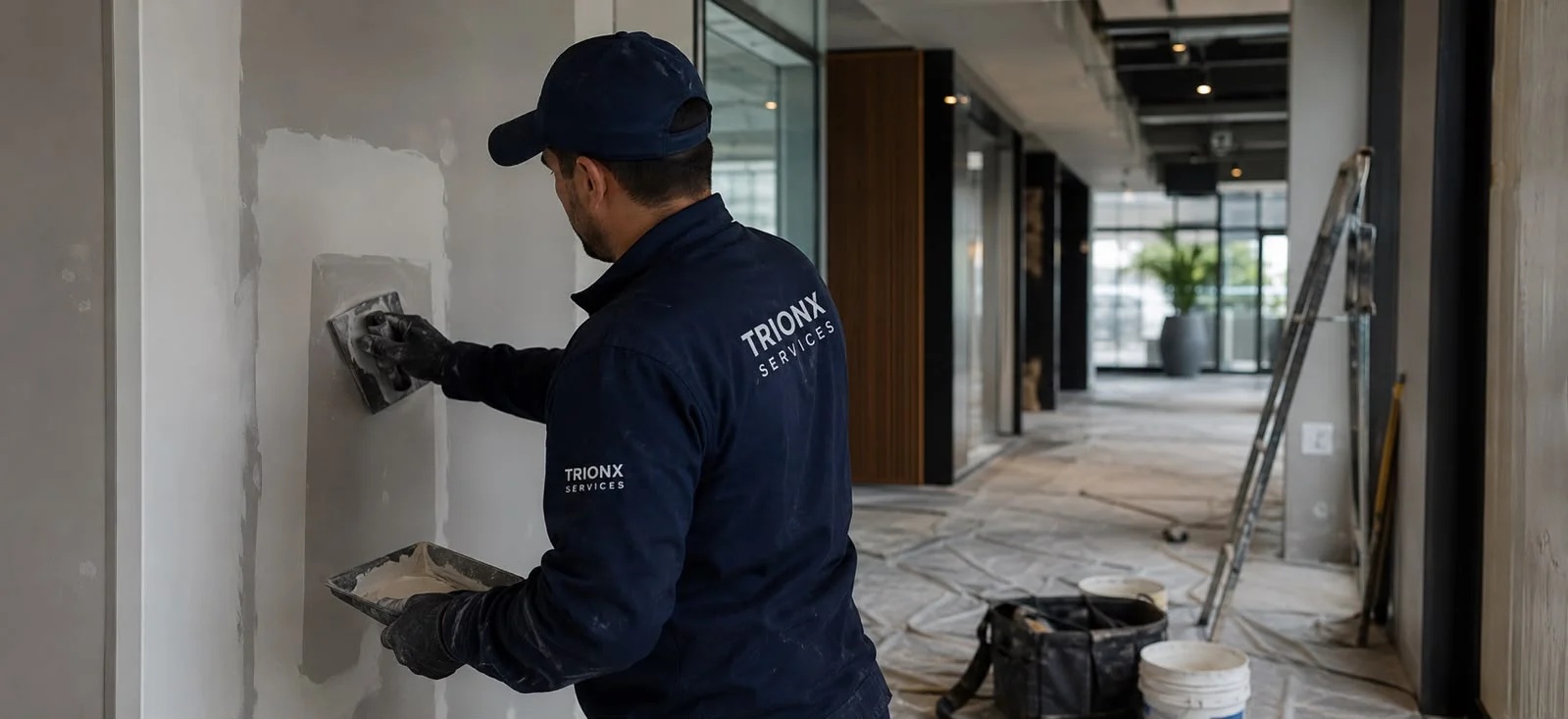
Where a repair is needed, it has to be finished to the level of the surface around it or it shows. Our article on why a patch shows covers that, and clinical lighting is unforgiving of a poor one.
Doors get operated with no free hands
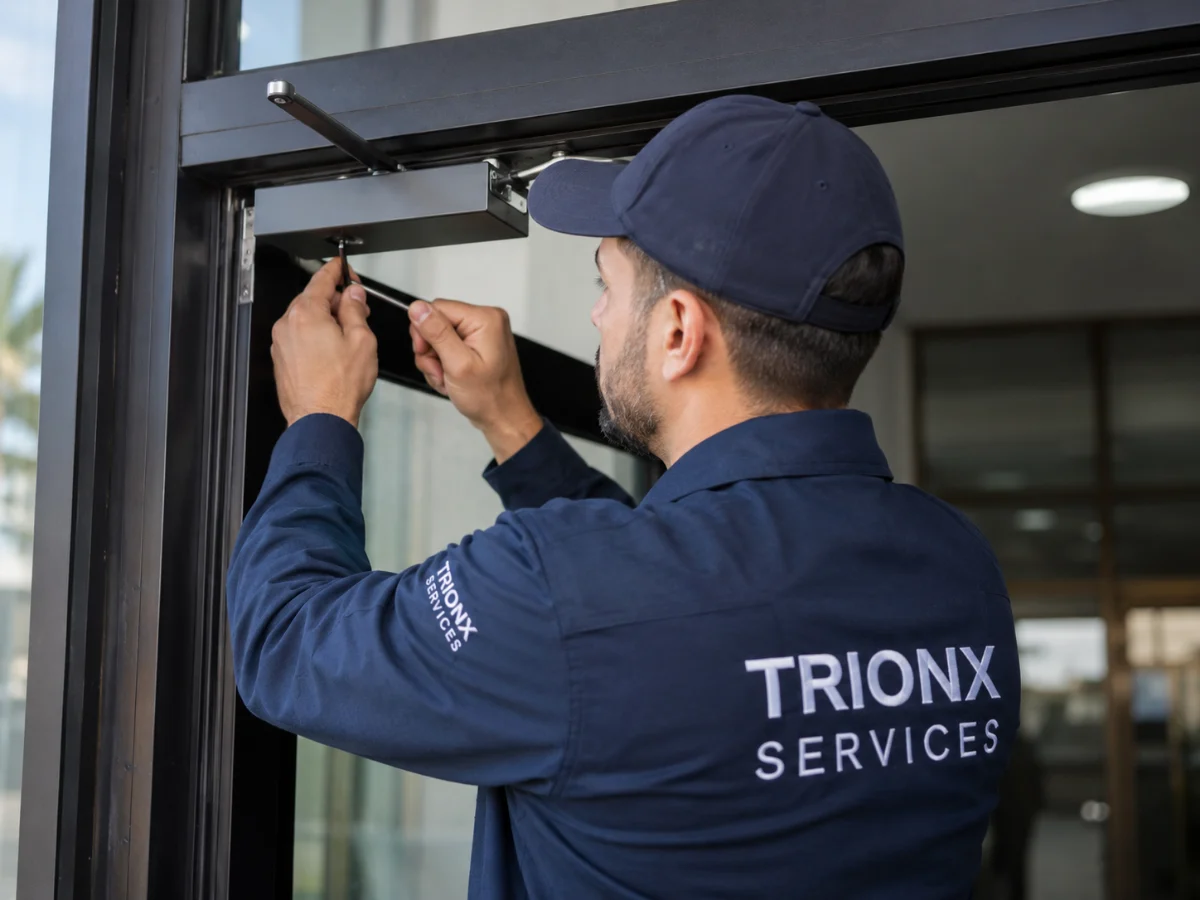
Staff move through a medical suite carrying things, which means doors are pushed with elbows, hips and carts rather than opened properly. Hardware wears faster than the door count suggests.
Opening force matters here more than in most buildings, because patients using the space may have limited strength. A door that has stiffened as its closer aged is a genuine accessibility problem rather than an inconvenience, and our article on opening force covers measuring it rather than guessing.
Privacy doors on consulting and treatment rooms have to lock against entry and always release from inside without a key or a second action. Hardware that does one and not the other gets fitted more often than it should.
Where an entrance has a powered operator, it is usually on the accessible route, which makes a failure urgent rather than cosmetic. Our article on powered doors covers what is ours and what is electrical.
Scheduling is most of the job
A suite runs in sessions, and the useful windows are between them, at the end of a clinic day, or on a day a particular room is not in use.
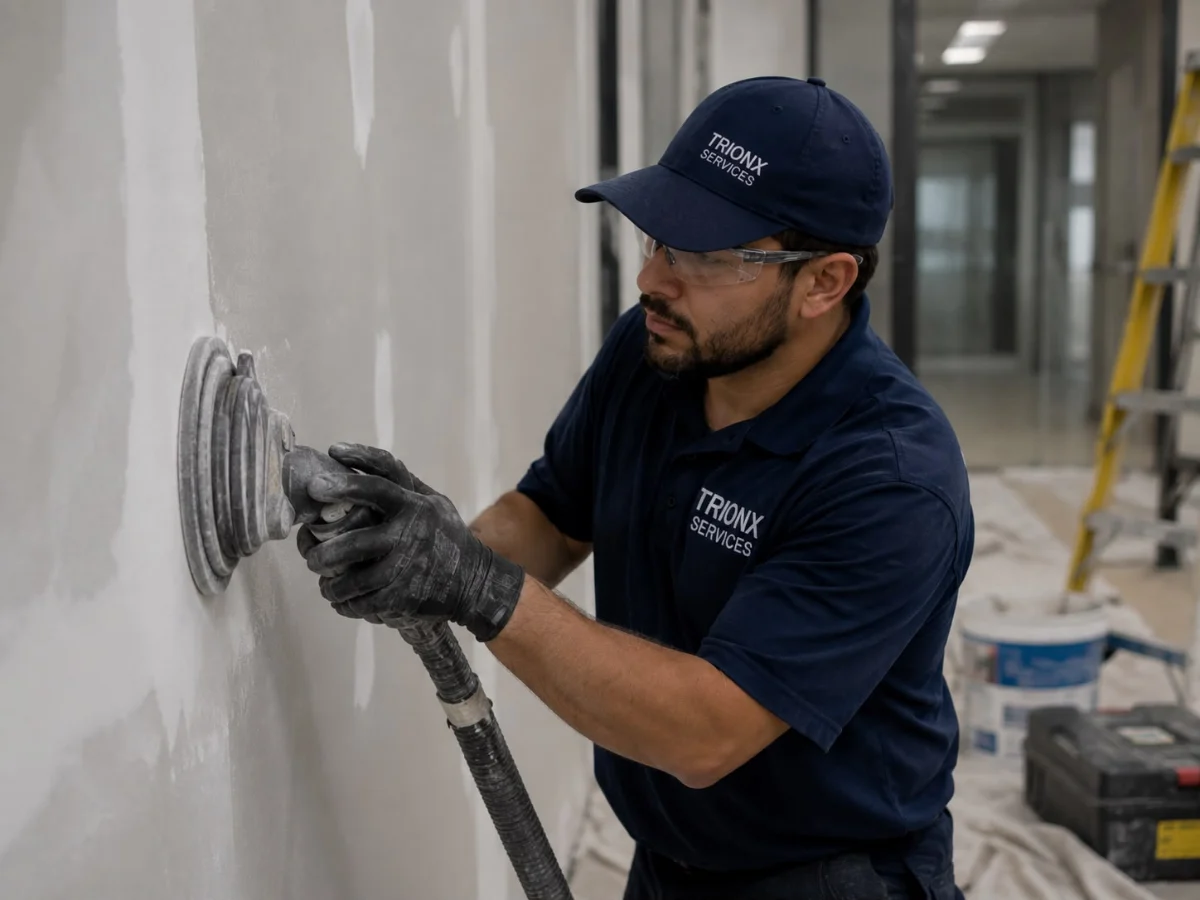
Dust is the constraint that decides everything. Sanding, cutting and drilling are contained and extracted at the tool, and the area is sealed off rather than cleaned afterward. In a space with clinical activity, containment is agreed explicitly rather than assumed.
Noise matters nearly as much. A consulting room next to the work is a privacy problem as well as a comfort one, and that is a timing question rather than an equipment one.
The quiet ones worth walking
Ceiling tiles above treatment rooms, where a stain is both a leak and an appearance problem. Door seals and sweeps on external doors, which are the main pest route into any building. Flooring seams and cove base, where water tracks under a covering and nobody sees it for months.
Hand hygiene points and anything plumbed, which is licensed work but worth noticing early. Our article on the quarterly walk covers building a repeatable version of this.
The entrance is part of the clinical offer
Patients arriving at a medical suite are frequently the people least able to manage a heavy door, a lipped threshold or a long push to a handle. The entrance is where accessibility is judged, and it is also the door with the highest cycle count on the site.
Check the approach as well as the door: a threshold that has lifted, a mat that has curled, a mat well that has filled, and whether the powered operator, if there is one, actually holds open long enough for somebody moving slowly.
What cannot wait in a clinical space
Most maintenance in a medical suite is schedulable. Three things are not.
A door that no longer secures a room holding controlled items or records, which is an urgent problem whatever else is on the list. Water reaching equipment or a ceiling above a treatment room. And a failure on the accessible entrance while the suite is open, because there is usually no second compliant way in.
Everything else, including the surface damage that dominates this article, is better batched into a planned visit than attended piecemeal between sessions.
Who carries this out
Doors and hardware, locks and access hardware, glass, carpentry, laminate and surface repair, flooring, ceiling, painting and general maintenance are performed directly by our own technicians, who are background checked and on our payroll. TrionX carries general liability and workers' compensation on that work.
Electrical, plumbing, HVAC and anything touching medical gas are coordinated through licensed contractors, because Florida requires a license for those at any job size, and there is no exception for a small job.
Common questions
Questions we get asked about this
Can work happen while the suite is operating?
Some of it. Quiet, contained work in a corridor or a vacant room is usually workable between sessions. Anything dusty, loud or blocking a route is planned around clinic hours, and that is agreed before scoping rather than discovered on the day.
What fails first in a clinical space?
Surfaces and doors. Wall protection and laminate take cart and chair impacts, and the doors get operated constantly with hands full. Both are visible to anybody inspecting the space, which is why they matter more here than the same damage elsewhere.
Why does damaged laminate matter so much?
Because a surface that is chipped, lifting or has an open seam is no longer cleanable, and cleanability is what the surface is there for. It reads as a maintenance failure to a patient and as a finding to anybody assessing the space.
Do you work in treatment rooms?
Yes, scheduled around use and with the area contained. Anything touching medical gas, clinical plumbing or the electrical supply is licensed work and goes through a licensed contractor, coordinated and documented by us.
Keep reading
Related field notes
Why a drywall patch shows, and how to stop it
Automatic or powered door not working
The quarterly walk: what to check on a commercial property
Storefront checks before the holiday season
Tenant maintenance requests: urgent, or can it wait?
Salons and spas: humidity, chemicals and finishes that show everything
One company, whoever does the work
Our technicians handle the trades that need no state license, and licensed contractors handle the ones that do. Either way we scope it, book the visit and file the record. Tell us the property and the problem and we will come back with a window. Call out of hours and someone who works here answers.