
Carpentry
Office churn: moving teams without wrecking the finishes
Nothing in an office is damaged by one move. It is damaged by the fourth.
Office churn is the internal moves nobody records: a team shifts floor, a meeting room becomes an office, a screen goes up, shelving comes down. Each one is small and each one leaves something behind.
Three or four rounds later the space has a condition problem that nobody can point at a cause for.
Walls accumulate the damage
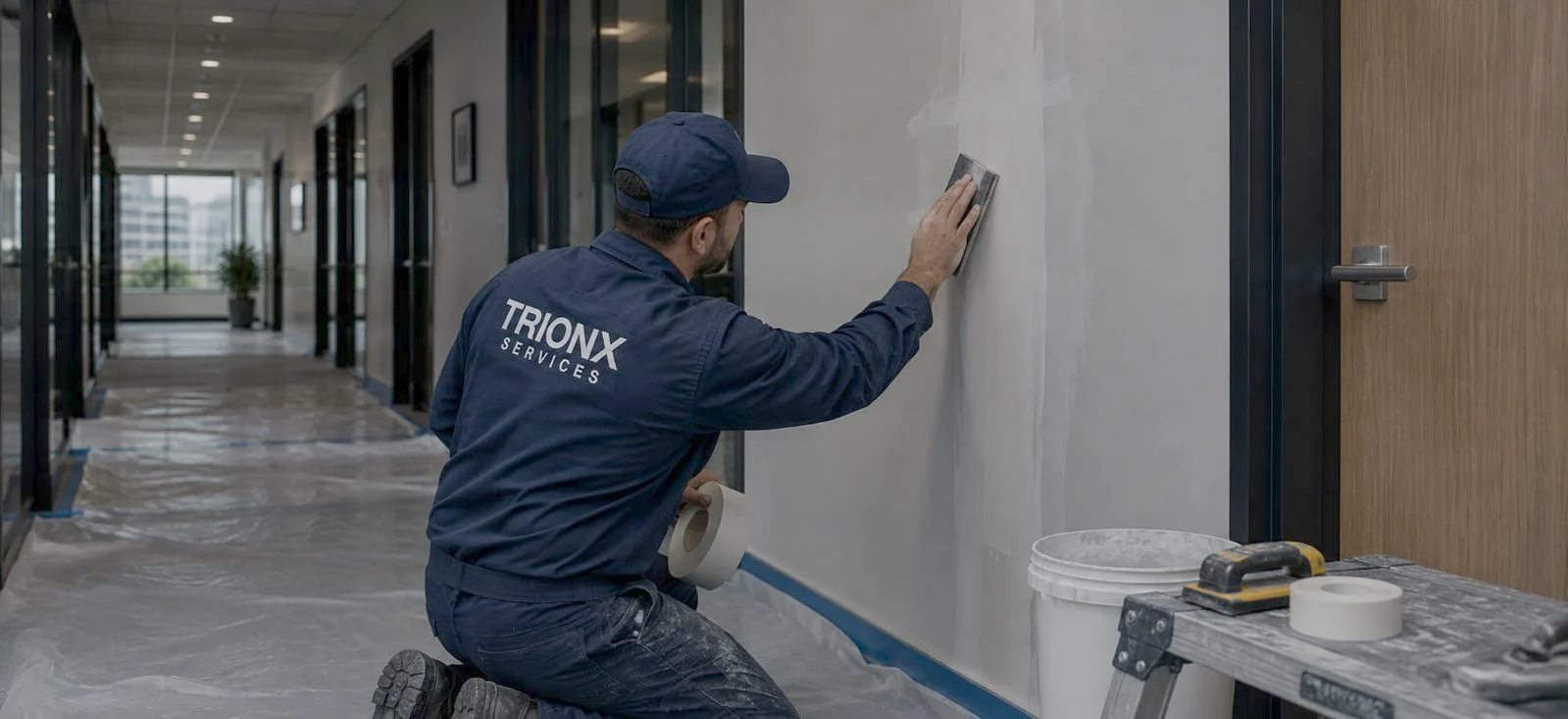
Drywall anchors fail by tearing the board rather than by the screw pulling out, so every removed fixing leaves a hole wider than what was in it. The next move puts a fixing beside it, into board already weakened, and the third round finds nothing sound to fix into at all.
Filler makes it look repaired and carries no load, so a screw back into a filled hole is weaker than the one that failed. Our article on what actually holds covers the fasteners, and why a patch shows covers making the repair invisible afterward.
The answer at build-out is backing: a member fixed between studs so there is solid material behind the board where things will be hung. It costs very little while a wall is open and it turns every subsequent move into a screw rather than a repair.
Ceilings get shuffled
Tiles come out for cabling and go back wherever is nearest. Mineral fiber ages and takes up dust, and tiles settle into their own openings, so a grid that has been rearranged sits unevenly and looks tired even though nothing is damaged.
Putting each tile back where it came from costs nothing. Where tiles have been damaged or lost, matching a replacement is harder than it looks, and our article on replacing ceiling tile covers the edge detail, module and aging problem.
Worth checking what has been hung from the grid over the years. Cabling, signage and the occasional light fixture end up suspended from a grid that was never meant to carry them.
Doors and access drift out of step
A room that changes use changes who should reach it, and the hardware rarely keeps up. Offices end up with doors locked to a key nobody can identify, readers granting access to people who moved floors two years ago, and meeting rooms with privacy hardware that was right when it was a manager's office.
Exporting the credential list and comparing it against people who actually work there is a half-hour job that almost never gets done, and it is the one with the most exposure attached.
Floors and the things that get dragged
Carpet tile lifts at the seams where furniture is dragged across it rather than lifted. Hard flooring scratches at the same points. Baseboard and door frames take cart impacts on the moving routes, which are the same routes every time.
None of this is worth chasing individually. It is worth photographing before and after a move so the damage has a date on it, which matters at the end of a lease more than during it.
Do it between occupancies
The cheap moment is when a space is empty. Walls are reachable, noise does not matter, and the finish is better because the work is not being done around desks.
The expensive moment is when a tenant is in. The most expensive is at lease end, under a dilapidations discussion, with a deadline. Our article on the tenant turnover punch list covers what that list should contain.
Photograph it while nobody is arguing
Office churn produces the damage that gets discussed at lease end, and by then it is years old and nobody can say which move caused it.
Photograph the walls, ceiling and floor of an area before a move and again after it, from the same positions. It takes minutes, it costs nothing, and it is the only thing that separates wear from damage once a dilapidations conversation starts.
Keep the record with the work order rather than on somebody's phone. Our article on what a closeout should contain covers where it belongs, and the point of filing it properly is that it survives the manager who took the photographs.
The same record answers the smaller question too: whether a wall has been repaired three times in two years, which tells you to fit backing rather than patch again.
Who carries this out
Drywall repair, backing, fasteners, ceiling tile and grid, doors and hardware, locks and access hardware, flooring, trim and painting are performed directly by our own technicians. None of it requires a Florida contractor license, and TrionX carries general liability and workers' compensation on that work.
Anything on the cabling or the power is electrical, and Florida requires a licensed contractor for that at any job size. In an office churn that is usually the floor boxes and anything feeding a new desk position, and it is coordinated and documented by us.
Common questions
Questions we get asked about this
Why do the walls end up in such poor condition?
Because each move leaves fasteners behind and the next one goes in beside them. Board anchors fail by tearing the board, so the hole left is larger than the fixing, and after several rounds an area of wall has no sound material left to fix into.
Can screens and shelving be moved without the damage?
Largely, if there is backing behind the board to fix into. Putting backing in while a wall is open during a build-out costs very little and turns every later move into a screw rather than a repair.
What about the ceiling?
Tiles get lifted for cabling and rarely go back in the same openings. Tiles wear into position, so a grid that has been shuffled looks worse than it did even with nothing damaged. Putting each tile back where it came from is free and almost never done.
When is the right moment to make good?
Between occupancies, while the space is empty and before anybody photographs it for the next tenant. Doing it while people are at desks costs more, takes longer and produces a worse finish.
Keep reading
Related field notes
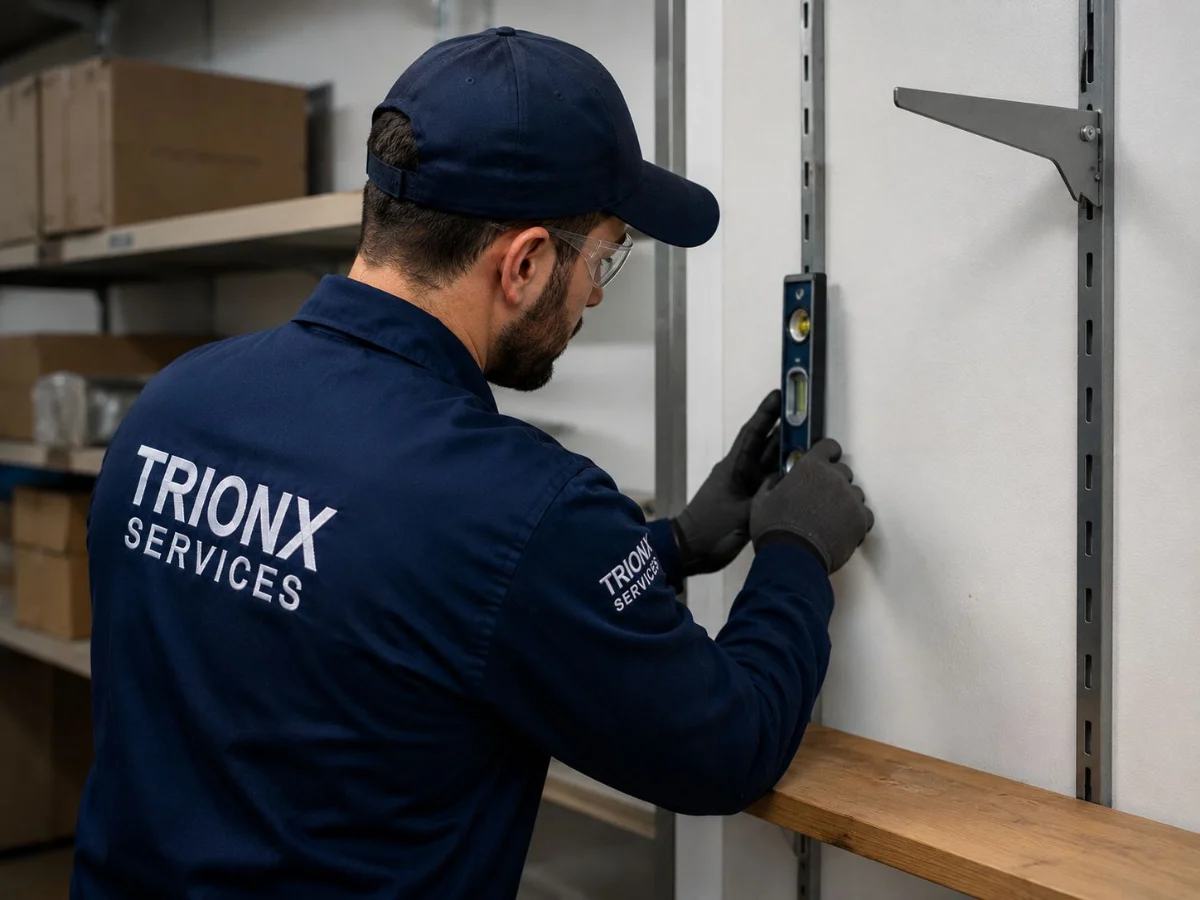
Why a drywall patch shows, and how to stop it
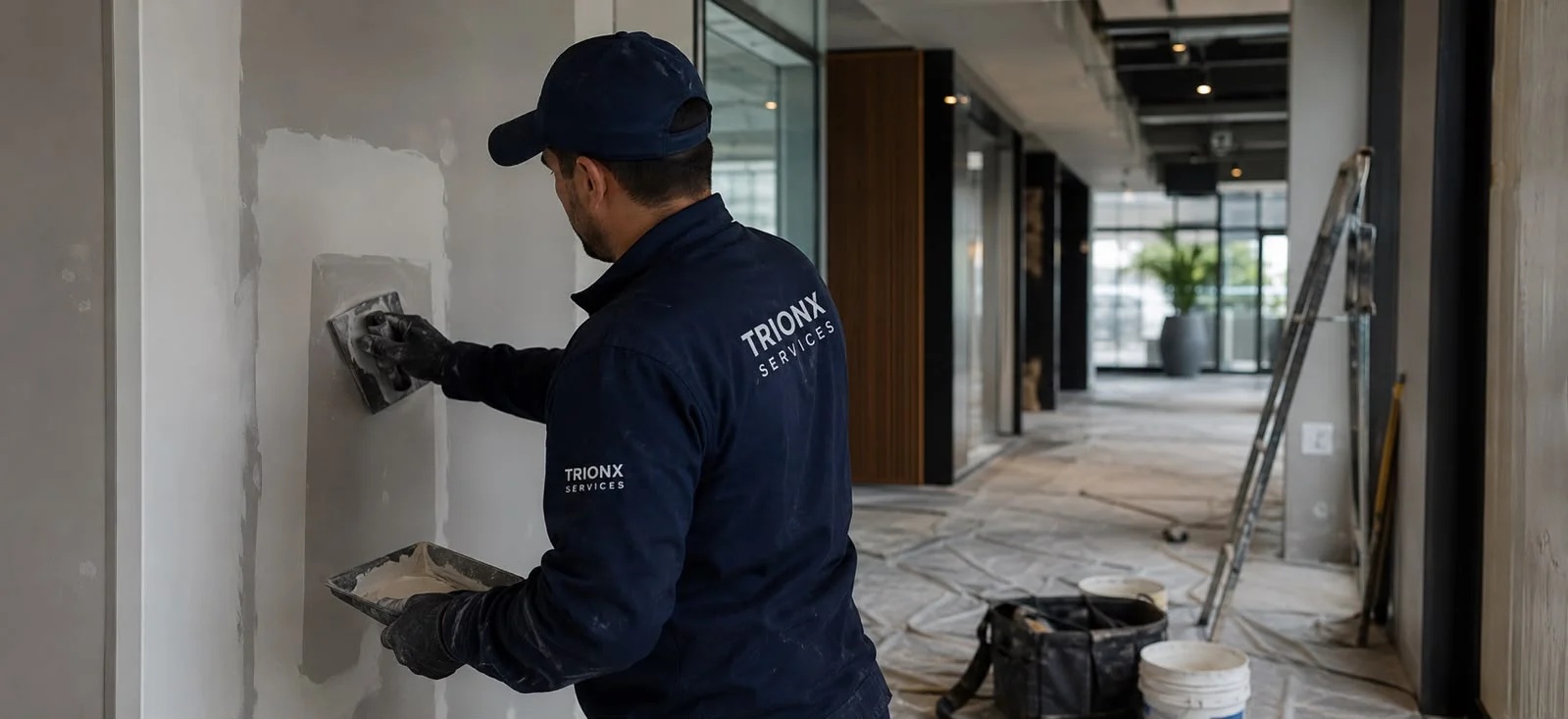
Replacing ceiling tile without wrecking the rest of the grid
Tenant turnover punch lists: what to fix between tenants
There is a hole in a commercial wall: repairing it fast
Handing back a leased unit: making good before surrender
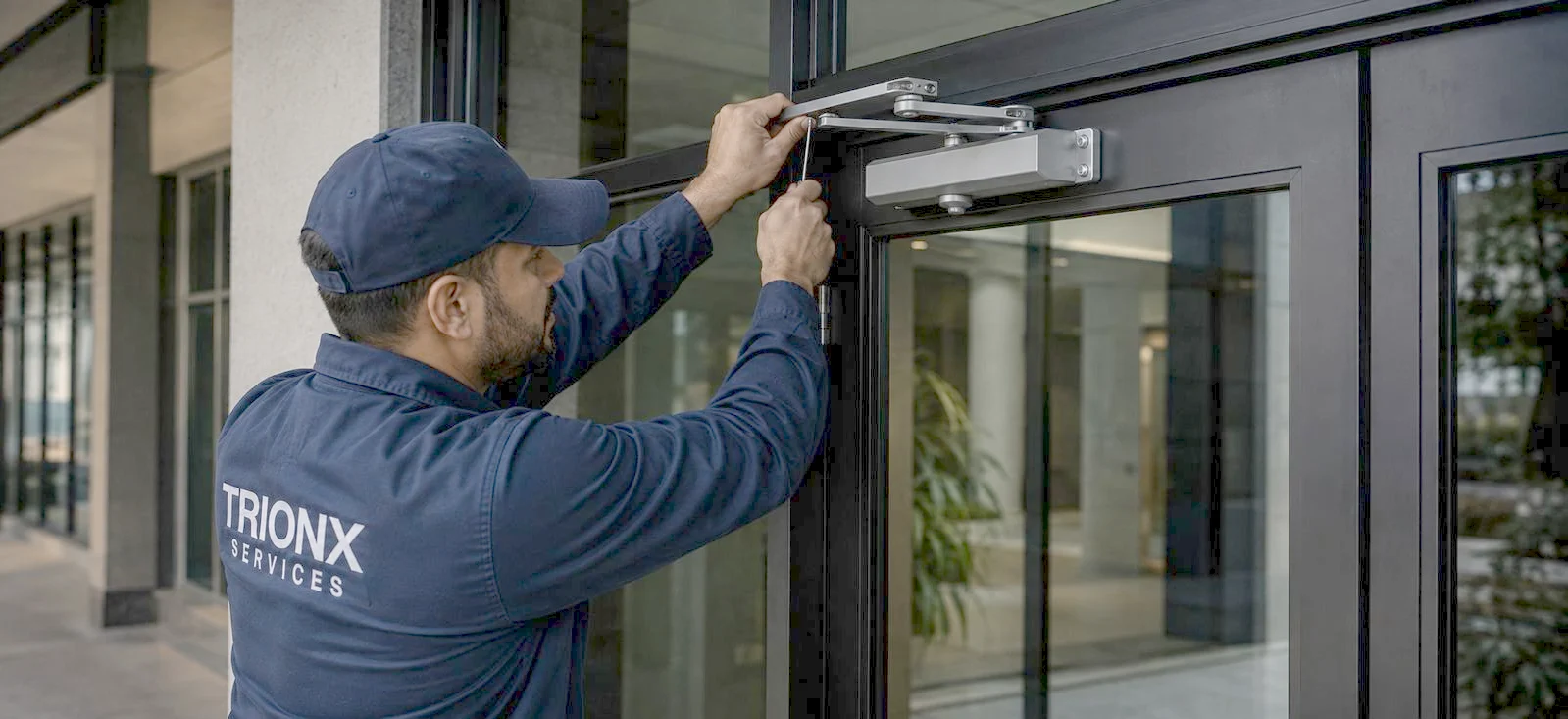
Schools and childcare: working around term time and access
One company, whoever does the work
Our technicians handle the trades that need no state license, and licensed contractors handle the ones that do. Either way we scope it, book the visit and file the record. Tell us the property and the problem and we will come back with a window. Call out of hours and someone who works here answers.