
Carpentry
Handing back a leased unit: making good before surrender
Making good means returning the unit in the condition the lease describes, fair wear aside, and the landlord will check it against a list you have not seen.
Start with the lease clause on surrender or yielding up, and the condition record from when you took the unit. Those two documents define what you owe. Everything else is a list of tasks that gets you there.
In practice making good comes down to four things: repair what you damaged, remove what you installed, return the finishes to a matching state, and hand back every key and credential. Do them in that order and record each stage with photographs.
Find out what the landlord will measure against
Ask for the landlord's expectations in writing before you start. Some landlords send a schedule of dilapidations or a surrender checklist, and some only walk the unit and send a bill. A checklist in advance turns a dispute into a task list.
Compare it with your entry record. Damage that was there on day one is not yours to fix, and a dated photograph from the start of the term is the evidence. If you have no entry record, photograph the unit now, empty, before you touch anything.
Landlords check the same things in the same order, which is the order our article on the tenant turnover punch list follows from the other side of the table. Reading it tells you what the person holding the clipboard is about to look for.
Remove what you installed
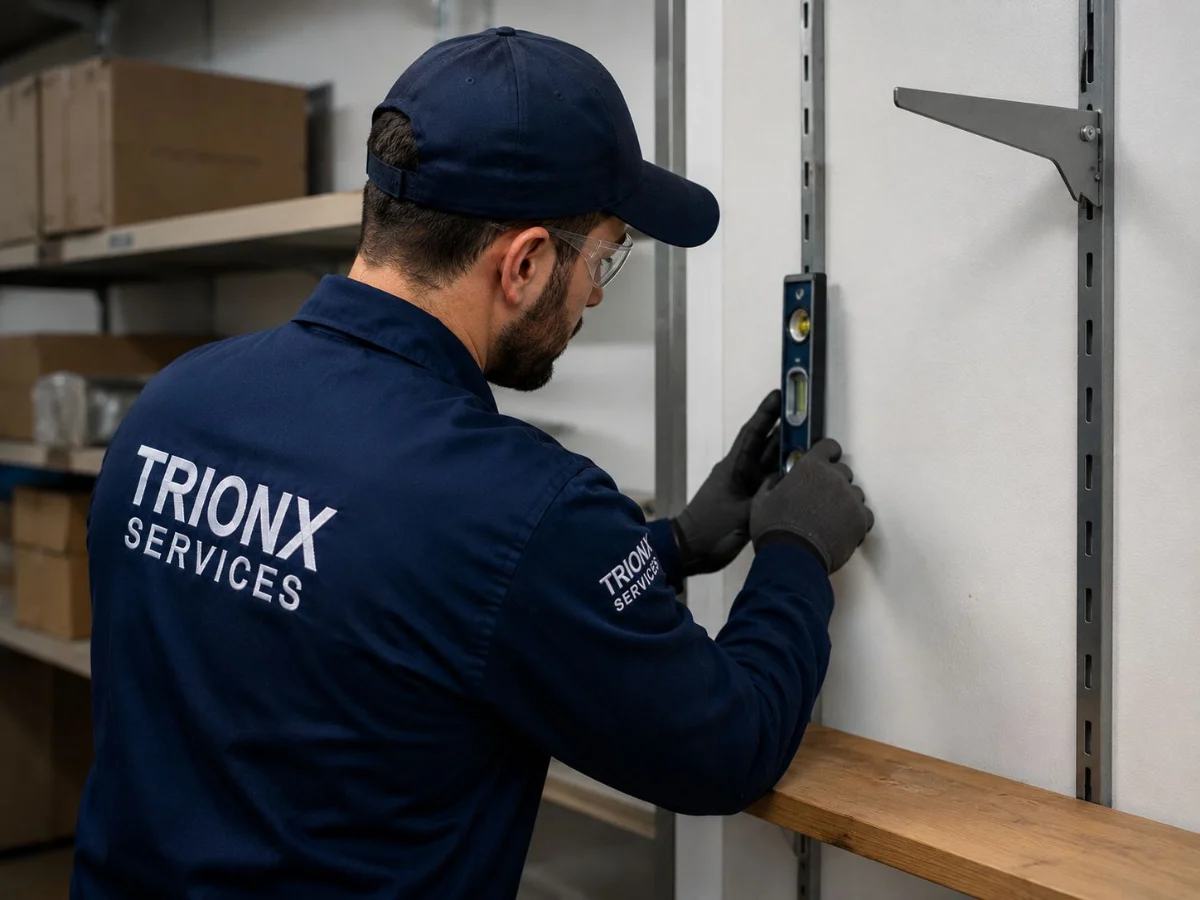
Take down signage, shelving, wall-mounted screens, brackets, hooks, rails and anything fixed for your operation. Removal leaves holes, ghosting and screw pops, so removal comes before repair, not after.
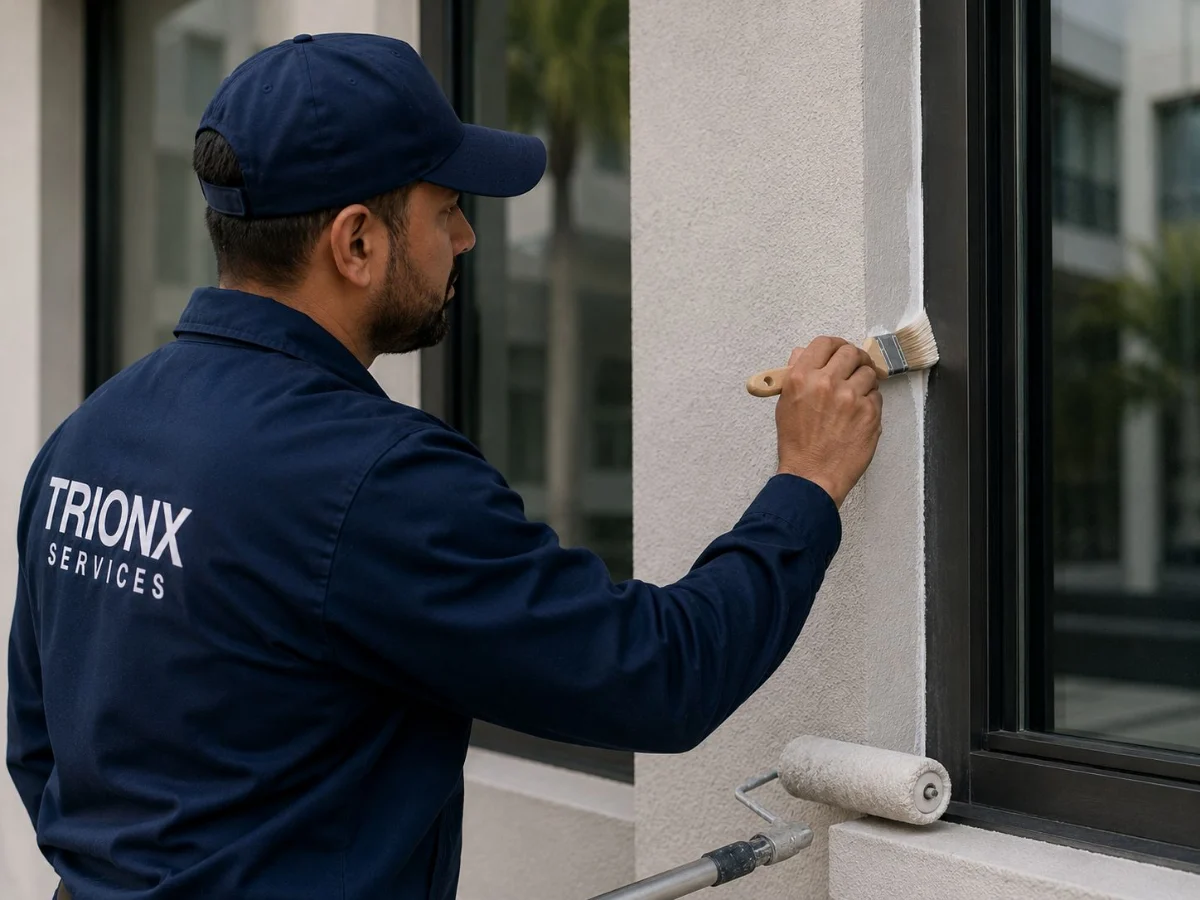
Exterior and fascia signage deserves attention because it leaves the most visible mark. Anchor holes in masonry or stucco need filling and sealing, and the unpainted rectangle where a sign hung shows from the street.
Check above the ceiling and behind fitted counters. Cable runs, data points and equipment mounts get forgotten there. Cabling and anything connected to the electrical system is covered below.
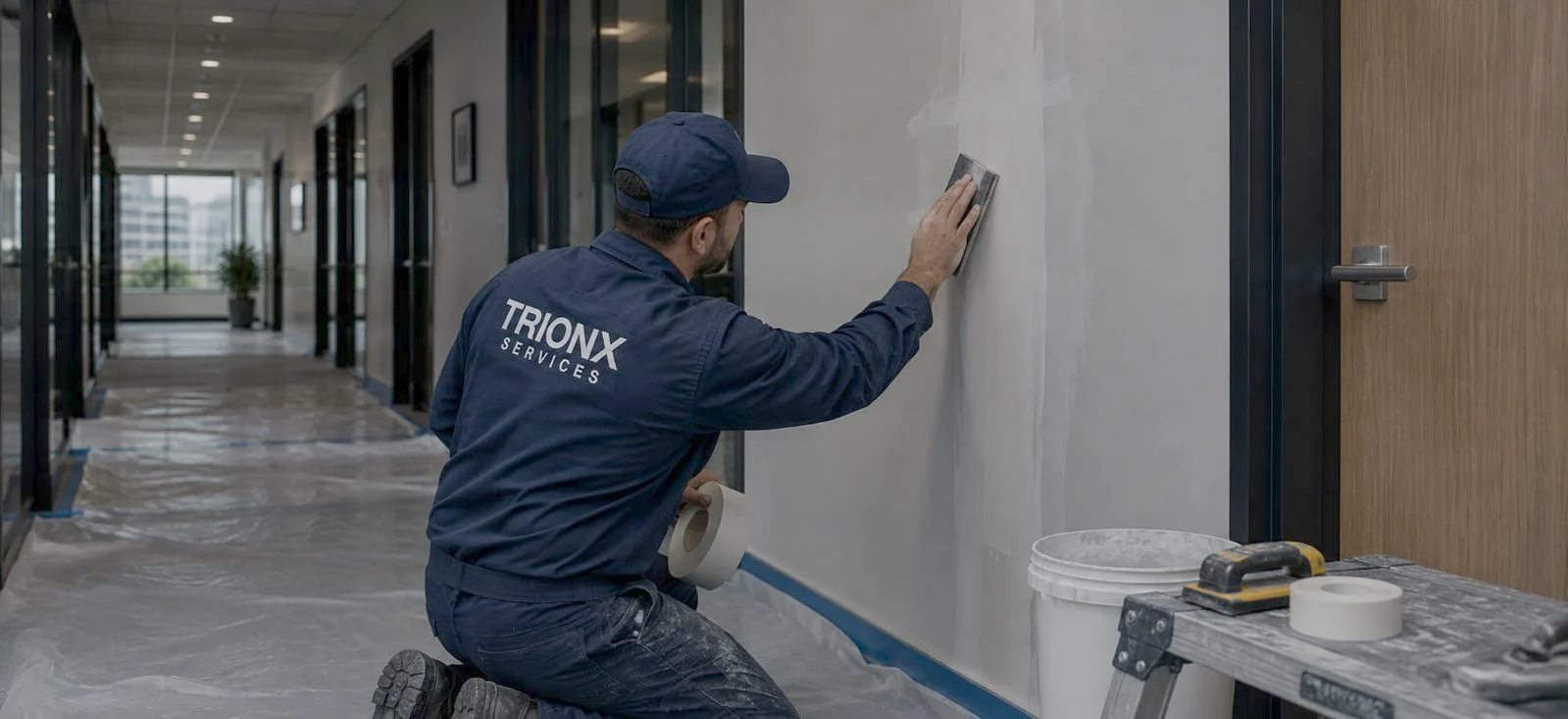
Patch the walls properly
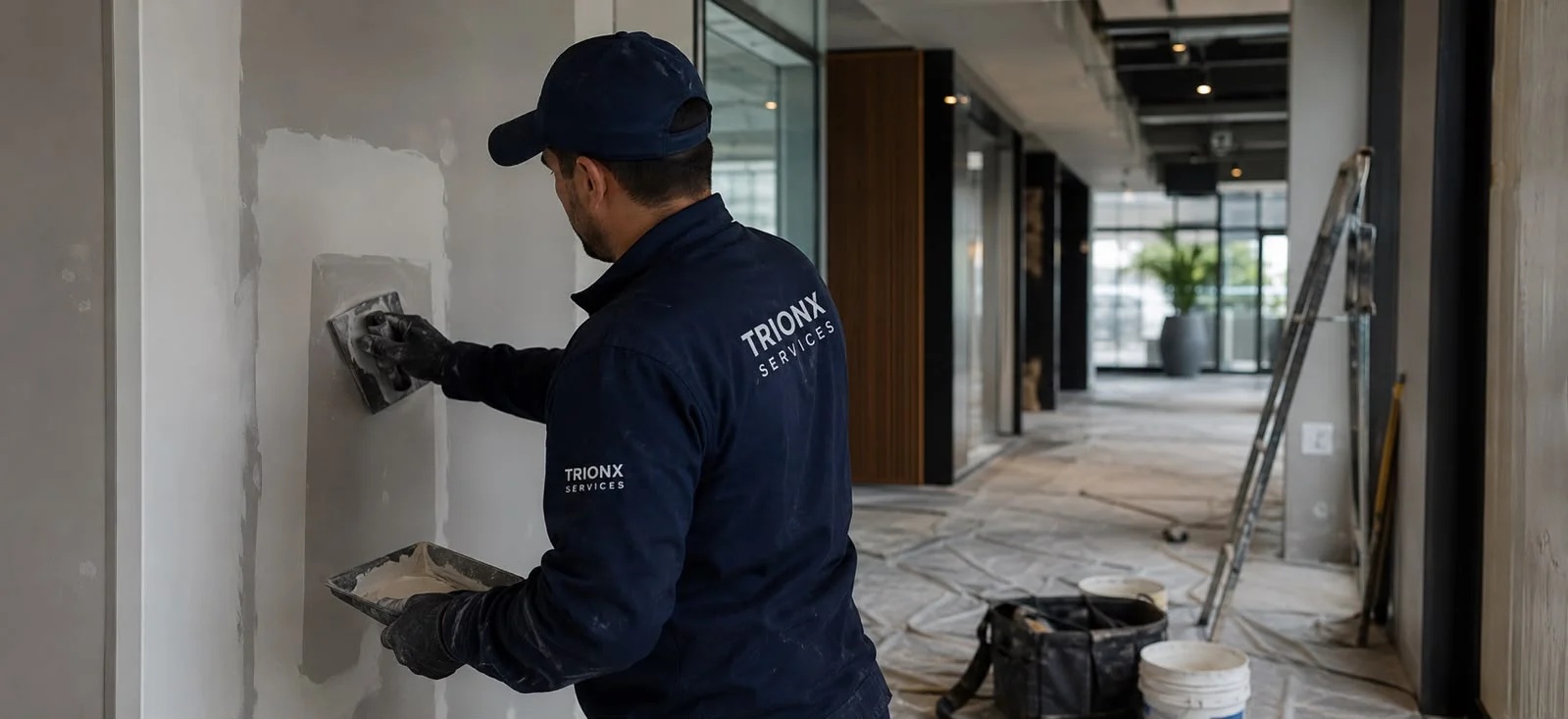
A small hole and a large one are different repairs. Nail and screw holes take filler and sanding. Anchor holes and cut-outs take a patch, joint compound in coats, and feathering wide enough to disappear. The finish has to match the surrounding wall, and our article on drywall finish levels explains why a patch that is flat to the touch can still show under side light.
Corners and door edges take the most damage in a working unit: carts, pallets and furniture leave dents and gouges at knee and hip height. Metal corner bead that has been crushed needs replacing, not skimming over.
Allow drying time between coats. Rushing the last coat the day before the walk-through is how a repair that looked fine under work lights gets listed in daylight.
Repaint to match
If the lease says the original color, find the original color. The landlord's records or the paint on a concealed surface will tell you. A near match that is a shade off is more visible on a repaired section than a deliberate full-wall repaint.
Sheen matters as much as color. A flat patch on a satin wall reflects differently and shows from across the room. Our guide to matching paint over a repair covers color, sheen and where to stop the new coat, and the short version is that a whole wall, corner to corner, is almost always safer than a patch.
Wash scuffed walls before painting, and cut in cleanly around trim, switches and door frames. Painting over dirt makes the coat peel at the edges, and peeling shows up on the list.
Trim, doors and hardware
Replace damaged baseboard and door casing, and refix anything loose. Check every door: hinges tight, closers working, handles secure, latches catching, thresholds and weatherstripping intact. A door that drags or does not latch is a defect on any list.
Cabinet doors, drawer runners and shelving brackets are quick to fix and quick to be charged for. Ceiling tiles that are stained, cracked or missing get replaced like for like.
Return the unit to working order, not to perfect order. The test is whether each element does its job and looks consistent with the rest of the space.
Keys and credentials
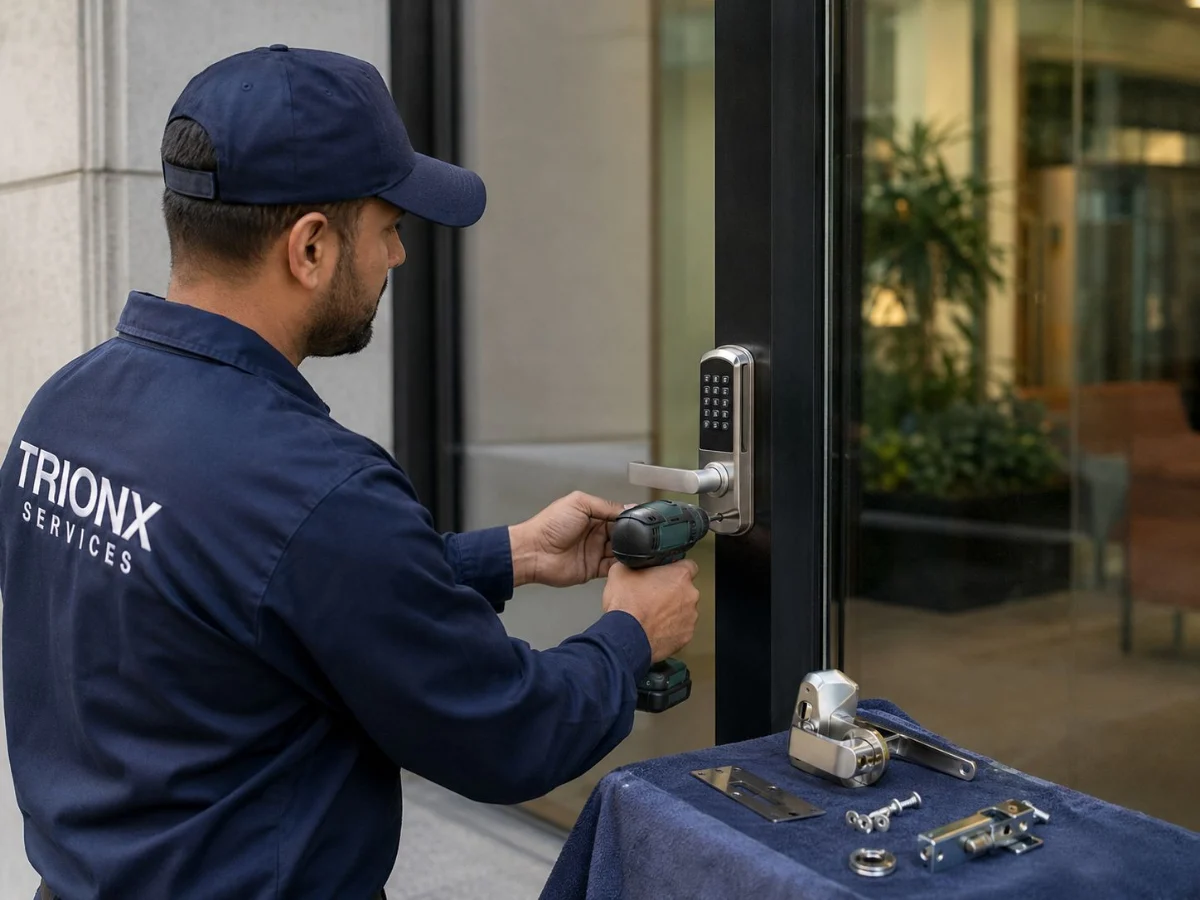
Return every key, fob and card, and list what was issued as well as what is coming back. Remove any lock, keypad or padlock you added, and put the original cylinder back if you changed it. Our article on what to secure when a tenant moves out explains why the landlord will probably rekey regardless, and why your issue list protects you when they do.
Items that need a licensed contractor
Landlord lists often include a missing outlet cover, a light fixture that was swapped, a faucet that drips, or an air handler that needs servicing. Electrical, plumbing and HVAC work is carried out by licensed contractors in Florida at any size of job, and tenants should not attempt it to save a visit. We coordinate those contractors and document the result, so the list closes with one record.
Lighting is a good example of the split. Replacing lamps and refixing a fixture that has come loose on its bracket is finish work. Anything touching wiring, ballasts or drivers is electrical.
Who does the finish work
Drywall patching, painting, trim, tile, door and hardware repair, glass repair and rekeying are performed by our own technicians, on our payroll and background checked, and we carry general liability and workers' compensation. One visit can cover patching, painting and hardware, which helps when the days before surrender are short. See our carpentry and finish work for the scope.
Record it
Photograph every wall, door, ceiling and floor after the work is done, with the date visible in the file. Walk the unit with the landlord's representative if you can, and ask for sign-off on the checklist in writing. Where the landlord adds items afterward, your photographs show the condition on the day you left.
Carpentry and finish work in Miami
Printable checklist: Tenant move-out punch list for commercial units
Common questions
Questions we get asked about this
Do I have to repaint the whole unit?
It depends on the lease. Many require the unit back in its original color, and a patch that shows in raking light will be listed whatever the clause says. Read the surrender clause first, then decide between spot repairs and full walls.
Can I leave the build-out in place?
Only if the landlord agrees in writing. Most leases require removal of tenant installations, and anything left behind without that agreement can be charged as a removal cost.
What counts as fair wear and tear?
Light scuffing, minor fading and the general aging of finishes over the term. A hole through a wall, a gouged door or a missing closer is damage. The lease wording and the entry condition record settle the borderline cases.
What if the landlord's list includes electrical or plumbing items?
Those need a licensed contractor in Florida at any size of job. We coordinate and document that work alongside the finish repairs, so the whole list can be closed in one visit sequence.
Keep reading
Related field notes
A tenant is moving out this week: what to secure before they go
Why a drywall patch shows, and how to stop it
Matching paint over a repair so it does not flash
Office churn: moving teams without wrecking the finishes
Mounting to a commercial wall: what actually holds
Replacing ceiling tile without wrecking the rest of the grid
One company, whoever does the work
Our technicians handle the trades that need no state license, and licensed contractors handle the ones that do. Either way we scope it, book the visit and file the record. Tell us the property and the problem and we will come back with a window. Call out of hours and someone who works here answers.