
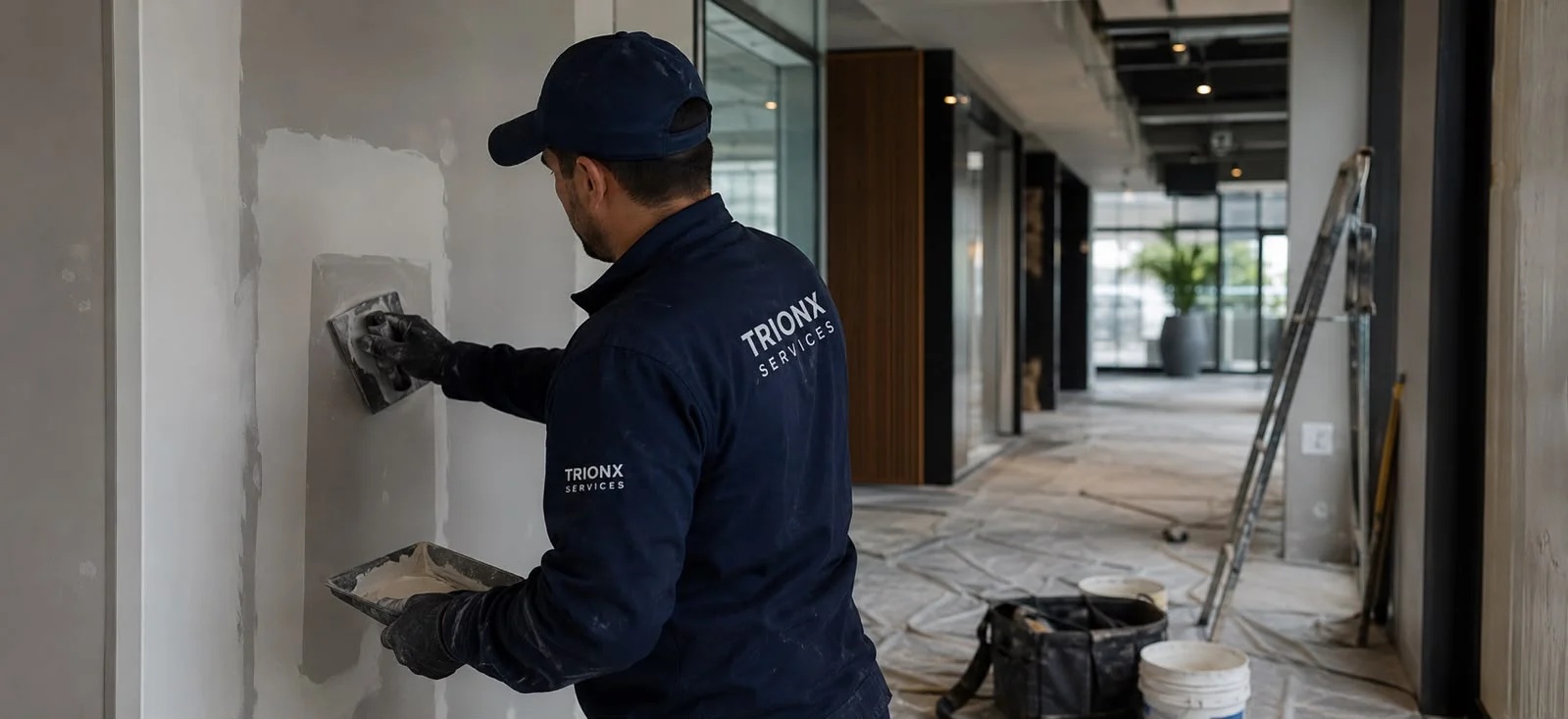
Facilities
Tenant maintenance requests: urgent, or can it wait?
Every request sounds urgent to the person making it. A fixed rule, based on risk to people, security, water and the building, lets you decide the same way every time.
Sort tenant requests by what the fault puts at risk, not by how the tenant sounds. Anything that can hurt a person, leave a space unlockable, let water spread or open the building to weather gets attention now, after hours if needed. Anything that affects comfort or appearance goes on the weekly list.
That rule works because it can be applied by whoever picks up the request, on the day, without calling you first. The rest of this article sets out the categories, the questions to ask and what to write down.
The five categories, in order
Work down the list and stop at the first one that applies.
- Safety. Exposed wiring, a burning smell, a door that will not open from the inside, a blocked exit, a cracked pane in a walkway, a trip hazard. Treat these as urgent.
- Security. A lock that will not secure, a door that will not latch, a broken pane at ground level, a gate keypad that has failed. A space that cannot be locked overnight is urgent, because the exposure begins at closing time.
- Water. Any active leak, a ceiling stain that is spreading, an overflowing fixture. Water damage grows by the hour, and it does not matter that the tenant calls it minor.
- Building envelope. Broken glazing, a failed roof section, a door that will not close against rain. The opening has to be secured first and the repair follows.
- Comfort and appearance. Temperature complaints, scuffed paint, a loose cabinet door, a flickering lamp in a low-traffic area. These go on the weekly list.
The order is deliberate. A request that touches two categories takes the higher one. A sticking exterior door is a comfort complaint until it will not latch, and then it is a security problem.
What to ask when the tenant calls
Five questions cover almost every report. Where exactly is it? What can they see, hear or smell? Is anything getting wet, hot or unsafe to walk through? Can the space still be locked? Can they send a photo?
The photo matters more than people expect. It lets you sort the request without a visit and it tells whoever attends what to bring. It also gives you a record if the cause turns out to be disputed. Our own notes on what to have ready before an emergency call list the same details from the dispatcher side.
Ask for facts, not conclusions. A tenant who says the pipe burst may have a dripping fitting. A tenant who says the door is fine may not have tried locking it. Write down what they saw, and sort on that.
Who handles what once it is sorted
Locks, doors, hardware and glass are work our own technicians carry out. That covers a lockout, a failed deadbolt, a closer that has dropped, a panic bar that sticks, and a cracked or broken pane, including securing the opening when glass has failed. Our technicians are on our payroll and background checked, and TrionX carries general liability and workers' compensation.
Electrical, plumbing and HVAC are different. Florida requires a license for them, and TrionX does not hold one, so a licensed, insured contractor carries the work out and TrionX coordinates and documents it. That applies at any scale. Replacing an outlet or a faucet is licensed work in the same way a panel upgrade is. When a request falls in one of those trades, the sorting still happens first: you decide how urgent it is, and the contractor is dispatched against that.
Anything that needs a permit is coordinated whatever the trade. A full storefront replacement is the usual example. A request that turns out to need one moves off the weekly list and into a planned job.
What goes on the weekly list
Routine items are worth batching. One visit to a building can clear a loose cabinet door, a patch of drywall, a missing ceiling tile, a worn weatherstrip and a door that drags, which is cheaper in attention than five separate trips. It also shows you patterns. Two requests about the same door in a month are a hardware problem, not two unrelated complaints.
Keep one standing rule: a routine item moves up the moment the tenant reports that it has changed. The stain that was the size of a coin and is now the size of a plate is a water request. The door that dragged and now will not latch is a security request.
Planned work belongs in a different place from requests. If the same fault keeps arriving as a request, the answer is usually in your preventive maintenance schedule, where it gets checked before a tenant has to report it.
Check responsibility before you dispatch
Not every request is yours to fix. Inside a tenant's premises the lease may put the cost on them, while shared doors, lobbies and the envelope usually sit with the landlord or association. Sort for urgency first, because a leak does not wait for a lease review, and settle who pays afterward. The way to read that split is covered in who is responsible for repairs in a multi-tenant building.
Where the tenant's cost is likely, say so early and in writing. It prevents an argument after the work is done.
Write it down the same way every time
A usable log has one line per request: date, unit, the tenant's own words, the category you gave it, a photo if one exists and what was done. Nothing else is needed. The category column is what makes the log useful, because after a quarter you can count how many requests were security and how many were comfort, and see which doors, drains or units account for most of them.
Photograph the work after it is finished as well as the fault before it. Our technicians photograph every job for that reason, and it lets you close a request without a second visit to confirm it.
Using the rule with a maintenance provider
Give your provider the five categories and the after-hours threshold in writing, and ask for requests to come back with the category on them. Then disagreements about priority become rare, because both sides are reading the same rule. Our general maintenance service takes the request, attends the locks, doors and glass with our own technicians, and coordinates the licensed contractors for the other trades.
Common questions
Questions we get asked about this
How do I decide whether a tenant request needs an after-hours call?
Ask whether anyone can be hurt, whether the space can be locked, whether water is moving, or whether the building envelope is open to weather. A yes to any of those is urgent. A request that only affects comfort or appearance can wait for the weekly list.
Is a broken air conditioner an emergency?
It depends on the occupant and the conditions. A tenant with a server room, medical stock or food needs a faster answer than an office that is merely warm. Record what is affected, and note that HVAC repair is carried out by a licensed contractor that we coordinate.
What should I ask a tenant who reports a problem?
Where it is, what they can see or hear, whether anything is getting wet or unsafe, whether the space can be secured, and whether they have a photo. Those five answers are enough to sort the request and to brief whoever attends.
Should routine requests be batched?
Yes. A weekly list lets one visit clear several items in the same building, and it gives you a record of repeat faults. Keep a standing rule that anything on the list moves to urgent if the tenant reports it has got worse.
How should tenant requests be recorded?
One line per request: date, unit, the tenant's words, the category you assigned, a photo if there is one and what was done. Consistent wording is what lets you spot a door or a drain that keeps coming back.
Keep reading
Related field notes
Who pays: splitting repair responsibility in a multi-tenant building

What to have ready when you call for emergency service
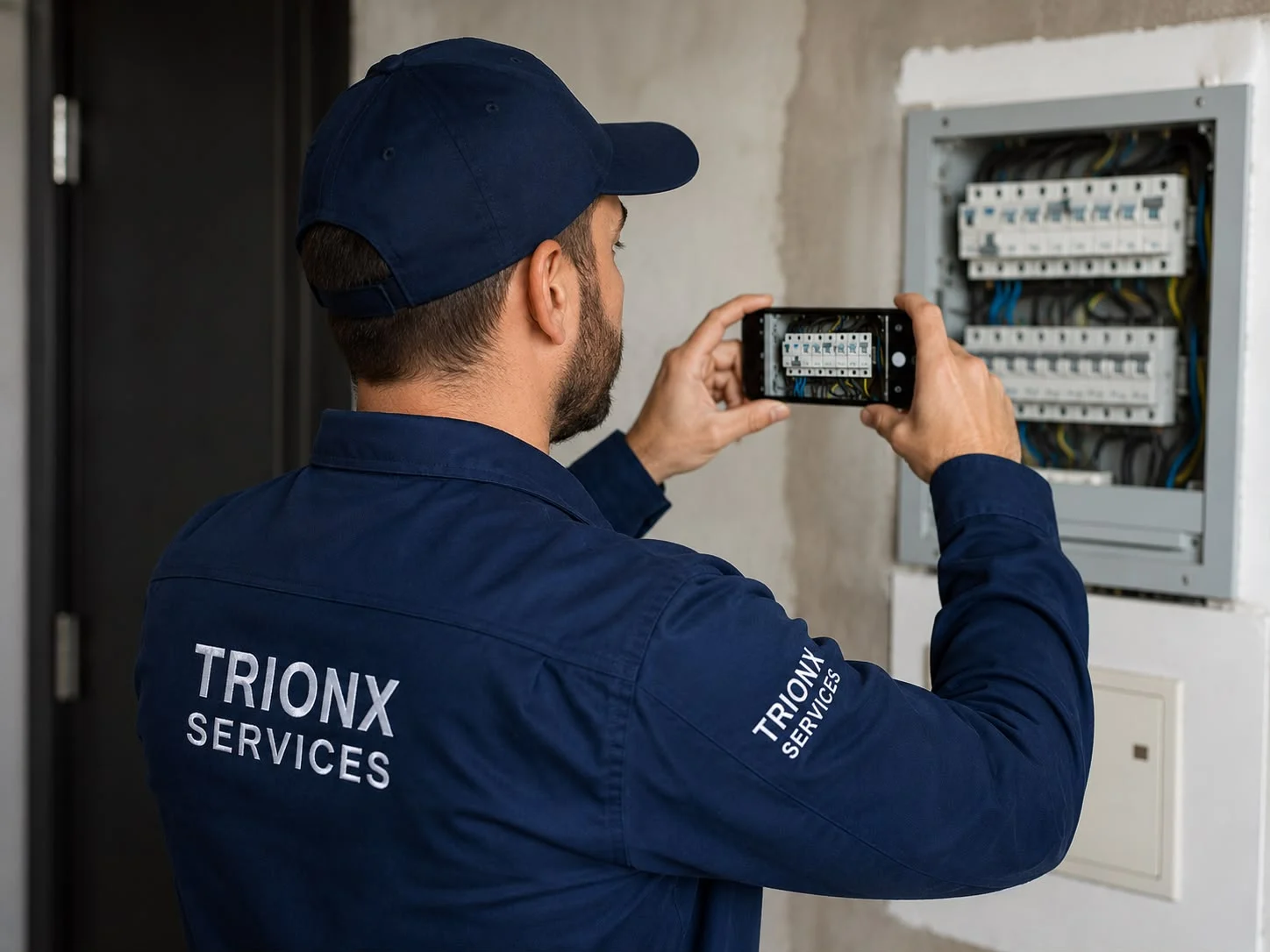
The quarterly walk: what to check on a commercial property

Annual agreement or call by call
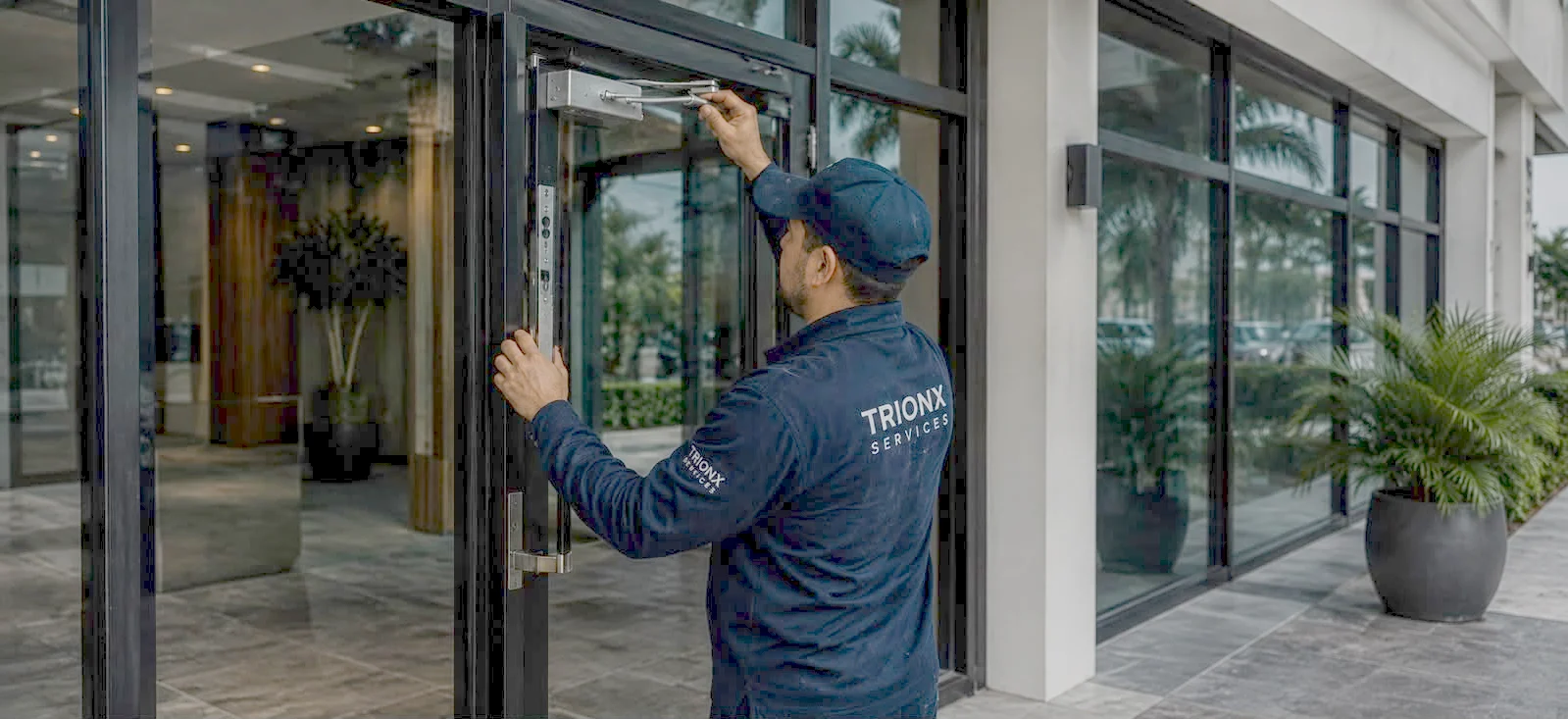
Pests are getting in: finding the entry points
Our maintenance vendor has stopped showing up
One company, whoever does the work
Our technicians handle the trades that need no state license, and licensed contractors handle the ones that do. Either way we scope it, book the visit and file the record. Tell us the property and the problem and we will come back with a window. Call out of hours and someone who works here answers.