

Doors
Annual door closer and hinge service for a building
Closers wear out slowly and fail on the worst day. A yearly pass over every door finds the weak ones while they are still a small job.
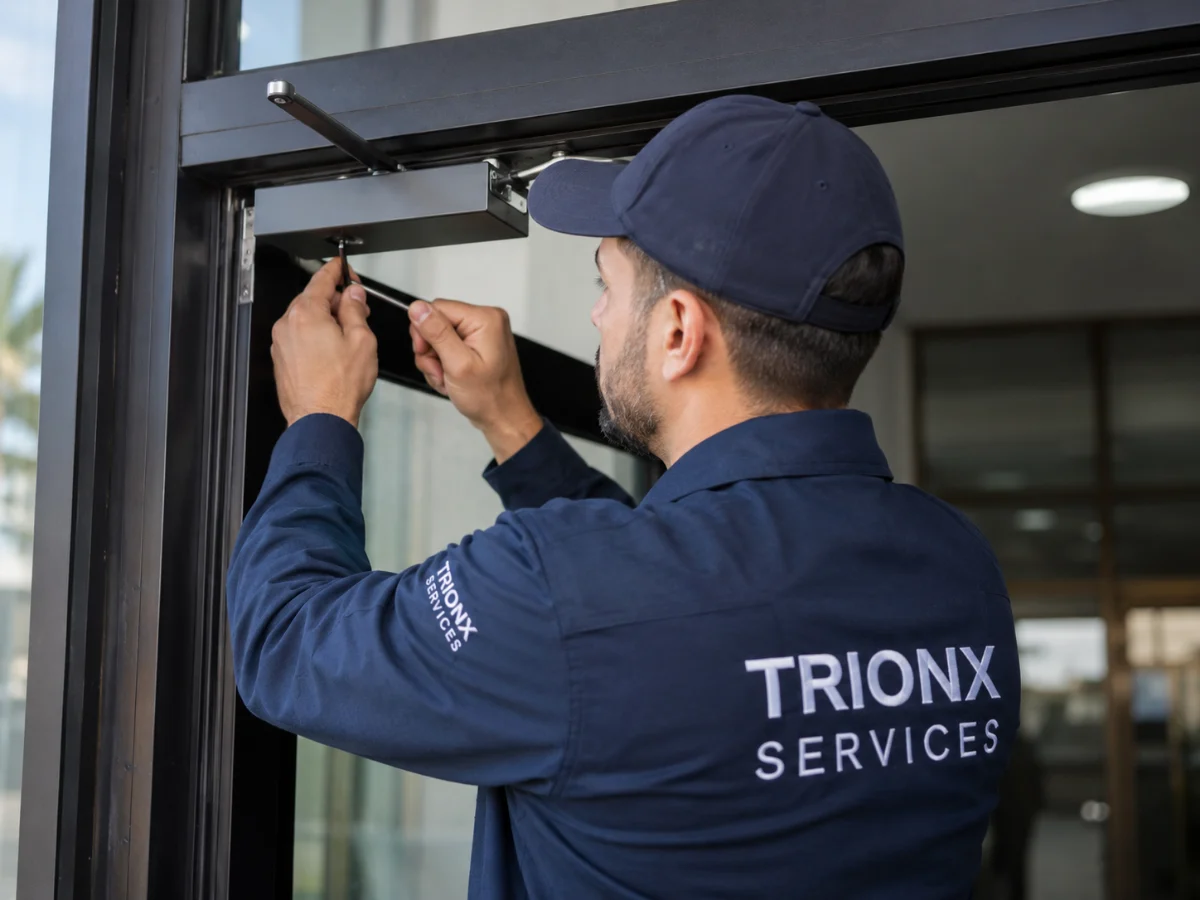
Service every closer and hinge in the building once a year, as a single planned pass, using a register of the doors. Each door gets the same short list of checks, small adjustments are made on the spot, and anything worn out is written down for replacement rather than patched again.
Most buildings do this the other way round: nothing happens until a door slams, drags or will not latch, and then one closer gets attention. That is fine for a single failure. Our article on commercial door closer problems covers diagnosing one, and adjusting a door closer covers the valves. A yearly pass is a different job: it covers every door, including the ones nobody has complained about.
Start with a door register
Walk the building once and list every door that has a closer, an exit device or a set of hinges. Record the location, whether it is interior or exterior, single or pair, fire-rated or not, and the closer make if it can be read. Number the doors and mark the numbers on a floor plan.
The register earns its keep in the second year. It shows which doors needed work twice, which closers are all the same age, and where a batch replacement makes more sense than another round of adjusting. Add a column for the date of the last service and one for notes.
Put fire-rated doors and doors on an escape route at the top. They have to close and latch every time, and they are the doors an inspector looks at first.
What gets checked on every door
The same sequence on each door keeps the pass quick and keeps it comparable from one year to the next.
- Open the door fully and release it. Watch the swing, the latch and the final few degrees of closing.
- Look at the closer body for oil weeping from the seals or the valve screws. Oil on the door or the floor below means the seal has gone.
- Check the arm and its fasteners. Loose mounting screws, a bent arm or a cracked bracket all show up as a door that closes unevenly.
- Hold the door by the edge and lift and push it. Movement at the hinge side points to worn hinges or loose leaves.
- Look at the gaps around the frame and the strike plate alignment.
- Check the threshold, the weatherstripping and the floor stop, since each can stop a door closing fully.
Hinges are half the closer problem
A closer is blamed for a lot that belongs to the hinges. When a door sags, the latch edge drops, the door drags on the floor or the strike, and the closer is asked to push a misaligned door home. Adjusting the closer will not cure that, and it will wear the closer out sooner.
On the pass, check every hinge for loose screws, worn pins and cracked leaves. Tighten what is loose. Where screws spin in the frame, the holes need repairing and refixing with longer screws into solid material. Replace a hinge that has visible wear, and replace all the hinges on a heavy door together so the load shares evenly. Our article on commercial door alignment goes through the sag, the binding and the gaps in more detail.
What gets adjusted on the spot
Closers drift. Temperature changes the oil, and in Miami an exterior door sees more of that than most. Most of what turns up on a yearly pass is drift, and it is corrected in a minute or two.
Set the sweep speed so the door closes in a steady swing without slamming. Set the latch speed so the last few degrees are firm enough to engage the latch. Where there is a backcheck, set it so a door thrown open by the wind does not hit the wall. On exterior doors, check that the setting still overcomes wind and the pressure of the building's air handling. Tighten arm fasteners and replace missing cover caps while the door is open.
Keep a note of any valve you had to turn more than a little. A closer that needs a big correction every year is telling you something.
What gets flagged for replacement
Adjusting is for a closer that works. Some do not, and the register should say so.
Flag a closer that leaks oil, since the loss of fluid will not stop. Flag one that will not hold any setting, one with a cracked body or arm, and one that is the wrong size for the door it is on. Flag doors whose closer has been adjusted at every visit and still misbehaves. A door with the wrong closer for its width and weight will never behave, however carefully it is set.
Replacements are then planned. You can batch them, order the closers together and fit them on a single visit, which beats responding to each failure as it happens. The flagged list also gives you something concrete to take into a budget conversation.
Fitting the pass into the maintenance calendar
Door hardware is one line in a wider calendar. Our article on a preventive maintenance schedule for a commercial building shows where it sits alongside the other recurring checks. A good time for the door pass is before the busiest part of your year and before hurricane season, when exterior doors are under the most strain.
Who carries this out
Closers, hinges, exit devices, thresholds, weatherstripping and alignment on existing frames are performed directly by our own technicians. TrionX carries general liability and workers' compensation, and each visit comes back with photographs and the updated register.
Where a door pass turns up something outside hardware, such as a damaged frame that needs structural repair or an automatic operator with wiring faults, that work is carried out by licensed, insured contractors, coordinated and documented by TrionX. If you have a building with dozens of doors and no register yet, our doors and hardware service is the place to start.
Common questions
Questions we get asked about this
How often should commercial door closers be serviced?
Once a year is a sound baseline for most buildings. Doors in constant use, such as a main entrance, a restroom corridor or a loading door, justify a second look part way through the year. Exterior doors in this climate suffer more than interior ones.
Can the pass be done while the building is occupied?
Yes. A door is out of use for a few minutes at a time, and the work goes door by door. Fire-rated and exit doors are done one at a time so the escape route is never lost.
Do I need a register of every door?
It is the part that makes the second year easier than the first. A simple list with location, door type, closer make and last service date lets you see which doors keep coming back and plan replacements in batches.
Which closers should be replaced rather than adjusted?
Any closer leaking oil, with a bent or loose arm, or that will not hold a setting after adjustment. Replacing it on a planned visit costs far less disruption than a door that will not latch on a Friday evening.
Keep reading
Related field notes
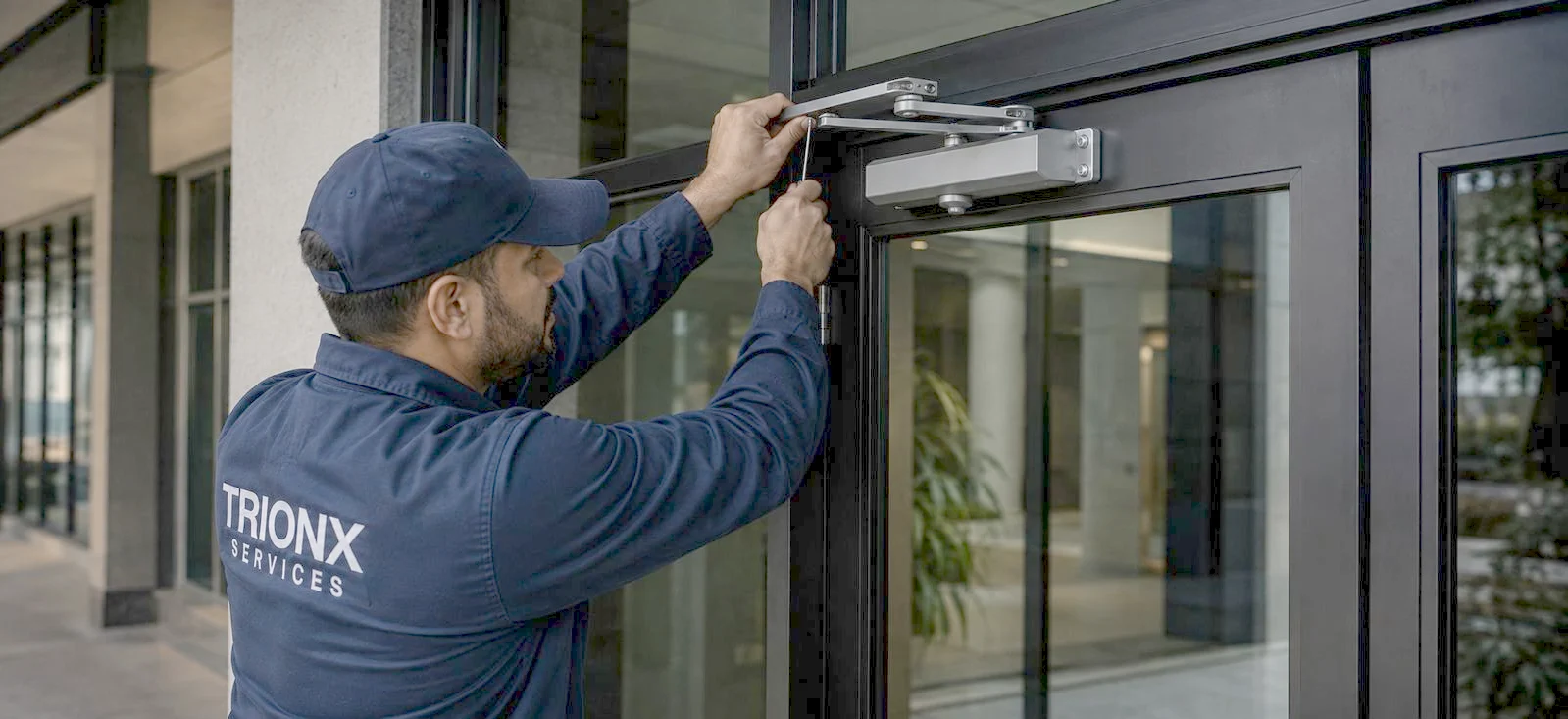
Adjusting a door closer: the valves and what each one does
Why commercial doors drop, and what alignment actually involves
Building a preventive maintenance schedule that survives contact with reality
Repair or replace a commercial door
A sliding door is hard to slide or off its track
The fire inspector wrote us up: closing the findings out
One company, whoever does the work
Our technicians handle the trades that need no state license, and licensed contractors handle the ones that do. Either way we scope it, book the visit and file the record. Tell us the property and the problem and we will come back with a window. Call out of hours and someone who works here answers.