
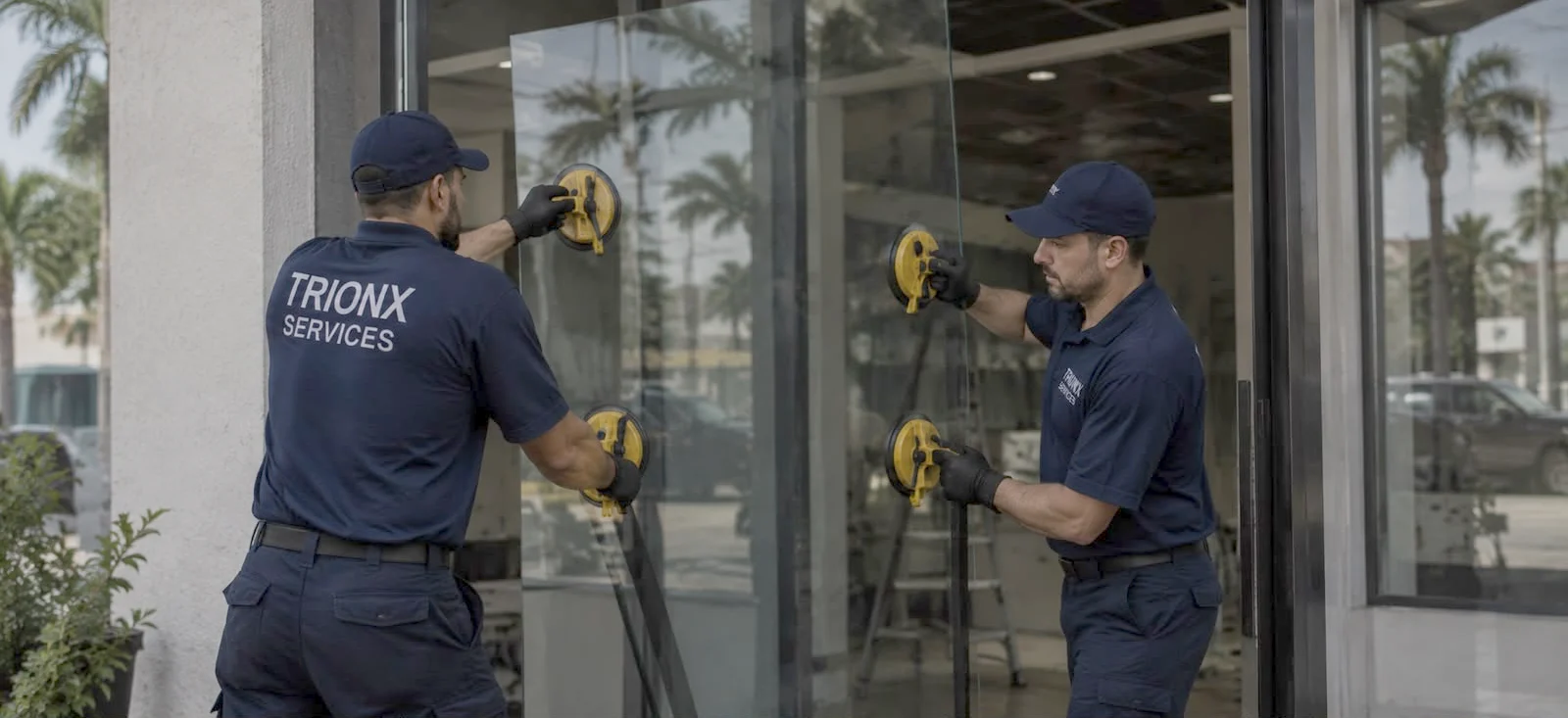
Glass
Arranging storefront board-up before hurricane season
Arrange board-up while the weather is quiet. Once a storm is named, every glass-fronted building in the county is looking for the same vendor.
Arrange it now, in writing, with the vendor who will actually attend. A usable arrangement is short: a list of every opening, a named person who can authorize work, a way into the building, and a dated photograph of each opening as it stands today.
All of that is quick to prepare, and none of it can be done once a storm has a name. After that, phones are busy, access is difficult and nobody has time to measure a window.
Why before hurricane season rather than during it
Board-up demand arrives all at once. Every glass-fronted property wants plywood on the same afternoon, and a vendor who has never seen your building has to measure, ask questions and find out who can approve the work while the wind is rising.
A vendor who already holds your opening list and your access instructions can start from the paperwork. We cannot promise a time for any storm, and nobody honest can. Wind limits, flooded roads and the number of buildings affected decide that. Preparation settles most of the job before the call is made.
Our article on emergency board-up after glass has failed covers the sequence once a window has gone. This one covers what should be agreed before that.
The opening list
Walk the building and record every opening that could take wind or debris. Do not stop at the front. Side windows, glazed doors, sliding doors, transoms, rear doors with vision panels and skylights all count.
For each one, note:
- its location and a number you will both recognize, such as the unit and elevation
- approximate width and height
- the type: single pane, laminated, insulated unit, framed or frameless
- whether it is already protected by shutters, and whether those work
Openings with working shutters may need nothing. Our article on testing hurricane shutters covers how to find out, and the answer changes the list considerably. Boarding is for the openings shutters do not cover.
Access and keys
Boarding a building means getting to every opening, including the ones inside a locked tenant space, a gated yard or behind an alarm. Write down how the technician gets in, which doors, which codes, and who holds the alarm details.
Decide where keys live. A lockbox on site works if its code is held by named people only. A key held by someone who has evacuated does not. If you have a master key system or card access, say so, and say who can issue credentials.
Check that the entry points on your list actually open. A deadbolt that sticks or a closer that will not release is the sort of thing that is much easier to fix in calm weather than during a watch.
Who authorizes, and how
This is where arrangements most often fail. The vendor is ready, the plywood is ready, and nobody with authority picks up.
Name at least two people who can approve board-up without consulting anyone else, with direct phone numbers. If the property has an owner, a manager and a tenant, say which of them decides for which part of the building. Where an insurer or landlord must be told, put their contact details on the same page.
It is also worth agreeing in advance what happens when the approver cannot be reached. Some owners give standing permission to secure openings and report afterward. Others want a call first. Either is reasonable if it is written down.
The photo baseline
Photograph every opening on the list, from outside and from inside, in daylight, with the date visible in the file. Include the frame, the glass, the sealant and any existing shutter.
This is the record that matters later. When you file a claim, the question is what condition each opening was in before the storm, and a dated photograph answers it in a way that memory cannot. It also separates damage the storm caused from wear that was already there.
Our technicians take photographs on every job as a matter of routine, so the work itself also leaves a record: the opening before boarding, the board in place and the fasteners. Our article on the first 48 hours after a storm covers how that record gets used in the days that follow.
Materials and where the work stops
Ask the vendor what they board with, how it is fixed, and what it does to the frame. Boards fixed carelessly can damage mullions and leave holes that need patching afterward. A good installer plans the fasteners so the building can be returned to normal.
Boarding is a temporary measure to keep weather and people out. It does not replace shutters, and it does not repair glass. Repair and re-glazing of existing openings follow once it is safe to attend.
Who carries this out
Board-up, glass repair and re-glazing of existing openings, and the door hardware that goes with them, are done by our own technicians, on our payroll. We carry general liability and workers' compensation, and one company is accountable for the result.
A replacement that needs a permit, such as a full storefront with a product approval submittal, is different. That is carried out by a licensed contractor, with TrionX coordinating and documenting it. Electrical work to a damaged sign or lighting, and any plumbing or roofing damage, is coordinated the same way.
You can read more about the glass work on our glass and glazing page.
A one-page version
Put the list, the contacts, the access notes and the photographs into a single folder. Keep a printed copy at the property, because the network and the power may not be there, and a second copy somewhere that is not in the storm's path.
For the rest of the preparation, from drains and roofs to stock and records, see our commercial hurricane preparation checklist. Review the board-up sheet once a year, since staff change, phone numbers change and a tenant may have replaced a window.
Printable checklist: Hurricane door, glass and shutter checklist
Common questions
Questions we get asked about this
What should an advance board-up arrangement contain?
A list of every opening with its size and type, who may authorize work and how to reach them, how the technician gets in and where the keys or codes are, and a dated photograph of each opening. Keep one copy at the property and one off site.
Does arranging it in advance guarantee a timing?
No. Nobody can promise a time in a storm, because roads, wind limits and the number of buildings affected decide it. Arranging early means the vendor already knows your building, your openings and who to call before anything happens.
Is replacing broken glass part of the same arrangement?
Board-up and repair of existing openings are handled together. A replacement that needs a permit, such as a full storefront, is a separate job coordinated through a licensed contractor, and it usually comes after the building is secure.
Keep reading
Related field notes
The commercial hurricane preparation checklist
The first 48 hours after a storm
Hurricane shutters: testing them before you need them
Dealership showrooms: glass, lighting and the service bay
What re-glazing an existing opening actually involves
A sealed glass unit has fogged: why, and what fixes it
One company, whoever does the work
Our technicians handle the trades that need no state license, and licensed contractors handle the ones that do. Either way we scope it, book the visit and file the record. Tell us the property and the problem and we will come back with a window. Call out of hours and someone who works here answers.