
Building
The first 48 hours after a storm
The order the first two days go in decides how much of the damage is covered and how much is argued about later.
Someone who works here answers, out of hours included. (786) 628-9227
Do not go inside yet. Walk the perimeter first and look up, because the things that hurt people after a storm are overhead and underfoot rather than in front of them.
Downed or sagging lines anywhere near the building. A parapet, a sign or cladding that has moved. Standing water near a meter, a panel or an outdoor unit. Any of those means calling somebody qualified rather than going in to have a look.
Photograph before anything moves
Wide shots of the whole building from each side, then the roofline, then each opening, then the ground. Only then go inside, and photograph room by room before anything is picked up or mopped.
These photographs are what an insurer works from and they cannot be taken again. The clean-up starts within hours and it removes the evidence faster than anybody expects. Take far more than seems necessary.
Securing the envelope comes before repairing it
Broken glass, doors that will not close, missing shutters and roof penetrations all let in weather and people, and the second night is frequently worse than the storm. Rain into an already open building over twenty-four hours does damage the event itself did not do.
Board-ups and temporary securing are the priority for that reason, and they are work our own technicians carry out. The board-up article covers what a proper one looks like and what should be recorded as it goes on.
The services, in the order they cause trouble
Power first, because everything else depends on it and because a building that has been dark has other problems waiting. Check what came back and what did not, and resist resetting a breaker more than once.
Refrigeration second. A walk-in that lost power has a stock clock running, and the temperature log across the outage is the record you will be asked for.
Water third. Check whether anything is running that should not be, and whether there has been a boil notice or a supply interruption affecting food operations.
Access control is the one people forget. Powered locks and readers behave differently on a power loss depending on how they were specified, and a building can come back with doors that failed open. Our article on fail-safe and fail-secure locks explains which yours will have done.
Day two is when the water shows up
Water that entered through the roof or a failed opening travels through the structure and arrives at a ceiling hours or days later, usually a long way from where it got in. Stained and sagging ceiling tiles appearing on the second day are normal and they are the most useful map you will get of where the envelope failed.
Photograph and date each one rather than replacing it. Our article on reading a stained ceiling tile covers what the mark itself tells you.
The record that settles the claim
Write down what was found, when it was found and what was done about it, and keep it as one document rather than as a folder of photographs and a memory.
The argument that comes later is almost always about whether a defect was storm damage or a pre-existing condition. A property that had a documented condition before the season is in a far stronger position on that question than one relying on recollection.
Keep the receipts for everything bought in the first two days, including materials somebody collected themselves, generators, fuel and temporary labor. Mitigation costs are usually recoverable and they are the ones most often lost, because they get paid on somebody's own card during an emergency and never reach the file.
Who is allowed to do what
Board-ups, glass repair and re-glazing of existing openings, door and hardware repairs, ceiling tile, drywall making good and painting are performed directly by our own technicians.
Roofing, electrical, plumbing, HVAC and refrigeration go through licensed contractors, coordinated and documented by us, because Florida requires a license for those at any job size. So does anything needing a permit, including impact rated glazing with an NOA submittal, which comes up constantly after a storm.
What genuinely waits
Permanent glass, permanent roofing, cosmetic making good and anything that needs a permit will take as long as the supply chain and the building department take, and there is no version of the first 48 hours in which those complete.
Inside two days, four things have to happen: the safety check, the record, the securing and the services. Everything after that is a scheduled repair, and it goes better for having been documented properly while the building was still wet.
24/7 emergency response in Miami
Printable checklist: Hurricane door, glass and shutter checklist
Common questions
Questions we get asked about this
What should I photograph first?
The outside of the building, wide, before anybody goes in or moves anything. Then the roofline, the openings and the ground. Then interiors room by room. Insurers work from these, and the clean-up destroys the evidence within hours.
Is a board-up worth it if the glass is being replaced anyway?
Yes, and it is normally the difference between one loss and two. Impact glass and shutters are ordered rather than stocked, and an open building through a second night of rain accumulates damage that the original event would not have caused.
The power came back. Is the walk-in safe to use?
That is a food safety decision for your own procedures and your health authority. From the maintenance side, the useful facts are the temperature log across the outage and whether the unit recovered on its own or is still climbing.
Which repairs can be done right away?
Board-ups, glass repair on existing openings, door and hardware repairs, ceiling tile and drywall making good are all direct work. Roofing, electrical, plumbing and refrigeration go through licensed contractors, and permitted work does regardless of the trade.
Keep reading
Related field notes
The roof checks worth doing before hurricane season
What happens in a storefront emergency board-up
Door and glass inspection once hurricane season is over
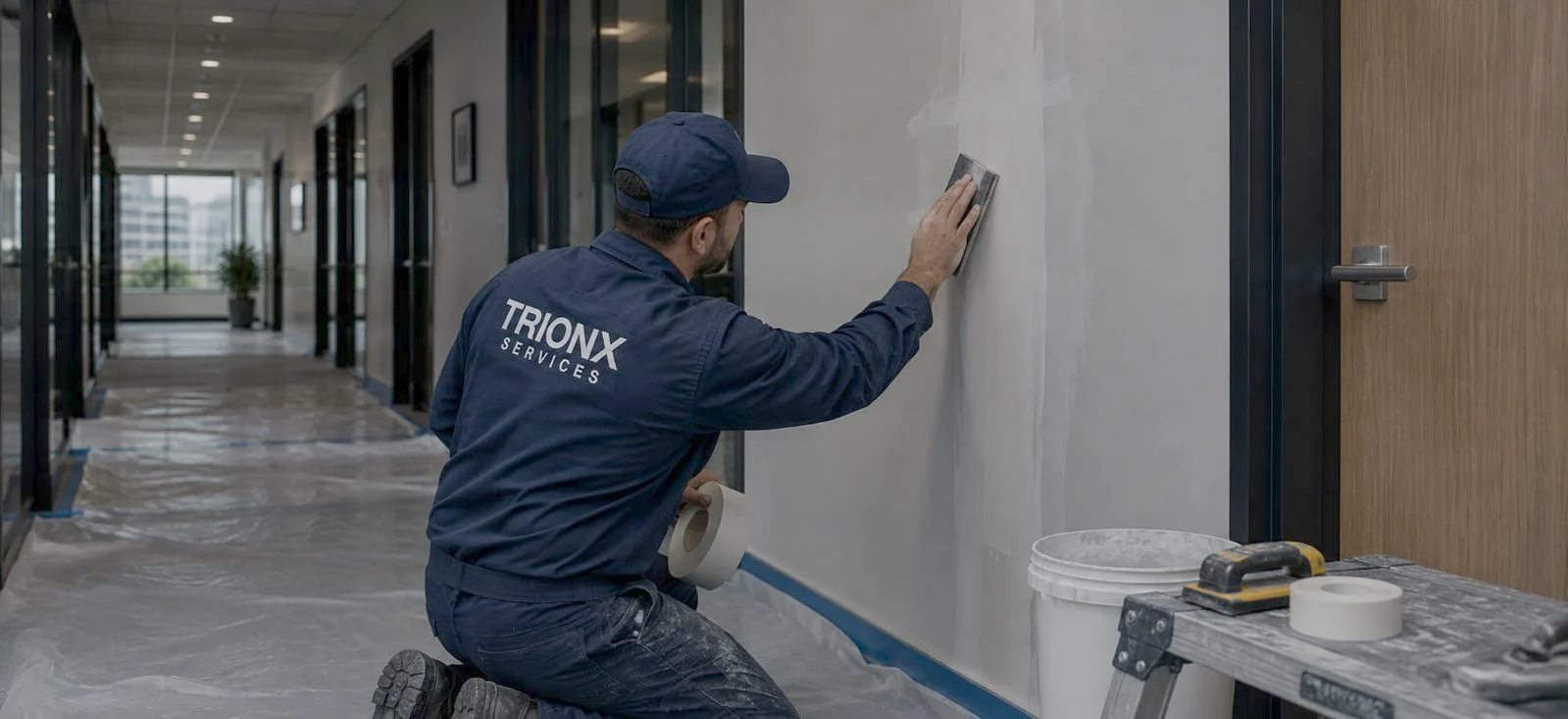
There is a hole in a commercial wall: repairing it fast

The walk-in door will not seal and frost is building
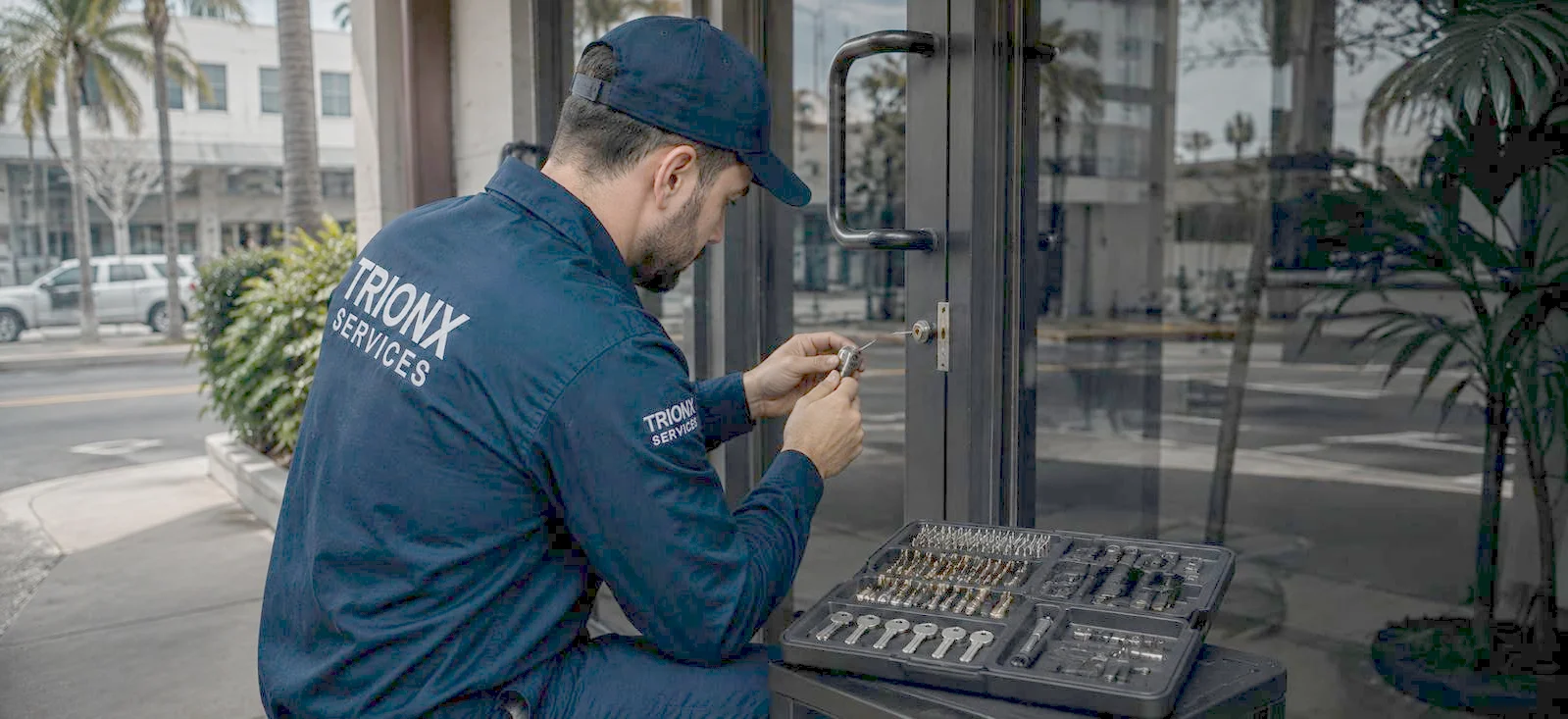
Choosing a commercial locksmith in Miami
One company, whoever does the work
Our technicians handle the trades that need no state license, and licensed contractors handle the ones that do. Either way we scope it, book the visit and file the record. Tell us the property and the problem and we will come back with a window. Call out of hours and someone who works here answers.