

Building
Door and glass inspection once hurricane season is over
A building that came through the season without an obvious loss has still been soaked and pushed hard by wind, and the damage that results shows up months later as a leak.
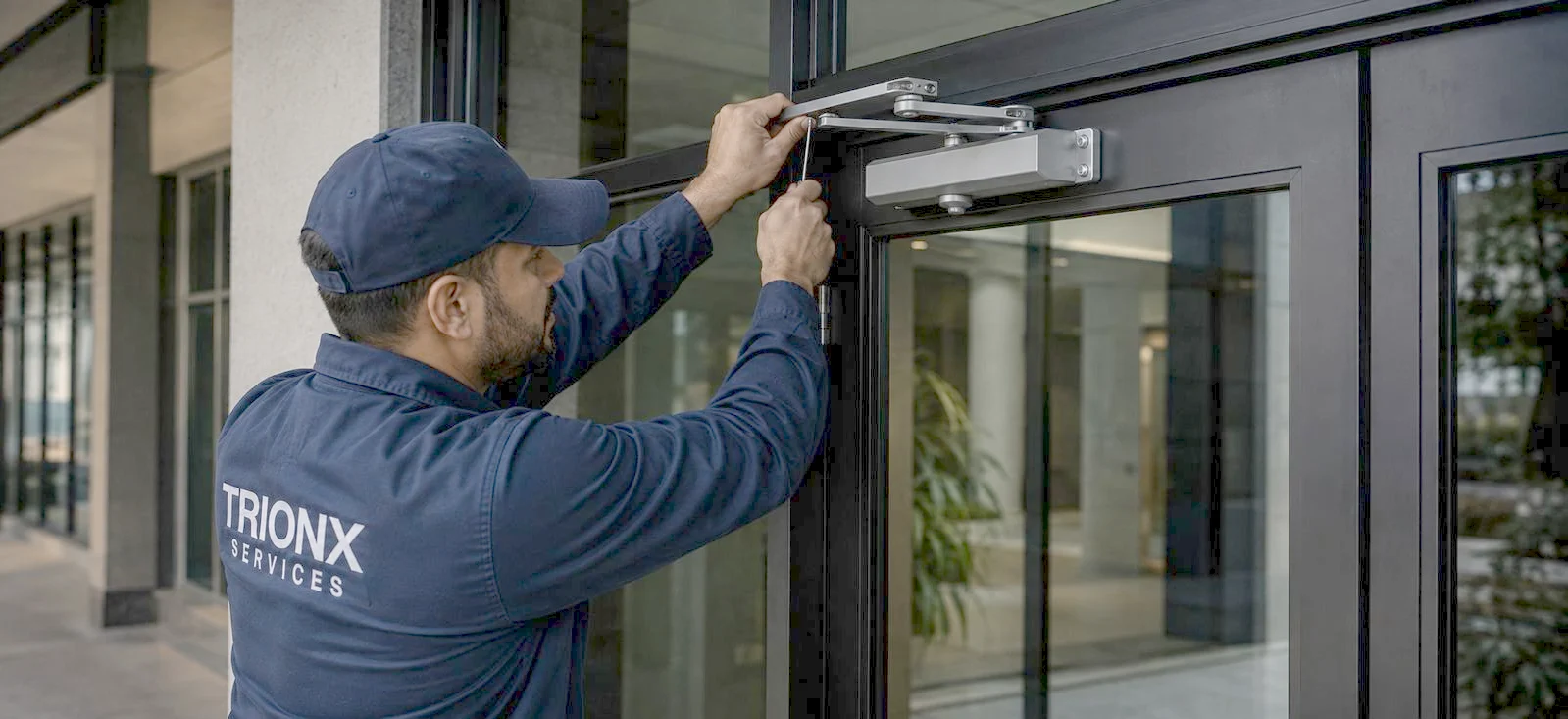
Walk every exterior door, window, storefront and sliding unit in the building, open and close each one, and look closely at the sealant, the fasteners and the frame edges. You are looking for movement and for moisture, because a season of storms leaves both in places nobody has reason to check.
Do it now, while the season is fresh and the cause of any wear is easy to work out. Keep notes and photographs as you go. A finding made on a dry day is far easier to deal with than the same finding made after water has been through a ceiling.
How this differs from a storm response
After a named storm the job is immediate: make the building safe, secure the openings and record the damage. Our article on the first 48 hours after a storm covers that order of work.
This inspection is a different exercise. There is no single event and no obvious loss, so the aim is to find slow damage. Wind-driven rain, heat, salt and repeated pressure changes act on a building over months, and the result is wear that looks like normal aging until it fails.
Frames that have swollen or racked
Timber frames and thresholds take on water and swell. Metal frames flex under wind load and can settle slightly out of square. Either way the door stops meeting the frame evenly.
Check the gap around each door leaf. It should be even along the top and down both sides. A gap that tapers, a latch that no longer lines up with the strike, or a door that rubs at one corner means the frame has moved. Left alone, the hinges carry the difference and wear quickly.
Our article on commercial door alignment explains how to tell a hinge fault from a frame fault and what can be adjusted without replacing anything.
Hinges, bolts and fasteners
Salt air attacks metal wherever it is exposed. Look at hinge pins, hinge screws, closer arms, exit device fasteners, strike plates and the bolts holding frames to the wall. Rust staining running down from a fixing is the usual early sign, and so is a screw head that has lost its slot.
Push on each hinge by hand while the door is open. Any movement in the leaf, or a screw that turns freely, means the fixing has lost its grip in the frame. Replace corroded fasteners rather than reusing them. A fixing that has lost section will not hold the load it did before.
Closers deserve a separate look. Check for oil weeping from the body, a door that slams or stalls, and arms that have bent. A closer that has been fighting a swollen frame all season is often close to the end of its life.
Sealant that has hardened
Sealant around frames, glass and thresholds is the first line against water, and it ages faster than anything else in the opening. Look for cracks, gaps at the corners, edges lifting away from the frame and surfaces that have gone chalky or hard.
Press a thumbnail gently into a joint. Sound sealant gives and recovers. Sealant that is rigid, crumbles or leaves a gap behind it has stopped doing its job, even if it looks continuous. Water that gets behind it travels along the frame and appears somewhere else, usually well away from the opening.
Our article on commercial caulking and sealing covers what to remove, what to prepare and why a bead laid over old sealant tends to fail.
Glazing beads and glass
On glazed doors and storefronts, check the beads or stops that hold the glass in. They loosen under repeated wind pressure, and a bead that has lifted or come away at a corner lets the glass move in its frame. Look for rattling when you press the pane, gaskets that have shrunk back from the corners, and any trace of moisture or staining between double panes.
Also look at the glass itself. Small chips at the edge, hairline cracks that start at a corner and scratches deep enough to catch a fingernail can all spread with temperature swings. Repairs to existing glass and re-glazing of an existing opening are carried out directly by our own technicians. A full replacement that needs a permit and a product approval submittal is a different job and is coordinated through licensed contractors.
Shutters, tracks and sliding units
Shutters and sliding doors take strain whether or not they were deployed. Check that tracks are clean and straight, that rollers turn, that locks engage fully and that any bent section has been noted. A shutter that was closed under pressure may have a strained track that only shows when it is next operated.
If you have not run the shutters through a full test, do it now rather than in the spring. Our article on testing hurricane shutters sets out what a full test involves and what it usually turns up.
Look up as well
While inside, look at the ceilings and the tops of walls near each opening. Brown staining, bubbling paint, sagging tiles and damp patches that stay after dry weather point to water arriving from above rather than through the door. Photograph them and tell whoever manages the roof.
Roof findings are carried out by licensed contractors, which TrionX coordinates and documents. A clear photograph with a note of its location makes that conversation shorter.
What our own technicians can do and what needs a contractor
Alignment, hinges, closers, exit devices, thresholds, weatherstripping, hardware swaps on existing frames, re-sealing, re-glazing of existing openings and glass repair are performed directly by our own technicians. TrionX carries general liability and workers' compensation.
Anything that involves wiring is electrical. That covers automatic door operators, access control power supplies and powered shutter motors, and it is coordinated through licensed contractors because Florida requires a license. Anything that needs a permit is coordinated too, whatever the trade. Our doors and hardware service page lists what is covered directly.
Write it up
Record each opening: location, condition, what was found and what was done. Add photographs. Sort the findings into what needs attention before the next season, what can be scheduled and what only needs watching.
That record helps with budgeting, and it is useful to an insurer if a claim ever turns on the condition of an opening. It also gives next year's inspection something to compare against.
Printable checklist: Hurricane door, glass and shutter checklist
Common questions
Questions we get asked about this
When should the inspection be done?
Once the season has closed and before the next round of work is planned, while the building is still carrying whatever the season did to it. Waiting until a leak appears means the findings arrive in the wrong order, with the damage first and the cause second.
What is the most commonly missed item?
Sealant. It hardens and pulls away from the frame over a season of heat, rain and movement, and it looks intact from a few feet away. Press it and look at the edges, because that is where water gets in.
A door still closes and locks. Does it need attention?
If it closes and latches without being lifted or shouldered, probably not. If it needs a lift, drags on the threshold or has a gap that changes along the edge, the frame has moved and the hardware is wearing against it.
Do roof findings belong in this inspection?
Note them, photograph them and report them. Roofing is carried out by licensed contractors, which TrionX coordinates and documents, and a door inspection is a sensible moment to spot staining on ceilings that points upward.
Why keep a written record?
An insurer asking about a leak will want to know what condition the openings were in and when it was last checked. Dated notes and photographs from an end-of-season inspection answer that without anyone having to reconstruct it.
Keep reading
Related field notes
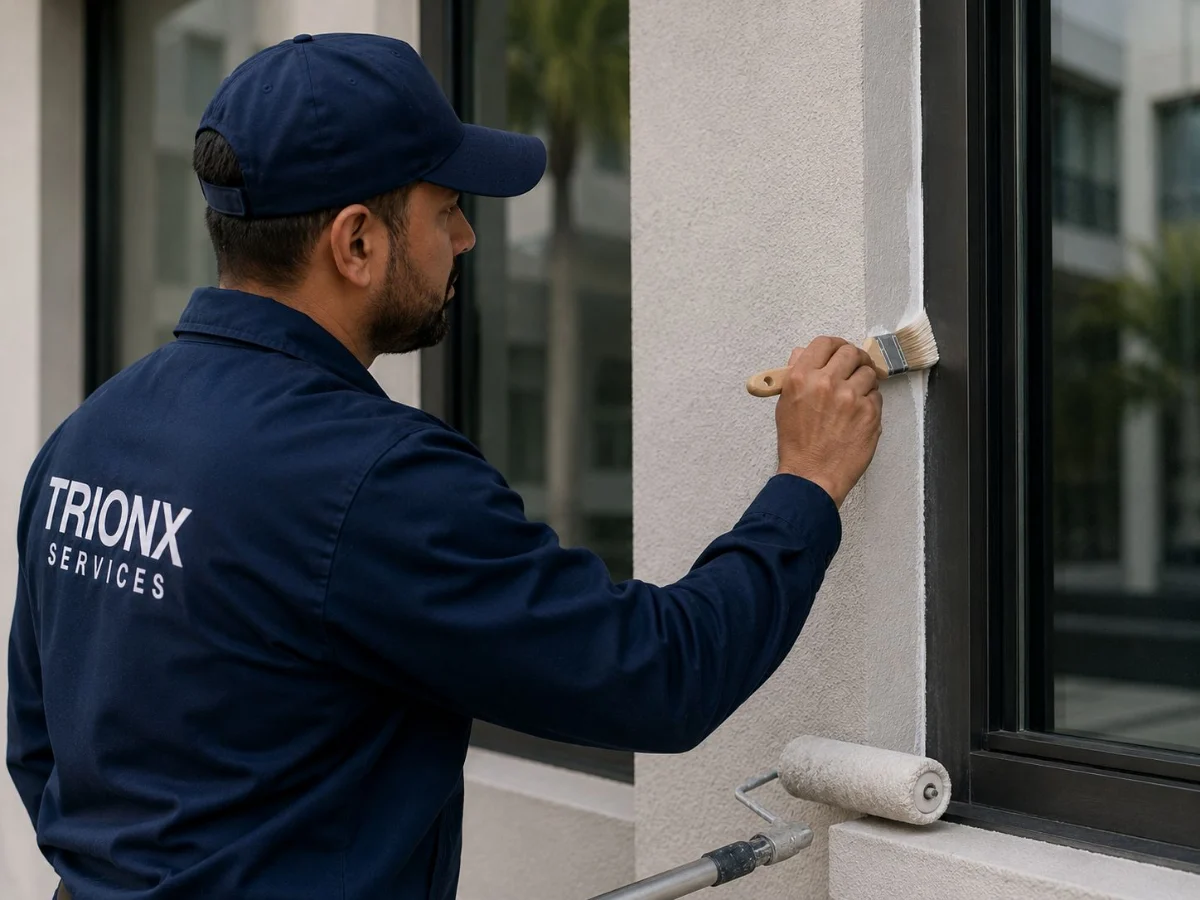
Caulking and joint sealing: the maintenance nobody schedules
Why commercial doors drop, and what alignment actually involves
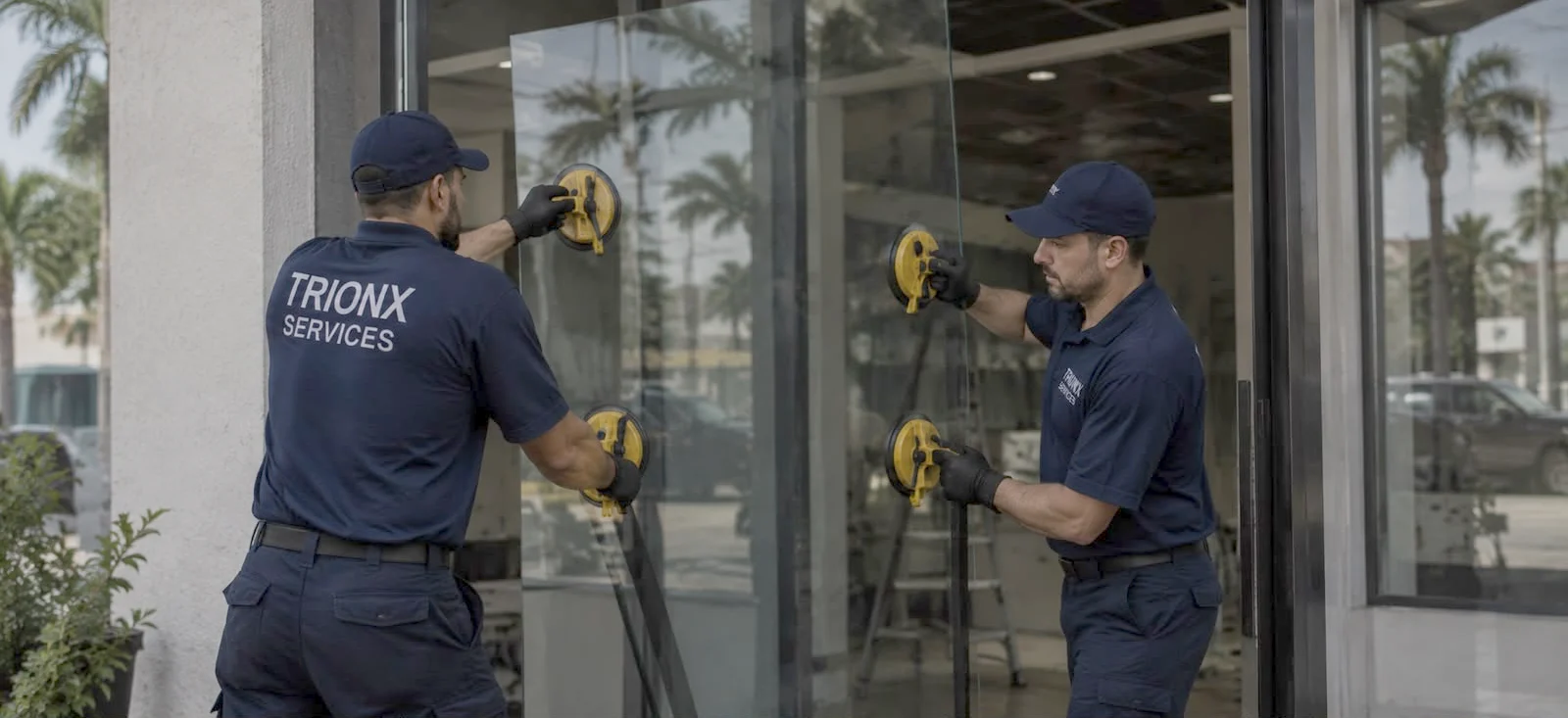
Hurricane shutters: testing them before you need them
A crack has appeared in a wall
The commercial hurricane preparation checklist

The roof checks worth doing before hurricane season
One company, whoever does the work
Our technicians handle the trades that need no state license, and licensed contractors handle the ones that do. Either way we scope it, book the visit and file the record. Tell us the property and the problem and we will come back with a window. Call out of hours and someone who works here answers.