
Facilities
Storefront checks before the holiday season
Heavier foot traffic and longer trading hours find every weak point at the entrance. One planned pass now finds those faults before the busiest weeks, when a repair is hardest to fit in.

Walk the entrance first, then work outward. Doors, closers, thresholds and glass carry the extra traffic, so they are the items most likely to fail in the busy weeks, and they are the ones a customer notices before they have seen a single product.
Do the pass once, with a written list, a few weeks before the extra hours begin. It is a different job from the daily close-out and from the general quarterly walk, and it is shorter than either because it only looks at what heavier use will stress.
Entrance doors and closers
A door that opens often in a quiet month will open far more often in a peak one. Stand at the door for ten minutes and watch it. The closer should bring the door to the latch in a steady swing, without a bang and without hanging back.
Look for oil weeping from the closer body, a bracket that has loosened its fasteners, and hinges that have started to drop the door so it drags at the bottom corner. Check the handle or pull for play. A loose pull gets worse quickly when everyone uses it.
Test the exit hardware as well. Panic bars must release with a normal push and the door must swing clear, and an access-controlled door must still release on the way out. These are quick checks that matter most when the store is full.
If the entrance has a pair of doors, confirm both leaves latch and that the astragal or meeting edge is intact. A door that does not latch properly on a busy night is also one that does not lock properly at close.
Thresholds and trip points
Longer hours mean more people crossing the threshold in the dark or in the rain, carrying bags. Any lip, curled edge or loose strip becomes a fall. Walk the path from the curb to the first display and note every change of level, cracked paving slab, loose mat and worn nosing.
Inside the door, look at the threshold itself and the sweep beneath the leaf. Gaps let in water and air conditioning leaks out through them. Our article on thresholds, sweeps and weatherstripping covers what wear looks like and which parts are simple to replace.
Entrance matting needs the same attention. A mat that curls at the corners is a trip hazard, and one that has stopped absorbing water leaves a wet floor right where people arrive.
Glass, decals and signage
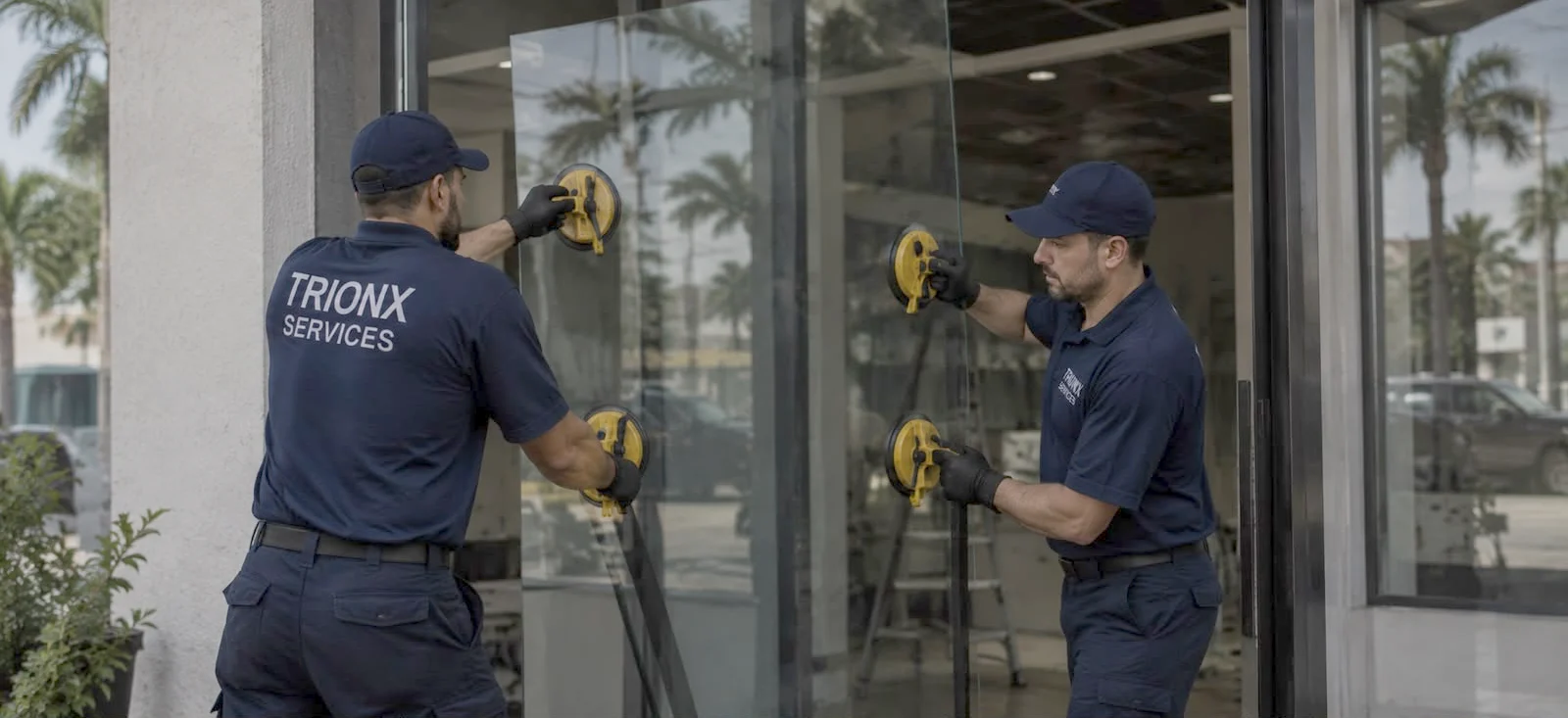
Check every pane at the front for chips, cracks that have started at an edge and failed seals. A small chip on a busy frontage tends to grow with vibration from the door and with temperature change. It is far easier to deal with now than after it has run across the pane.
Clean the glass inside and out, then look at your decals and window graphics. Peeling corners and sun-faded vinyl look tired next to fresh seasonal displays, and a decal that has started to lift will not survive a cleaning cycle.
Check the signage mounting too. Fascia signs and projecting signs sit through a lot of wind and rain, and a bracket that has rusted is a safety issue as well as a cosmetic one. Tighten what can be tightened and note anything that needs replacing.
Lamps and sign lighting
Count the dead lamps. Walk the frontage after dark, because a failed lamp in a canopy, a sign or a window display is far more visible then than in daylight. Dim and flickering lamps count as dead for this purpose.
Replacing like for like is a simple job and our own technicians do it. Anything that involves wiring, a ballast or a driver is electrical work, and so is an LED retrofit, which is carried out by a licensed electrician through our coordination. Our article on relamping versus retrofit sets out where that line sits and how to decide which a failing fixture needs.
If a fixture keeps blowing lamps or buzzing, do not keep replacing the lamp. That points to the fixture or its supply, and it needs an electrician before the extra hours make it worse.
Mounting for seasonal displays
Displays are usually where the pressure comes from. Someone wants a hanging rail, a shelf bay, a sign or a backdrop fixed up quickly. Mounting to a wall, a fixture or a ceiling grid with no wiring involved is ordinary maintenance and straightforward when the fasteners suit the surface.
Locate the studs or the solid backing before drilling into drywall, and use proper anchors for anything heavy. Check the ceiling load before hanging anything from it. Where a display needs power, whether lights, screens or motors, have a licensed electrician supply it. Do not run extension leads across the shopfloor or a doorway.
Agree with the landlord what can be fixed to storefront glass and framing, and write it down. It saves an argument in January.
Touch-up painting and wear
Scuffed door frames, marked baseboard, dented corners and chipped paint at the entrance read as neglect when the place is full. A day of touch-up painting and patching before the season is much quicker than repainting later, and it should be done before the displays go up and block access to the walls.
Look at the exterior as well. Pressure washing the frontage and the approach, resealing joints around the door frame and fixing any cracked trim brings the whole entrance up together. Damaged drywall inside gets patched and painted before the fixtures cover it.
Who carries this out
Doors, closers, hardware, glass repair, painting, sealing, display mounting and general repairs are performed by our own technicians, and we carry general liability and workers' compensation. Electrical work, including any LED retrofit and any power supply for displays, is carried out by licensed, insured contractors, coordinated and documented by TrionX.
The tidiest way to run it is a single visit with the list in hand. Our general maintenance service covers the direct items together, and photographs on each one give you a record you can compare with the January pass.
Keep it going once trading is busy
The pre-peak pass gets the entrance ready, but the season itself needs the routine to continue. The closing checklist for a retail unit is the daily version: it catches the door that did not latch and the lamp that failed that day. Once the season ends, fold what you found into the quarterly property walk so that the weak points do not wait another year to be looked at.
Common questions
Questions we get asked about this
How far ahead of the busy season should the pass happen?
Early enough that a part which needs ordering arrives before the traffic does. Closers, glass and lamps are quick to fit once on hand, but a slow delivery in the middle of the peak leaves a fault in place for exactly the weeks you least want it.
Which entrance items fail first under heavier use?
Door closers and hinges, because they cycle many more times a day. A closer that slams, hangs open or leaks oil is already near the end. Thresholds and sweeps follow, since they take the foot traffic and the water.
Can we replace failed sign or canopy lighting ourselves?
Swapping a lamp like for like is routine. Anything touching wiring, ballasts or drivers, including an LED retrofit, is electrical work and needs a licensed electrician. We coordinate that with licensed contractors and document the result.
Can seasonal displays be fixed to the walls and glass?
Mounting to a wall or fixture with no wiring involved is ordinary maintenance. Check what the lease allows on glass and storefront finishes first, and use fasteners suited to the surface so removal in January does not leave damage.
Keep reading
Related field notes
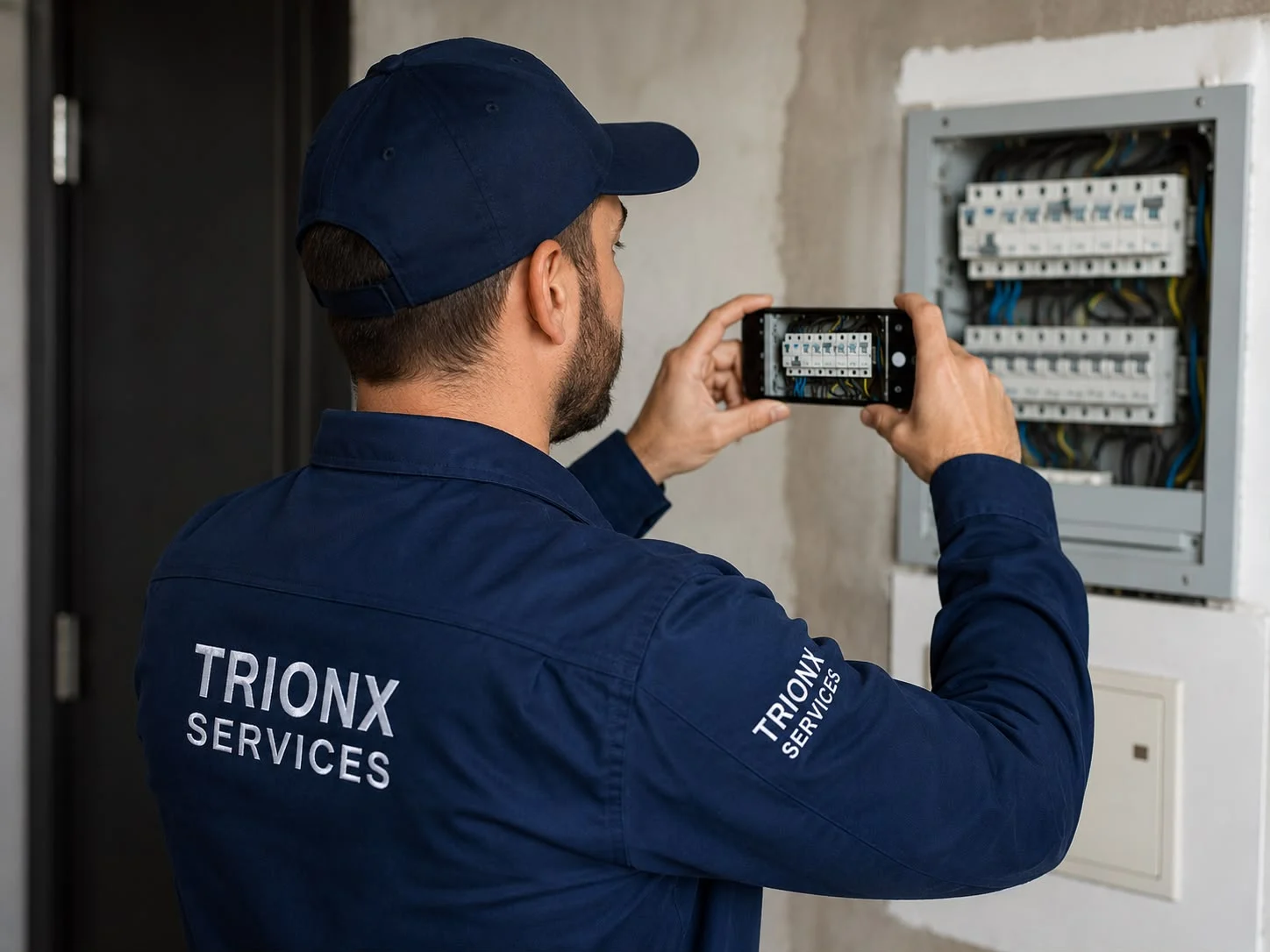
The quarterly walk: what to check on a commercial property
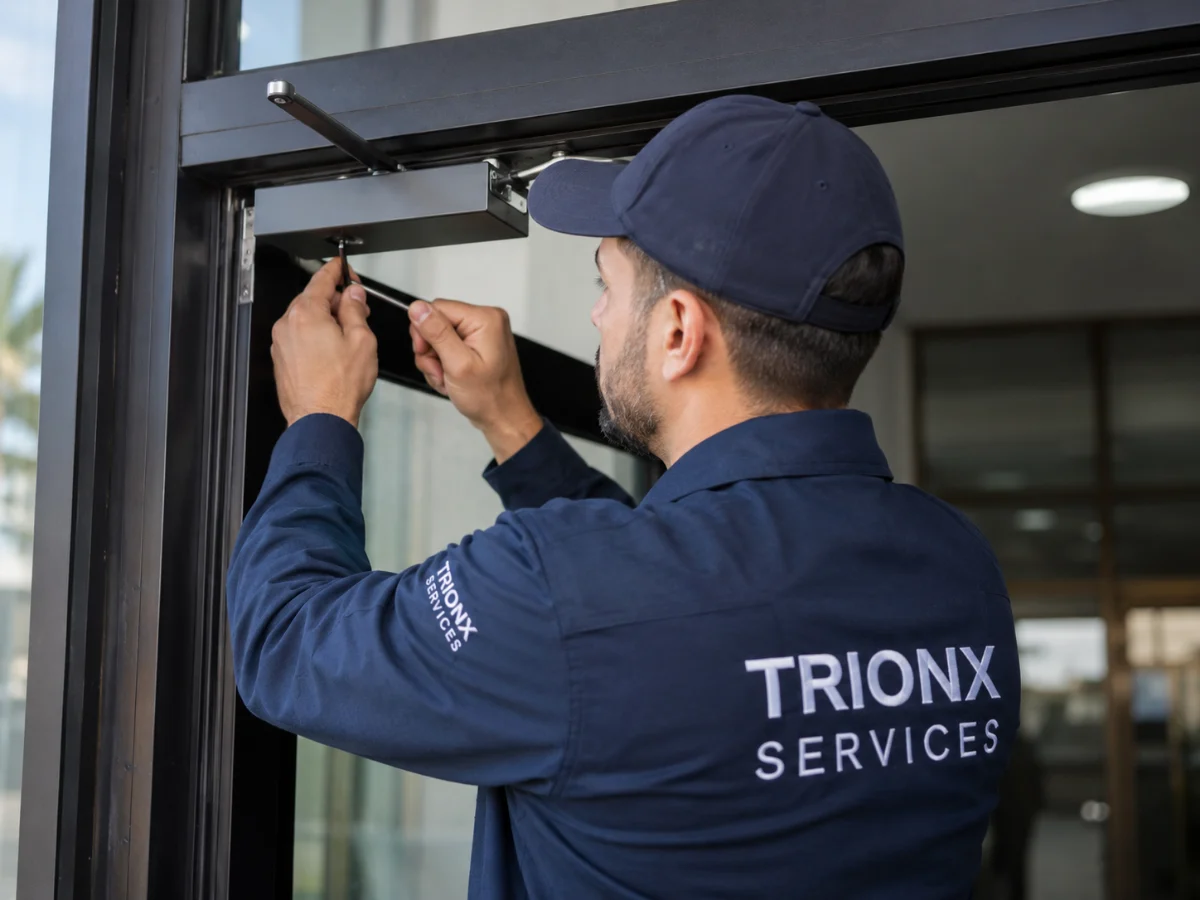
Thresholds, sweeps and weatherstripping: the parts that wear first
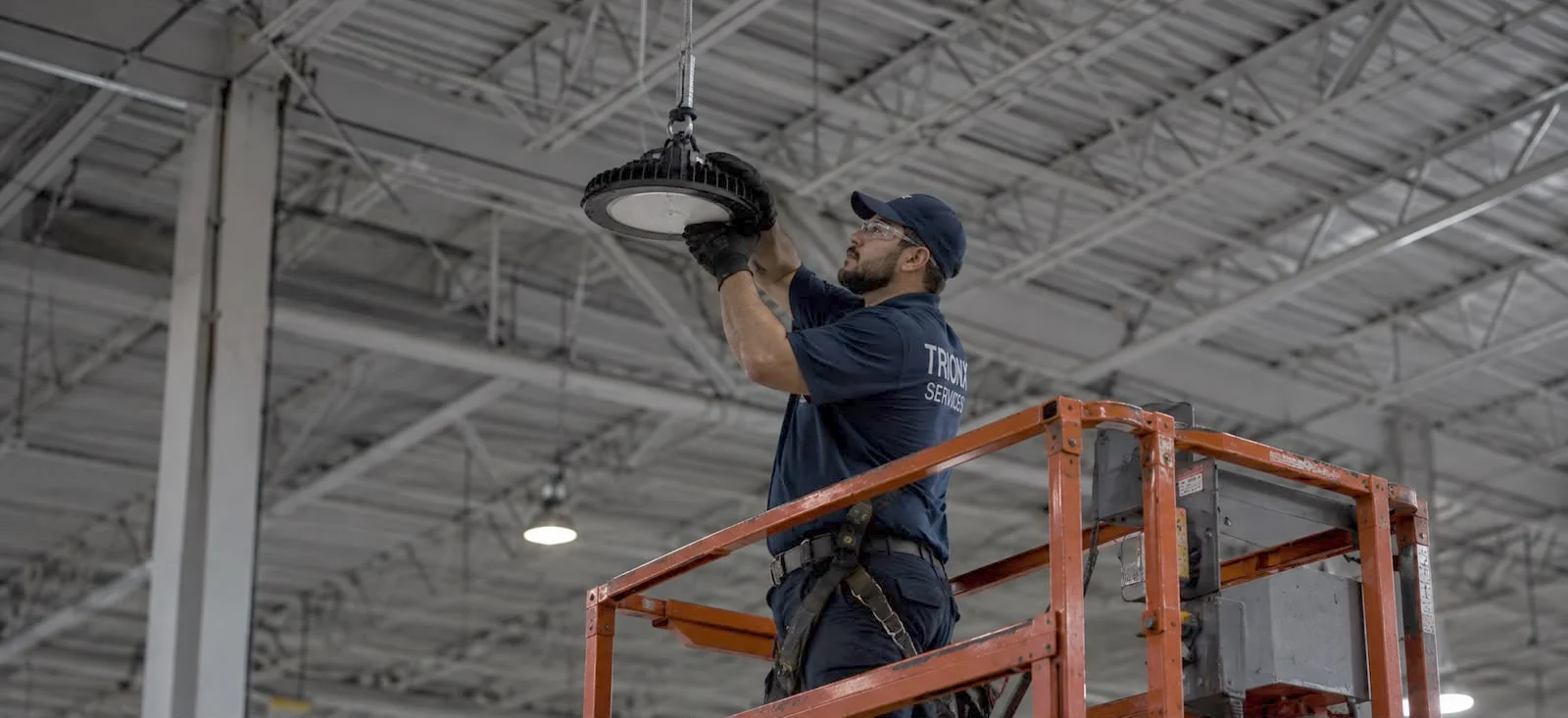
Relamping against retrofit: what a technician can and cannot touch
Reopening a space that has been closed for months

A vacant unit: what to check while it sits empty
Taking over a restaurant space: what to check before signing
One company, whoever does the work
Our technicians handle the trades that need no state license, and licensed contractors handle the ones that do. Either way we scope it, book the visit and file the record. Tell us the property and the problem and we will come back with a window. Call out of hours and someone who works here answers.