
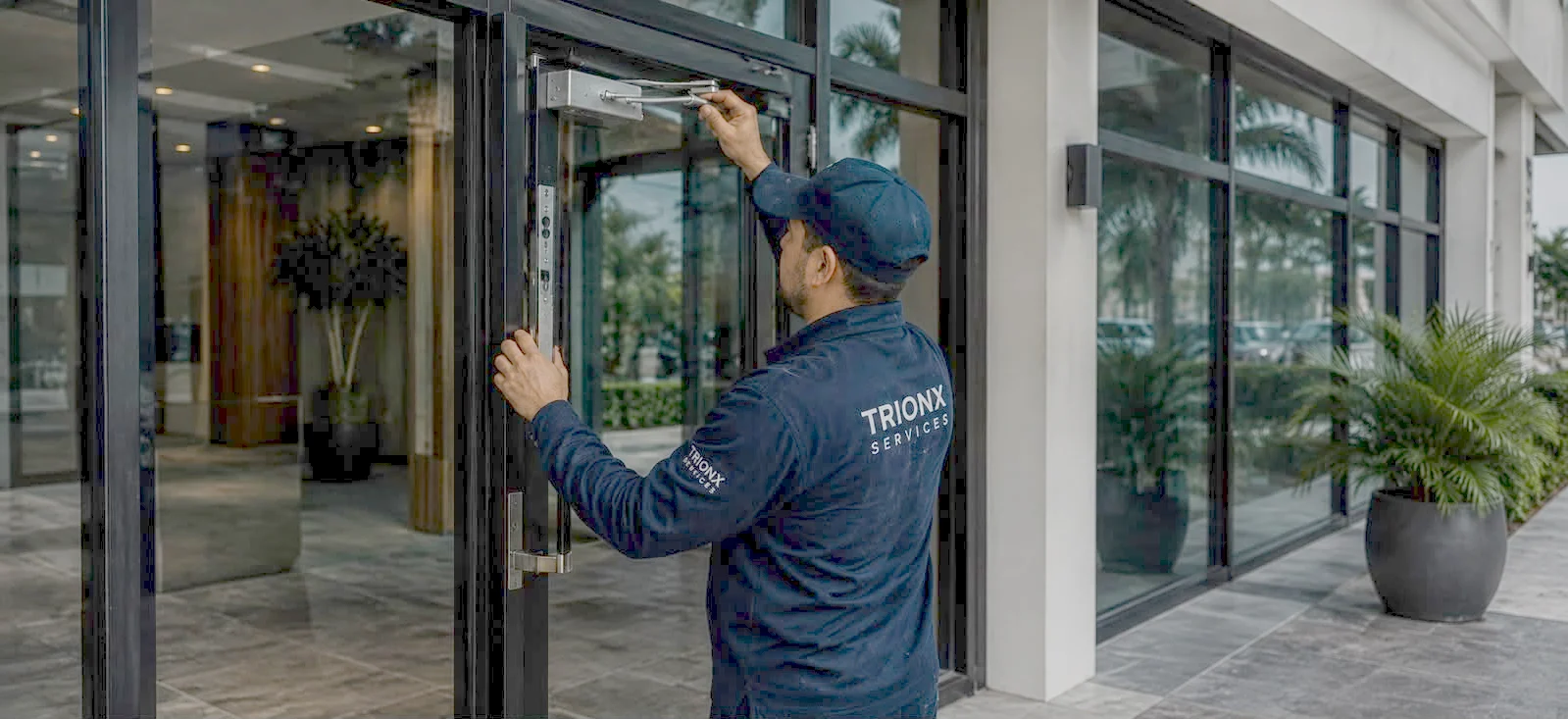
Doors
Thresholds, sweeps and weatherstripping: the parts that wear first
Kneel at a back door and look for daylight. Whatever you can see through, something else can get through.
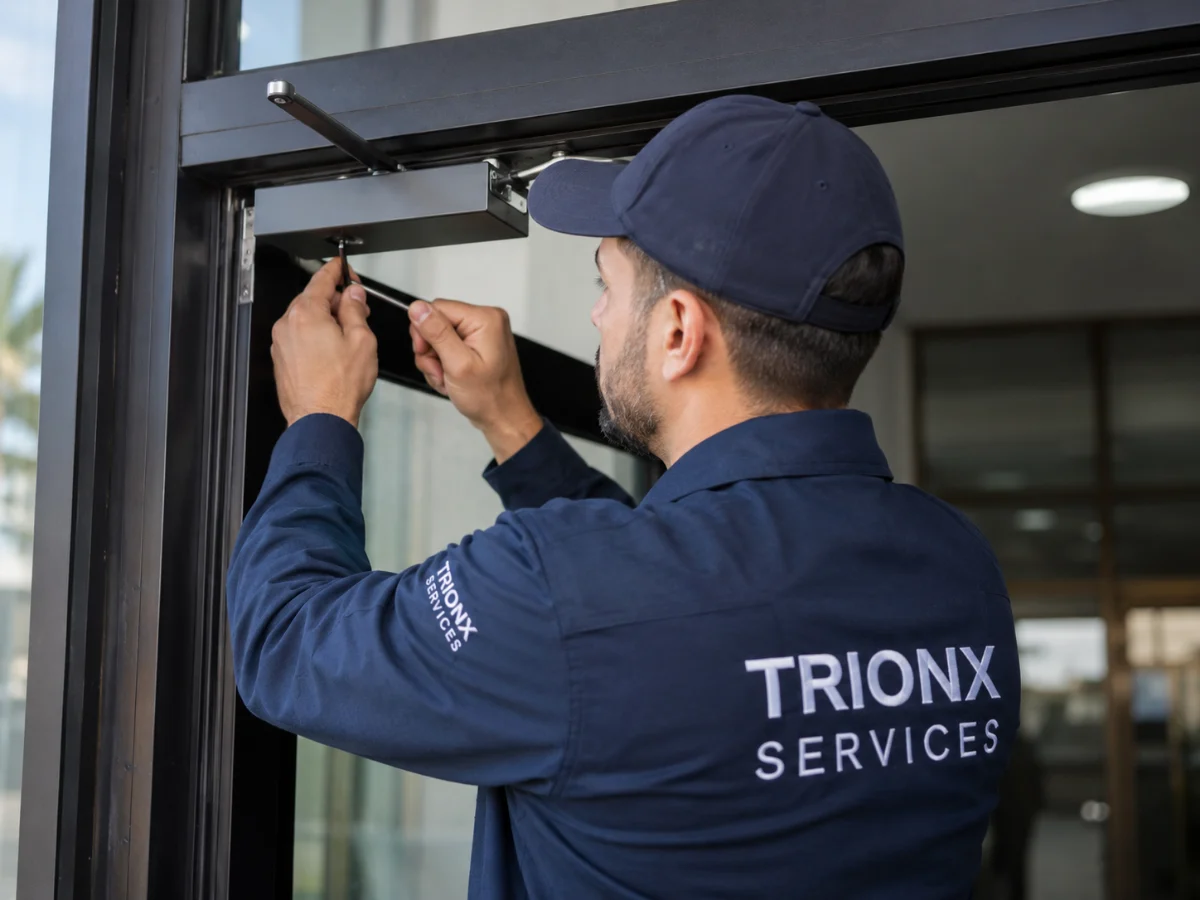
Kneel inside a closed external door and look along the bottom edge. If you can see daylight, so can everything else, and the bottom of a commercial door is where most of it gets in.
These parts are consumables and almost nobody schedules them, which is why they are the most common quiet fault on a commercial opening.
What the parts are
A door sweep fixes to the bottom face of the door and bridges the gap to the floor, usually with a rubber blade or a brush. A brush suits an uneven floor, a blade seals better on a smooth one.
A threshold is the section fixed to the floor under the door, giving the sweep something flat and consistent to meet. An automatic door bottom is a sprung version that drops as the door closes and lifts as it opens, which is what gets used where a sweep dragging on carpet would be a problem.
Weatherstripping and jamb seals run down both sides and across the head, sealing the gap between the door face and the frame stop. An astragal covers the meeting point on a pair of doors, where there is no frame to seal against.
Why they wear out quietly
Ultraviolet hardens rubber and it then splits rather than flexing. Heat does the same more slowly. A blade sweep on a door used hundreds of times a day wears its contact face down until it no longer reaches the floor, and the door still looks completely normal from standing height.
Jamb seals get crushed by a door that has dropped, or painted over during a redecoration, which stiffens them into a hard strip that holds the door off its latch instead of sealing against it.
Thresholds loosen. The fasteners work free under traffic, the section lifts slightly, and it becomes a trip point as well as a failed seal.
What it costs you when they go
Pest entry, which is the one that produces a citation in a food operation. A gap under a back door is the main route in, and our article on finding pest entry points covers the full sweep of the building.
Cooling, because in this climate a gap at every external door is a continuous load on the air conditioning, and it is invisible on a bill that has no line for it.
Water, at any door where wind drives rain at the opening. Fire and smoke performance on a rated door, where intumescent and smoke seals are part of the listed assembly and a missing one is a finding.
And latching. A hardened jamb seal holds a door off the frame just enough that the latch never seats, which reads as a lock fault and is not one.
The order the repair goes in
Alignment first. A seal is sized for the gap the door was built with, and asking it to cover a door that has dropped fifteen millimeters produces a part that wears out again immediately. Our article on why doors drop covers that.
Then the threshold, because the sweep is sized to meet it. Then the sweep, then the jamb seals.
On a rated door every replacement part has to carry the rating, and a general-purpose seal fitted to a fire door produces something that looks correct and is not.
Treat them as scheduled, not reactive
These wear on a predictable cycle, which makes them a maintenance item rather than a repair. A daylight check at every external door on the quarterly walk takes minutes and catches the whole category before anybody else finds it.
Our article on the quarterly property walk covers where this fits alongside the rest.
Specifying the replacement
Three measurements decide it. The gap between the door bottom and the finished floor, taken at both ends and the middle because it is rarely equal. The door thickness, which determines what will fit. And what the floor actually is, because a blade seals well on smooth concrete or tile and a brush copes better with a rough or uneven surface.
On a pair of doors the meeting stile needs an astragal rather than a jamb seal, and that is the gap most often left open after a repair because there is no frame there to draw attention to it.
On a rated door the part has to carry the rating. Intumescent and smoke seals are listed components of the assembly, and fitting a general-purpose replacement produces a door that looks correct and no longer performs as tested.
Who carries this out
Sweeps, thresholds, automatic door bottoms, weatherstripping, jamb seals, astragals and the door alignment around them are performed directly by our own technicians. None of it requires a Florida contractor license, and TrionX carries general liability and workers' compensation on that work.
Common questions
Questions we get asked about this
How do I check them without any tools?
Kneel at the door and look along the bottom and both jambs for daylight, from the inside with the door shut. Then run a hand around the perimeter on a windy day. Anything you can see light through or feel air moving through is a gap, and the bottom of the door is where it usually is.
Why do sweeps fail so fast here?
Sun, heat and traffic. The rubber or brush hardens under ultraviolet and then tears, and a door dragged over a threshold hundreds of times a day wears the contact face down. They are consumables on a commercial door rather than permanent fittings.
Do these affect anything other than drafts?
They are the main pest entry route on a back or delivery door, they carry a share of the cooling load in this climate, and on a fire rated door the smoke seals are part of the rated assembly. A missing seal on a rated door is an inspection finding.
Can a worn threshold be replaced on its own?
Usually yes. Thresholds, sweeps, jamb seals and astragals are separate parts and are normally replaced individually. Where the door itself has dropped, the seal is being asked to cover a gap it was never sized for, and the alignment comes first.
Keep reading
Related field notes
Why commercial doors drop, and what alignment actually involves
Adjusting a door closer: the valves and what each one does
Caulking and joint sealing: the maintenance nobody schedules
An ADA complaint about a door: what actually has to change
Do I need a locksmith or a door company?
An exit door or panic bar that will not release
One company, whoever does the work
Our technicians handle the trades that need no state license, and licensed contractors handle the ones that do. Either way we scope it, book the visit and file the record. Tell us the property and the problem and we will come back with a window. Call out of hours and someone who works here answers.