

Glass
What re-glazing an existing opening actually involves
Re-glazing puts new glass into the frame that is already there, and that distinction decides both the price and the paperwork.
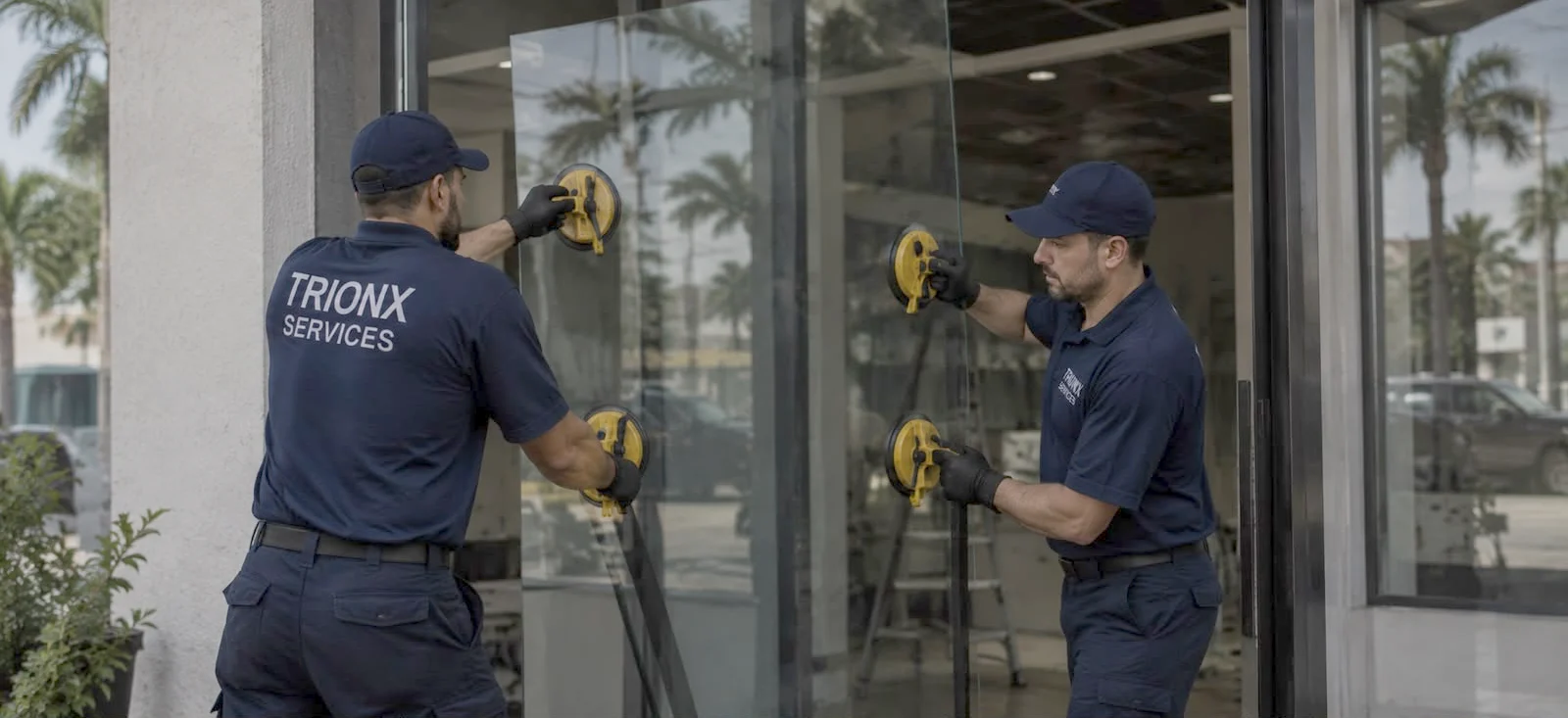
Re-glazing means new glass in the frame that is already on the building. Nothing structural changes, the opening stays the size it was, and the framing system stays where it is.
That boundary matters beyond terminology, because it is the same line that decides whether the job needs a permit.
Measuring, which is where jobs go wrong
The size that matters is the daylight opening, meaning the clear hole you can see through, plus how far the pane has to sit into the frame on each edge, minus a tolerance so it is not pinched when the metal moves.
A broken pane is a poor guide. Fragments are rarely square, and the old glass was smaller than the opening by exactly the engagement you cannot now measure. So the frame is measured, not the wreckage, at several points along each side because commercial frames are not reliably square.
Thickness and type are established at the same time. Our article on tempered, laminated or insulated covers how to tell which belongs in which opening, and putting the wrong one back is a safety question rather than a preference.
Getting the old pane out
The stops or beads come off first, usually on the inside face, which is what holds the pane in. On a wet glazed frame the sealant has to be cut out rather than pulled, because tearing it damages the frame face the new bead has to seal against.
Broken glass comes out in controlled pieces rather than being pushed through, and the frame rabbet is then cleaned back to bare metal. Old sealant, old gasket, glass fragments and dirt left in the rabbet all stop the new pane sitting flat, and a pane that is not flat is a pane under stress.
Setting the new glass
Setting blocks go in first. These are small load-bearing blocks the pane rests on, placed at set points along the bottom so the weight goes through them rather than through the glass edge onto metal. Glass resting directly on a frame is glass that cracks from the edge inward, sometimes months later.
Spacers keep the pane centered in the rabbet so it does not touch the frame on either face. Then the glass goes in, the gaskets or the sealant go back, and the stops are refitted.
Dry glazing seals with gaskets and beads. Wet glazing beds the pane in sealant. A frame is designed for one or the other, and the difference decides how long the job takes to become weathertight.
Why the glass is ordered rather than fitted at the board-up
Tempered glass cannot be cut after it is tempered, so it is cut to size and then processed. Laminated glass is made up as a sandwich. Insulated units are assembled and sealed as a unit. None of them exist on a van in your size.
A board-up exists for that reason alone: it closes the opening while the correct pane is made. Our article on the first hour after a storefront pane breaks covers that side, and the board-up is work our own technicians carry out.
Where the permit line falls
Re-glazing an existing opening is normally unpermitted work and is performed directly by our own technicians, including the board-up, the removal and the fitting.
Replacing the storefront system, altering the size of an opening, or fitting impact rated glazing that needs a Notice of Acceptance submittal is a different matter. Anything requiring a permit is licensed work whatever the trade, and it is coordinated through licensed contractors and documented by us. Our article on impact glazing and the NOA covers when that applies on exterior work in Miami-Dade.
What the site needs to have ready
Clear access to both faces of the opening. On a storefront that usually means moving a display, and on an internal screen it means clearing whatever has accumulated against it. Glass is handled with both hands and no room to stand is the most common reason a visit takes twice as long as it should.
Somewhere to put the old pane, and a route to carry it out that does not cross a trading floor. Where the opening is at height, access equipment has to be arranged in advance rather than discovered on the day.
Decide beforehand whether the area can be closed while the work happens. An opening with glass out of it is a hazard on both sides, and the honest answer is usually that the space nearest it stops being used for the duration.
What you should end up with
A pane of the correct type and thickness, sitting on blocks, centered in its rabbet, sealed by the method the frame was built for, with the stops refitted properly and the site cleared of glass. Photographs of the opening before and after, which matter where this is an insurance claim.
A pane that rattles, sits hard against the frame or has been bedded in the wrong material will come back, and usually not under warranty.
Common questions
Questions we get asked about this
What is the difference between re-glazing and replacing the storefront?
Re-glazing puts new glass into the existing frame. Replacing the storefront changes the framing system itself. The first is normally unpermitted work our own technicians carry out; the second usually needs a permit and goes through a licensed contractor, which makes it a different job in every respect.
Why can you not measure the old pane?
Because a broken pane rarely gives an accurate size and the glass is always smaller than the hole. The measurement that matters is the daylight opening plus the engagement into the frame on each side, minus a tolerance so the pane is not pinched.
What are setting blocks?
Small load-bearing blocks the pane rests on inside the frame, positioned at set points along the bottom. They carry the weight so the glass is not resting on the metal, which would stress the edge and crack it. A pane set without them is a pane that fails early.
Is the glass held by the gasket or by sealant?
Either, depending on the system. Dry glazing uses gaskets and a bead, wet glazing beds the pane in sealant. They are not interchangeable, and a frame designed for one does not accept the other without being changed.
Keep reading
Related field notes
Storefront glass is broken: the first hour
Impact-rated glazing and the NOA: what needs a permit
A sealed glass unit has fogged: why, and what fixes it
Dealership showrooms: glass, lighting and the service bay
A glass storefront door drags or will not lock
An office or upper-floor window is cracked or broken
One company, whoever does the work
Our technicians handle the trades that need no state license, and licensed contractors handle the ones that do. Either way we scope it, book the visit and file the record. Tell us the property and the problem and we will come back with a window. Call out of hours and someone who works here answers.