

Locks
The yearly key and access code audit
Once a year, compare what your records say about keys and codes with what is actually out there. The two rarely match the first time.
Pull the key register, the access control user list and the list of who knows each keypad code. Put them side by side with a list of the people who work in or service the building today. Every name that appears on a key or credential list and not on the people list is a finding, and so is every person with access who appears on no list at all.
That comparison is the audit. The rest of the year's work is deciding what to do about the differences. If you have never done it, expect the first pass to take longer than planned and to turn up more than you hoped.
Reconcile the key register
A register records each key by stamp or number, which doors it opens and who it was issued to, with a date. If yours exists only as a spreadsheet nobody has touched since the last manager, treat it as a draft.
Ask each holder to bring in every key they carry. Check them against the register one at a time. You will find keys that nobody can account for, keys held by people who changed roles, and keys on the register that no one has seen in years. Mark each as confirmed, missing or unknown.
A missing key is not automatically an emergency, but it needs a decision. If it opens only a storeroom, you may accept the risk and record it. If it opens an external door or a master level cylinder, the decision is usually to rekey. The key control after a termination article covers the same reasoning for the case where one person has left.
Check the doors against the key chart
Walk the building with the key chart and try the keys. Over a few years doors get changed. A tenant fits a different cylinder, a lock fails and is replaced with whatever was in the van, or a door is repurposed and its old key now opens something it should not.
Look for cylinders that do not match the stamp on the chart, doors that your master key does not open and doors that a key from the wrong level does open. Each of those means the chart no longer describes the building. If the property runs a hierarchy, our piece on master key systems for commercial property explains why a few mismatches can undermine the whole structure.
Note the physical condition as you go. A cylinder that sticks, a latch that does not retract fully or a strike plate that has shifted are all small repairs now and a lockout later.
Rotate keypad codes and check shared ones
Keypad codes outlive the people who knew them. Ask who knows each code, honestly, and include former staff, previous contractors and anyone who was once told it over the phone.
Change every shared code at the audit. Where the hardware supports individual user codes, move to those so that removing a person is a single deletion. Where it supports only one code, rotate more often and keep a written note of who was told the new one and when.
Check the factory default and any installer code. These are sometimes left unchanged for the life of the lock, and they are public knowledge.
Clear dormant credentials
On card or fob systems, export the user list with last-used dates if the controller provides them. A credential that has not opened a door in six months is either an unused spare or a card that belongs to someone who has gone. Match each one to a current person. Suspend what you cannot match and see who complains.
Look at the permission levels as well. People accumulate access as they change roles, and nobody takes it away. Cards that open every door, and cards still carrying a former tenant's schedule, are common results.
Vendors need their own pass through the list. Cleaners, security, alarm and elevator companies tend to hold credentials with no end date. The rules for vendor access keys and codes set out how to issue them so that the audit has less to find next year.
When the audit says rekey
Rekeying is due when you cannot account for keys to external doors or master levels, when copies are likely to be in circulation and unrecoverable, or when the chart and the building have drifted too far to trust. It is also due when the system has been extended informally for years and nobody can say what it opens.
It does not have to cover the whole building. Rekey the doors where the exposure is, and bring in a restricted keyway if you want copies to be controlled from here on. Our article on what happens on a commercial rekey describes the sequence, including the key chart you should receive at the end.
Who carries this out
Rekeying, master key work, cylinder and lock replacement, keypad and card reader changes and credential clean-up are performed directly by our own technicians, who can also walk the building with you against the chart. We carry general liability and workers' compensation. Our locks and access control service covers the full scope.
Where the audit turns up a door with powered release wiring that has failed, that part is electrical and goes to a licensed contractor, coordinated and documented by us.
Keep the record
Date the audit and store the result with the register: what was found, what was decided, who was told. Next year's audit begins from this one, and a building that has a dated record of its last reconciliation is far easier to hand over, insure or defend after an incident.
Put the next audit in the calendar before you close the file. That step is the one most often skipped.
Locks and access control in Miami
Common questions
Questions we get asked about this
How often should a commercial building audit its keys and codes?
Once a year as a full reconciliation, with a lighter check whenever a tenant, manager or long-term vendor changes. The yearly pass catches the slow drift that individual events never trigger.
We have no key register. Where do we start?
Start with the doors. List every lock that matters, note the key stamp on each, then ask every person who might hold a key to bring them in and record what they have. The first register is built from what people actually carry, and it will be untidy.
How often should keypad codes be changed?
At least yearly, and immediately after anyone who knew a shared code leaves. Where the keypad supports individual codes, use them, so removing one person does not mean telling everyone else a new number.
What if keys are stamped Do Not Duplicate?
The stamp is only a request, and a local key cutter will often copy the key anyway. Only a restricted keyway, where blanks and cutting are controlled, actually limits copies.
Who can carry out the rekey if the audit shows it is due?
Our own technicians rekey and replace cylinders, update the key chart and reissue keys to the people on your register.
Keep reading
Related field notes
Setting up a master key system without losing control of it

Giving a vendor access: keys, codes and sign-in rules
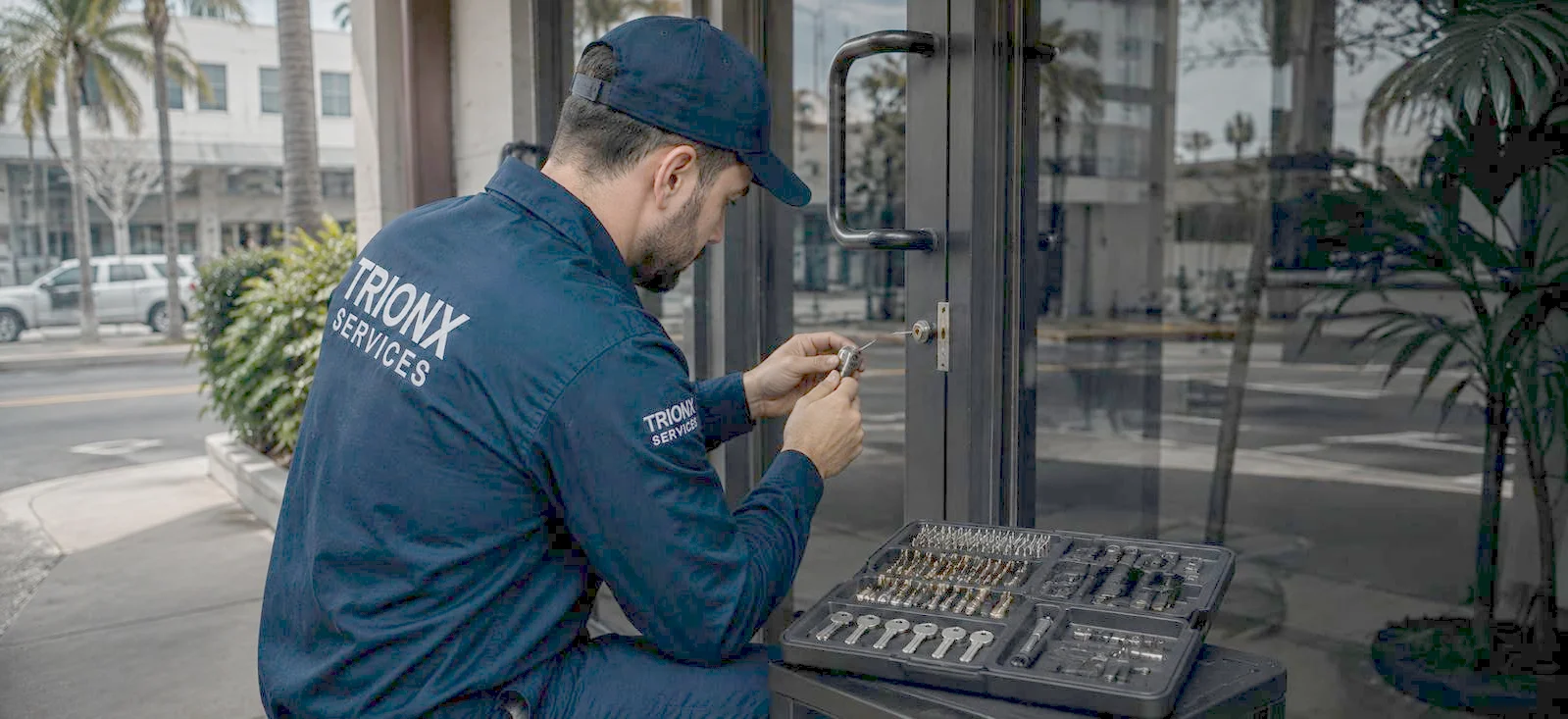
What actually happens on a commercial rekey
Bank branches: closed-hours work and a key register that holds up

Self-storage: hundreds of latches and one gate
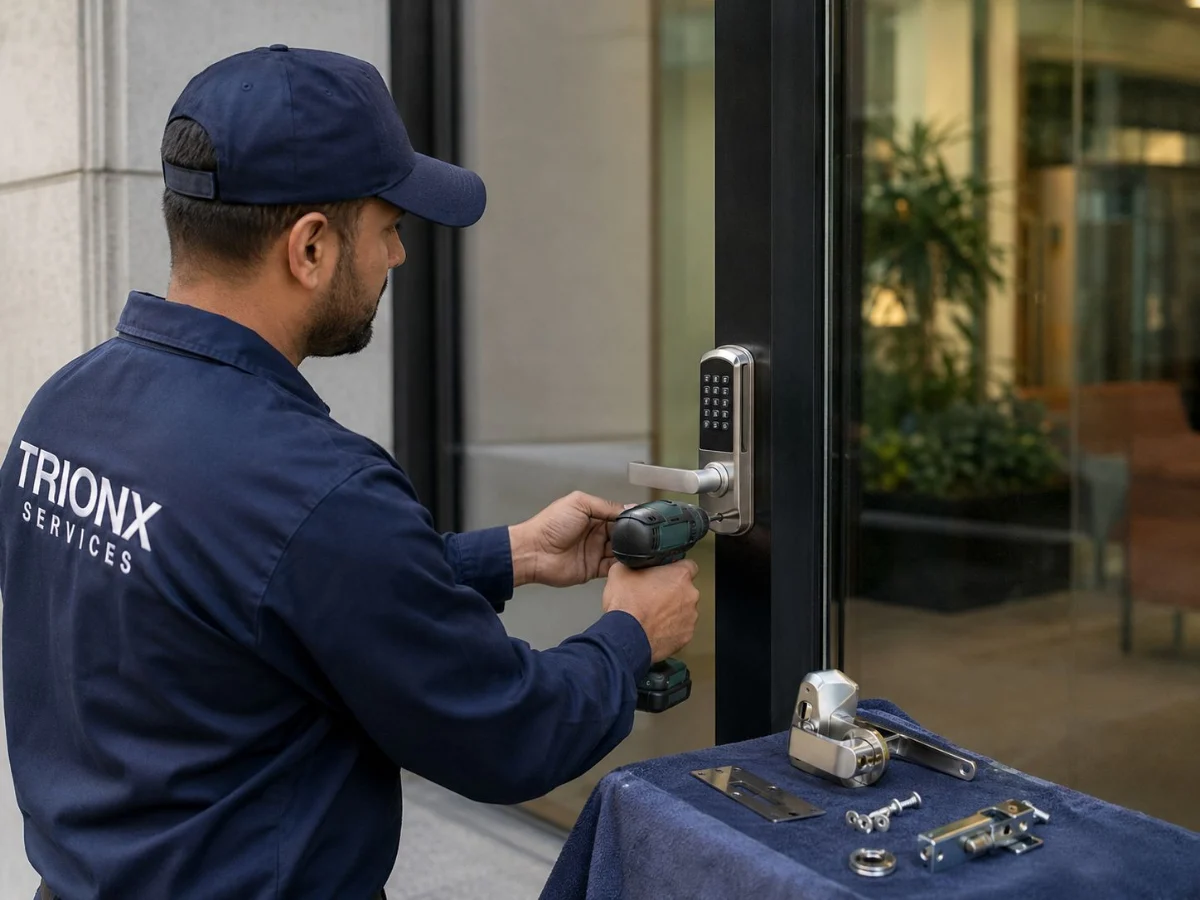
Lock grades: what Grade 1, 2 and 3 actually mean
One company, whoever does the work
Our technicians handle the trades that need no state license, and licensed contractors handle the ones that do. Either way we scope it, book the visit and file the record. Tell us the property and the problem and we will come back with a window. Call out of hours and someone who works here answers.