
Facilities
Handyman or licensed contractor: which does this job need?
The question is which trade the work falls in, and the size of the job has nothing to do with the answer.

Ask which trade the work falls in, and ignore what it costs. Florida licenses by trade, and a small job in a licensed trade needs a licensed contractor exactly as much as a large one does.
Nearly every argument about this starts from the assumption that there is a threshold below which the rules relax. There is not.
The trades that always need a license
Electrical, plumbing, HVAC, refrigeration, roofing and structural work. In each of those, the license requirement attaches to the type of work rather than to its scale.
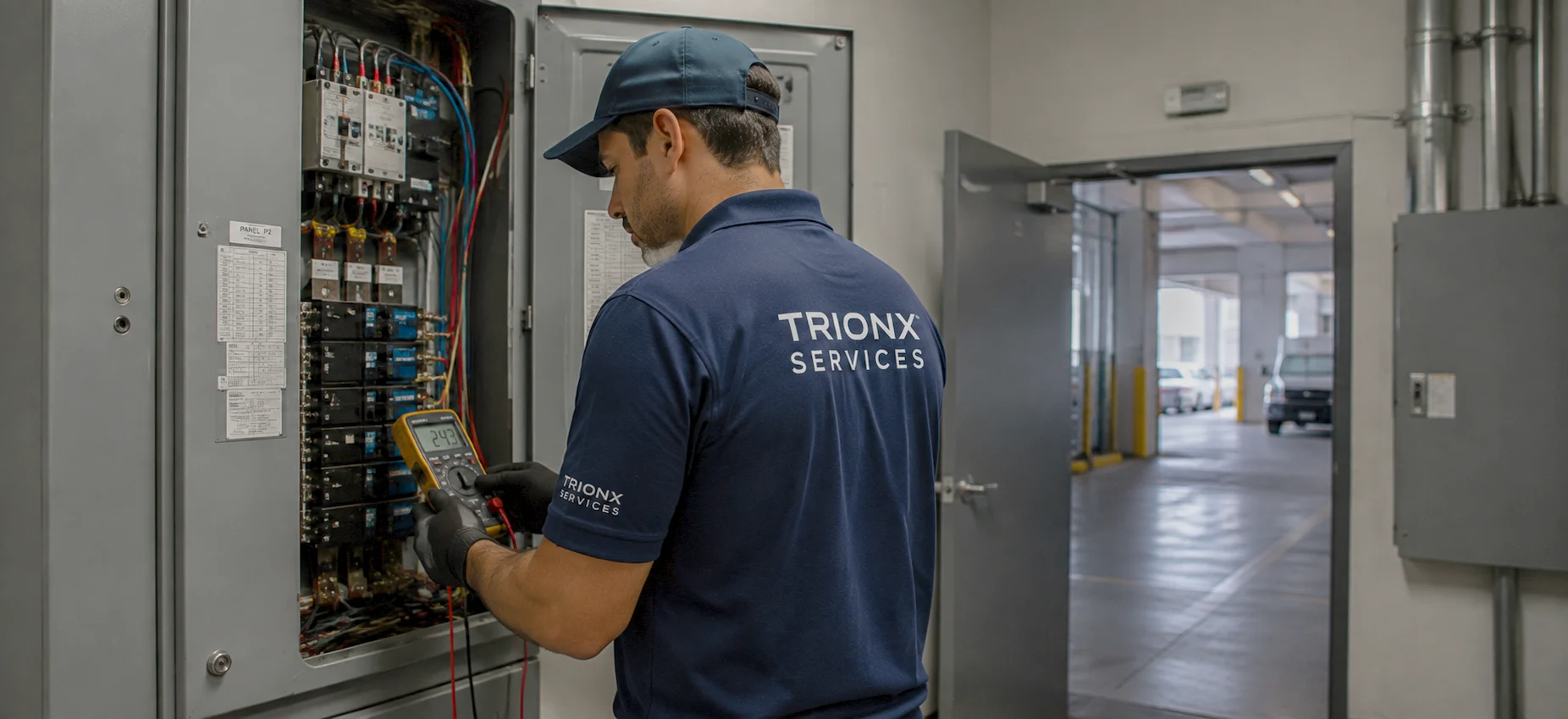
The scope is wider than most property managers expect. Replacing an outlet, a switch, a light fixture or a ceiling fan is electrical work. Swapping a toilet or a faucet where lines are made and broken is plumbing. Anything touching refrigerant is refrigeration. A patch on a roof is roofing. Our article on when you need a licensed electrician in Florida works through the electrical side in detail, because that is where the line gets crossed most often.
The work that does not need one
A large amount of commercial maintenance sits outside the licensed trades entirely, and this is the part people underestimate in the other direction.
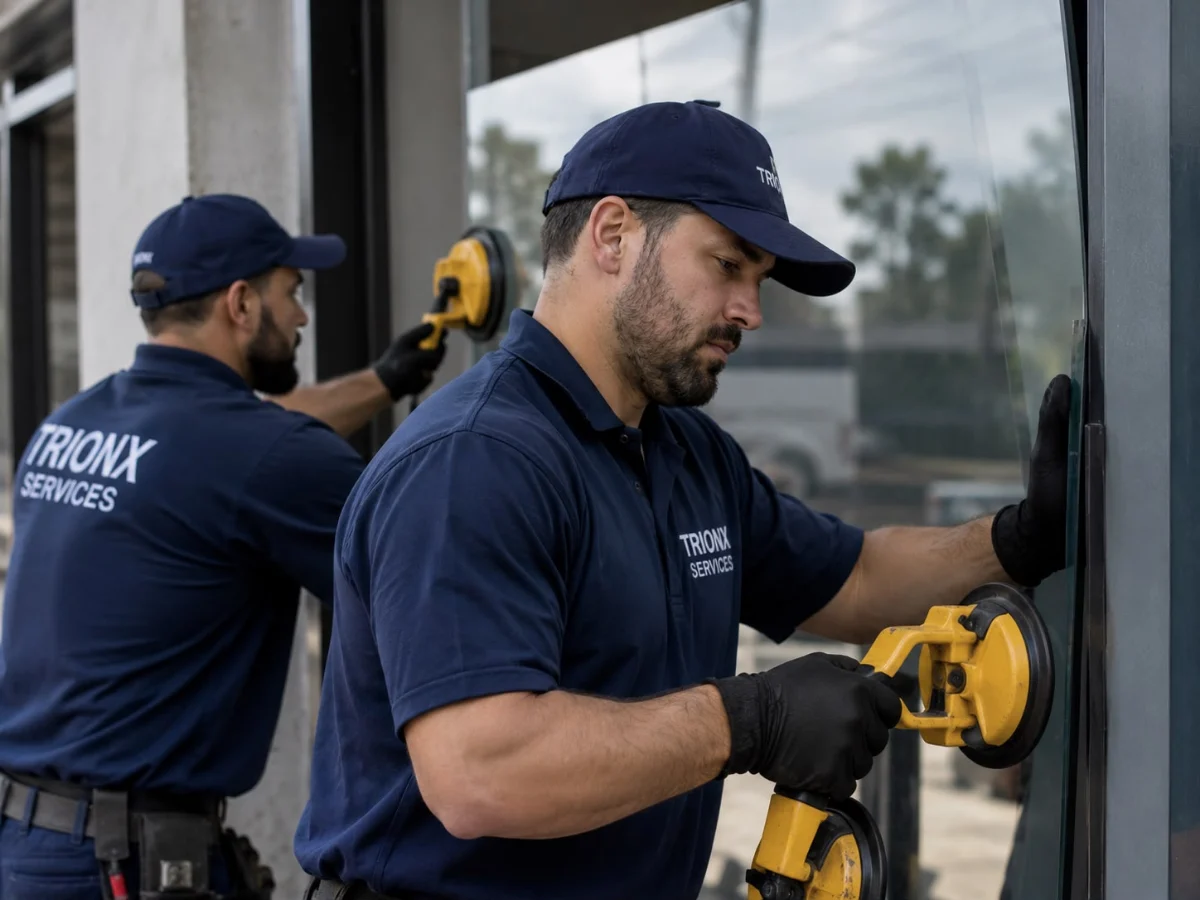
Locks, access control, master key systems, keypads, readers and panic hardware. Doors and door hardware, including closers, hinges, exit devices, thresholds and alignment. Glass repair and re-glazing of existing openings, including emergency board-ups. Carpentry, drywall patching, trim, shelving and tile. Painting, pressure washing, caulking and sealing. Ceiling tile, blinds, signage and fixture mounting with no wiring involved.
All of that is performed directly by our own technicians, and none of it requires a Florida contractor license.
Worth saying plainly: none of that list is lesser work. Over a year it accounts for the majority of what a commercial building actually needs. No license stands in the way of it, which is why it can be handled by employed technicians rather than passed to a subcontractor you never meet.
The distinction shows up on the invoice as well. Coordinated work carries a licensed contractor's cost plus the coordination around it, and direct work does not, which is the practical argument for keeping as much of the year's maintenance as possible inside the unlicensed trades.
The permit rule that overrides everything
Anything requiring a permit is licensed work, in any trade, regardless of which list it appears on above.
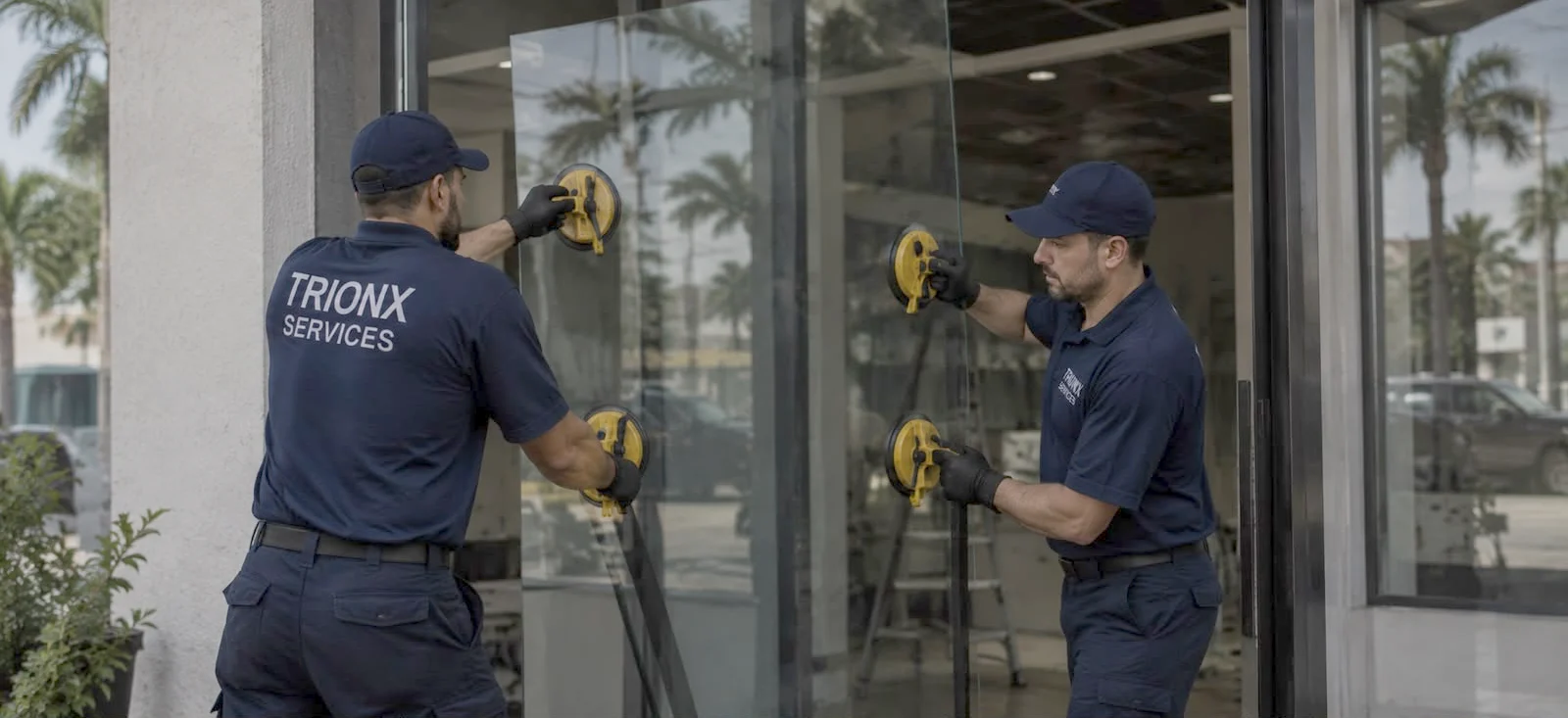
Glass is the case that catches people. Repairing or re-glazing an existing opening is unlicensed work. Replacing the storefront system, altering the opening, or fitting impact rated glazing that needs a Notice of Acceptance submittal is permitted work and therefore goes through a licensed contractor. Our article on impact glazing and NOA submittals covers where that falls in Miami-Dade.
Lighting, where the line runs through the middle
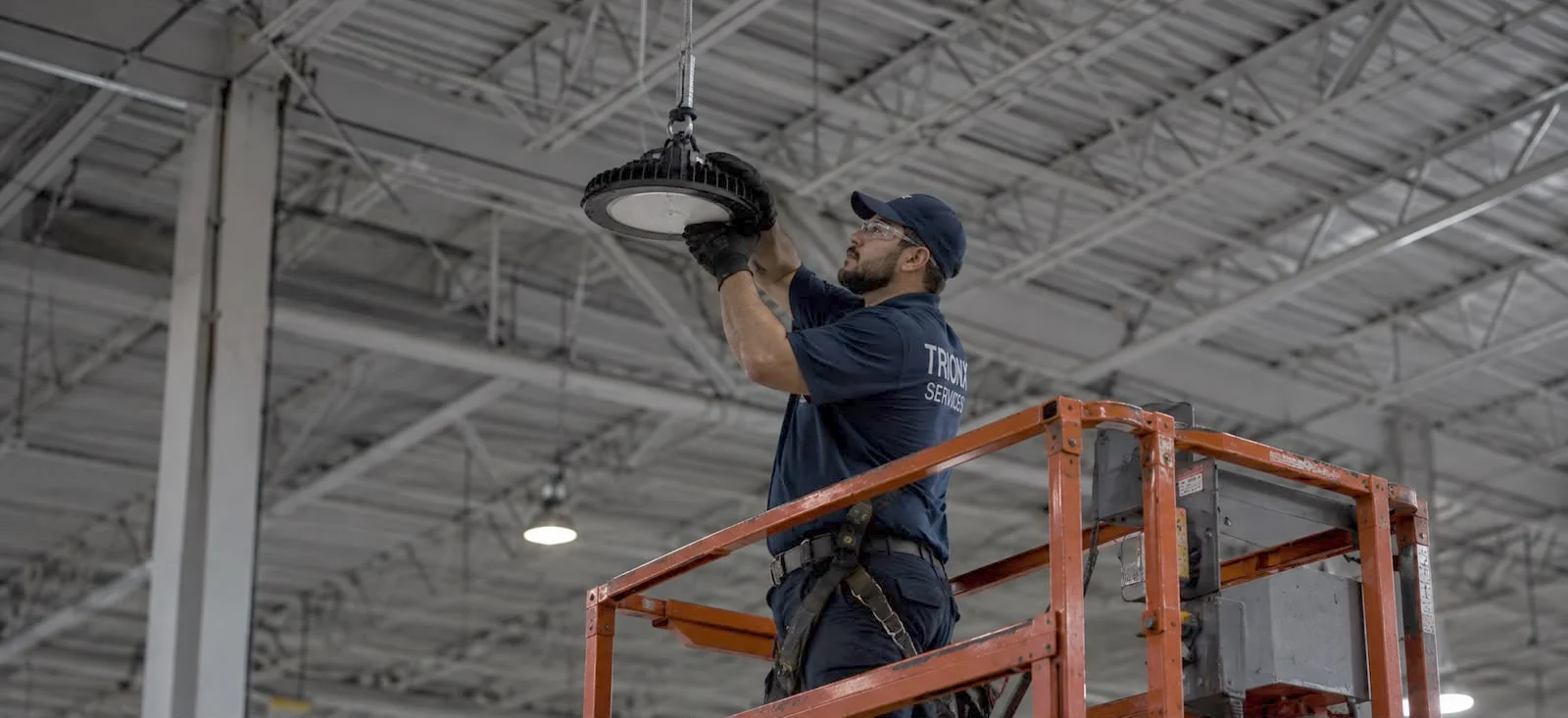
Relamping a fixture is maintenance. Mounting a fixture with no wiring involved is maintenance. Anything touching wiring, ballasts or drivers is electrical work, and that includes LED retrofit, which is the job most often quoted as though it were a lamp change.
Our article on relamping against retrofit sets out the difference, and it is worth reading before accepting a quote that treats a retrofit as maintenance.
Why this is your problem and not only the contractor's
Unlicensed work in a licensed trade creates exposure that lands on the property rather than on whoever carried it out.
Insurers routinely decline claims arising from unpermitted or unlicensed work. Unpermitted work is discovered during a sale, a refinance or a change of use, and then has to be opened up and corrected. If somebody is injured by work that should have been licensed, the liability follows the building owner and the manager as well as the tradesperson. And a contractor without a license in that trade will not be carrying the insurance that goes with one.
How this works in practice
The six unlicensed trades above are performed by our own employees, on our payroll, background checked, with TrionX carrying general liability and workers' compensation. Electrical, plumbing, HVAC, refrigeration, roofing and structural work are carried out by licensed, insured contractors, coordinated and documented by us.
One company is accountable for both halves and for the written record of what was done, which is the arrangement that stops a licensing question becoming a judgment call made on site by whoever turned up.
What to ask before work starts
Which trade does this fall in, and does it need a permit. Who holds the license for it and can I see it. Will there be a written record of what was done and by whom.
Any competent vendor will answer all three without hesitating. A vendor who tells you a license is unnecessary because the job is small has told you something useful about how they work.
Common questions
Questions we get asked about this
Is there a dollar amount below which a license is not needed?
No. Florida licenses by trade, not by job value. A small electrical repair needs a licensed electrical contractor exactly as much as a large one. The belief that small jobs are exempt is the most common and most expensive misunderstanding in this area.
Can a handyman replace an outlet or a light switch?
No. Replacing outlets, switches, fixtures and ceiling fans is electrical work and requires a licensed electrical contractor in Florida. Relamping an existing fixture and mounting equipment with no wiring involved are not.
What about swapping a toilet or a faucet?
Where supply or waste lines are made and broken, that is plumbing and it needs a licensed plumbing contractor. The rule holds regardless of how routine the swap looks or how small the fixture is.
Why does it matter to me rather than to the contractor?
Because unlicensed work can void insurance cover on a resulting loss, has to be disclosed and frequently corrected when a property is sold or refinanced, and leaves you carrying the liability if somebody is hurt. The exposure sits with the property, not only with whoever did the work.
Keep reading
Related field notes
Relamping against retrofit: what a technician can and cannot touch
Impact-rated glazing and the NOA: what needs a permit
Walk-in temperature logs: what to record, and what it tells you

We have lost a master or building key: what now
A tempered glass door has shattered
A window is leaking around the glass when it rains
One company, whoever does the work
Our technicians handle the trades that need no state license, and licensed contractors handle the ones that do. Either way we scope it, book the visit and file the record. Tell us the property and the problem and we will come back with a window. Call out of hours and someone who works here answers.