
Glass
A tempered glass door has shattered
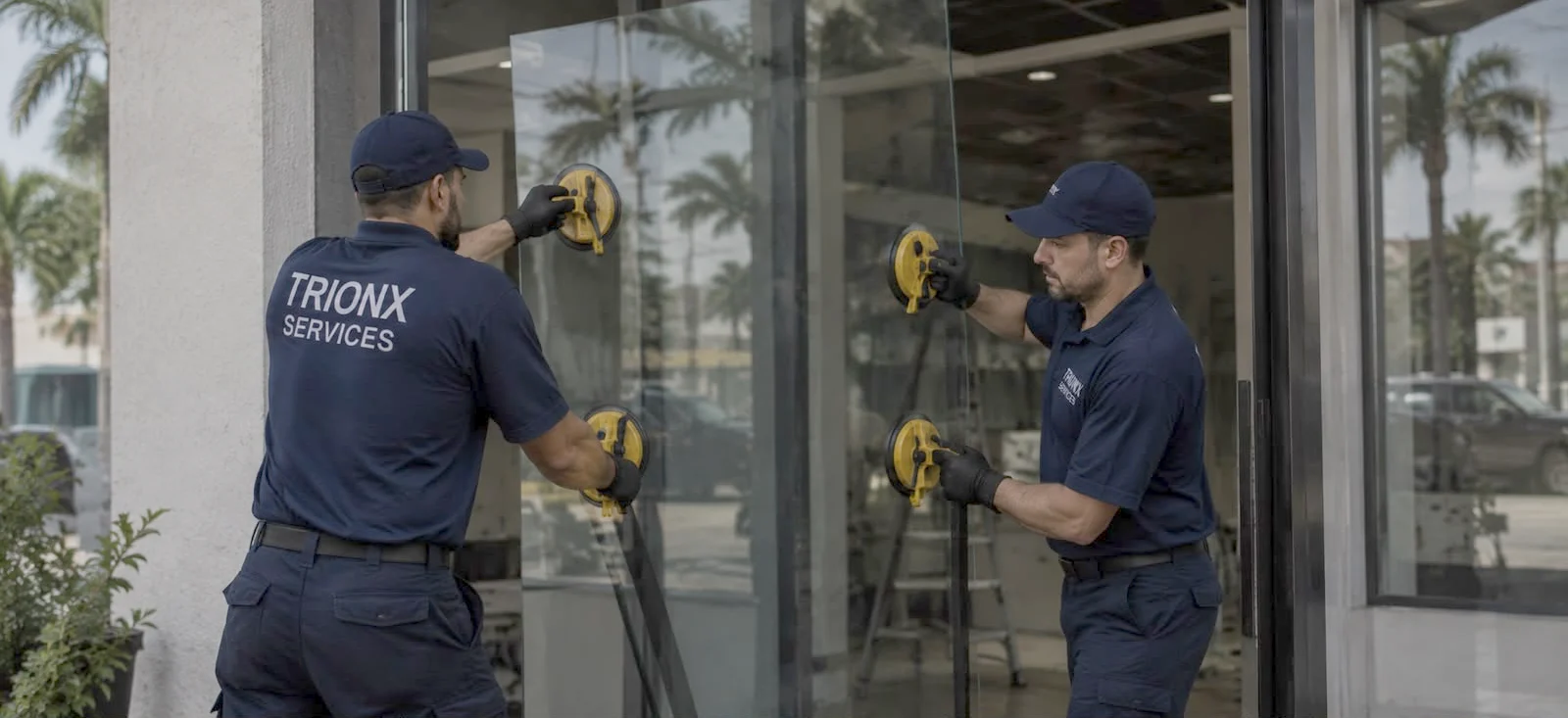
A shattered tempered door leaf has done what it was built to do, and what remains is a door that cannot close, a floor covered in small pieces and a building that is open.
Keep people away from the opening and do not sweep until you have looked at it. Tempered glass breaks into small blunt pieces, and a door leaf that has gone usually leaves an empty frame with a drift of glass under it and a scatter that reaches well past the threshold.
Then secure the entrance. A door with no glass cannot close or lock, so the premises are open until the opening is covered, and that needs to happen before anything else is cleaned or investigated.
Why tempered glass dices
Door glass is tempered because of what happens when it fails. The surface is held in compression and the core in tension, and when that balance is broken the whole leaf releases at once into small cubes rather than long shards. It is far safer than ordinary glass for a door people walk into.
It also explains why the break looks sudden and complete. Tempered glass cannot be cut, drilled or edged after it has been made, so a leaf that has gone cannot be repaired. The difference between this and other glass types is covered in our article on tempered, laminated and insulated glass.
Why it broke when nothing hit it
Impact is the obvious cause, and a cart, a delivery or a thrown object accounts for many of these. Where nobody saw anything, look at the edges of the broken frame and at how the door was behaving beforehand.
A chip on an edge from installation or a knock years ago can sit unnoticed and then let go. A door that slams, because the closer has failed, puts a shock through the glass each time. A leaf that binds against the frame or the floor is loaded where it should not be. Temperature swings across a leaf in strong sun can contribute where an edge is already damaged.
Worth knowing if you have other doors of the same age and make. If one failed from a closer problem or a hardware fault, the neighbors may share it.
Clearing the opening safely
Wear gloves and closed shoes. Pick up the larger pieces by hand and vacuum the rest with a hose attachment rather than a broom, because sweeping drives small pieces into floor covering and spreads them. Check inside the door rails and the bottom channel, where cubes collect and later fall out.
Photograph the opening before you clear it, including the frame, the floor and the closer. If you will claim on insurance, those pictures matter, and they also show whoever attends what the hardware looked like when the glass went.
Securing the opening meanwhile
A temporary board across the frame is the standard answer, fixed to the frame rather than to the surrounding wall or glass, and secured from the inside where that can be done. The detail of how it is done and what to ask for is in our piece on the emergency board-up procedure.
If the premises have to stay open, put a person on the entrance and divert customers to another door where one exists. A boarded entrance on a trading building also needs a sign pointing visitors elsewhere.
If the door is on an escape route, the board must not trap anyone in. Plan the alternative before the board goes up, and check whether the exit device on that door still works so it can be used if the board is lifted.
Whether the door and frame survived
Glass failure is sometimes the end of a hardware fault and sometimes damage from it. Once the opening is clear, look at the rails, the pivots or hinges, the closer and its arm, the lock and the threshold.
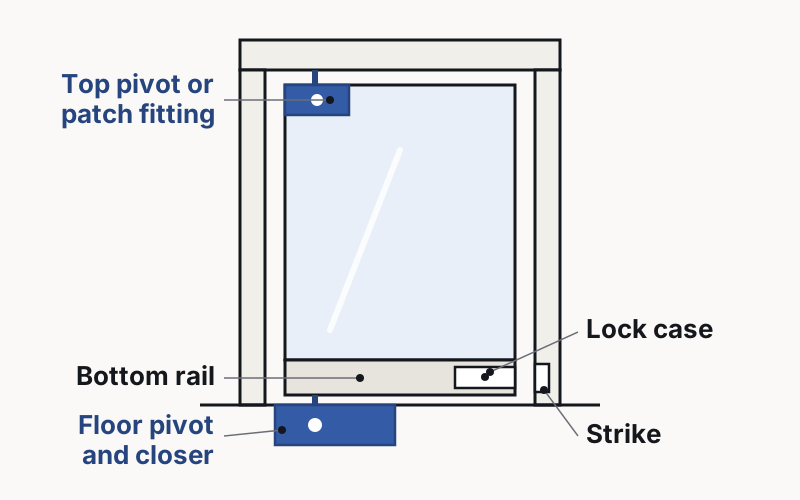
A bent bottom rail, a closer that has lost its fluid, a pivot that has dropped or a strike plate that has shifted will break the next leaf just as the first one went. Fitting new glass into a door that still binds only resets the clock. Our article on a glass storefront door that drags or will not lock covers the faults to check for.
Re-glazing the door or replacing the leaf
Where the door frame, rails and hardware are sound, the usual fix is new tempered glass made to the existing size and glazed into the door. That is repair of an existing opening, and the lead time is the time the glass takes to be made.
Replacing the whole door or leaf makes sense where the rails are damaged, the hardware is obsolete or the door has been repaired before and still misbehaves. A new door, or any change to the storefront that needs a permit, is a different job with a submittal behind it, and it is coordinated rather than done by a technician with a glazing kit.
Door glass in a commercial entrance has to be safety glazing, and it must be marked as such. Ask for that on the quote and look for the permanent mark on the replacement when it arrives.
Who carries this out
Clearing the opening, boarding it, re-glazing an existing door and refitting closers, pivots, handles, locks and weatherstripping are performed directly by our own technicians. None of it requires a Florida contractor license, and TrionX carries general liability and workers' compensation on that work.
A full storefront replacement, or a new door where a permit and product approval are involved, is coordinated through licensed contractors and documented by TrionX. Our glass and glazing service page sets out what falls on each side. For a wider break across fixed panes, see our article on broken storefront glass.
When it cannot wait
An entrance door with no glass is an open building, and it is a call today, out of hours included. Someone who works here answers the phone. Attending is chargeable whether or not work follows, and the rate is given before anyone is dispatched.
Common questions
Questions we get asked about this
Why did the glass break when nothing hit it?
Tempered glass can fail without a visible impact. A nick on an edge from installation, a hairline chip, stress from a door that slams or binds in its frame, or a rare inclusion in the glass can all start a failure that spreads through the whole leaf at once. Edge damage is the most common starting point.
Can a single broken section be replaced?
Tempered glass cannot be cut or repaired after manufacture, so a broken leaf is replaced whole. The glass is made to size, which is why the opening is secured in the meantime.
Is the door still safe to use if the frame looks fine?
Not until the glass is replaced and the hardware has been checked. The leaf has no glass to hold, and the rails, closer, pivots and lock may have been bent by whatever broke it.
Do you do this work?
Yes, for existing openings. Our own technicians clear the opening, board it up, re-glaze an existing door and refit its hardware, and TrionX carries general liability and workers' compensation on that work. A new door or storefront that needs a permit is coordinated through licensed contractors and documented by TrionX.
Keep reading
Related field notes

One company, whoever does the work
Our technicians handle the trades that need no state license, and licensed contractors handle the ones that do. Either way we scope it, book the visit and file the record. Tell us the property and the problem and we will come back with a window. Call out of hours and someone who works here answers.