

Facilities
What to have ready when you call for emergency service
The information that decides how fast somebody reaches you is rarely the description of the fault.
Someone who works here answers, out of hours included. (786) 628-9227
Have the access answer ready before you dial. Which door, which gate code, whether a guard has to be called, whether the yard is locked and who holds that key at night.
Out-of-hours attendance is delayed by access more than by anything else, including distance and workload. A technician outside a locked yard at two in the morning is not attending your emergency.
The five things that decide dispatch
What has happened, in one sentence. A door that will not lock is a different job from a door that will not open, and both get described as a door problem.
Where exactly. Building, unit, floor, and which door or fixture. A street address on its own costs real time on a large site.
Whether anyone is at risk, or trapped, or whether an exit is affected. That changes the priority immediately and it should be the first thing said, not the last.
Whether the building is currently secure. An open building and a locked one are different emergencies even when the fault is identical.
Whether anything is still running that should not be, or has stopped that should not have. Refrigeration with stock in it, water that has not been isolated, a circuit that has tripped.
Photographs, not descriptions
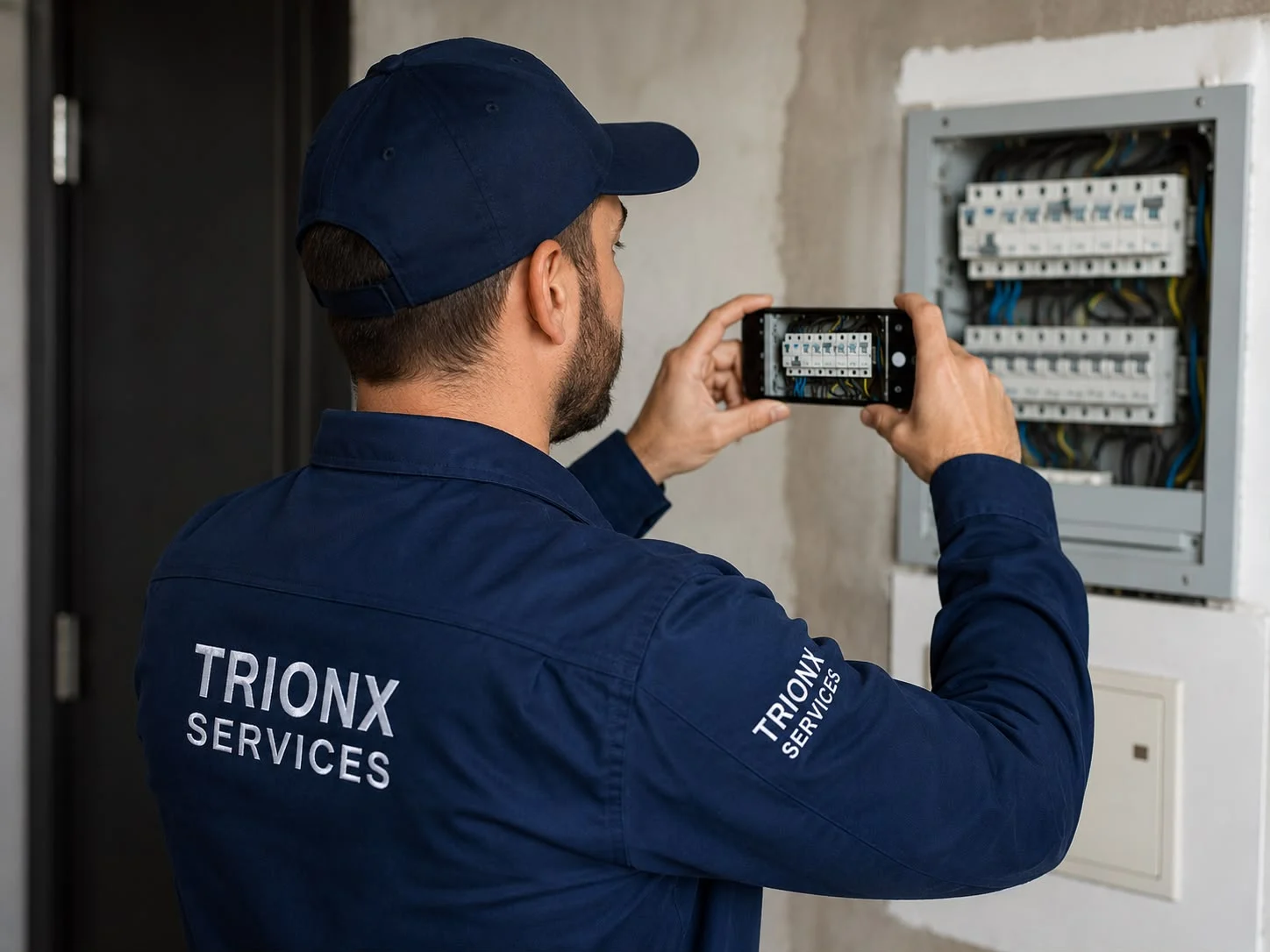
Send a wide shot showing where the problem is in the building and a close shot of the fault itself. Two photographs settle questions that five minutes of description will not.
They decide what gets loaded onto the van, which is the difference between one visit and two. A broken pane photographed with its frame tells us what board material to bring. A lock photographed on its door tells us what is likely behind the plate.
Who can say yes
Emergencies stall at the point where a decision is needed and nobody with authority is reachable. Establish before you call who can approve work at that hour, and give that person's name and number rather than your own if it is not you.
Where a spending limit applies, say what it is at the start. Nobody wants to discover it after the diagnosis, and a technician on site waiting for an approval is the most expensive part of any out-of-hours call. Our article on how after-hours rates are structured covers what actually drives the cost of these visits.
The building's own requirements
Managed buildings, condos and institutional properties frequently require a certificate of insurance naming the building before a contractor is allowed on site, and some require it before the elevator can be used or the loading dock opened.
Having a current one on file is a five minute job in daylight and an impossible one at midnight. Our article on what a COI is and why your building keeps asking for one covers what the certificate has to name.
Note any other site rules while you are at it: hot work permits, restricted hours, elevator bookings, whether a security escort is required.
What to do while you wait
Make the area safe and leave the fault alone. Keep people away from broken glass, water near electrics, or a door that is hanging. Do not keep operating something that has jammed, because each attempt usually makes the repair larger.
Do not clean up a break-in or an incident before it has been photographed and reported. Do not reset a breaker that has already tripped twice.
Where the situation is a security one, our articles on a door that will not lock and an overnight break-in cover the interim measures worth taking.
Afterward
Get the record while it is fresh: what was found, what was done, what is temporary and what still needs a return visit. An emergency visit that ends with a board-up or an override is only half a job, and the second half gets forgotten unless it is written down with a date.
Our article on what a proper closeout should contain covers the shape of that record. On an emergency it matters more than usual, because these are the jobs most likely to feed an insurance claim later.
Worth doing before you need it
Write the access details, the authorized approvers and the site requirements on one page and keep it where whoever is on duty can find it. Most emergency calls are made by whoever happens to be there, and that person rarely knows the gate code.
Common questions
Questions we get asked about this
What is the single most useful thing to have ready?
How somebody gets in at two in the morning. Not the street address, the actual route: which door, which gate code, whether a guard has to be called, and whether the loading yard is locked. Access is what delays out-of-hours attendance more than anything else.
Should I send photographs?
Yes, and send more than one. A wide shot showing where the problem is and a close shot of the fault. It settles what to bring, which decides whether the job is done in one visit, and it takes less time than describing it.
Who needs to be able to approve the work?
Somebody reachable at the hour you are calling. An emergency stops at the point where a decision is needed and nobody with authority is answering, which happens more often than any technical problem.
Does the building need a COI before anybody attends?
Many managed buildings do, and it is worth having a current one on file before an emergency rather than requesting it at midnight. Our article on what a COI is covers what the certificate has to name.
Keep reading
Related field notes
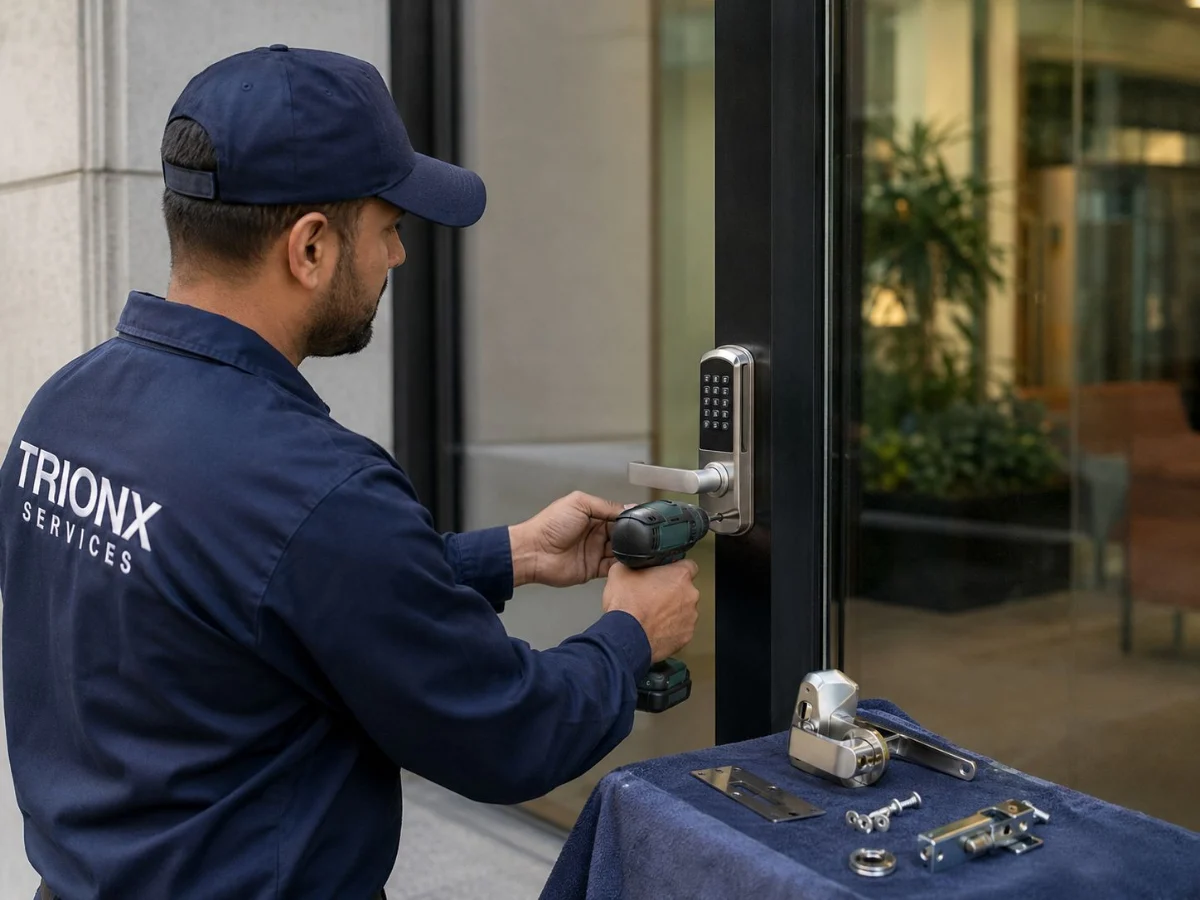
Commercial door will not lock: what to do tonight
What a COI is, and why your building keeps asking for one
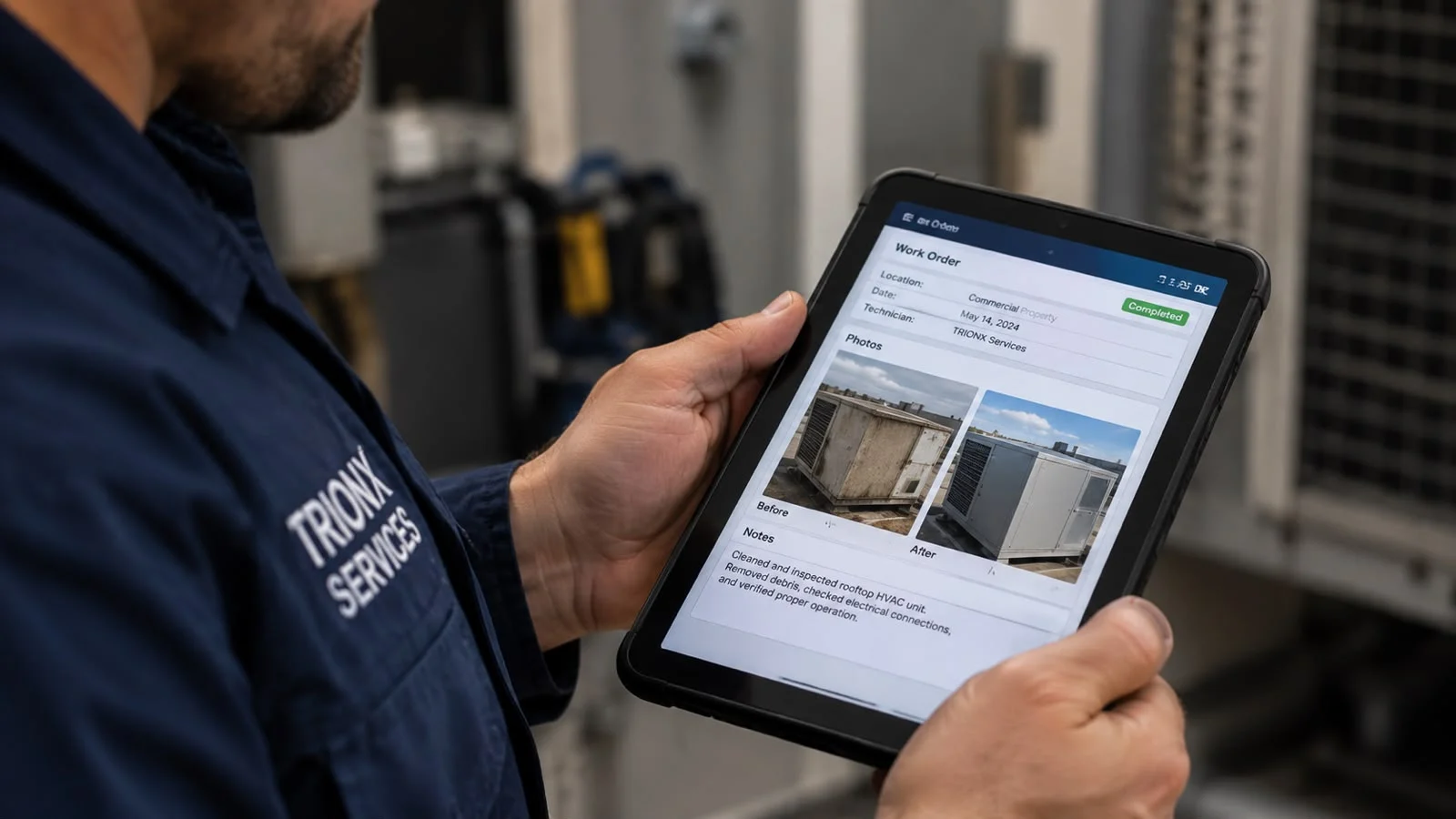
What a proper work-order closeout should contain
Pests are getting in: finding the entry points
Our maintenance vendor has stopped showing up
A code violation on a commercial property: closing it out
One company, whoever does the work
Our technicians handle the trades that need no state license, and licensed contractors handle the ones that do. Either way we scope it, book the visit and file the record. Tell us the property and the problem and we will come back with a window. Call out of hours and someone who works here answers.