
Glass
Glass has cracked but not fallen: how long can it wait?
A cracked pane that is still standing is either stable for weeks or hours from letting go, and the glass type decides which.
Work out what the glass is before deciding anything. Laminated, tempered, annealed and insulated units behave completely differently once cracked, and the difference is between a pane that will sit there for a month and one that could let go this afternoon.
Then mark the ends of the crack with a marker and write the date next to it, which answers the only other question that matters.
Identifying the pane
Look for an etched stamp in a corner, which most tempered and laminated panes carry. Failing that, look at the edge of the glass where it enters the frame.
A laminated pane shows a thin dark line through the thickness, which is the interlayer. An insulated unit shows two panes with a spacer bar between them, and the crack will be in one of the two rather than both. Tempered glass looks like ordinary glass at the edge, which is why the stamp matters.
Our article on tempered, laminated or insulated covers what each type is for and where each belongs.
What each type does once it is cracked
Laminated glass cracks and holds. The interlayer keeps the fragments in place, which is the entire point of it, and a cracked laminated pane is usually stable enough to schedule properly. It is still a failed pane and it has lost strength.
Tempered glass normally does not crack, it disintegrates into granules across the whole pane at once. A tempered pane showing a crack that has not released is in an unstable state and should be treated as likely to go.
Annealed glass is the unpredictable one. It can hold a crack for months or drop a long shard with no warning, and the shards are the dangerous kind. Over a footway or a public area, this is the case to act on.
An insulated unit with one cracked pane has lost its seal as well as its strength. It will fog between the panes over the following weeks and it is a replacement rather than a repair.
Reading where the crack started
A crack beginning at an edge and running in a curve is usually thermal or edge stress rather than impact. Thermal cracks follow a cold night after a hot day, or a pane that has become part-shaded by a new sign, awning or partition. Edge damage caused during installation surfaces this way years afterward.
A crack radiating from a point is impact, and the point tells you where. Look for a chip at the center.
Multiple cracks with no impact point, or a pane that has cracked in a frame that also shows distortion, suggests the frame or the structure is loading the glass. That is worth identifying before a replacement pane goes into the same opening and does the same thing.
Whether it can wait
Act now if the pane is annealed or tempered, if it is above or beside a public footway, if it is an exterior pane in a building people are in, or if the crack has grown past your mark since you made it.
It can usually be scheduled if it is laminated, internal, in a secured area, and stable against a dated mark. In that case, waiting for the correct glass to be ordered beats reacting to it.
Either way, keep people from leaning on it, do not clean it, and do not open or close a cracked door pane more than necessary. Movement is what turns a crack into a failure.
What ordering involves
Tempered and laminated panes are cut and processed to order, and insulated units are made up as a sealed assembly, so none of them are stock items. Identifying the type and getting the opening measured early is what stops a stable crack becoming an emergency while the glass is still being made.
Exterior work in Miami-Dade frequently involves impact rated glazing, which brings a permit and a Notice of Acceptance submittal with it. Our article on impact glazing and the NOA covers when that applies, and it adds time that is better spent before the pane fails than after.
Who carries this out
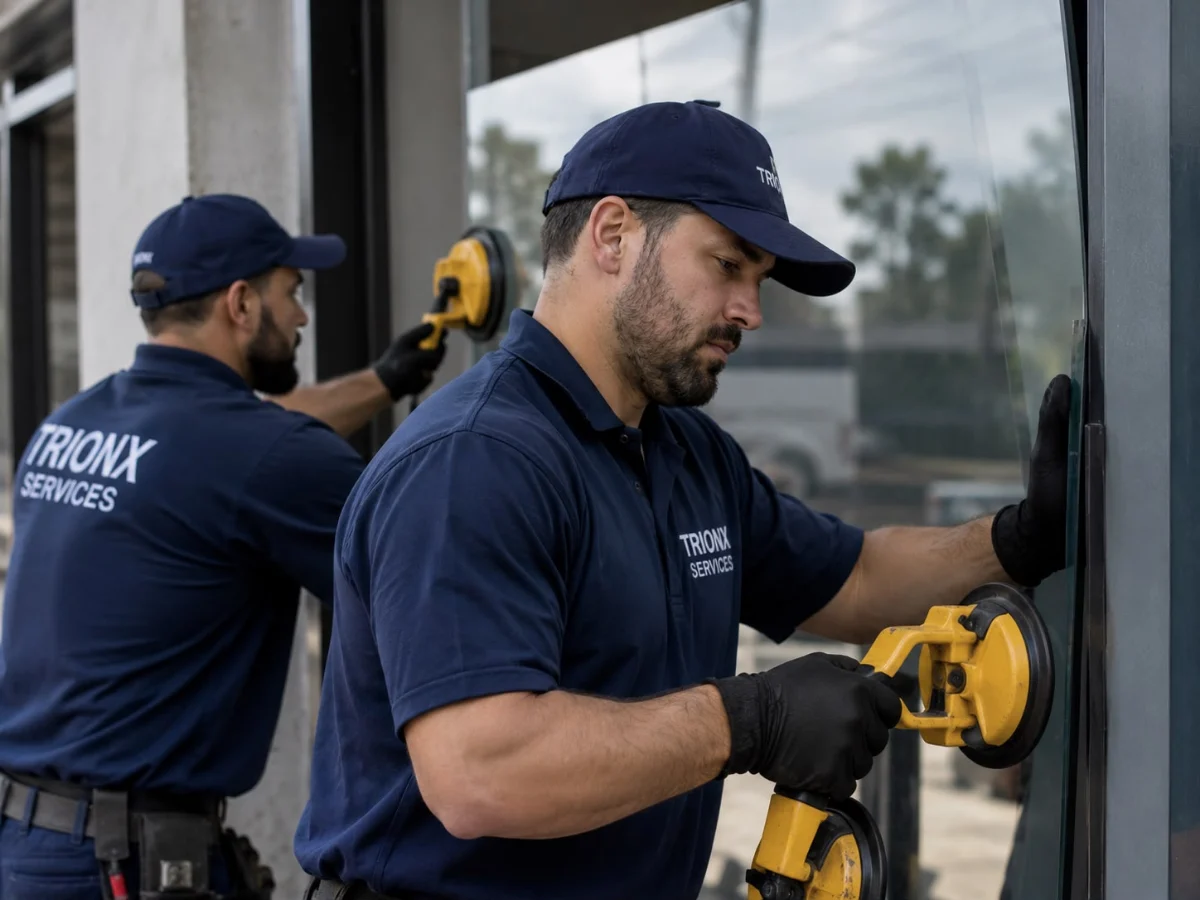
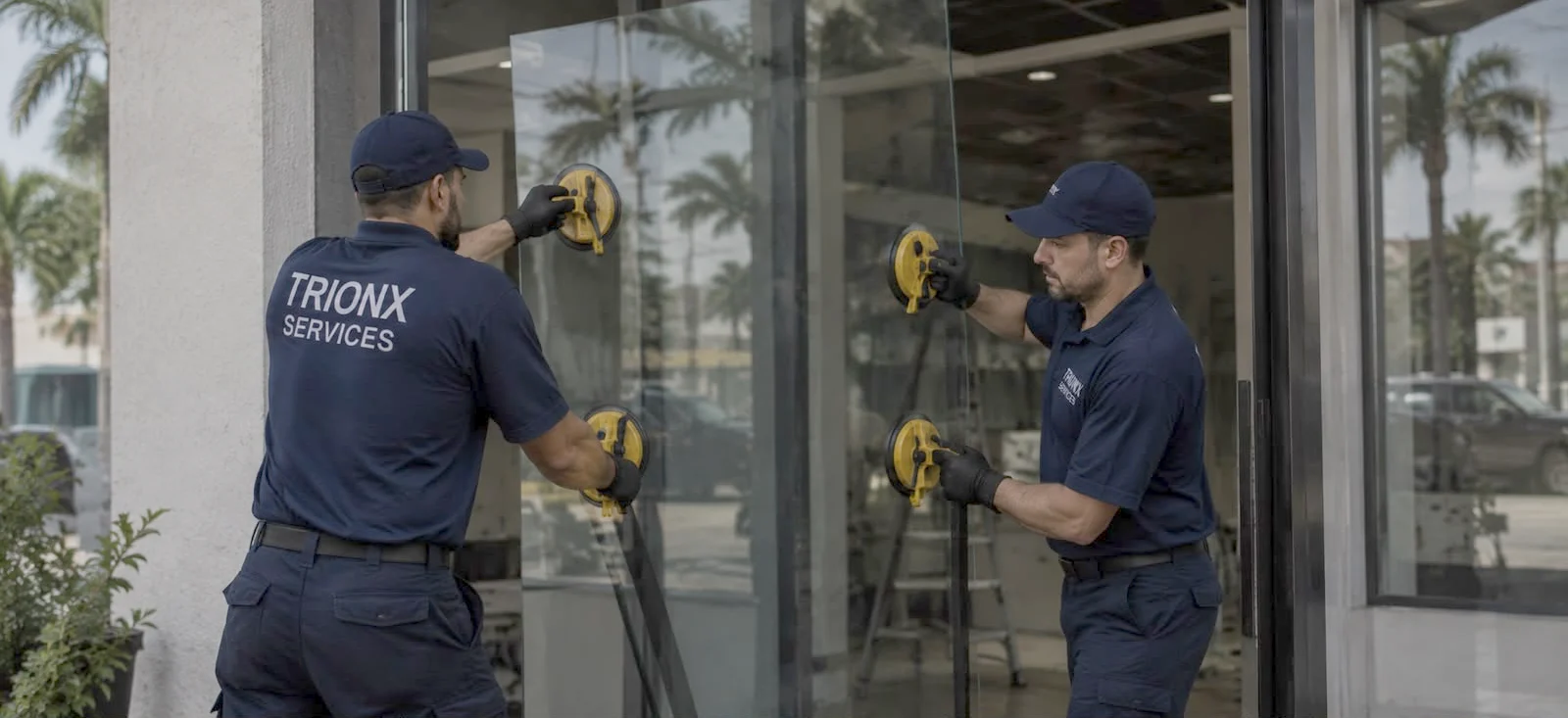
Repairing and re-glazing an existing opening is performed directly by our own technicians, including removing the cracked pane, fitting the replacement and boarding the opening if it lets go first. TrionX carries general liability and workers' compensation on that work.
Replacing the storefront system, altering an opening, or permitted impact rated glazing is coordinated through licensed contractors, because anything requiring a permit is licensed work whatever the trade. If the pane does fail before the replacement arrives, our article on the first hour after a storefront pane breaks covers what to do.
Common questions
Questions we get asked about this
Is a cracked pane going to fall out?
It depends what it is. Laminated glass cracks and stays put, held on its interlayer. Tempered glass usually goes all at once rather than cracking, so a tempered pane showing a crack is unusual and unstable. Annealed glass can hold for a long time or drop a shard without warning.
Should I tape it?
Tape does not hold glass and it makes the removal more awkward. If a pane needs restraining, it needs securing properly or boarding. Tape is useful for one thing: marking the ends of a crack with a date so you can tell whether it is growing.
The crack appeared overnight with nothing hitting it.
That happens. Thermal stress cracks start at an edge and run at a curve, and they follow a cold night after a hot day or a pane part-shaded by a new sign or awning. Edge damage from installation shows up the same way years later.
Can a cracked pane be repaired?
A crack through the glass is a replacement. Surface chips and small impact points in laminated glass are sometimes filled, but anything running through the thickness is structural and the pane comes out.
Keep reading
Related field notes
Storefront glass is broken: the first hour
Impact-rated glazing and the NOA: what needs a permit
What happens in a storefront emergency board-up
Dealership showrooms: glass, lighting and the service bay
A glass storefront door drags or will not lock
An office or upper-floor window is cracked or broken
One company, whoever does the work
Our technicians handle the trades that need no state license, and licensed contractors handle the ones that do. Either way we scope it, book the visit and file the record. Tell us the property and the problem and we will come back with a window. Call out of hours and someone who works here answers.